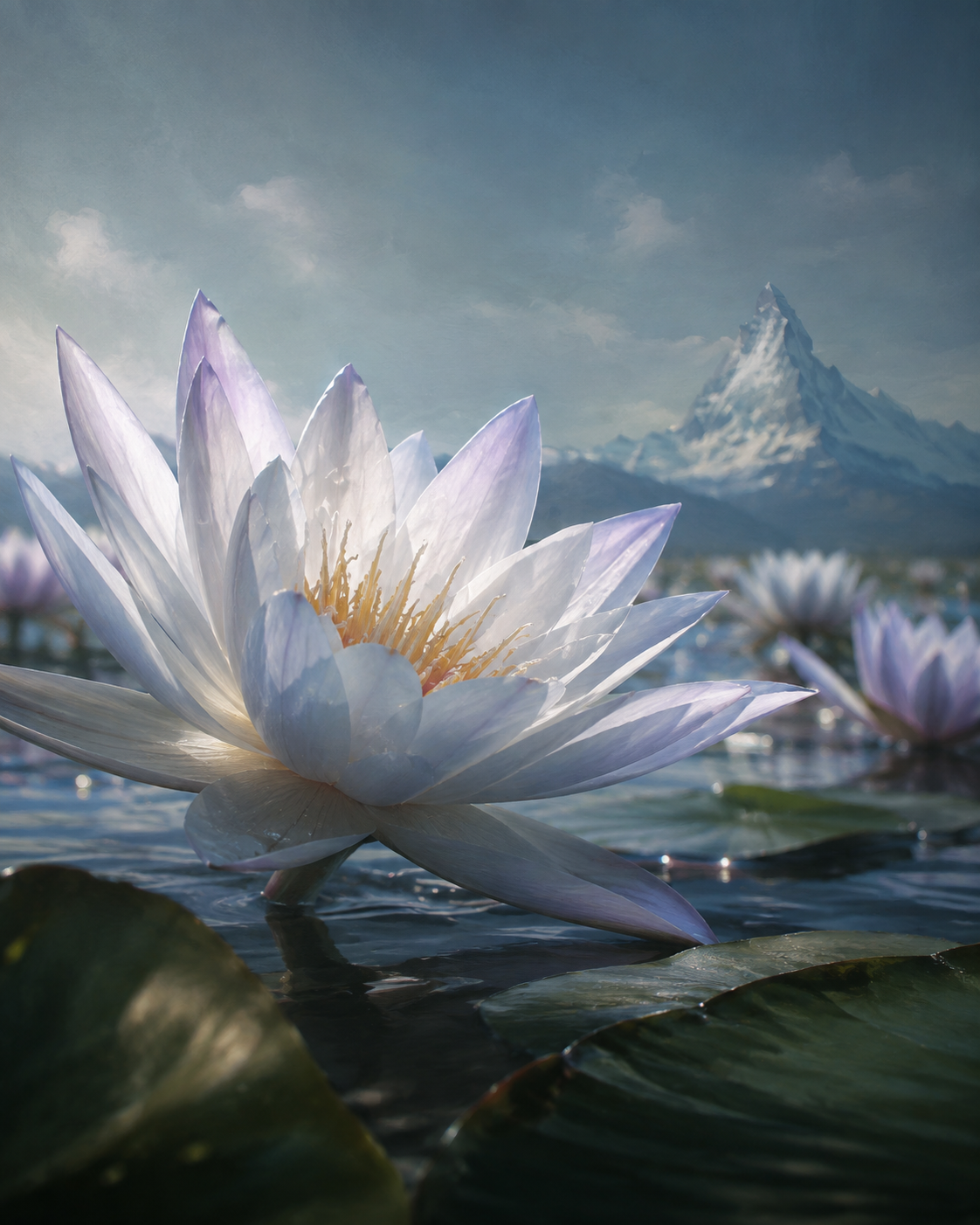
White Lotus Beneath the Alpine Peak
Critique
Introduction This painting confronts a white water lily with a rising mountain peak. Their pointed forms echo across distance, joining organic unfolding and geological ascent. Description The lily fills the left and lower center, opening translucent white petals edged with pale violet around slender golden stamens. Dark pads occupy the foreground, and other lavender-white blossoms recede across blue water. On the right horizon, a steep snow-covered peak rises above darker ridges, partly wrapped in thin cloud. A broad gray-blue sky provides calm space above both subjects. Low light glows through the flower from behind. Analysis The flower and mountain create two unequal triangular masses on a diagonal. Radiating petals repeat the peak’s angular silhouette, while differences in focus and size keep their distances clear. Backlight gives the thin petals crystalline luminosity, visually linking them to snow. Cool blue-gray dominates, with gold at the flower’s center serving as a small warm anchor. Large pads below add horizontal weight, stabilizing the upward thrust of petal and summit. Interpretation and Evaluation The formal rhyme invites comparison between a bloom’s rapid opening and a mountain’s immense duration. Both appear as forms of emergence, one biological and one geological. Yet the flower is not diminished by the peak; its foreground scale and inner light grant it equal visual authority. This balance is the painting’s central success. The restrained sky and softened secondary lilies prevent grandeur from becoming spectacle, preserving an atmosphere of clear, attentive wonder. Conclusion By making petals answer snowbound rock, the work finds kinship between radically different timescales. The luminous lily and distant summit share aspiration without becoming interchangeable, producing a serene landscape in which delicacy and endurance strengthen one another.
Same Subcategory
Similar Artworks
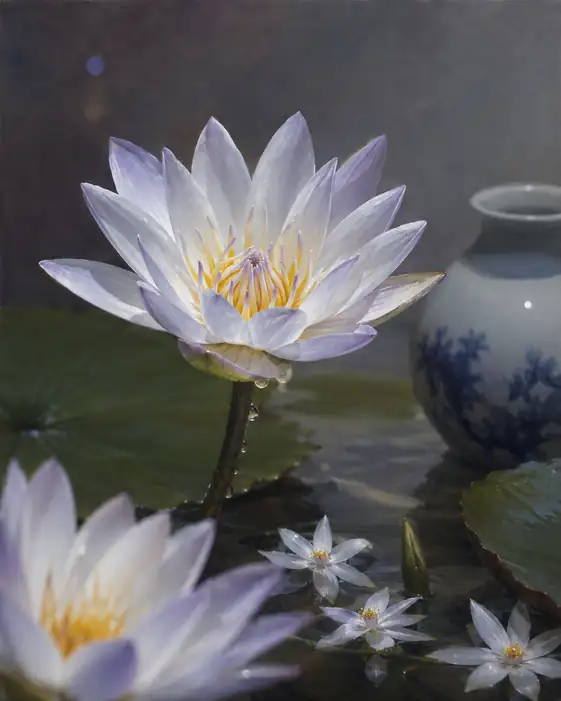 Water Lily and the Cobalt Porcelain
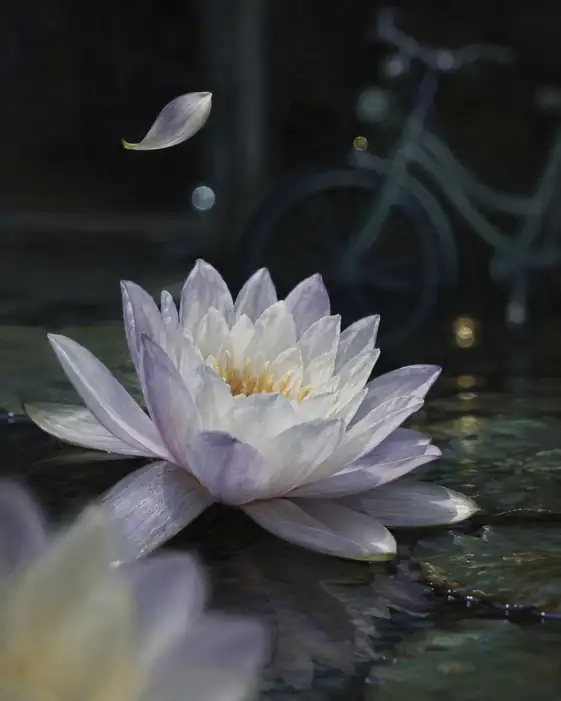 Floating Petal over the Night Pool
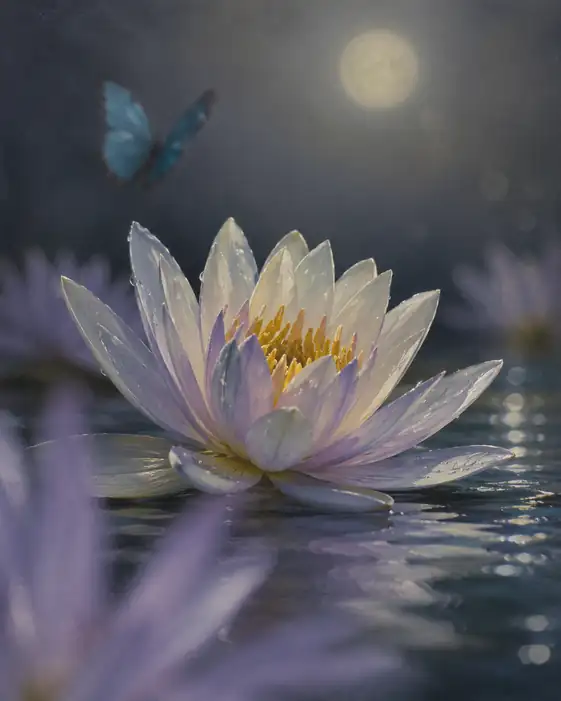 Hazy Moon, Water Lily, and the Blue Butterfly
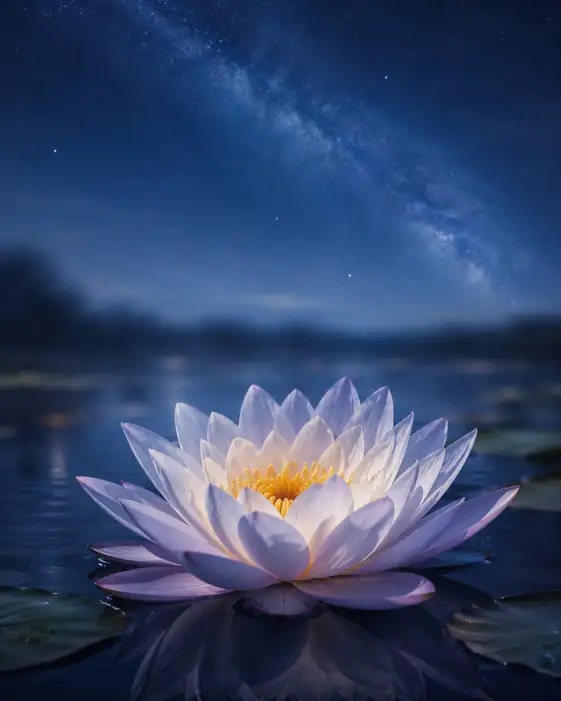 Lotus Blossoming in the Starry Night
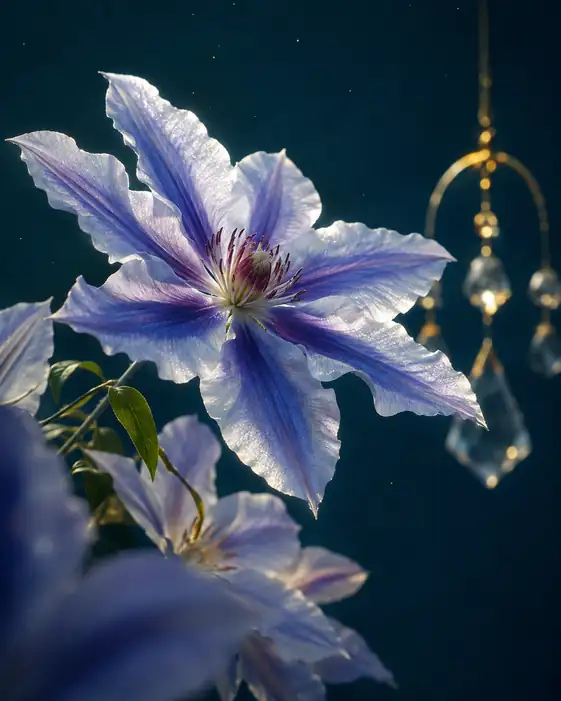 Violet Clematis and the Crystal Pendant
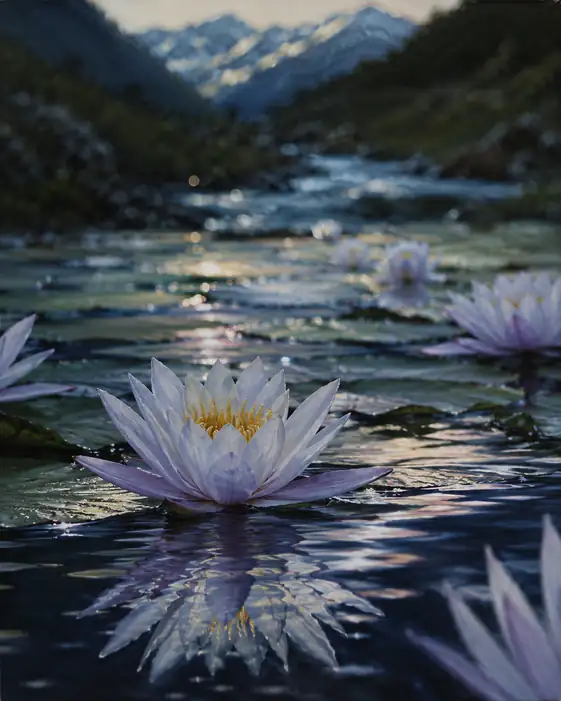 Water Lilies on the Alpine Stream
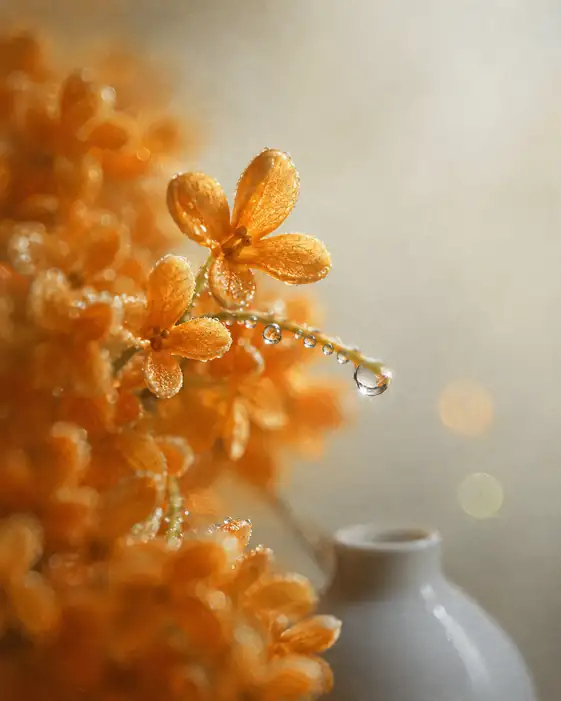 Luminescent Dew on the Amber Bough
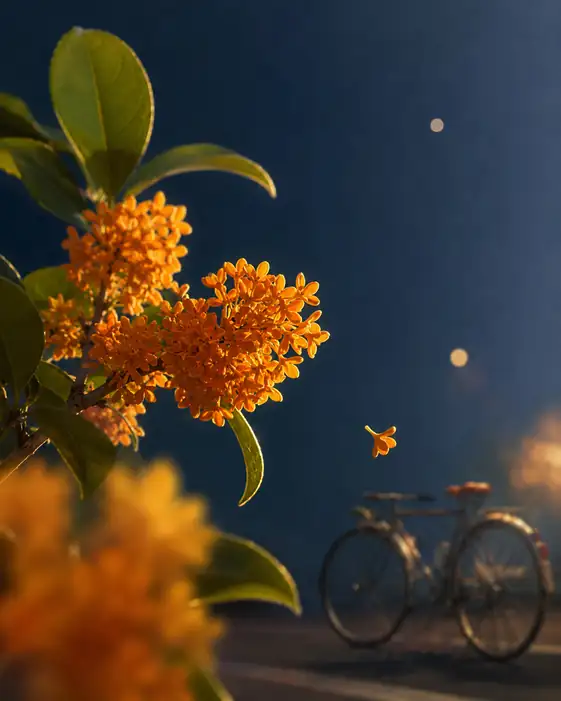 Falling Blossom on the Twilight Road
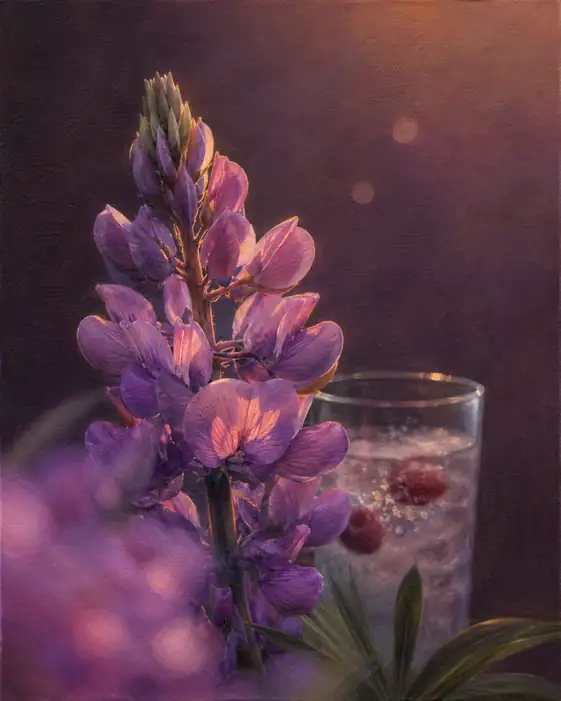 Evening Toast and the Purple Lupine
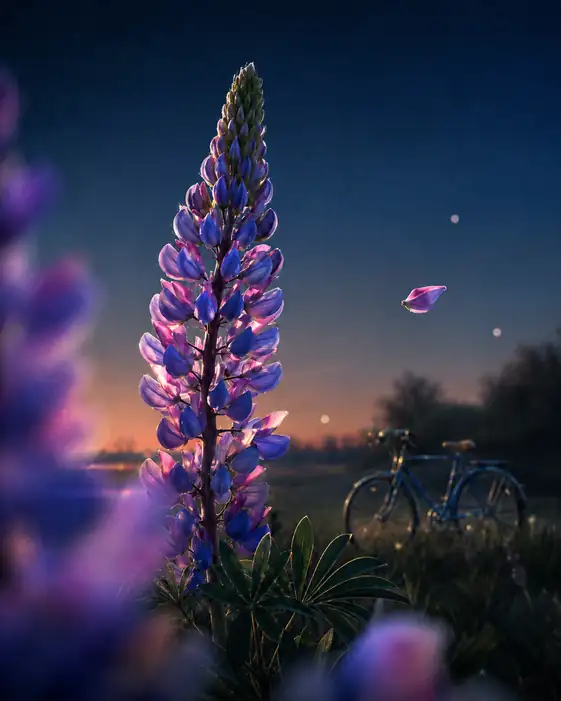 Floating Petal and the Twilight Bicycle