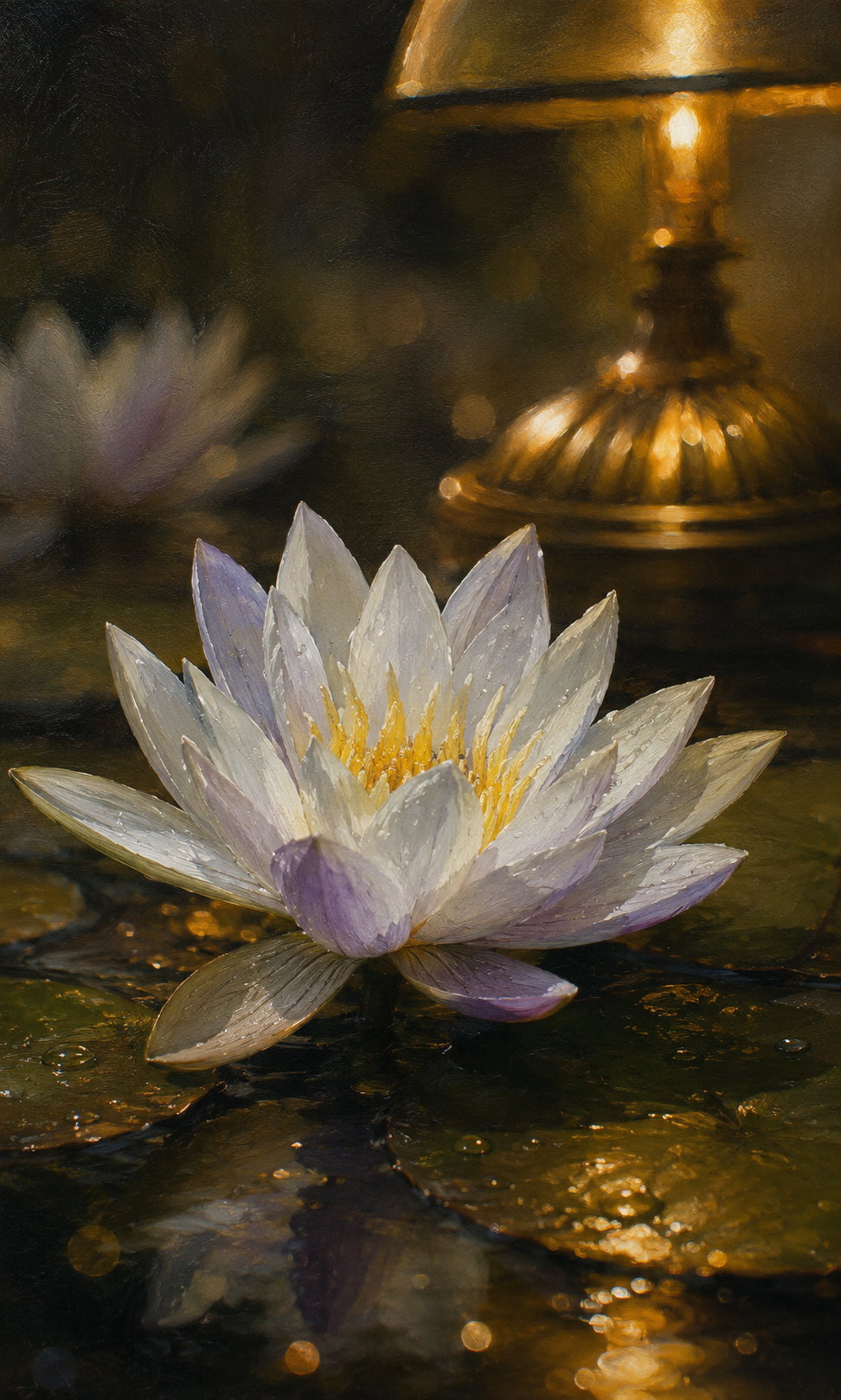
White Lotus and the Golden Lamp
Critique
Introduction This painting places a rain-bright water lily before an antique lamp. Bloom and domestic flame share darkness, creating a dialogue between two forms of illumination. Description The lily occupies lower center, opening white petals tipped with lavender around a golden core. Droplets trace petals and lily pads. Dark water reflects amber and violet. A second flower blurs upper left. Behind, a brass lamp rises softly, its base catching gold and shaded flame glowing upper right. Circular lights hover behind. Analysis The flower and lamp form two luminous centers on a diagonal. Sharp, cool petals advance against the soft, warm fixture, establishing both depth and temperature contrast. Golden stamens echo the flame, joining foreground and background despite their different materials. Pointed petals radiate outward, while the lamp’s stable vertical axis anchors the upper field. Reflections and droplets distribute small highlights across the lower darkness, preventing visual separation. Interpretation and Evaluation The lily may represent self-renewing natural light, whereas the lamp embodies human shelter and sustained attention. Yet the painting does not rank them: each lends warmth or clarity to the other. Rainwater makes the flower temporary and tangible; blur makes the lamp remembered rather than merely functional. This reciprocity is the work’s strength. The subdued second bloom also extends the scene beyond a single symbolic pairing, preserving the atmosphere of a living pond. Conclusion By echoing golden stamens with a distant flame, the painting joins pond and interior in one intimate night. Cool petals, warm metal, water, and shadow create a balanced meditation on how living and made things can illuminate one another without losing their distinct character.
Same Subcategory
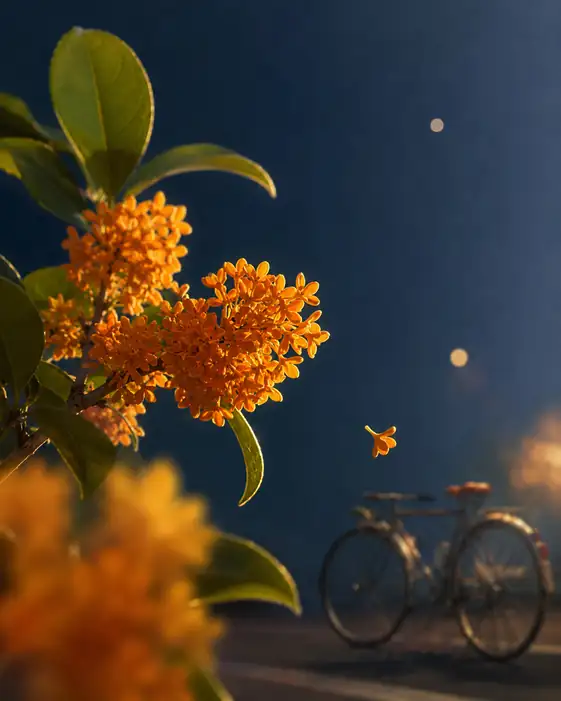 Falling Blossom on the Twilight Road
Similar Artworks
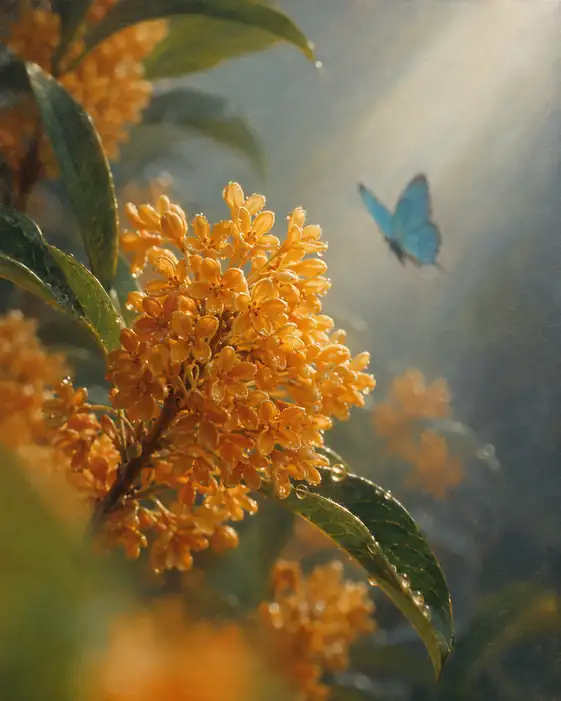 Azure Wings in the Golden Mist
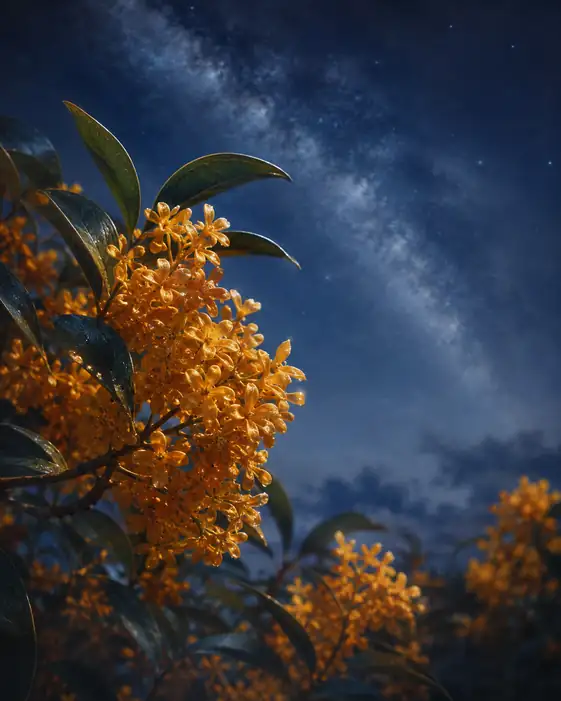 Golden Clusters Beneath the Milky Way
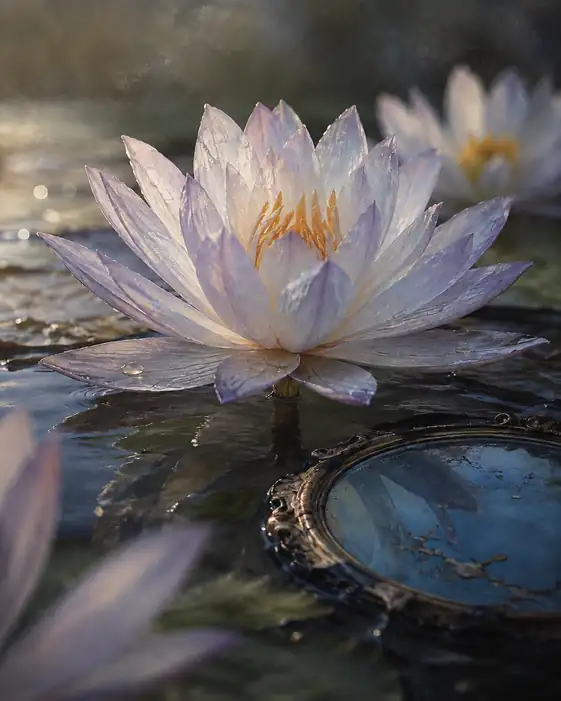 Meditation of Water Lily and Mirror
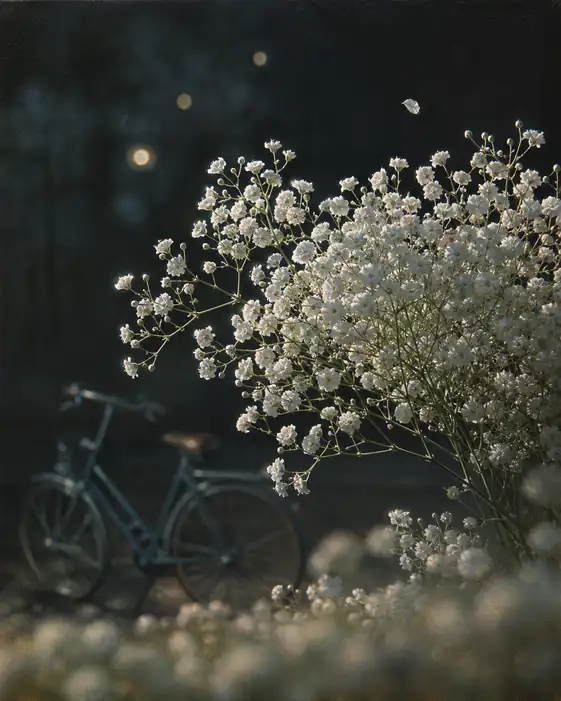 Baby's Breath in Night Mist and the Bicycle
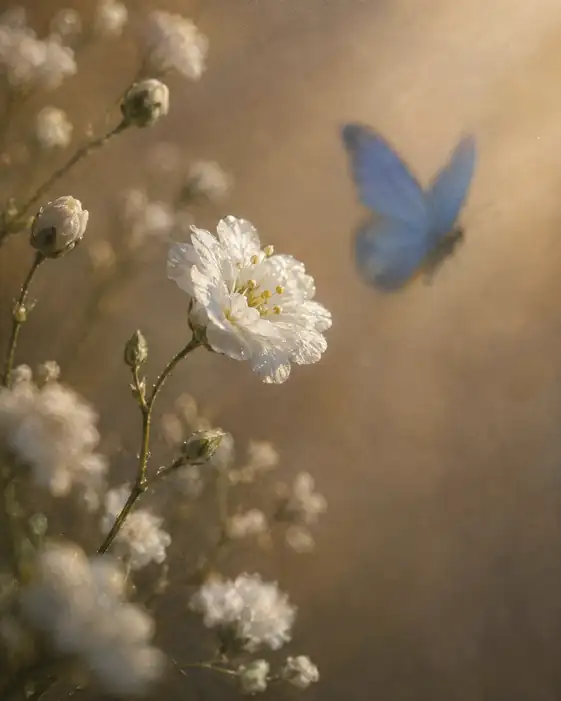 Sunlit Baby's Breath and the Blue Butterfly
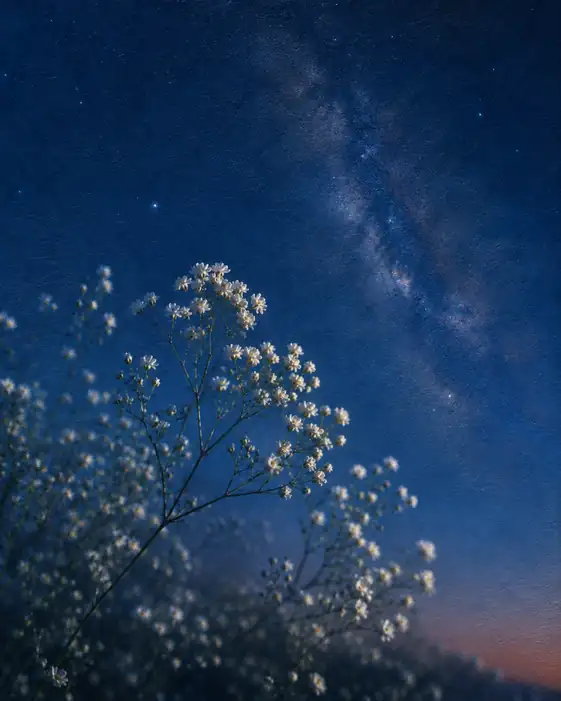 White Baby's Breath and the Milky Way
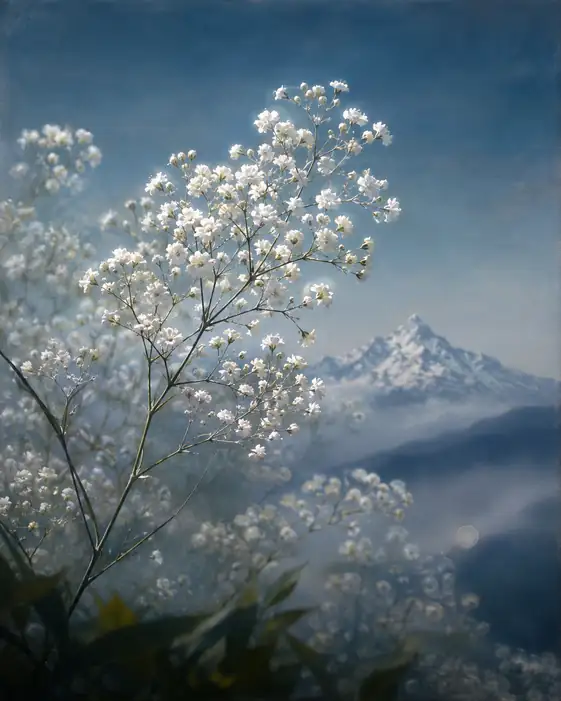 White Baby's Breath Facing the Snowy Peak
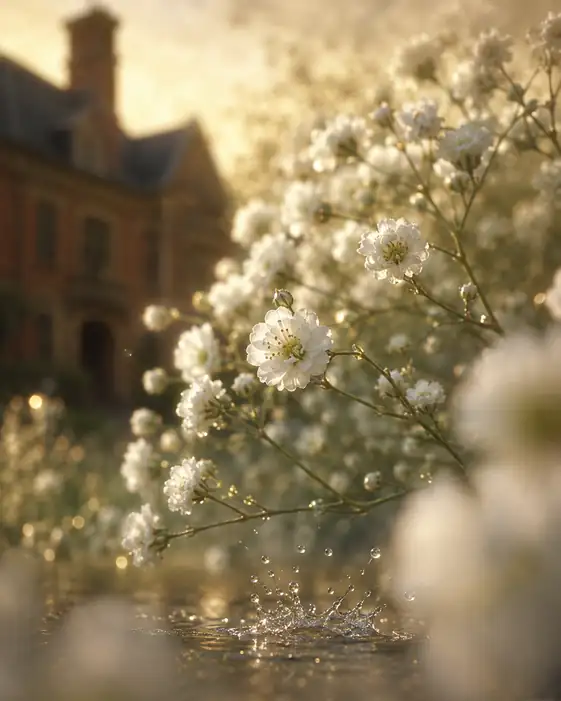 Sunlit Garden and the Water Crown
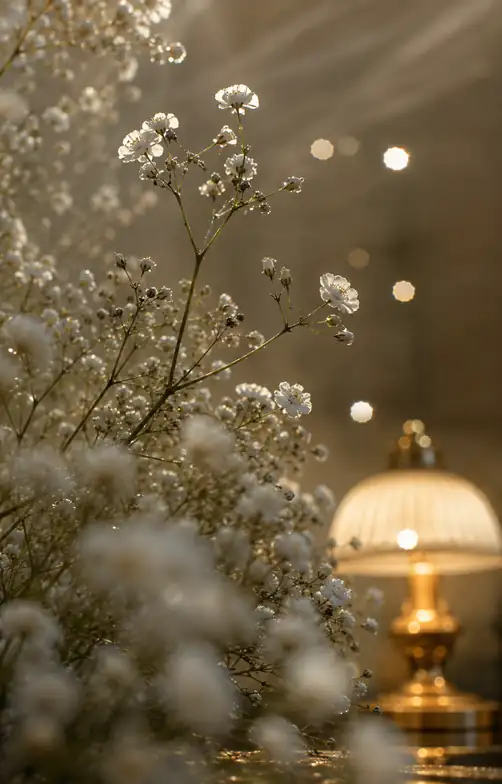 Amber Lamp and the Whispering Blooms
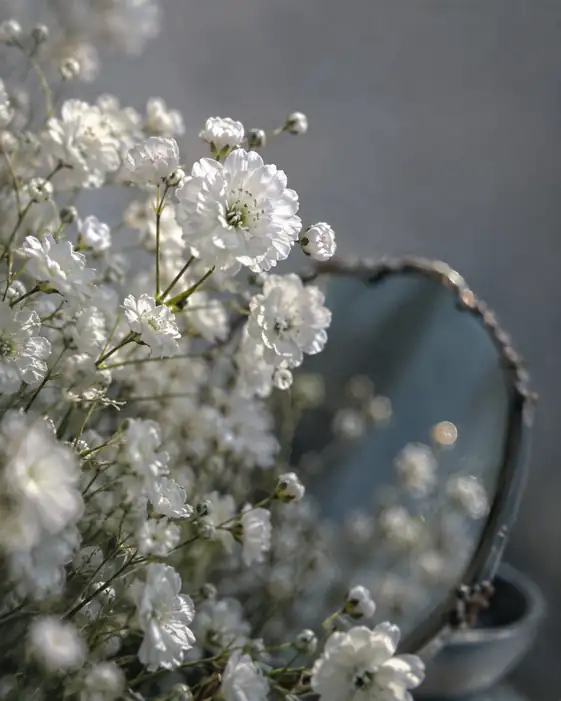 White Baby's Breath and the Mirror's Echo