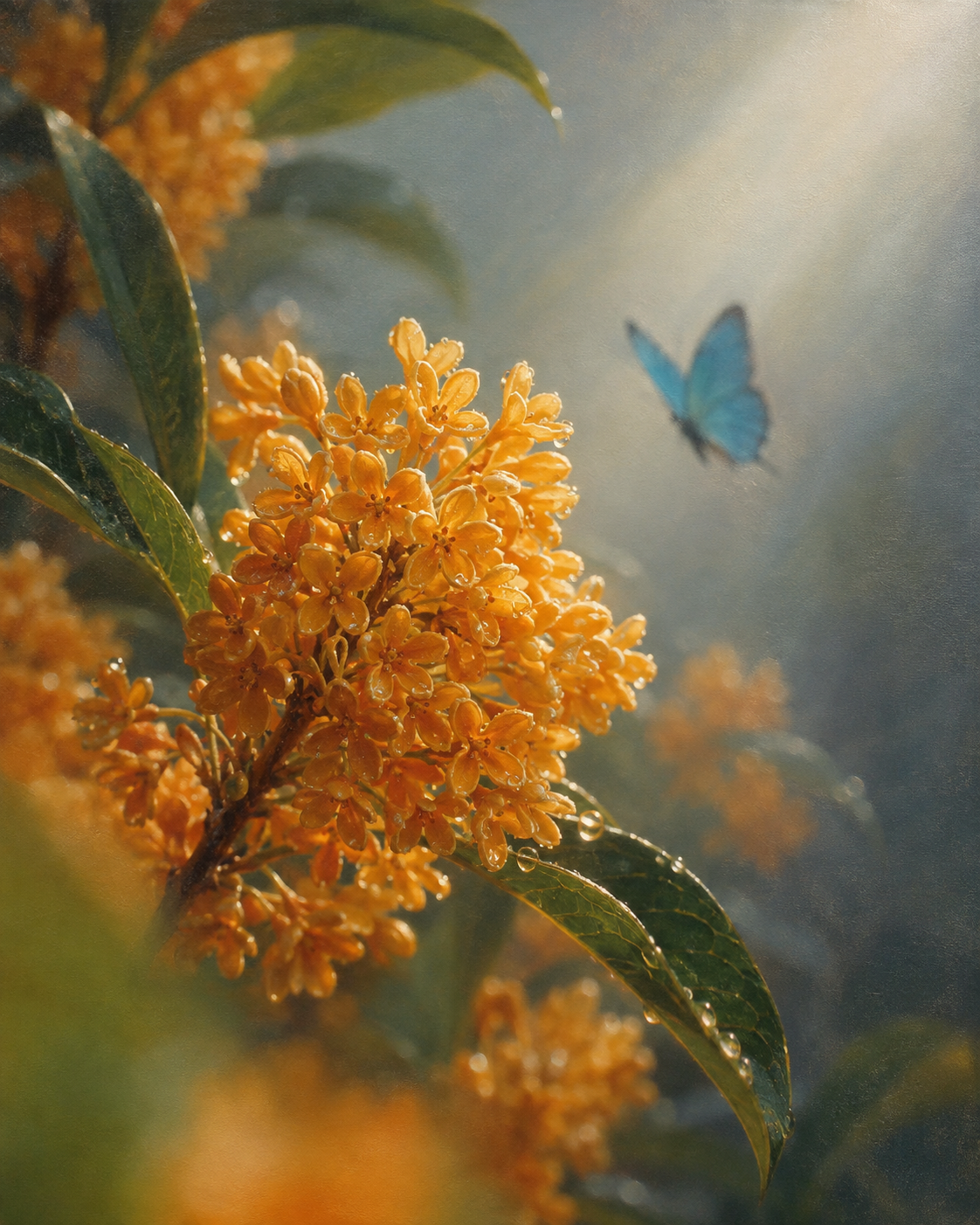
Azure Wings in the Golden Mist
Critique
Introduction This garden image pairs wet orange blossoms with a blue butterfly in pale mist. Warm flower and cool wing create an encounter between rooted abundance and airborne freedom. Description The flower cluster fills left-center, rounded petals glowing gold with water. Glossy leaves frame it, one sweeping right with edge droplets. Softer clusters occupy background and foreground. In upper-right haze, a blue butterfly appears out of focus. Cream light dissolves the garden into gray-green atmosphere. Analysis Sharp floral detail and blurred butterfly establish distinct spatial planes. The curving leaf points from the blossoms toward the insect, creating a visual bridge across the empty mist. Orange and cyan form a complementary tension, softened by neutral light. Repeated droplets concentrate brightness along petals and leaves, while foreground blur encloses the scene. The flower’s dense mass is balanced by the butterfly’s small, isolated silhouette. Interpretation and Evaluation The butterfly may suggest transformation, departure, or an arrival too brief to possess. Because it remains indistinct, it reads less as a specimen than as a fleeting perception. The flower cluster embodies rooted continuity, yet its wet petals are equally temporary. Their juxtaposition avoids a simple opposition between permanence and motion; both forms share vulnerability. The painting’s restraint and airy background allow that emotional connection to emerge without narrative insistence. Conclusion By linking a saturated cluster to a distant blue wing through leaf, color, and light, the work captures the delicacy of an almost-meeting. Its beauty lies in suspended distance: the butterfly may approach or vanish, while the rain-bright flowers remain open to either possibility.
Same Subcategory
Similar Artworks
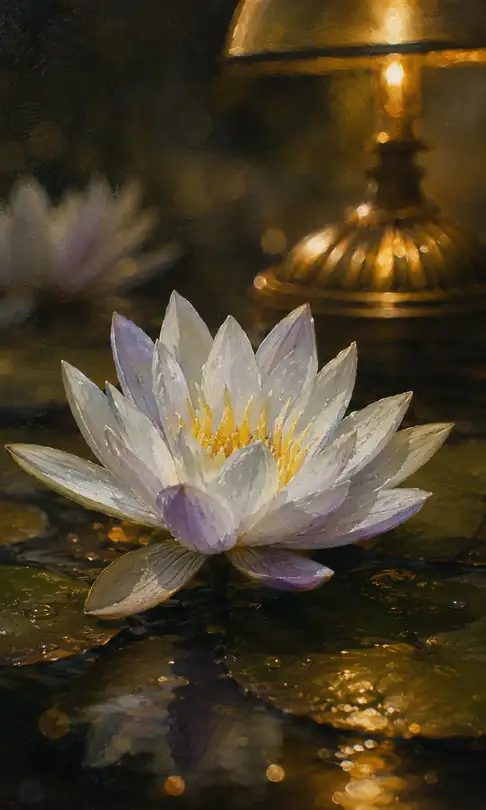 White Lotus and the Golden Lamp
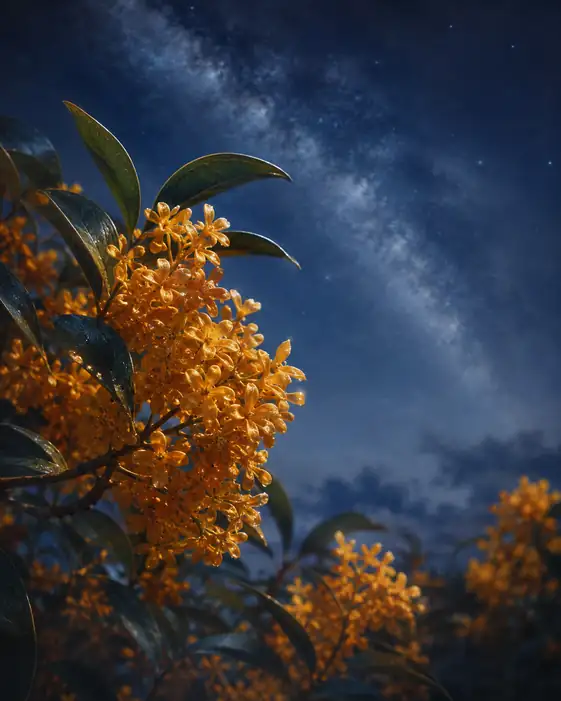 Golden Clusters Beneath the Milky Way
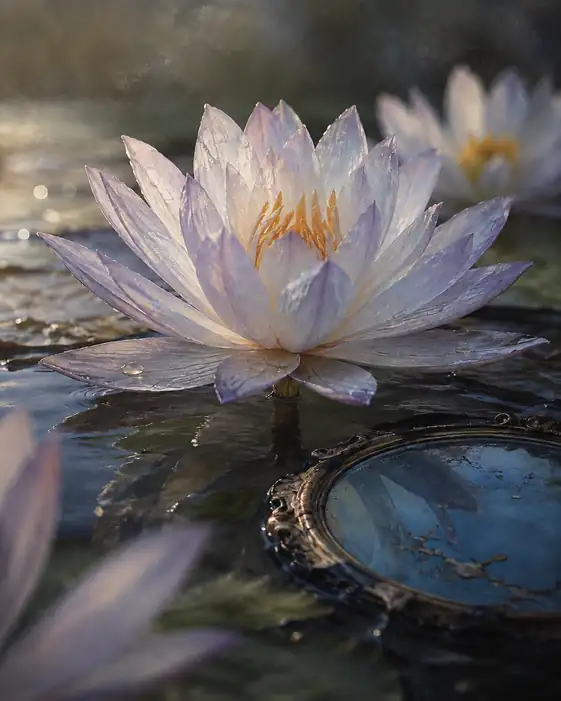 Meditation of Water Lily and Mirror
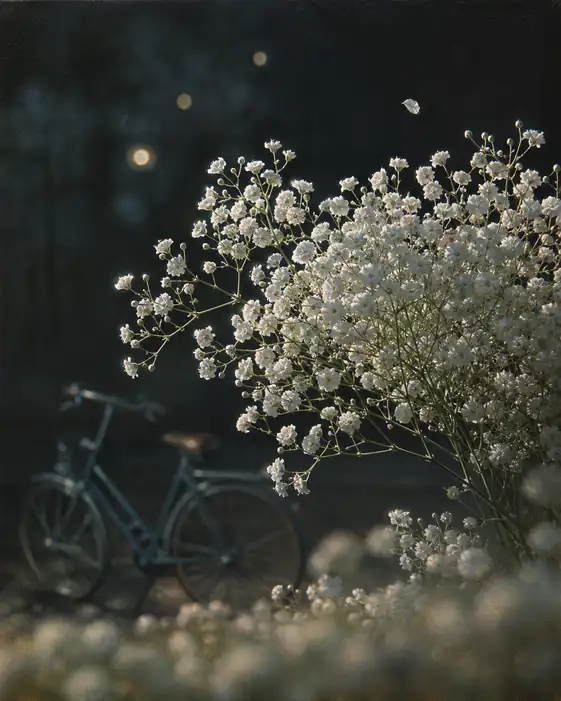 Baby's Breath in Night Mist and the Bicycle
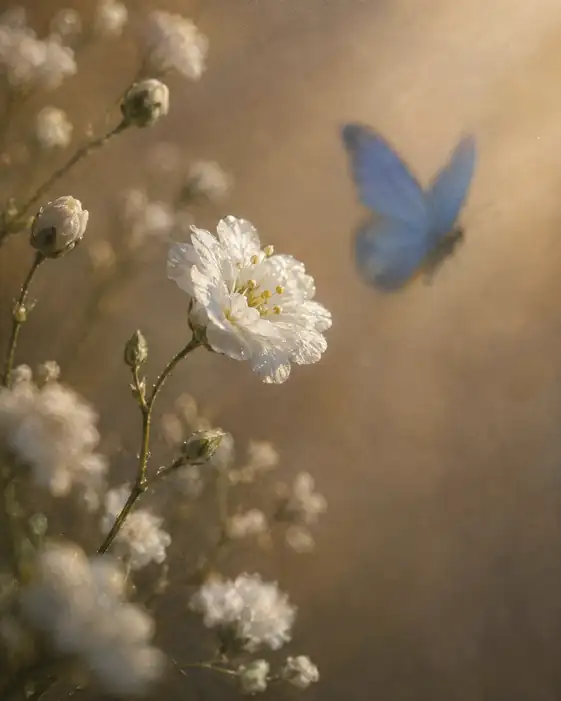 Sunlit Baby's Breath and the Blue Butterfly
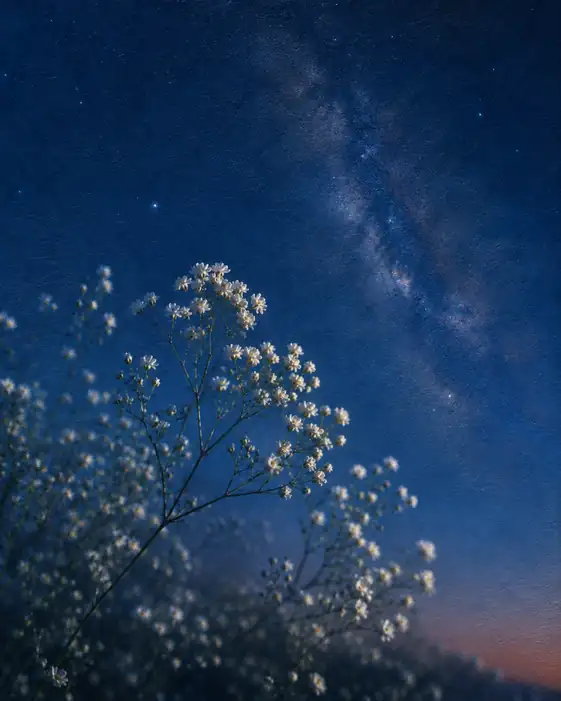 White Baby's Breath and the Milky Way
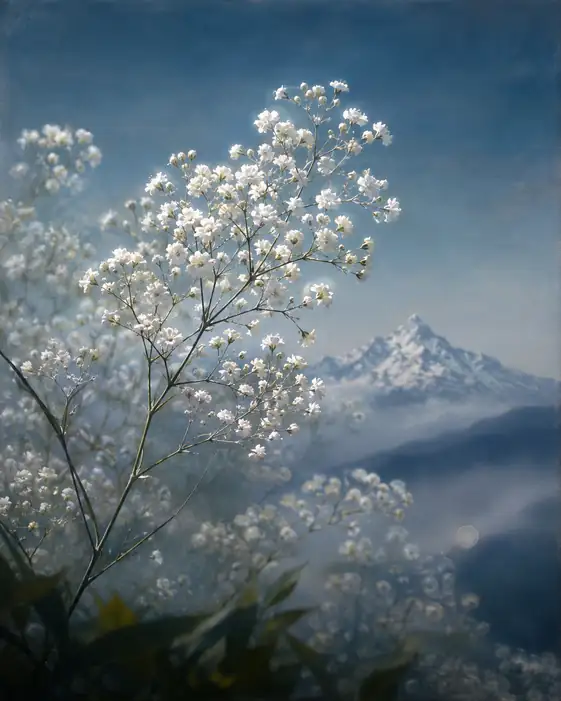 White Baby's Breath Facing the Snowy Peak
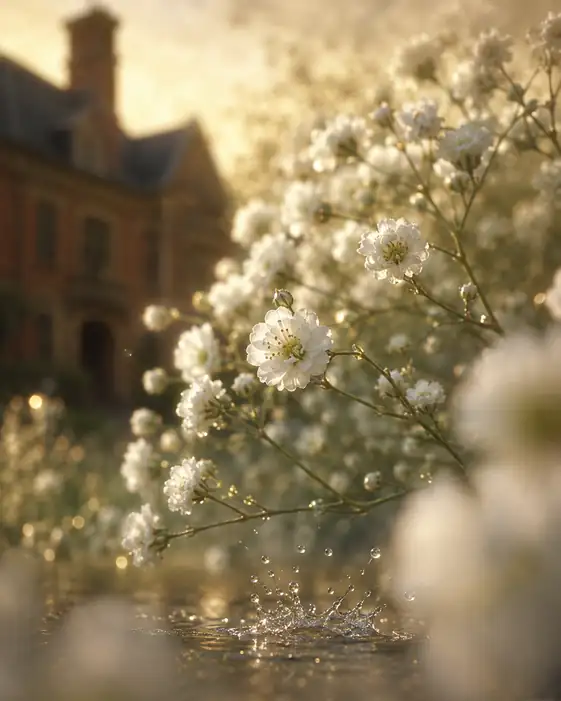 Sunlit Garden and the Water Crown
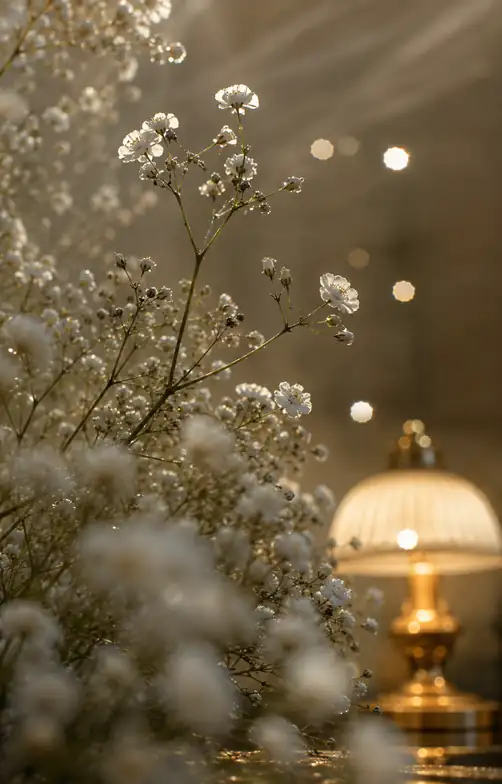 Amber Lamp and the Whispering Blooms
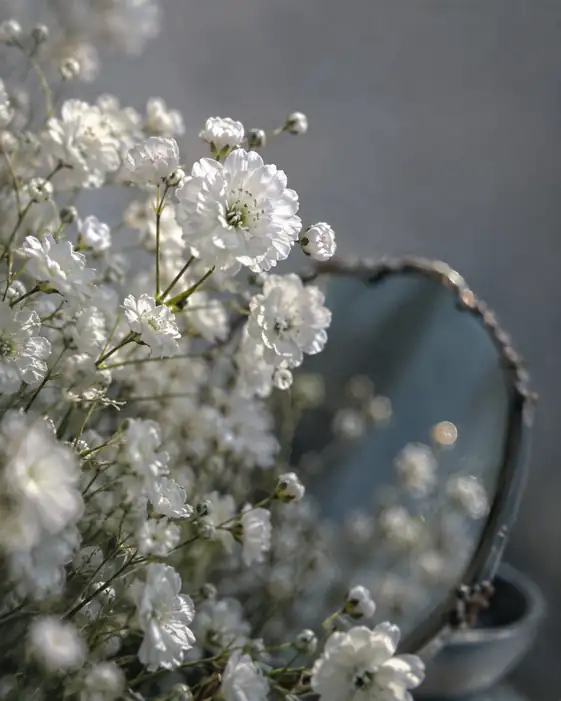 White Baby's Breath and the Mirror's Echo