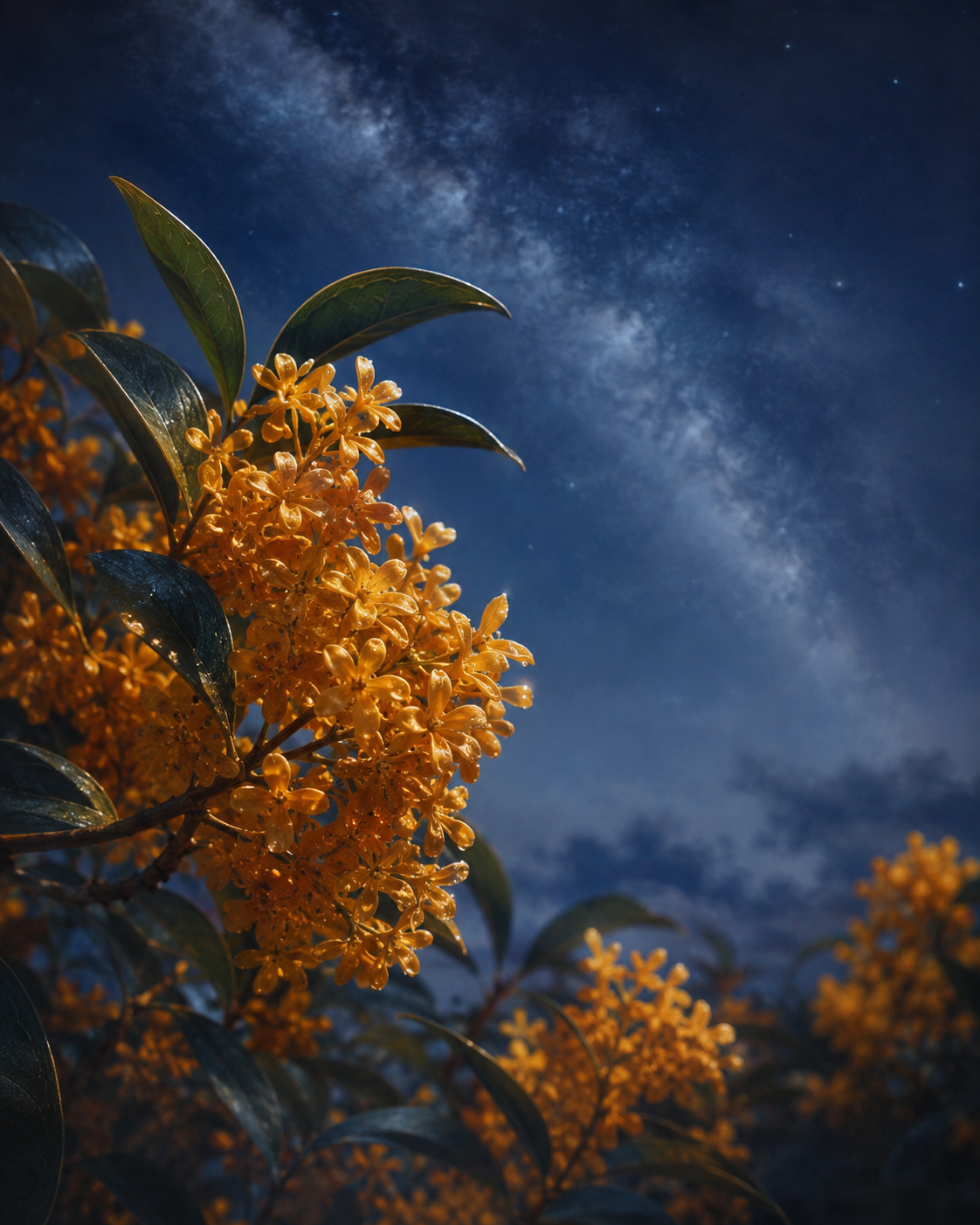
Golden Clusters Beneath the Milky Way
Critique
Introduction This painting lifts golden-orange blossoms against a star-filled blue night, merging a close botanical view with cosmic distance. The flowering branch becomes a terrestrial constellation, bright and intricate beneath the diffuse band of the Milky Way. Description Dense clusters of small four-petaled flowers occupy the left and center, glowing amber along branching stems. Long dark green leaves surround them, their edges and wet surfaces catching narrow highlights. Beyond, a deep navy sky opens across the right, crossed diagonally by a pale cloudy star band and scattered points of light. Softer orange clusters and leaves recede along the bottom and far right. Analysis The composition balances the heavy floral mass with broad celestial space. A diagonal branch rises toward the same direction as the Milky Way, connecting foreground growth and distant sky. Warm gold advances against cool blue, producing strong depth. Repeated flower points echo the stars, while glossy leaves form dark intervals that prevent the orange field from becoming uniform. Sharp foreground detail gradually yields to atmospheric blur. Interpretation and Evaluation The visual rhyme between blossoms and stars suggests that brief earthly flowering participates in a pattern far larger than itself. At the same time, differences of scale remain palpable: petals are wet and touchable, whereas the galaxy is unreachable. The painting succeeds by preserving both intimacy and awe. Its celestial background does not diminish the plant; instead, it grants the branch a quiet dignity without forcing an explicit allegory. Conclusion Through complementary color, diagonal movement, and repeated points of radiance, the work joins garden and cosmos convincingly. The blossoms appear momentary yet connected to enduring cycles, turning a night-blooming encounter into a generous meditation on scale and belonging.
Same Subcategory
Similar Artworks
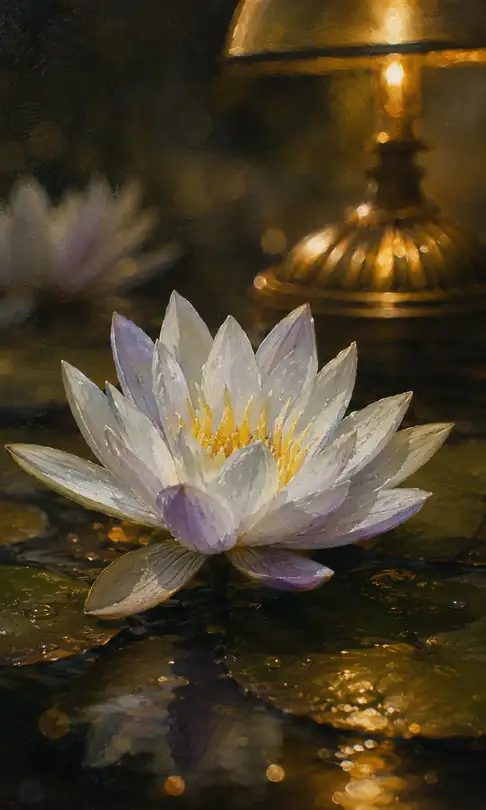 White Lotus and the Golden Lamp
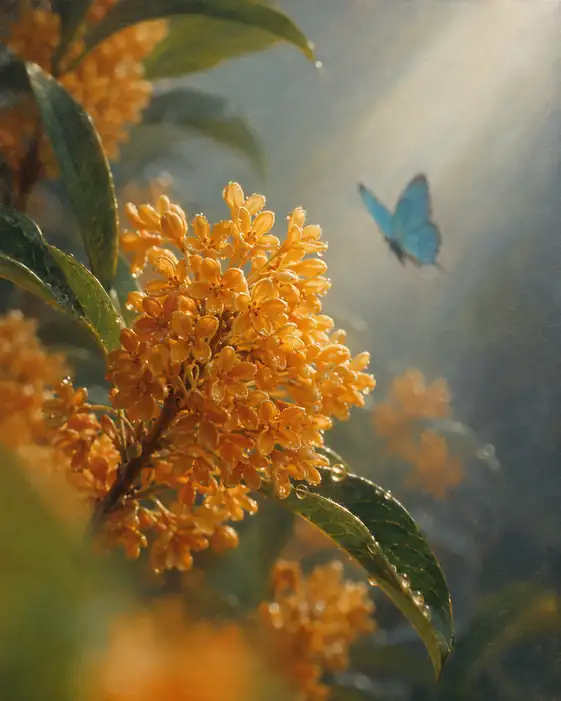 Azure Wings in the Golden Mist
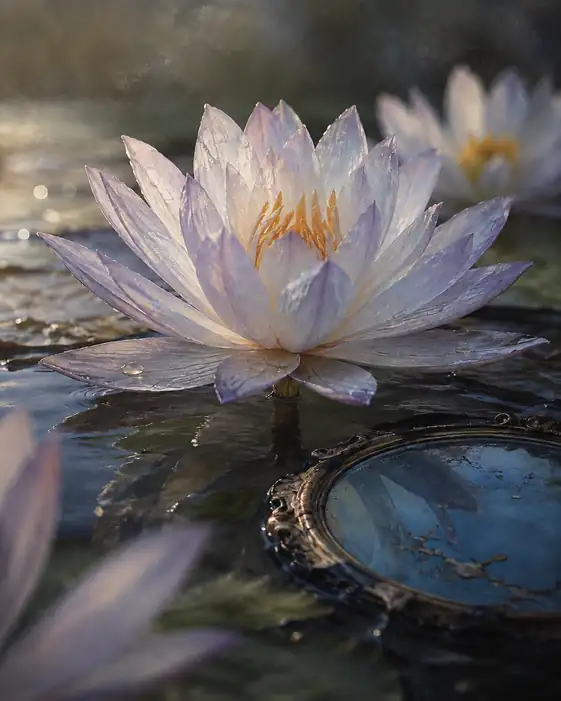 Meditation of Water Lily and Mirror
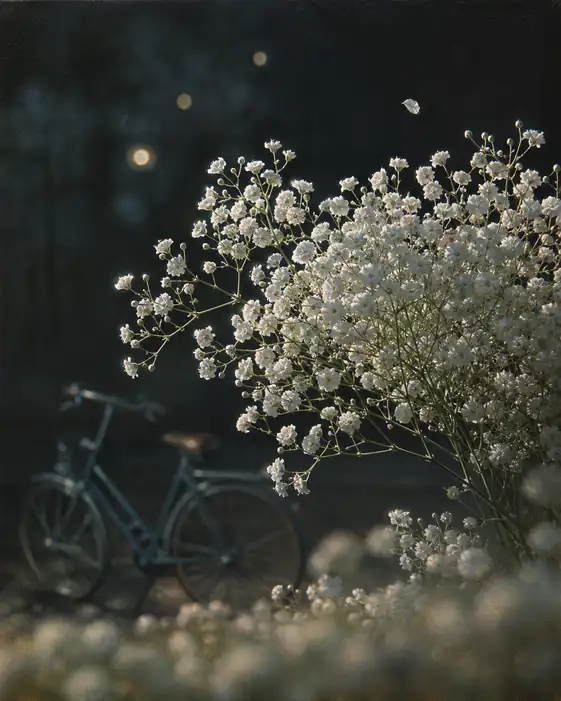 Baby's Breath in Night Mist and the Bicycle
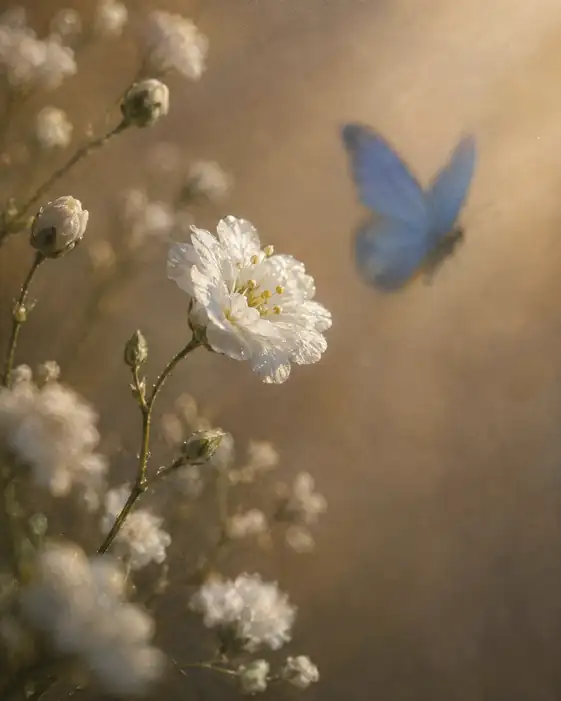 Sunlit Baby's Breath and the Blue Butterfly
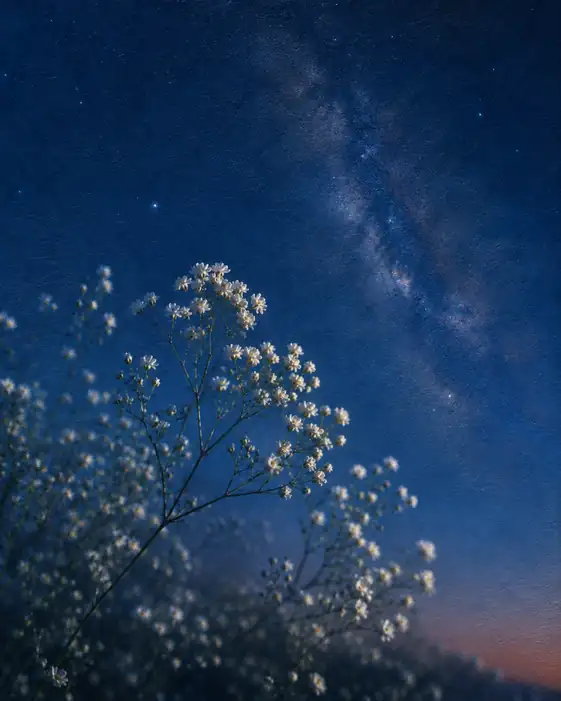 White Baby's Breath and the Milky Way
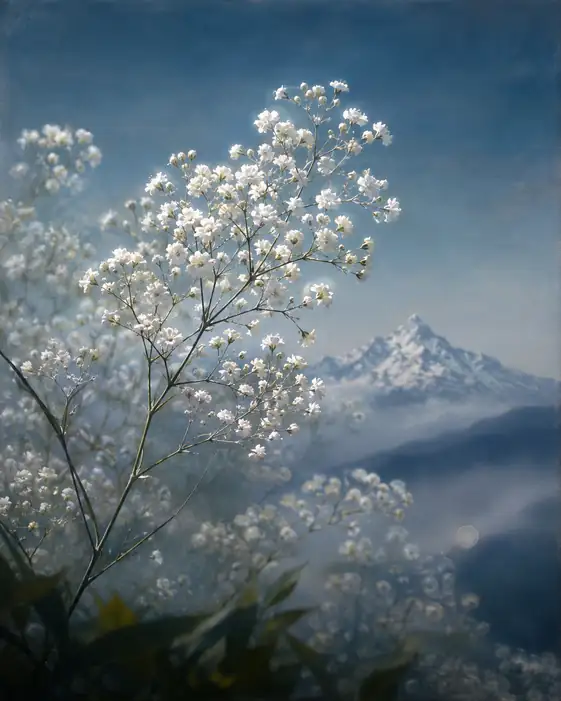 White Baby's Breath Facing the Snowy Peak
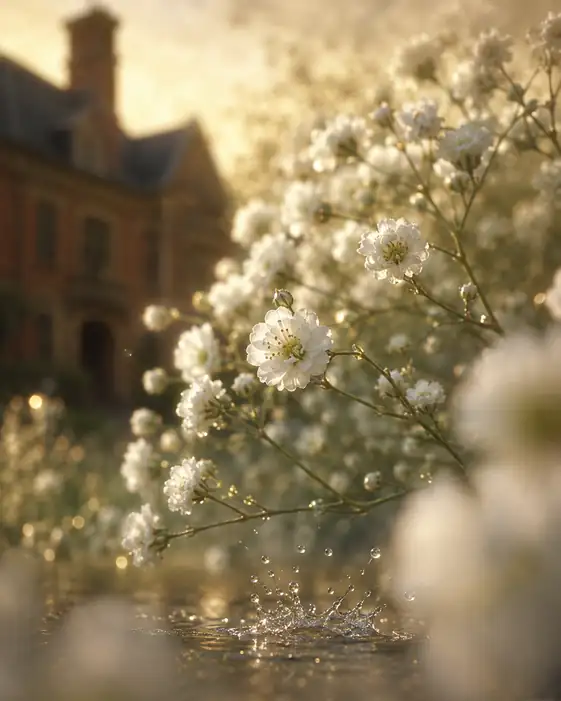 Sunlit Garden and the Water Crown
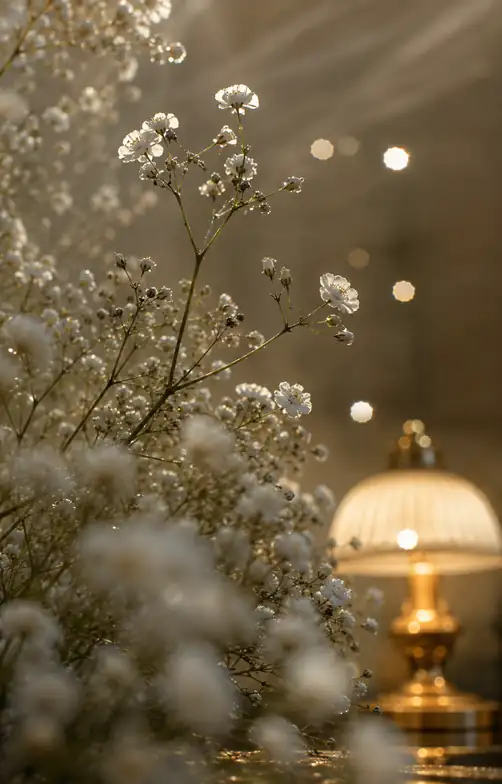 Amber Lamp and the Whispering Blooms
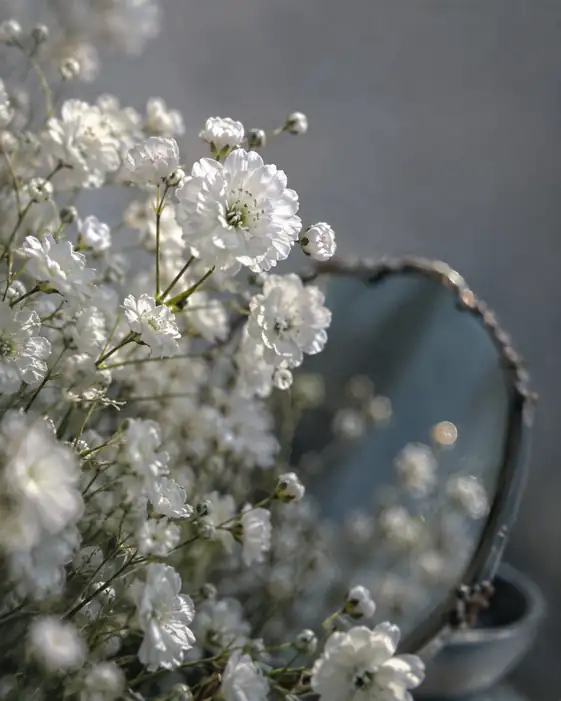 White Baby's Breath and the Mirror's Echo