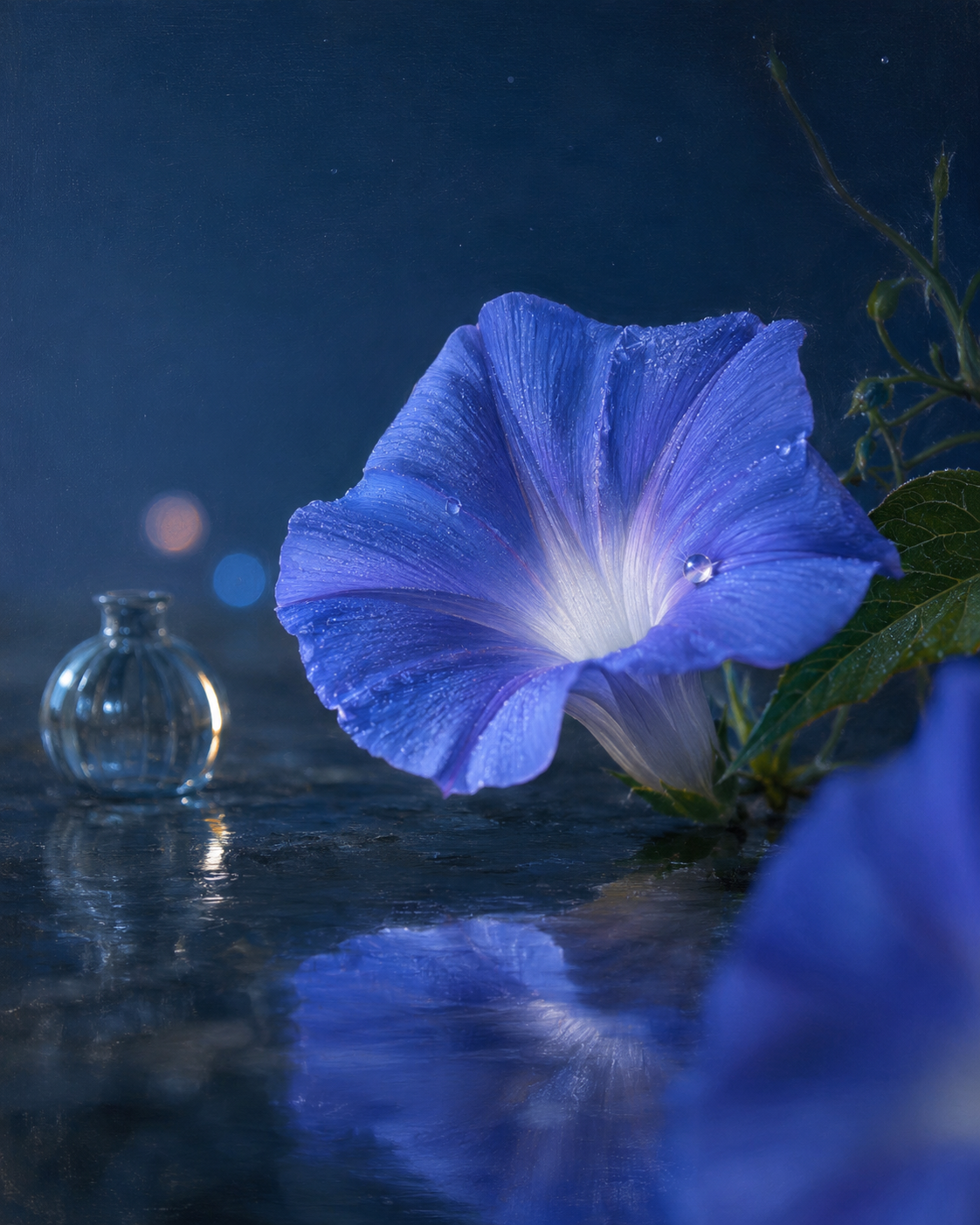
Indigo Night and the Crystal Vial
Critique
Introduction This nocturnal still life places a dewy blue morning glory beside a glass vase and wet reflection. Cool light, deep shadow, and the luminous throat make familiar objects mysterious. Description The trumpet bloom occupies center-right, cobalt petals fading to white at the base. Fine veins and droplets cover the folds; one large bead rests on the right petal. Dark leaves and budding stems rise at the edge. A ribbed vase at left catches gold light. Blue and amber bokeh punctuate the distance, while the tabletop mirrors softened violet. A blurred flower fills the lower corner. Analysis The bright throat is focal, and radial lines carry attention across wet petals. The vase provides a vertical counterweight to the broad bloom. Reflections double objects but dissolve boundaries, creating depth below the surface. Blue unifies flower, darkness, and water; amber accents prevent coldness. Sharp droplets, soft reflections, and distant circles mark recession. Interpretation and Evaluation The empty vase suggests absence or a place prepared for the flower, yet the bloom remains rooted. This creates tension between living growth and the wish to preserve beauty. Dew and reflection emphasize transience: one falls, the other changes with disturbance. The large clear droplet acts as a tiny lens concentrating the night without disturbing calm. Conclusion Through blue luminosity, reflective surfaces, and restrained warm sparks, the work turns a simple flower into an intimate night vision. The morning glory appears momentarily doubled and preserved, even as water and shadow remind us that its radiance is passing.
Same Subcategory
Similar Artworks
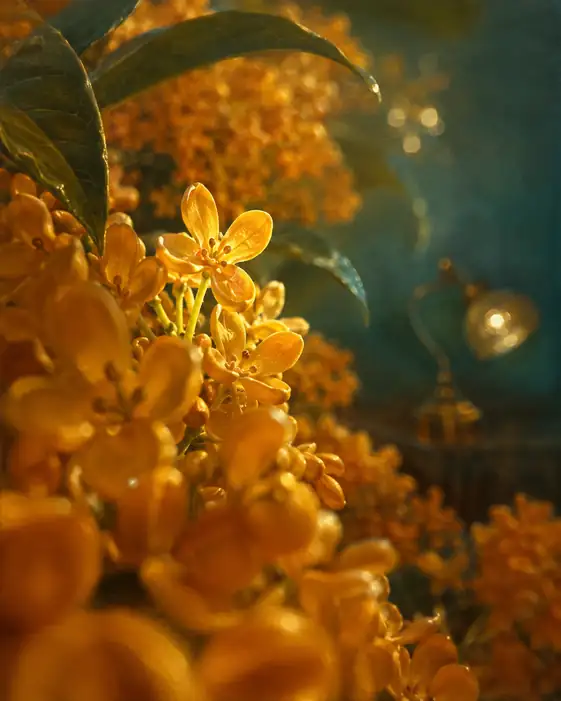 A Lone Star in the Golden Swarm
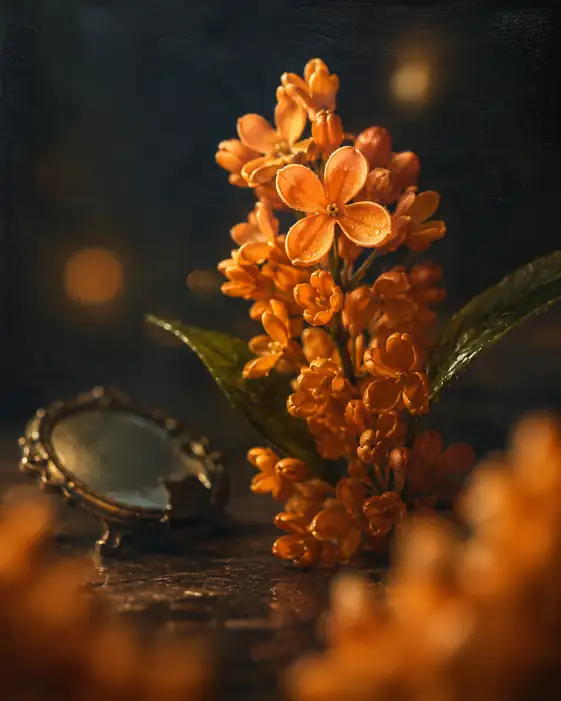 Amber Petals beside the Vintage Mirror
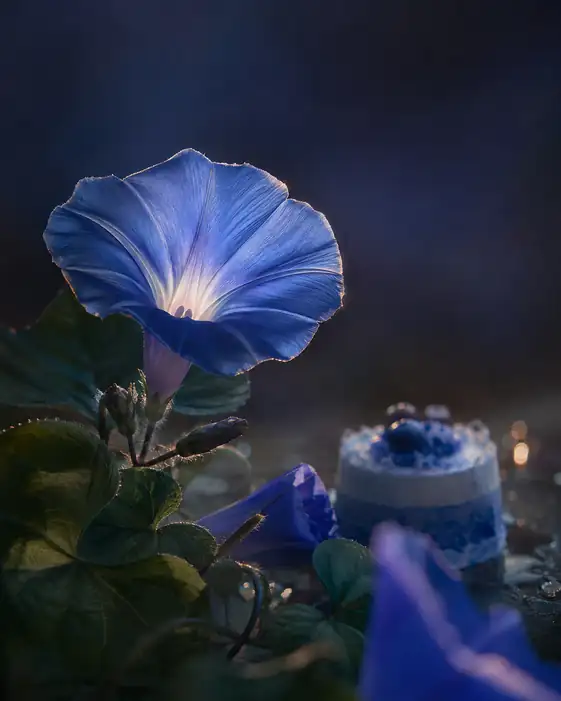 Little Feast in the Blue Twilight
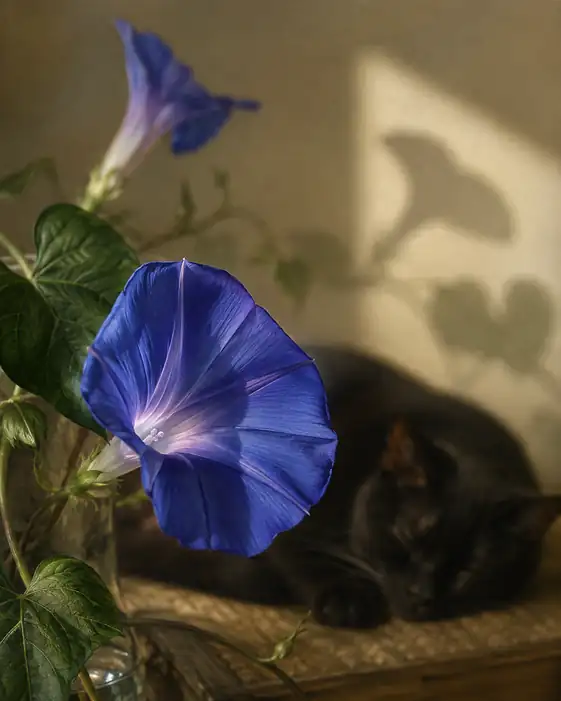 Slumber in the Sunlit Shadows
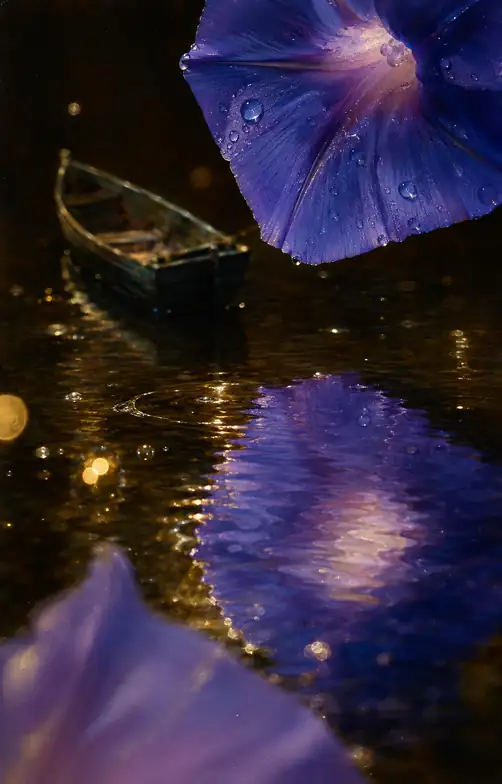 Rowing Through the Twilight Waters
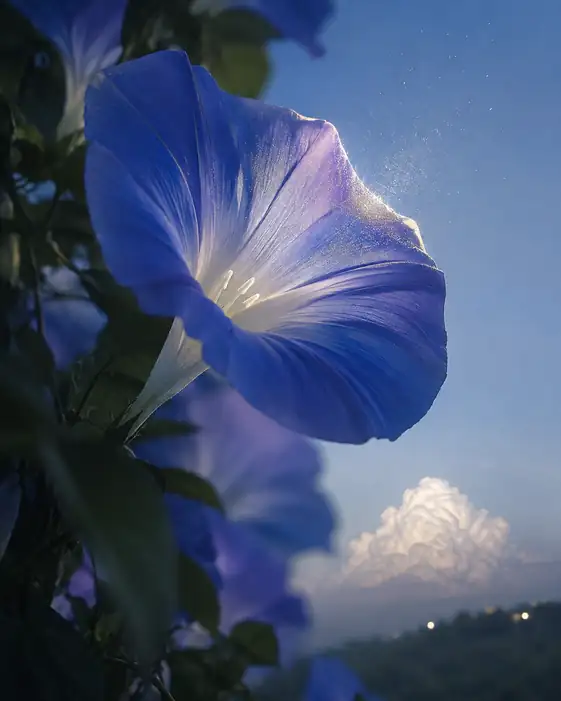 Breath of Light in the Azure Sky
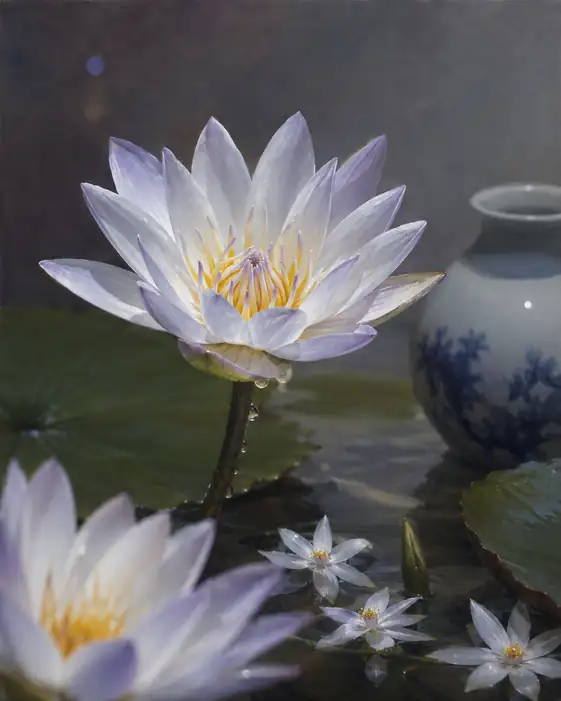 Water Lily and the Cobalt Porcelain
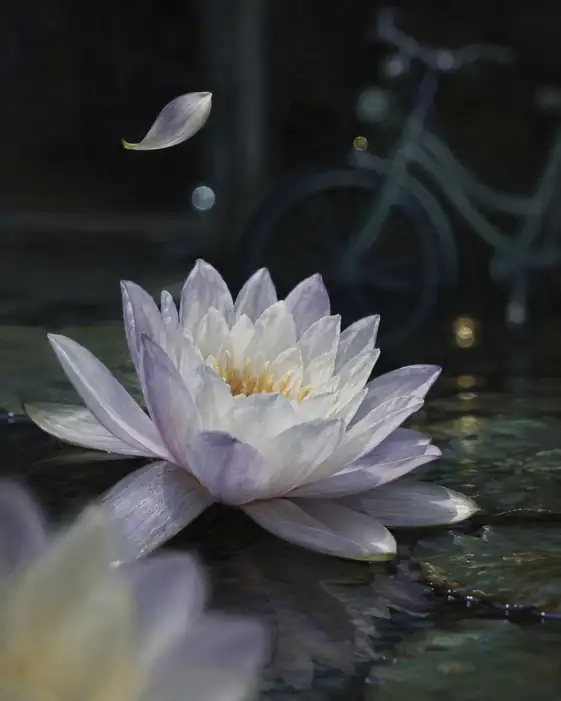 Floating Petal over the Night Pool
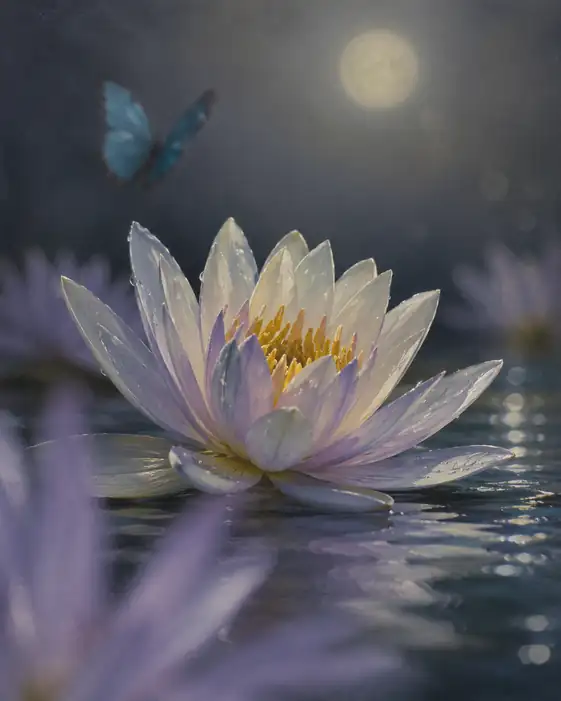 Hazy Moon, Water Lily, and the Blue Butterfly
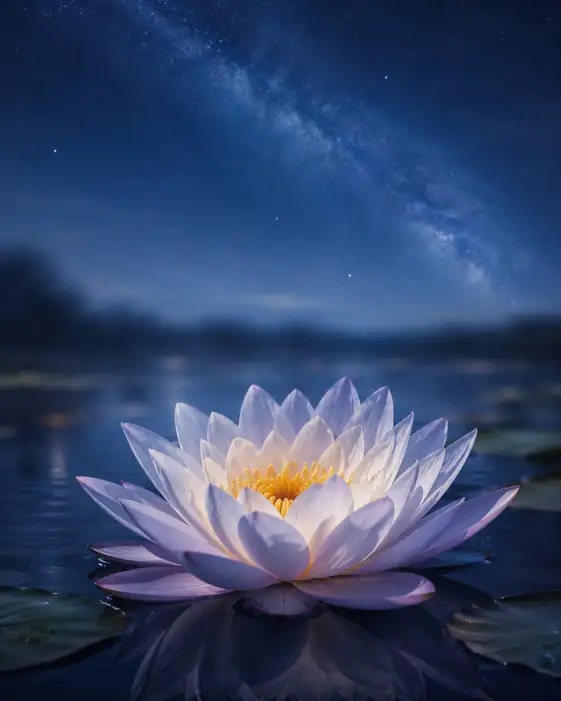 Lotus Blossoming in the Starry Night