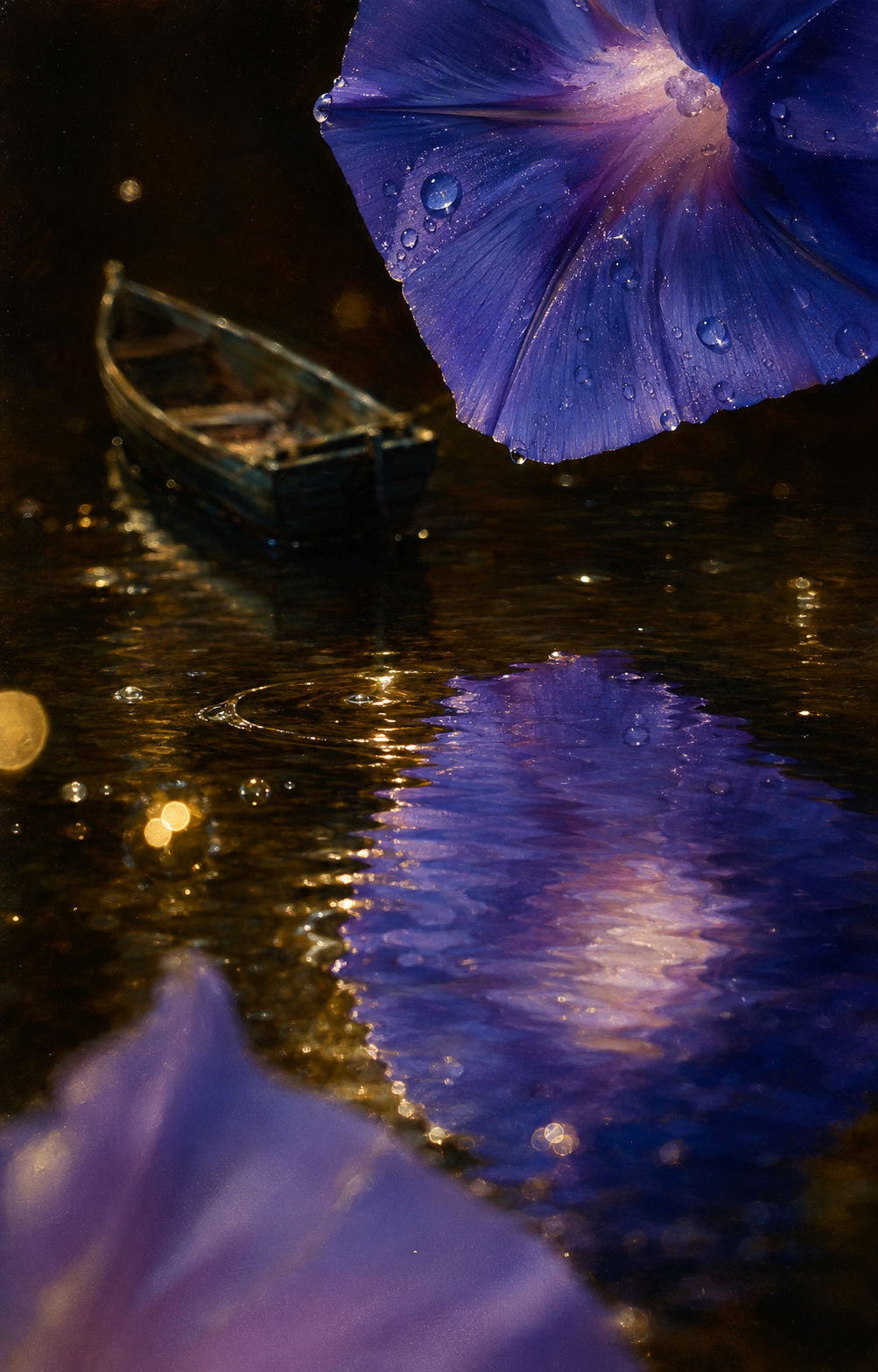
Rowing Through the Twilight Waters
Critique
Introduction This painting joins a dew-covered morning glory, wavering reflection, and empty boat within dark golden water. Unlikely scale creates a dream where botanical detail becomes shelter and destination. Description Part of a blue-violet trumpet fills the upper right, its glowing throat near the corner. Clear droplets bead its veined surface and rim. Below, dark water catches amber highlights and circular ripples. A broad violet reflection stretches through lower right. At upper left, a weathered boat floats in shadow. A blurred purple form crosses the foreground. Analysis Two diagonal masses—the cropped flower and expanded reflection—frame dark water leading toward the boat. Sharpness alternates with blur: droplets are tangible, while vessel and foreground remain uncertain. Violet and gold enrich the darkness. Circles recur as dew, bokeh, bubbles, and ripples, unifying different scales. The severe crop enlarges the flower’s imagined presence. Interpretation and Evaluation The empty boat suggests passage, waiting, or an absent traveler. Beside the immense flower, it navigates a world made from reflection and memory. Petal droplets answer rings below, linking suspended and fallen water, anticipation and consequence. The space remains unresolved. Warm points keep darkness inviting, while unstable reflection introduces melancholy and change. Conclusion By placing a modest boat between a monumental blossom and its liquid double, the painting turns scale into narrative. Its dense violet-gold night feels both intimate and boundless, suggesting a quiet voyage through beauty that can be seen clearly only for a moment before it breaks into ripples.
Same Subcategory
Similar Artworks
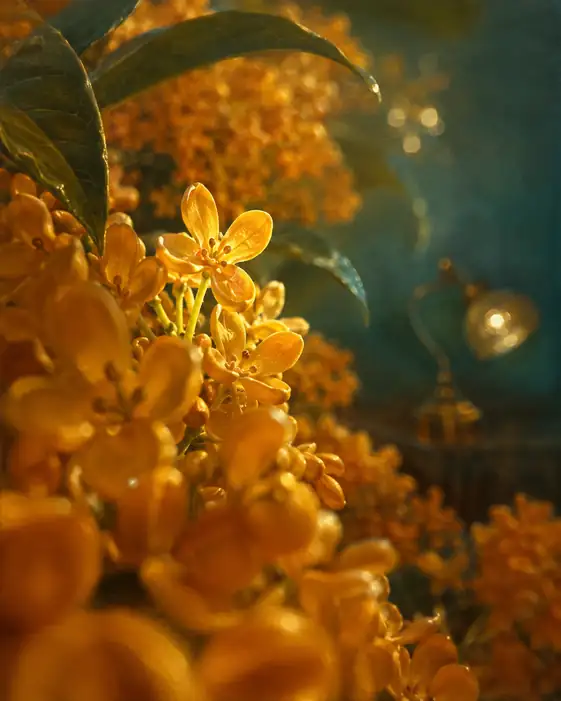 A Lone Star in the Golden Swarm
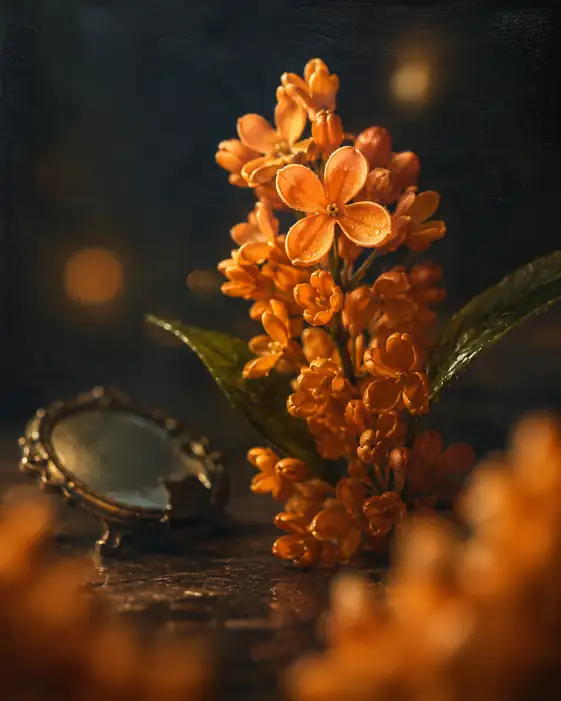 Amber Petals beside the Vintage Mirror
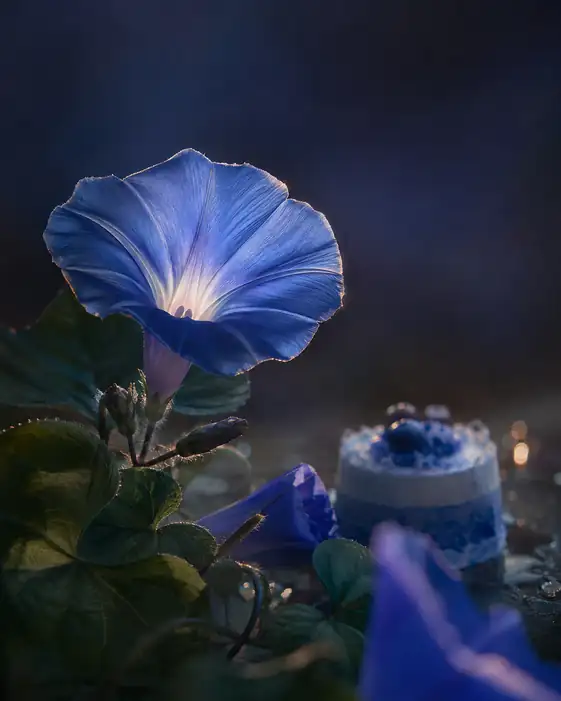 Little Feast in the Blue Twilight
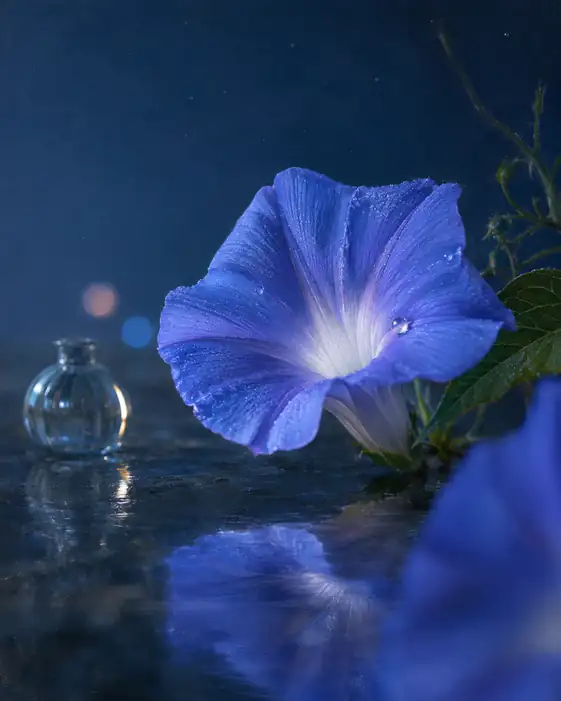 Indigo Night and the Crystal Vial
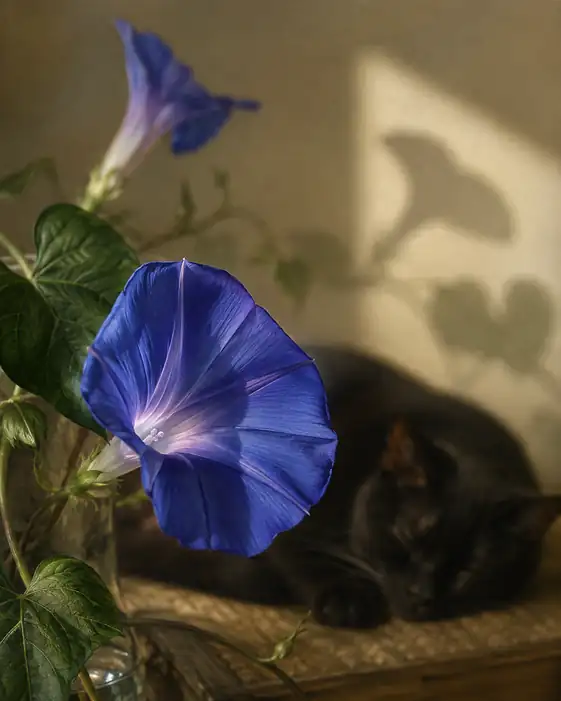 Slumber in the Sunlit Shadows
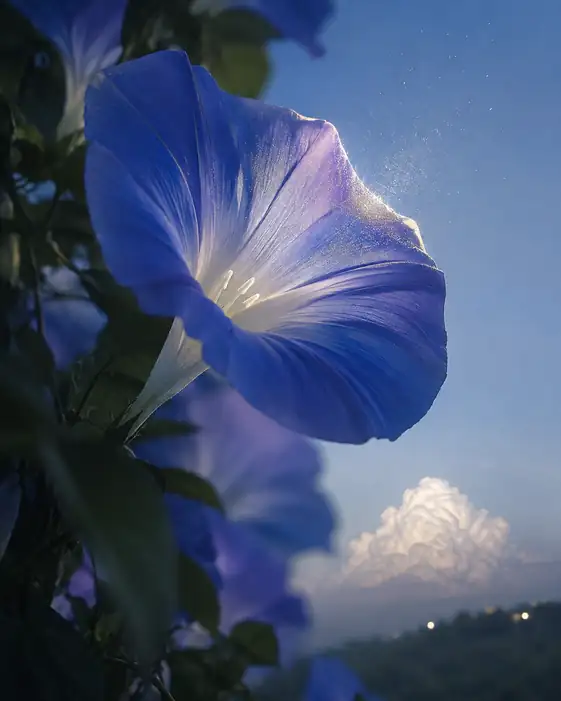 Breath of Light in the Azure Sky
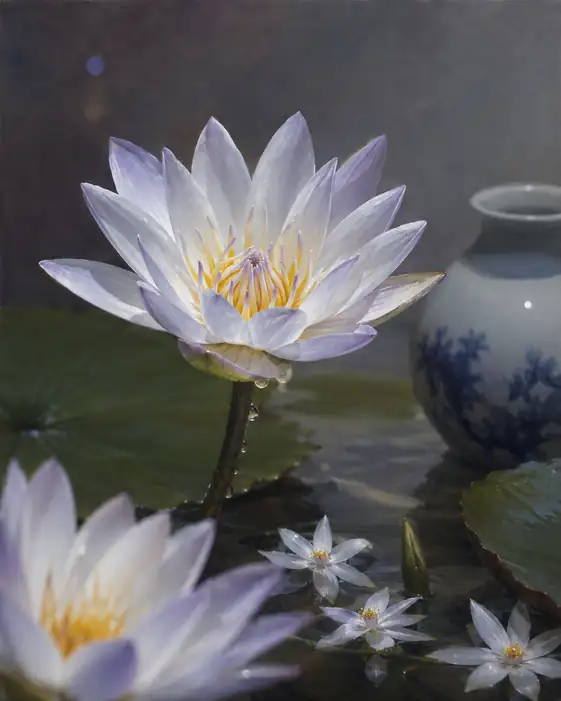 Water Lily and the Cobalt Porcelain
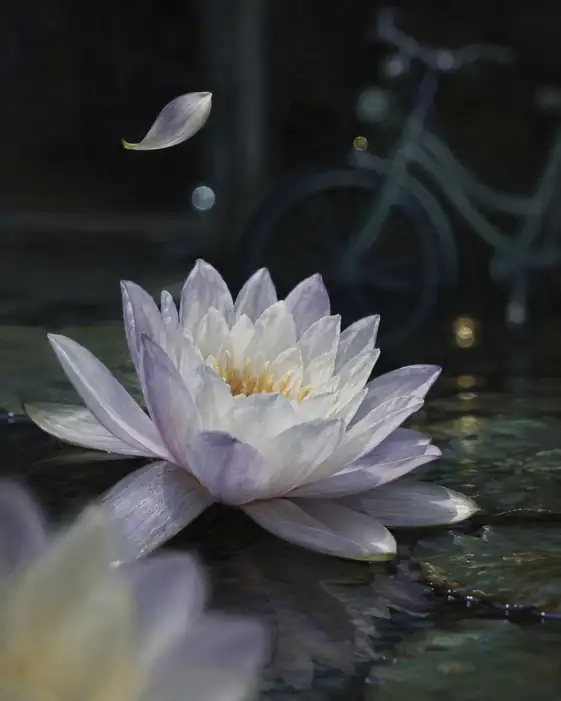 Floating Petal over the Night Pool
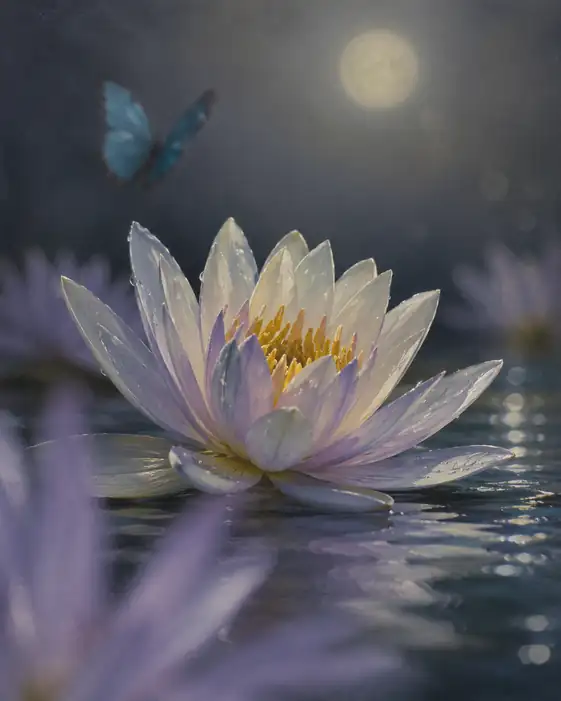 Hazy Moon, Water Lily, and the Blue Butterfly
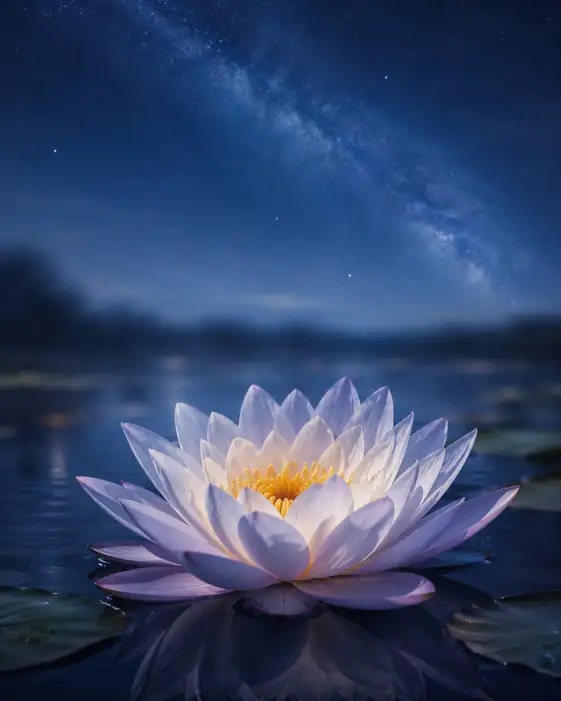 Lotus Blossoming in the Starry Night