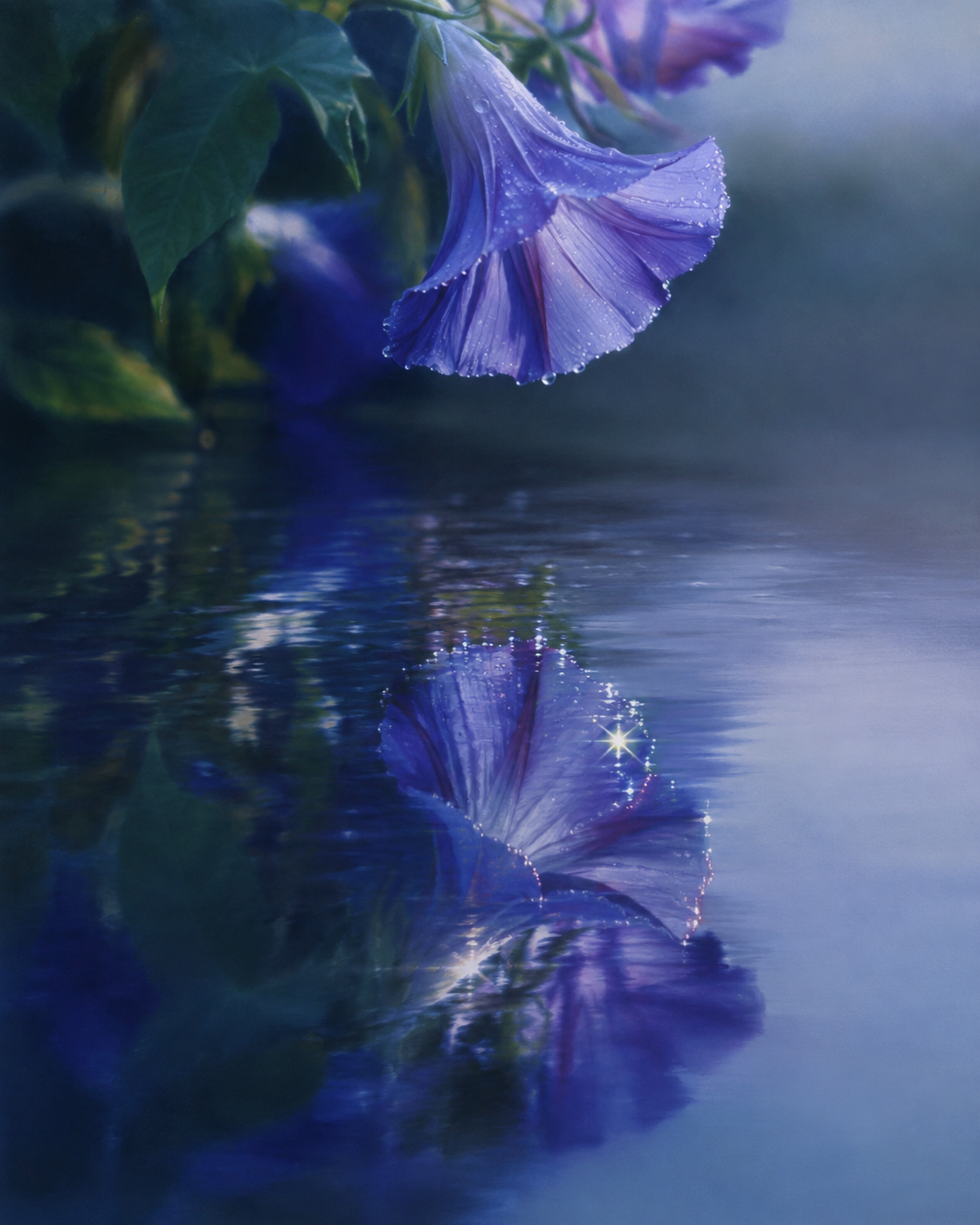
Mirage on the Still Water
Critique
Introduction This painting suspends a lavender-blue morning glory above still water and makes its reflection nearly a second flower. The scene studies doubling, gravity, and the fragile boundary between object and image. Description The bloom hangs from upper center, scalloped petals washed in blue and violet and beaded with moisture. Dark leaves and stems anchor it above. Misty water receives an elongated, inverted reflection across the center and lower field. Ripples soften its contours. Two star-like highlights glint amid blue-gray haze. Analysis The vertical axis provides clarity and calm. The tangible blossom is compact and crisp; its mirrored double stretches, fades, and breaks into bands. Concentrated form and dispersed image create tension without disrupting stillness. Blues unify air, flower, and water, while green leaves add weight. Paired lights prevent passive repetition. Interpretation and Evaluation Reflection raises questions of identity, memory, and impermanence. The downward flower seems to look into a world that resembles but cannot preserve it. Water transforms the bloom through distance and motion, suggesting perception alters what it receives. Minimal surroundings let edge, transparency, and ripple carry emotion, creating melancholy without heaviness. Conclusion By giving the reflection almost as much visual presence as the flower itself, the work makes uncertainty beautiful. The suspended bloom, wavering double, and two quiet sparks form a lucid meditation on appearance and disappearance, held within an atmosphere of cool tenderness and profound repose.
Same Subcategory
Similar Artworks
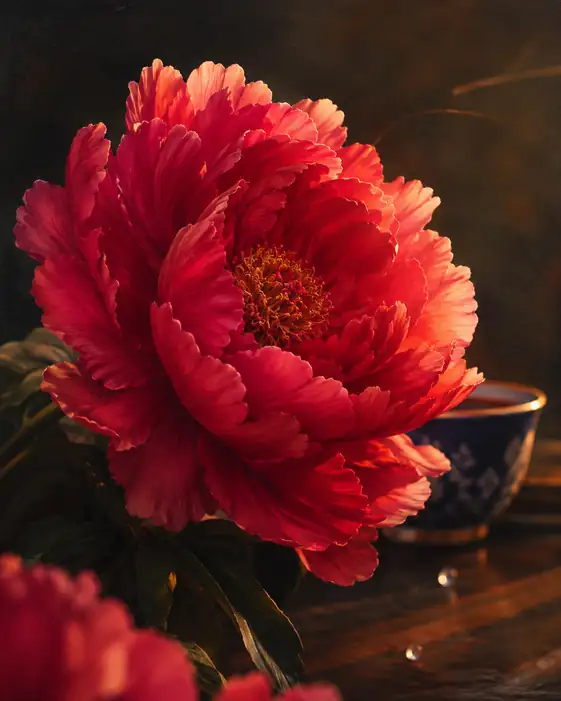 Crimson Banquet in the Evening Glow
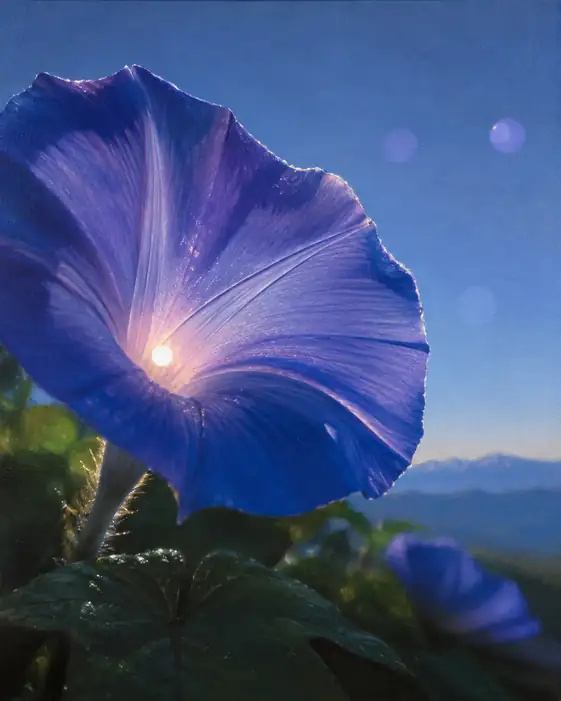 Azure Bloom Cradling the Morning Light
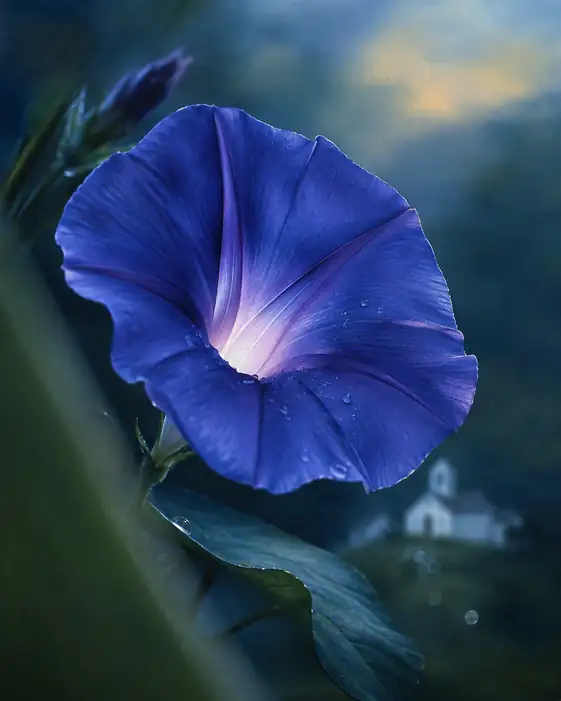 Dawn Prayer and the Azure Corona
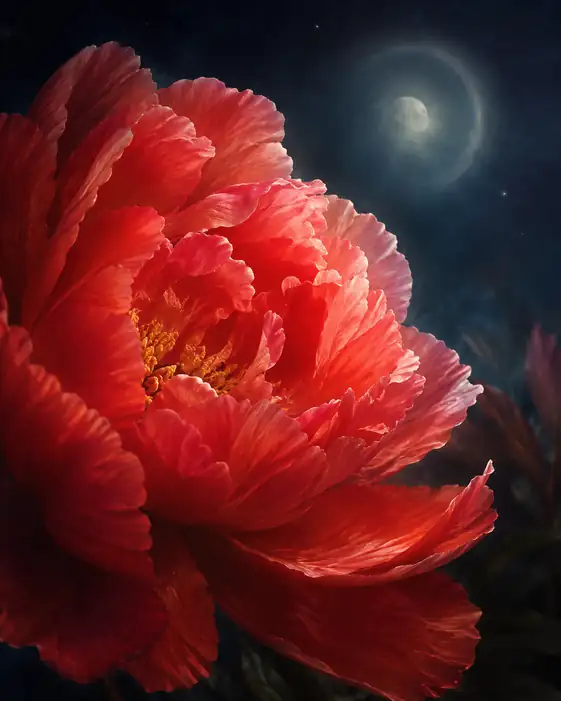 Crimson Bloom Beneath the Haloed Moon
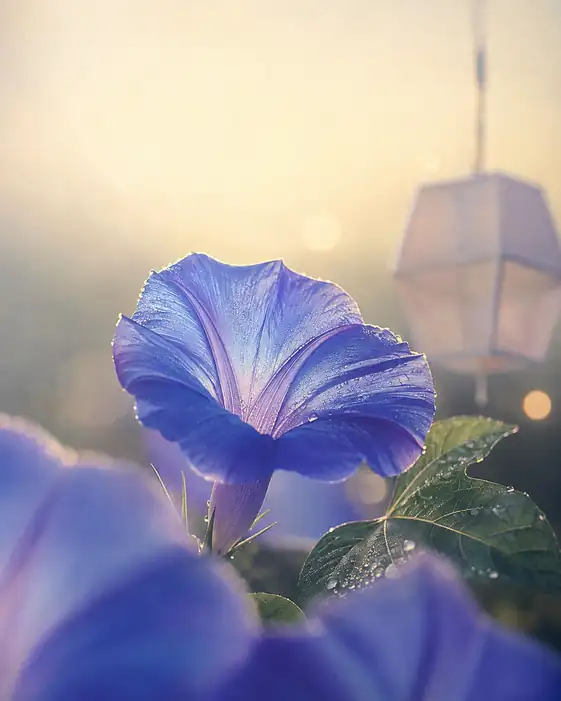 Lantern's Glow over Morning Dew
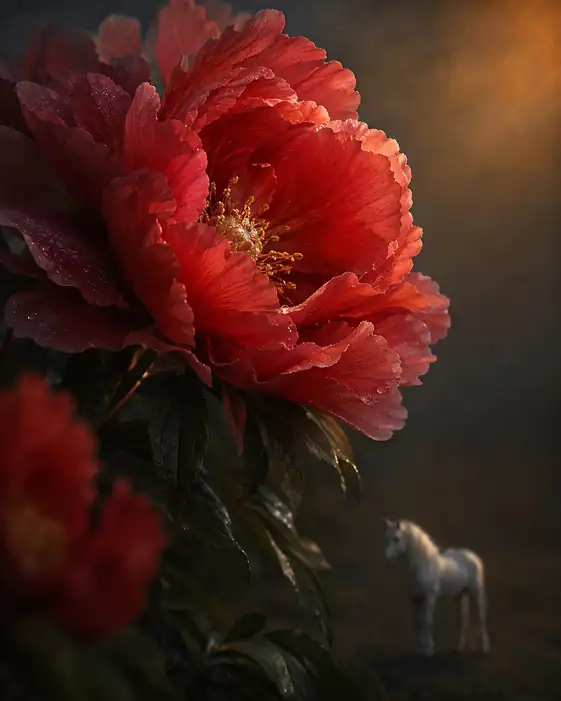 Crimson Reverie and the White Steed
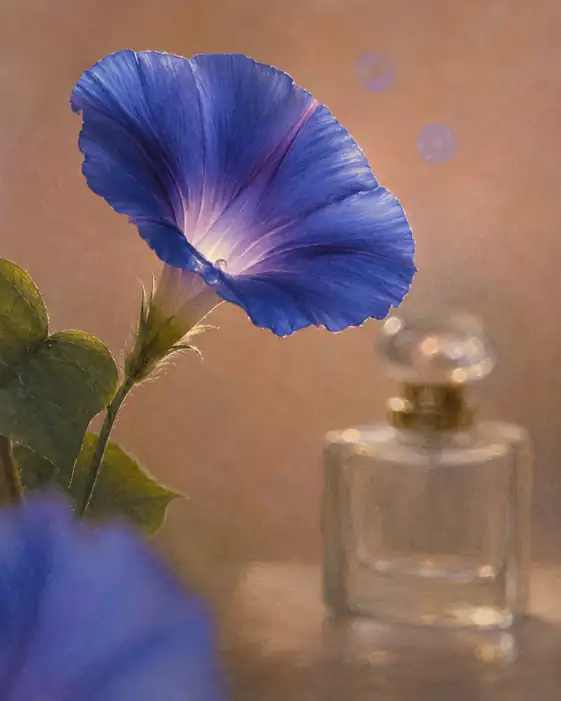 Azure Morning and Scent of Dawn
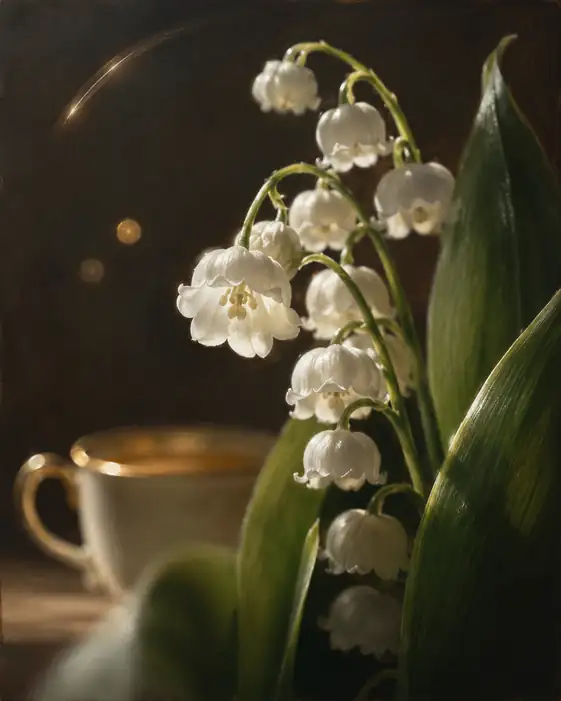 Midnight Tea and Starlit Bells
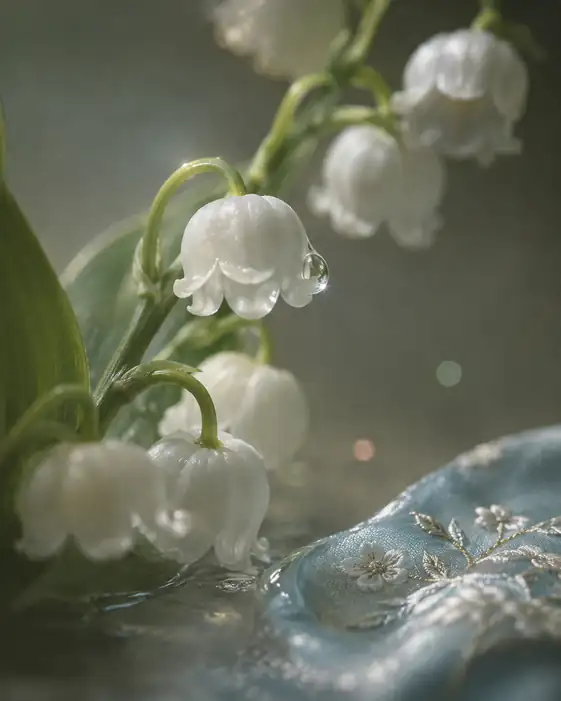 Whispering Dewdrop on Silk and Petals
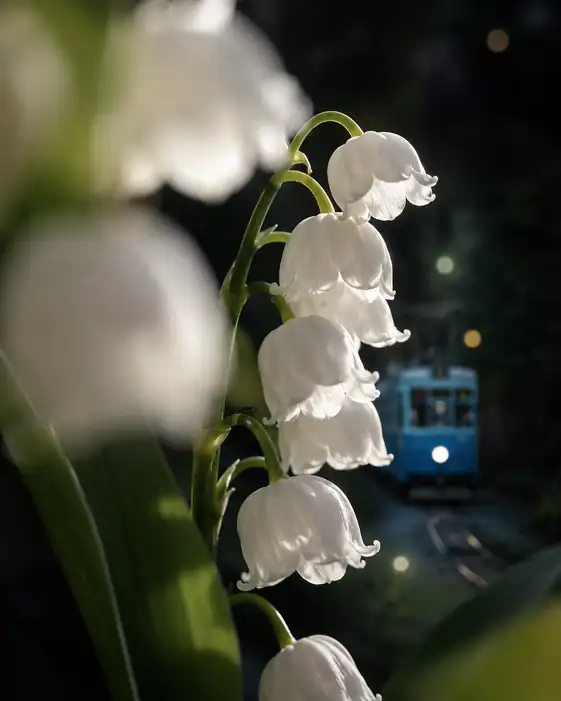 White Bells Along the Night Rails