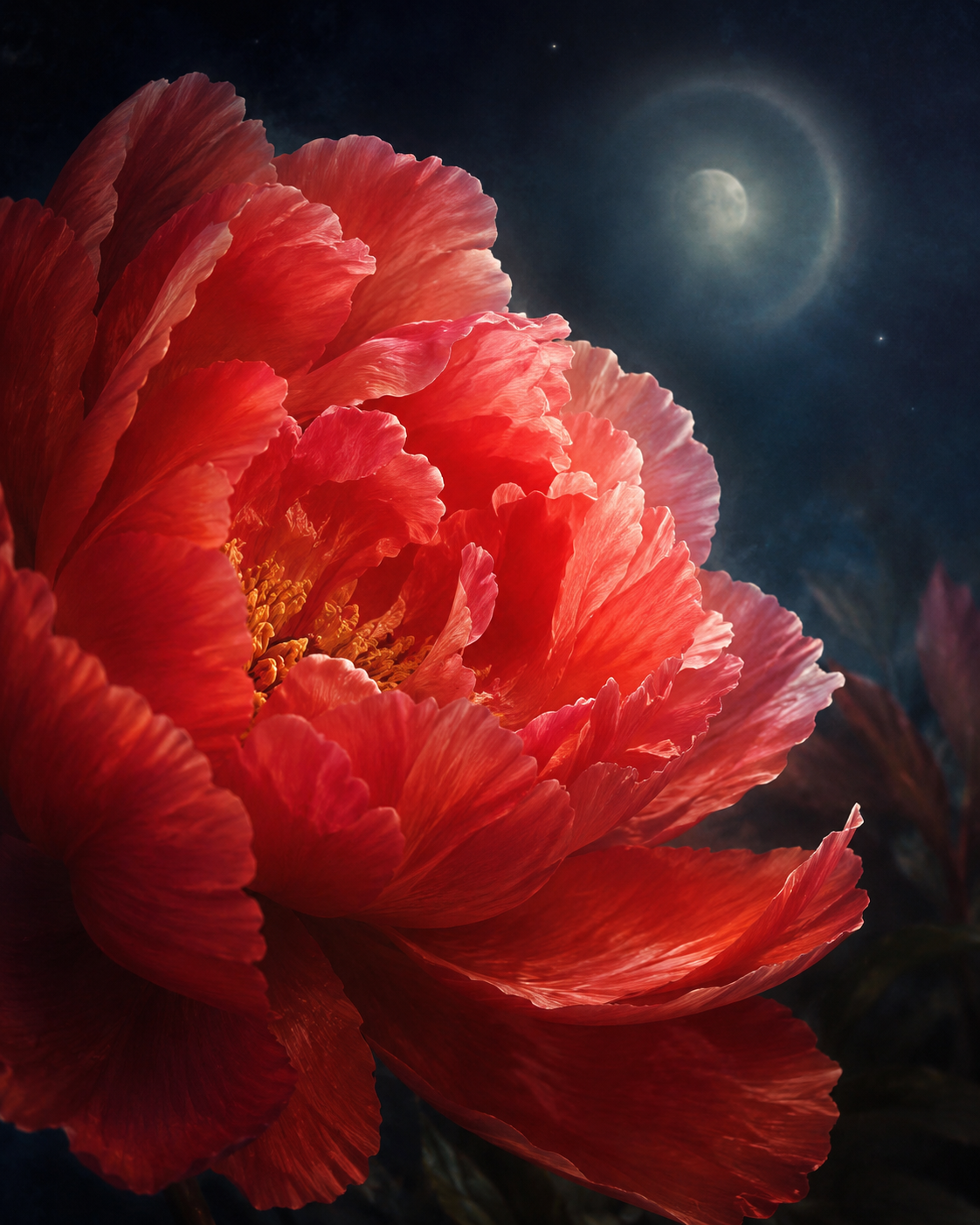
Crimson Bloom Beneath the Haloed Moon
Critique
Introduction This painting combines a red peony’s immediacy with the remote stillness of a moonlit sky. The flower becomes an earthly counterpart to the haloed moon, evoking radiance, scale, and nocturnal wonder. Description An immense peony fills the left and lower image. Crimson and coral petals curl around golden stamens, with warm light catching their edges. Dark leaves appear beneath. In the blue-black upper right, a pale moon sits within a smoky ring. Sparse stars pierce the darkness as garden and sky merge. Analysis Two luminous centers stabilize the composition: the expansive flower and compact moon. Their diagonal placement prevents the bloom from overwhelming the frame. Warm reds advance against receding blue, producing depth and drama. Petal arcs echo the moon’s halo across the void. Edge lighting preserves layered volume. Interpretation and Evaluation The pairing compares earthly flowering and celestial cycles. The peony’s brief abundance may represent embodied life, while the moon suggests recurrence and distance. Both remain persuasive sources of light and gravity. Few stars and restrained detail let opulence coexist with solitude, avoiding excess despite saturated color. Conclusion By echoing the moon’s halo in the unfolding architecture of petals, the work joins garden and cosmos without explaining their connection. Its contrast of warm nearness and cool distance creates a lush but contemplative night, in which a flower appears momentarily as vast and mysterious as the sky.
Same Subcategory
Similar Artworks
 Crimson Banquet in the Evening Glow
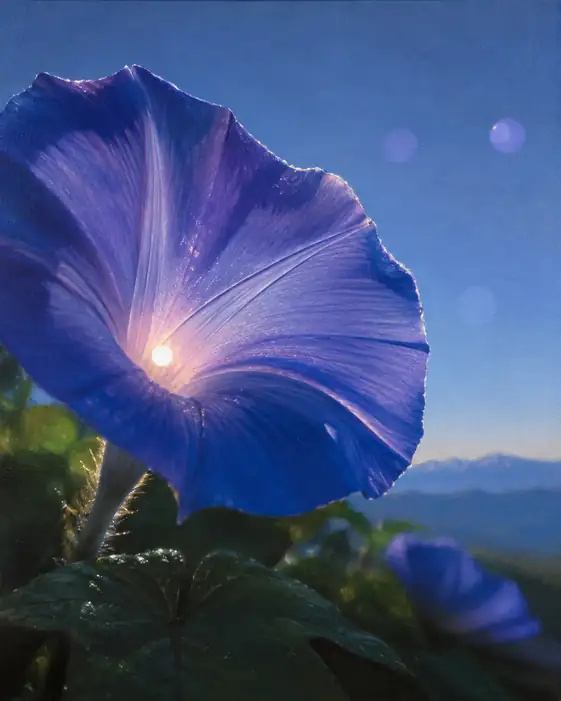 Azure Bloom Cradling the Morning Light
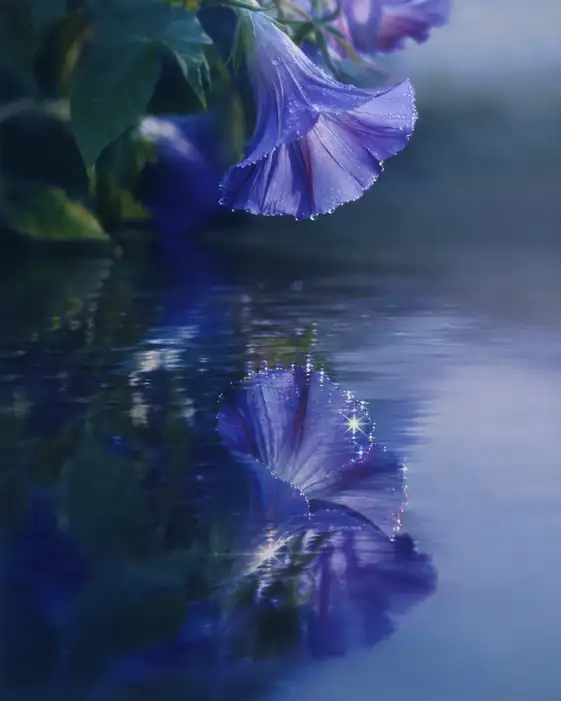 Mirage on the Still Water
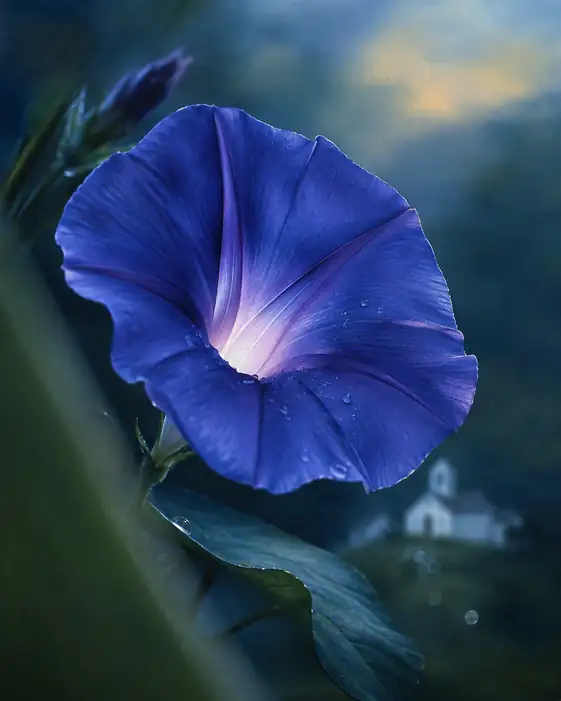 Dawn Prayer and the Azure Corona
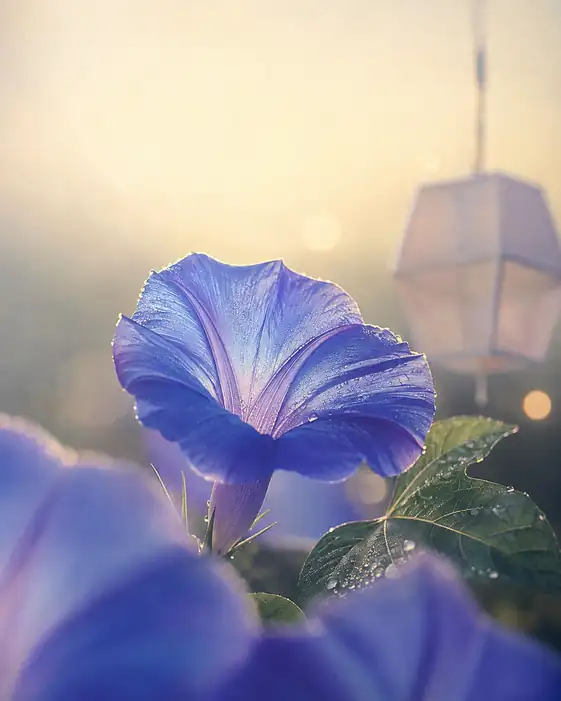 Lantern's Glow over Morning Dew
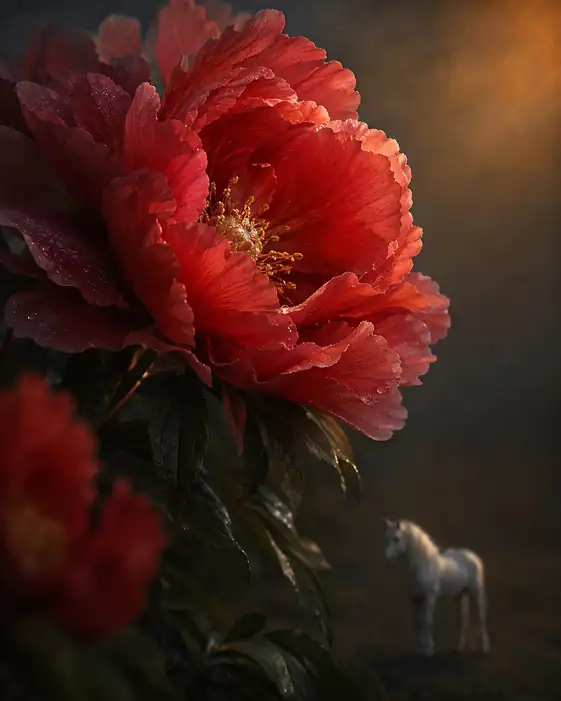 Crimson Reverie and the White Steed
 Azure Morning and Scent of Dawn
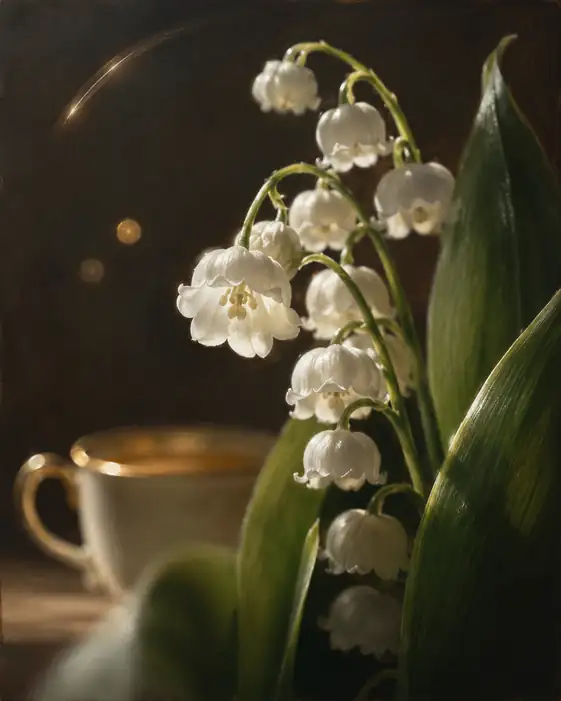 Midnight Tea and Starlit Bells
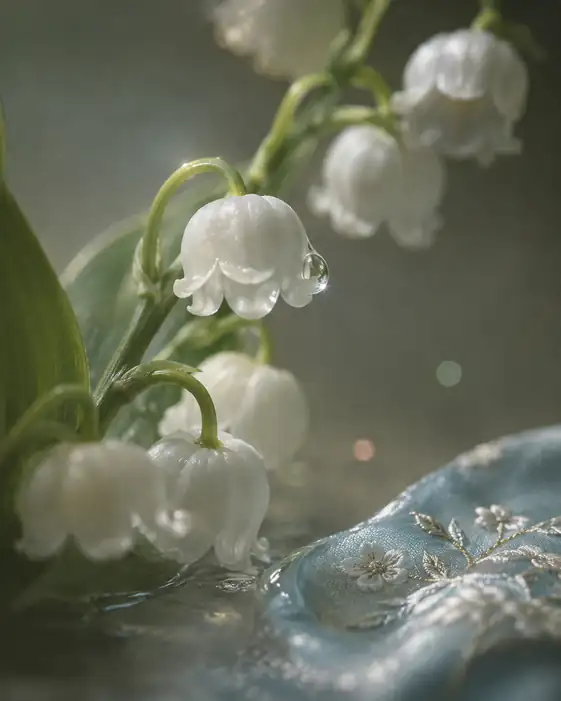 Whispering Dewdrop on Silk and Petals
 White Bells Along the Night Rails