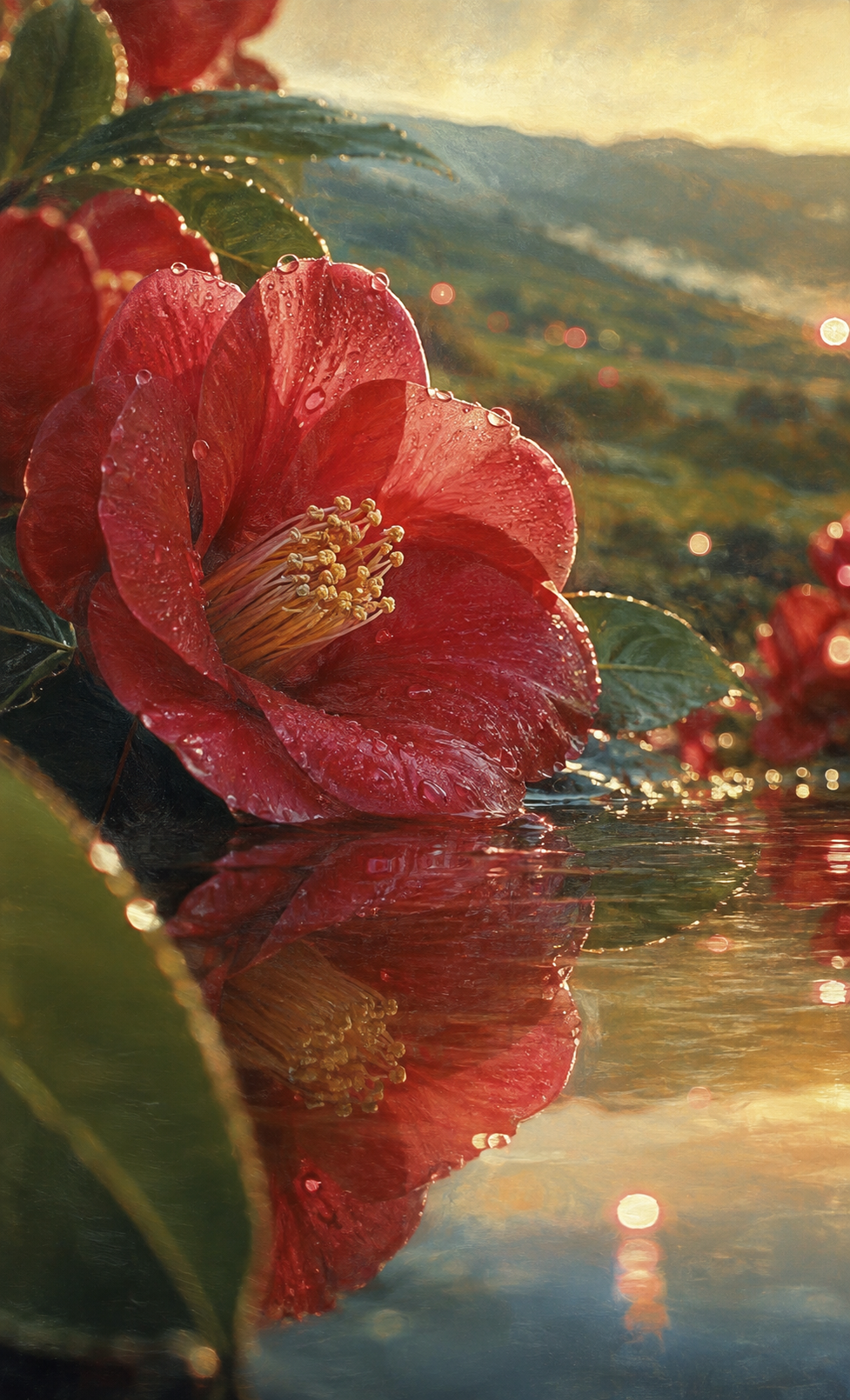
Camellia at Twilight Waterside
Critique
Introduction This painting places a rain-covered red camellia at the edge of reflective water, overlooking layered green mountains in warm light. Flower, landscape, and mirror image create a broad meditation on nearness, weather, and distance. Description The main bloom occupies the left center, its open crimson petals carrying beads and thin streams of water around a cluster of ocher stamens. Glossy leaves arc above and beside it. Other camellias recede along the right edge. Below, the water holds an inverted red reflection and scattered gold highlights; behind, green slopes, a pale winding band, and distant ridges fade beneath a bright sky. Analysis The flower's rounded mass anchors the foreground against the landscape's long horizontal layers. Warm rim light traces droplets and leaf edges, while cooler greens and blue-gray mountains create recession. The reflected blossom doubles the red downward, balancing the bright upper sky. Sharp moisture and petal texture gradually yield to softened terrain, making depth legible. Interpretation and Evaluation The temporary water image connects the brief freshness of rain with the longer duration of the mountains. Light appears across bloom, reflection, and distant paths as repeated small points. Detailed wet surfaces, coherent atmospheric perspective, and controlled warm-cool color demonstrate strong technique. Combining intimate flower study with expansive terrain gives the work distinctive scope. Conclusion Initial floral richness gradually becomes a dialogue among immediate touch, reflected change, and remote continuity. The painting's layered composition allows every distance to participate in the same luminous weather.
Same Subcategory
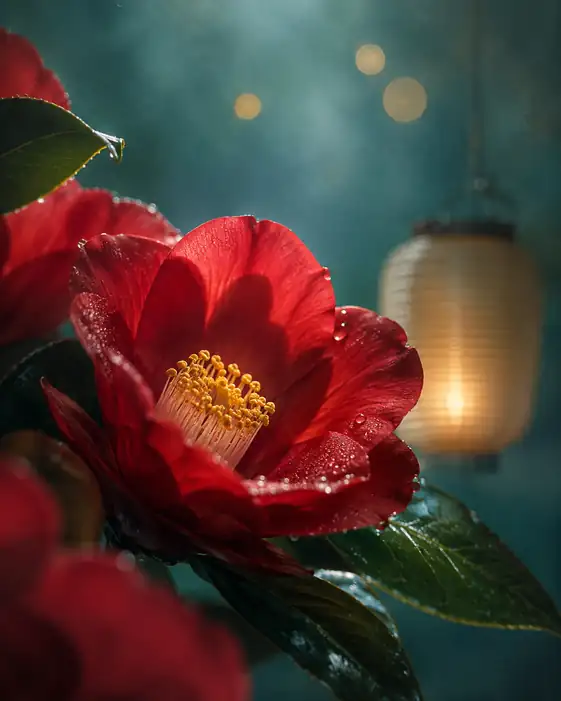 Crimson Camellia Beside Lantern Light
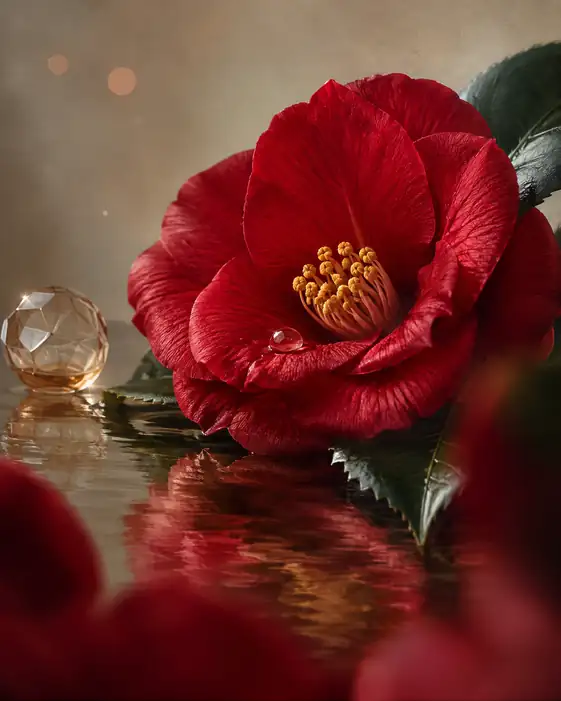 Red Camellia and Cut Crystal
Similar Artworks
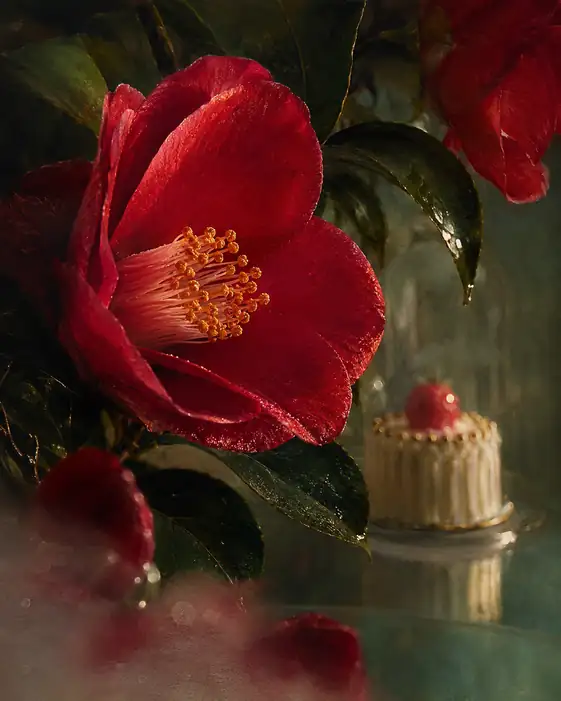 Crimson Camellia and Strawberry Cake
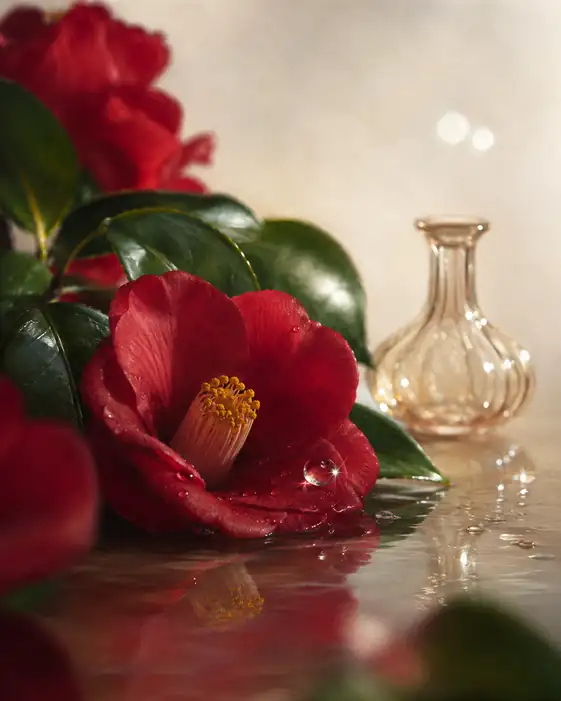 Dewdrop Camellia and Amber Flask
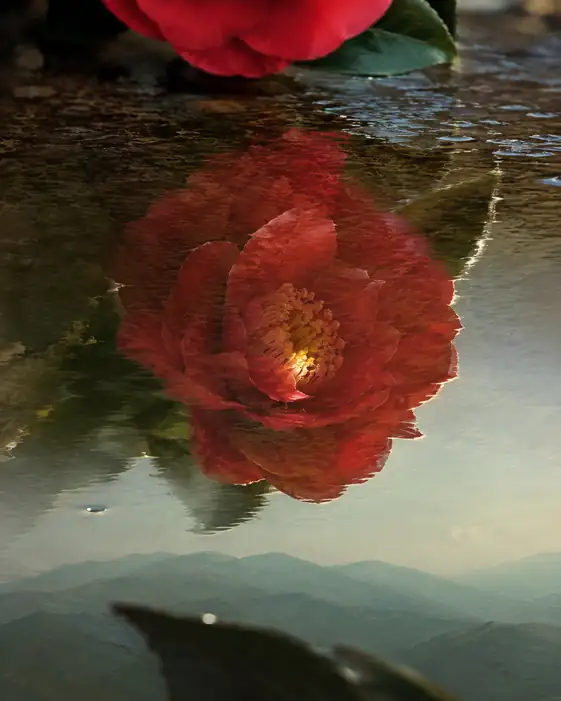 Camellia Mirage on Serene Waters
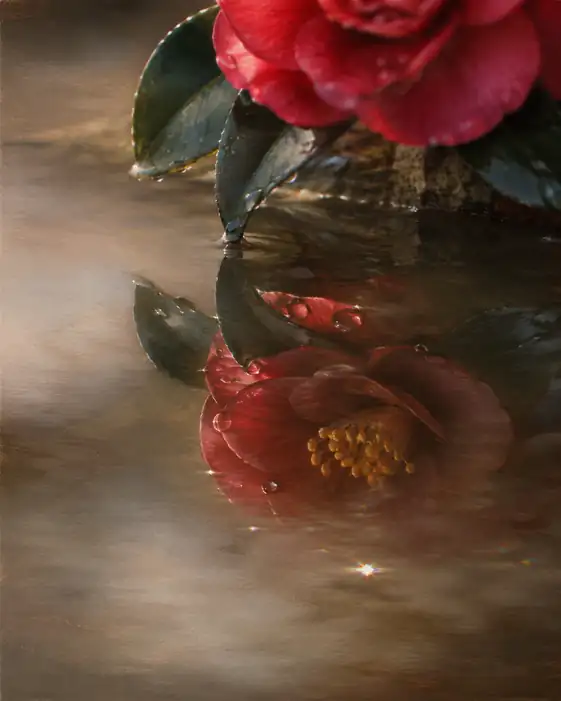 Floating Camellia on Sunlit Stream
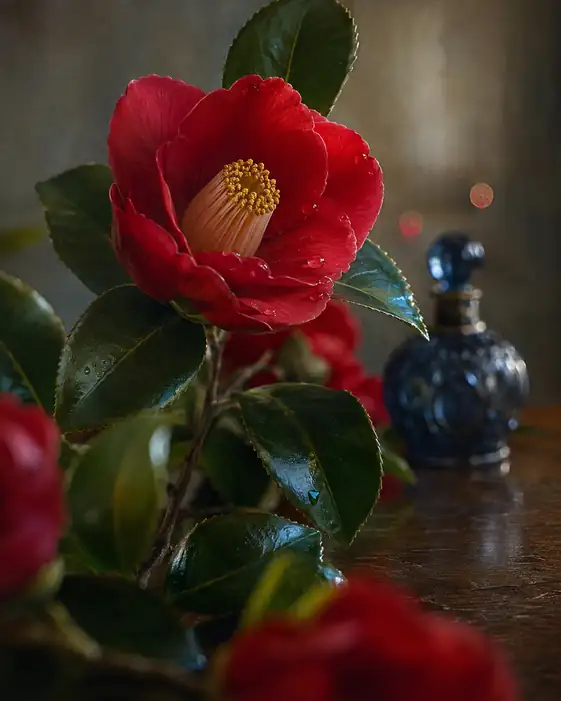 Red Camellia and the Cobalt Bottle
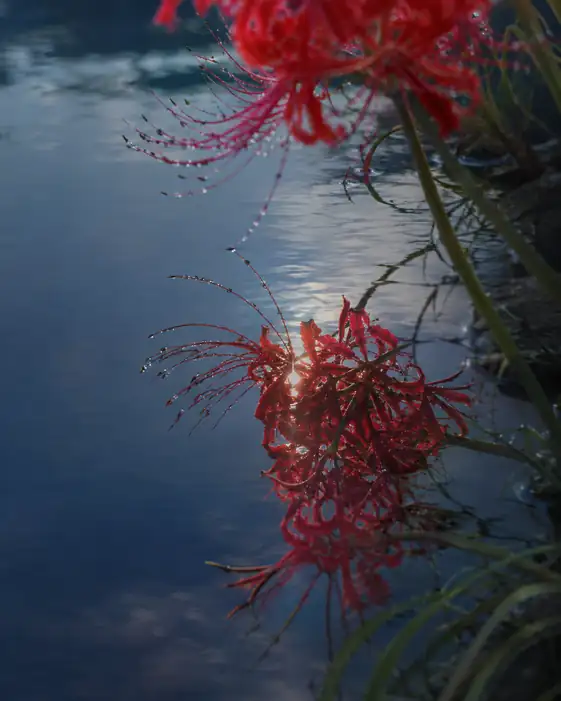 Twilight Solitude by the Waters
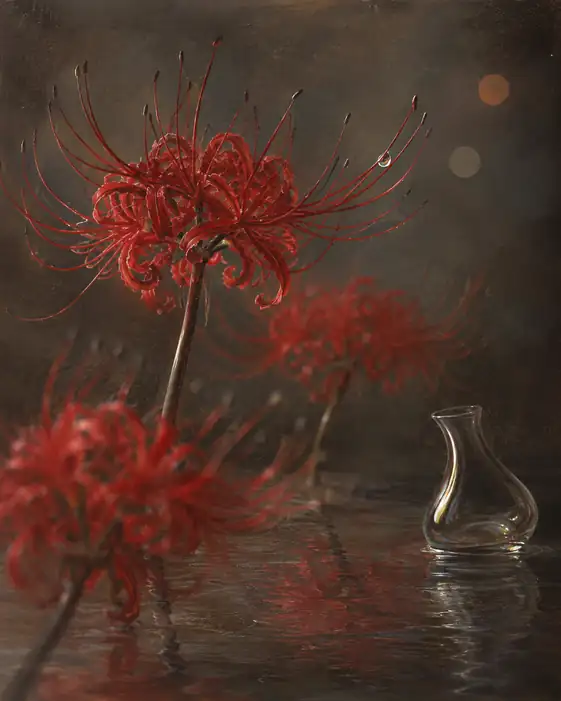 Lycoris and the Empty Glass Vase
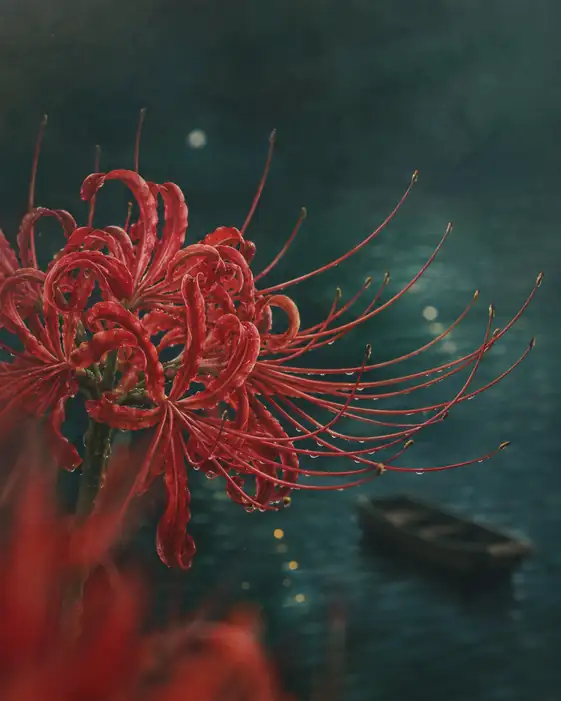 Red Lycoris and the Wooden Skiff
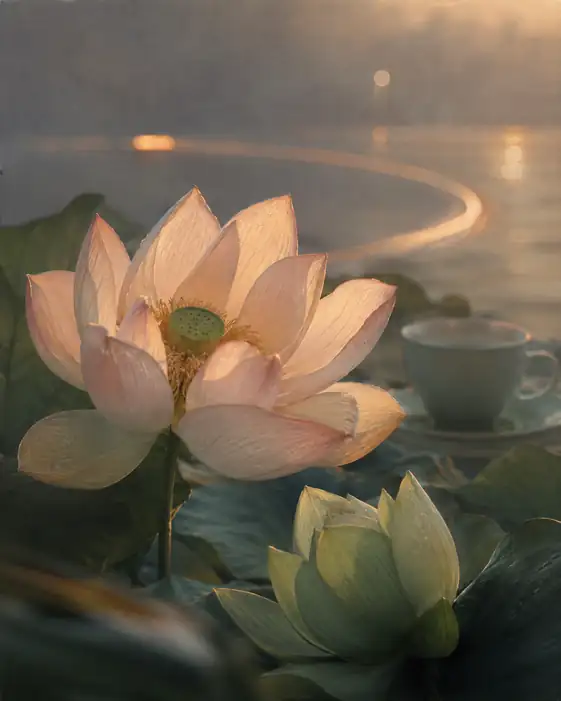 Morning Tea by the Lotus Shore
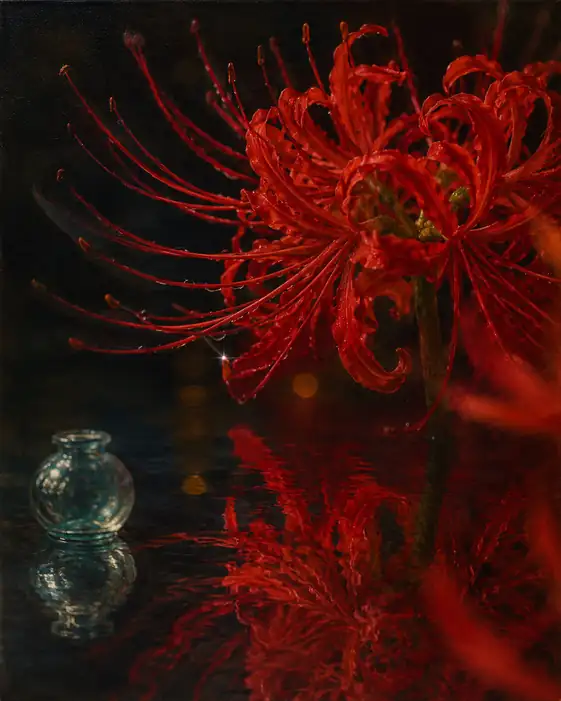 Crimson Reflection and Blue Glass