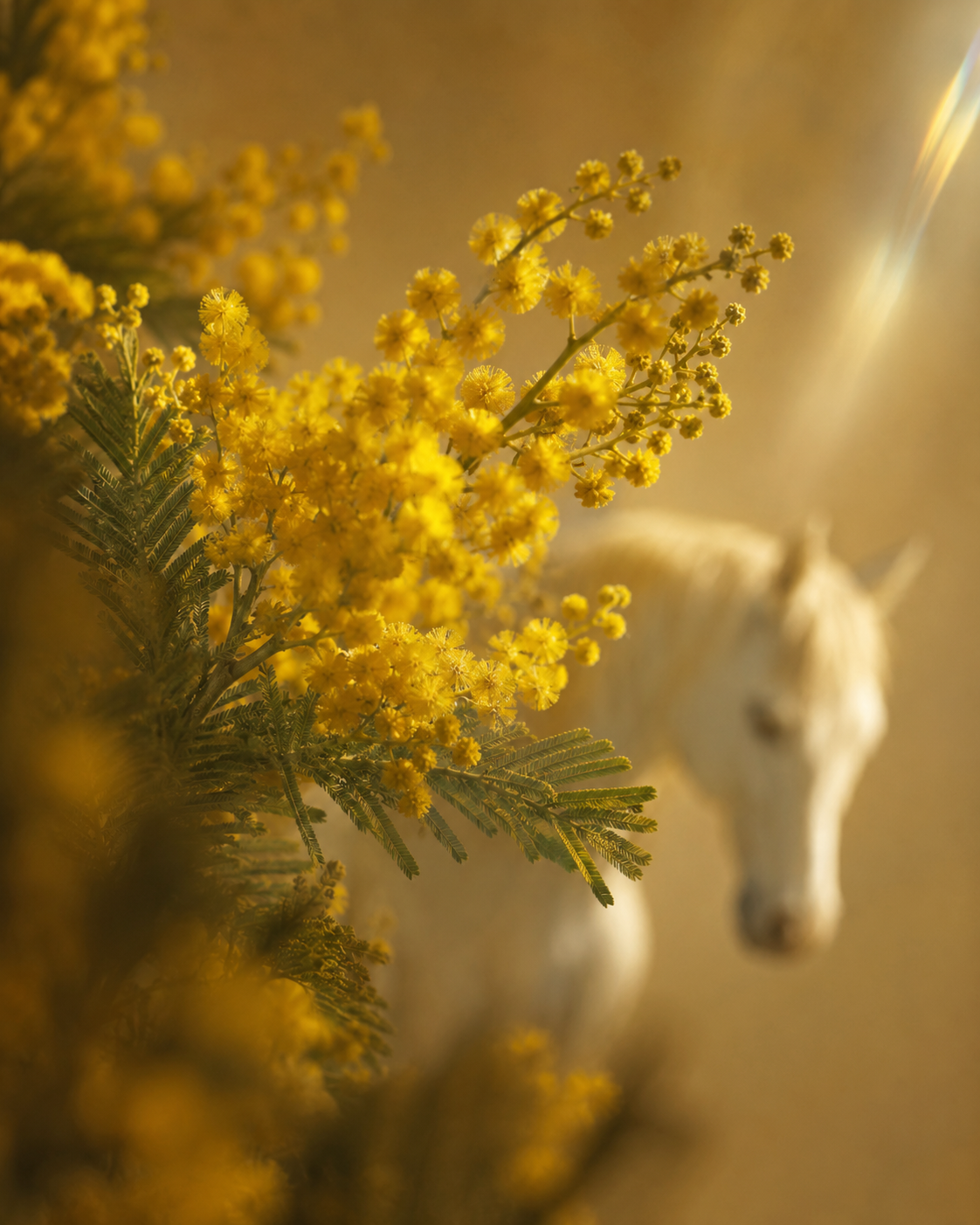
Golden Mimosa and the White Stallion
Critique
Introduction This painting places bright yellow mimosa before a white horse emerging from warm golden haze. The sharp botanical foreground and softened animal create an intimate encounter structured through scent, approach, and selective attention. Description Dense flowering sprays occupy the left and center, mixed with dark fern-like leaves. Several stems reach upward and right, carrying both fuzzy round blossoms and clustered buds. A white horse stands behind them at right, its lowered head, ears, shoulder, and foreleg visible but out of focus. A prismatic shaft enters from the upper-right corner, and blurred yellow forms frame the lower edge. Analysis The flowers' diagonal reach leads directly toward the horse's face. Fine leaves and circular blooms contrast with the animal's large simplified planes. Golden color unifies the scene, while green foliage and the horse's gray shadows preserve depth. Focus remains firmly on the mimosa; the horse's blur makes it an approaching presence rather than an equal descriptive subject. Interpretation and Evaluation The lowered head suggests attention to the flowers, yet the distance between muzzle and branch keeps the encounter unresolved. Delicate botanical detail and the horse's substantial body represent different scales of sensitivity. Controlled focus, nuanced monochromatic light, and coherent composition demonstrate technical skill. The rare pairing offers originality without forcing a narrative beyond what is visible. Conclusion What first appears as a warmly decorative animal scene becomes a study of cautious nearness. The painting's golden atmosphere and clear focal hierarchy allow fragility and strength to coexist quietly.
Same Subcategory
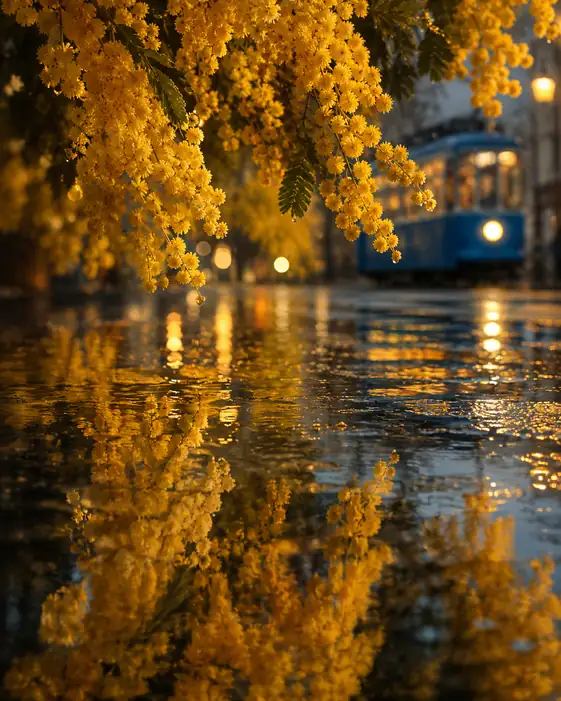 Rain-Reflected Mimosa and Evening Tram
Similar Artworks
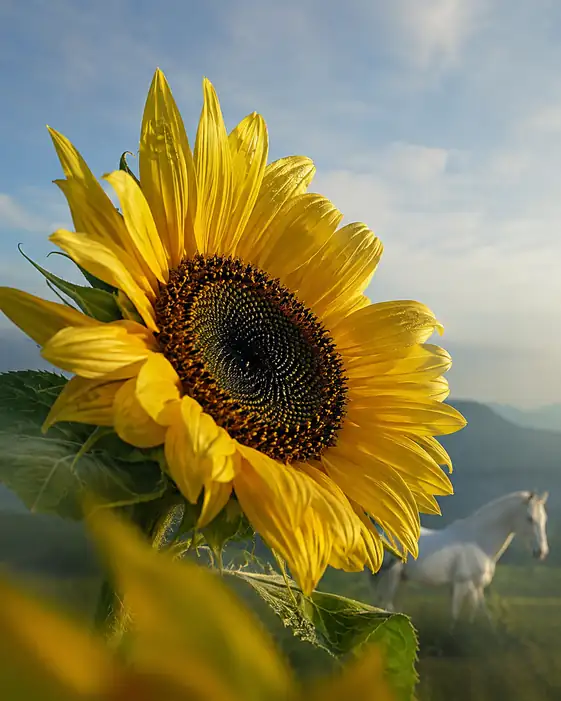 Pastoral Reverie with Sunflower and Steed
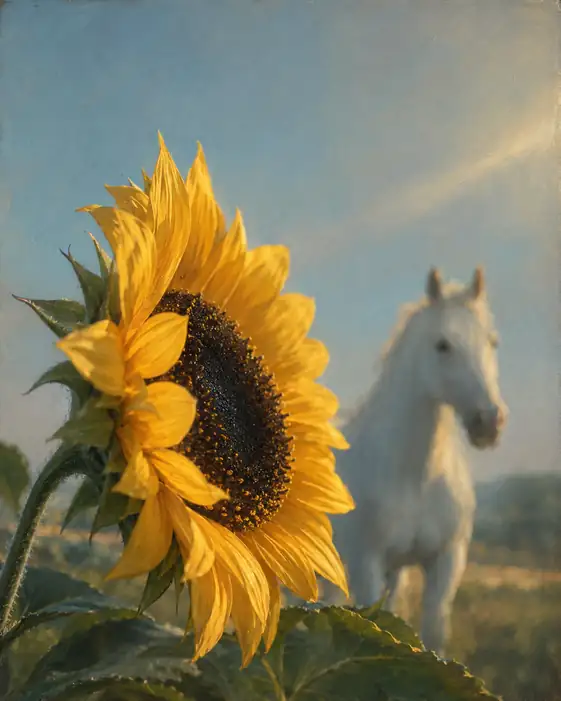 Morning Light on Petals and Steed
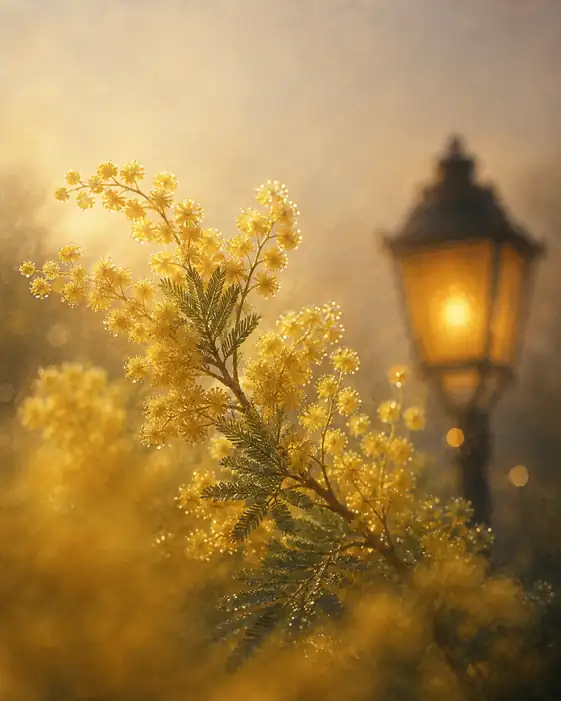 Golden Mimosa by the Morning Streetlamp
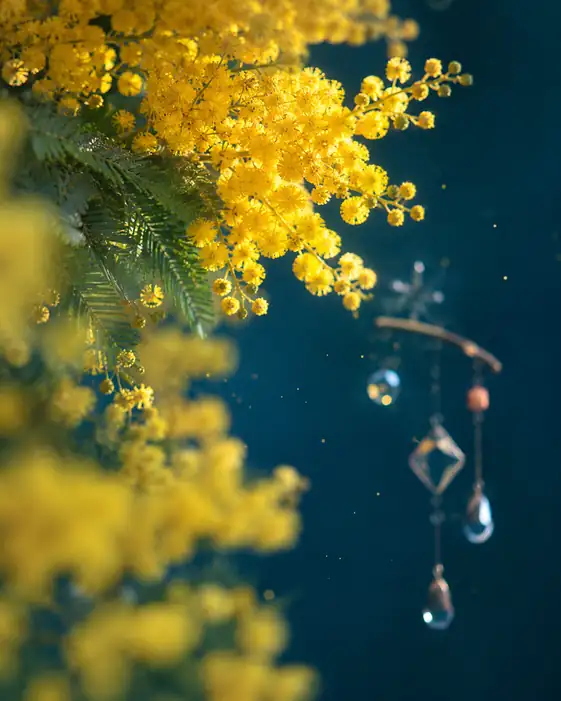 Golden Mimosa and Crystal Suncatcher
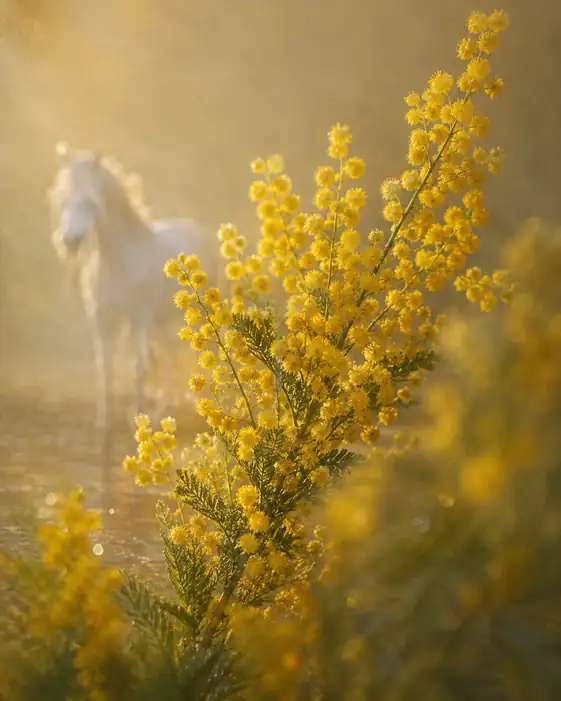 White Steed in Golden Morning Mist
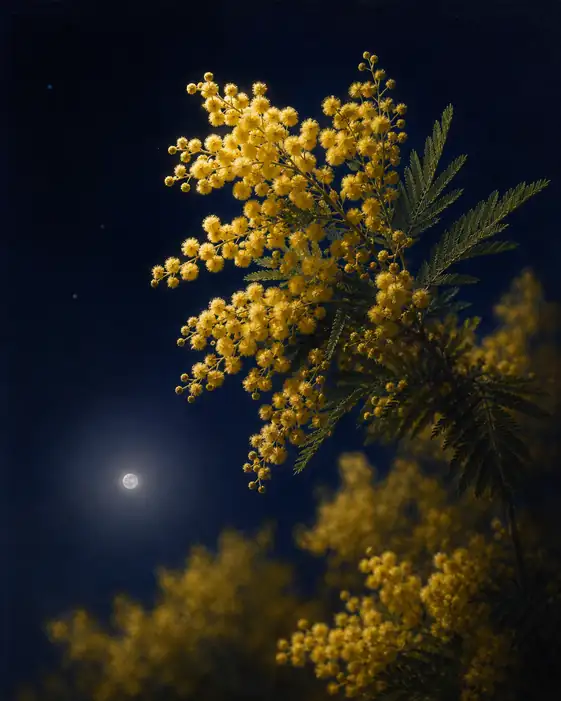 Mimosa Blossoms Beneath the Moon
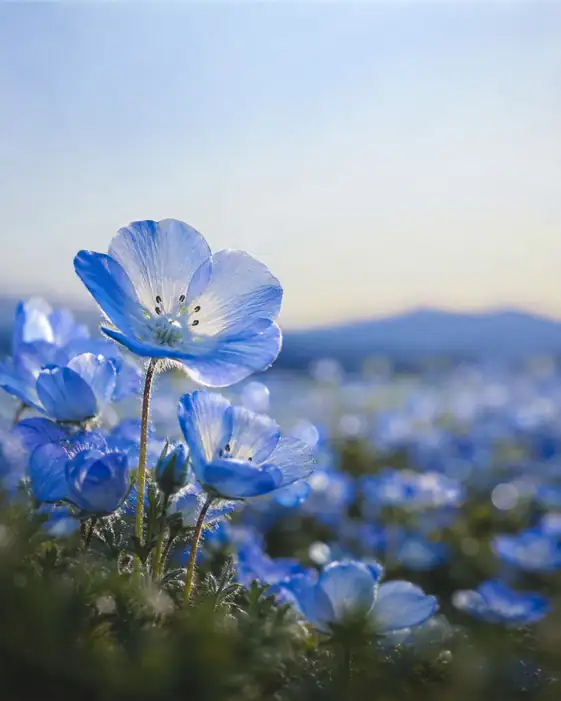 Translucent Blue Petals at Dawn
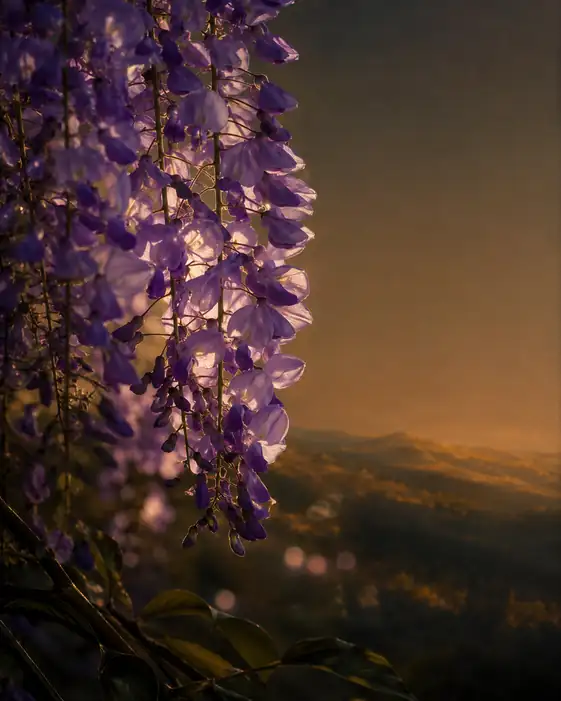 Amber Horizon and Falling Wisteria
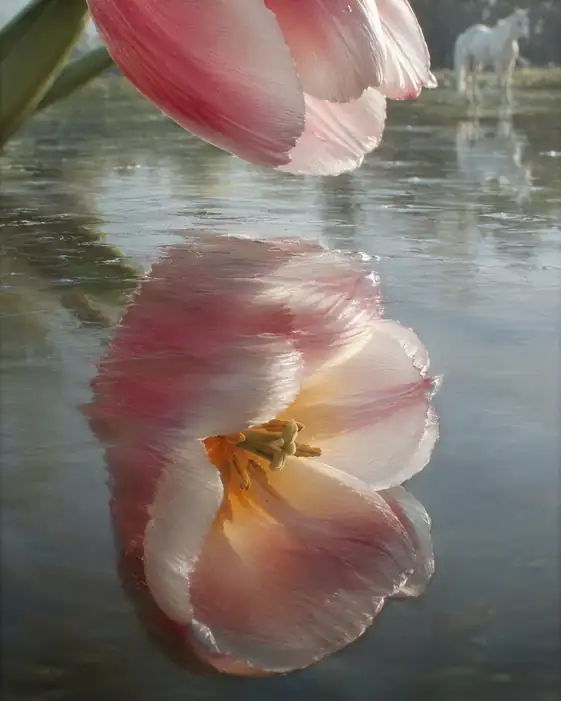 White Steed and Tulip Reflection
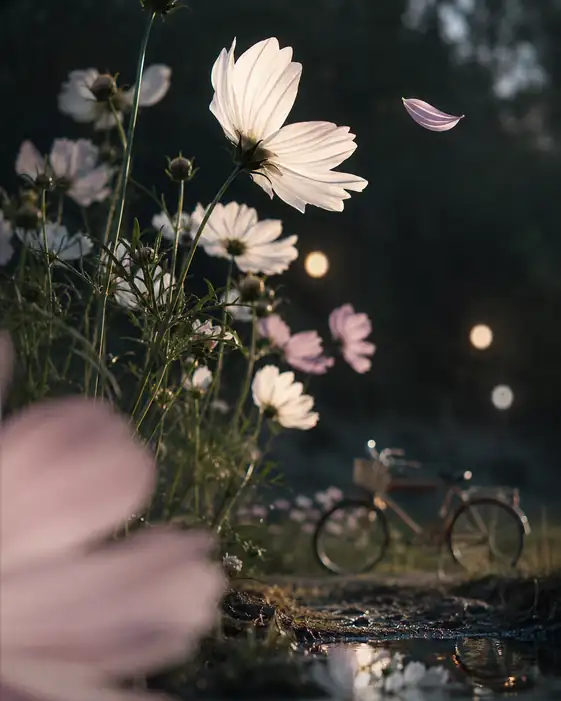 Twilight Breeze and Bicycle in Cosmos Field