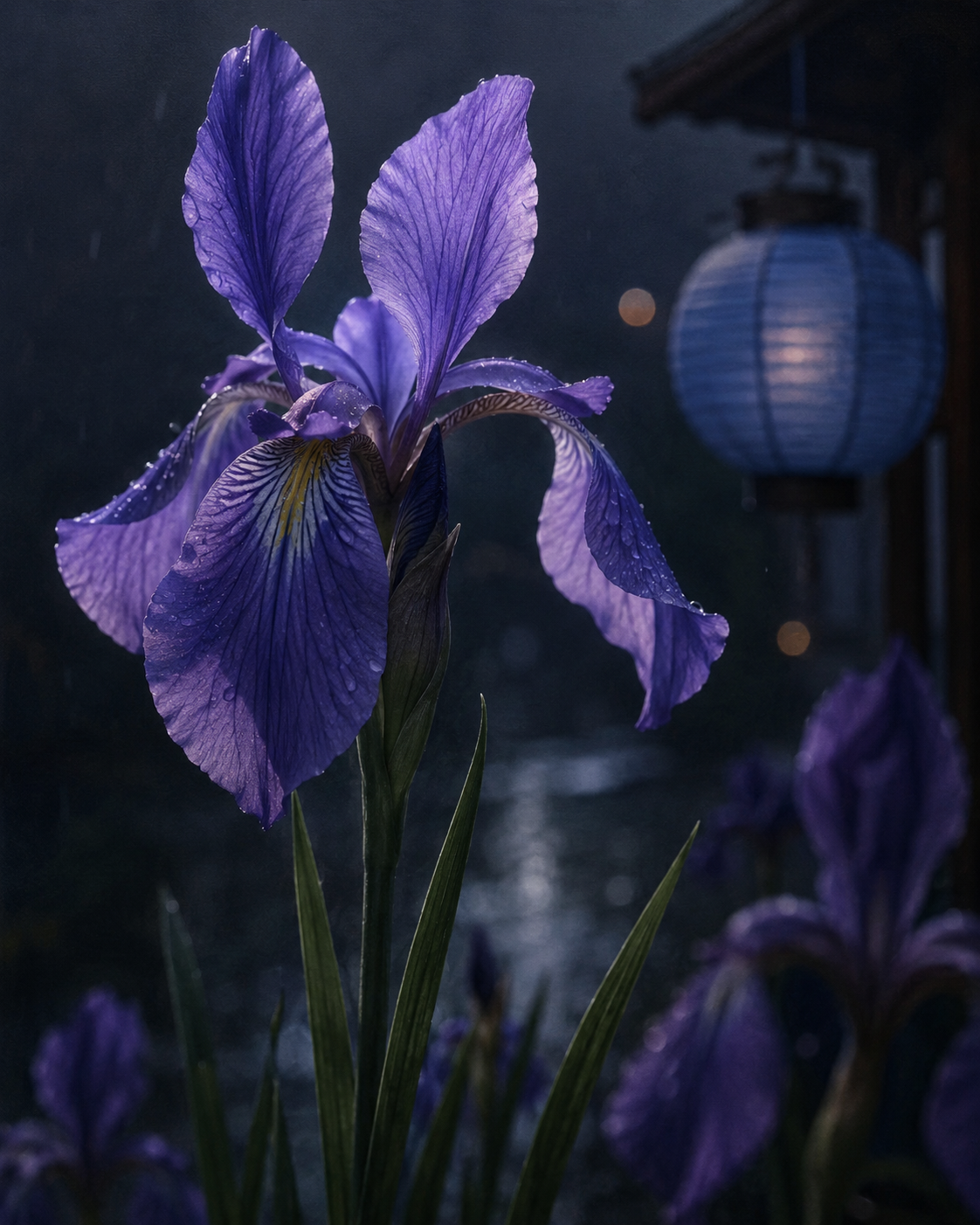
Midnight Iris Beside the Blue Lantern
Critique
Introduction This painting depicts a purple iris in a rain-darkened street, with a softly glowing paper lantern behind it. The close flower and distant architectural fixture create a nocturnal study of vulnerability, shelter, and reflected light. Description The iris stands left of center, its two upright petals rising above broad falls striped in violet and marked with yellow. Droplets line every petal edge and surface. Narrow green leaves climb from the lower field, while additional irises blur at both sides. At upper right, a blue-white ribbed lantern hangs beneath a dark roof; wet pavement recedes behind the flower amid sparse amber lights. Analysis The flower's vertical axis is balanced by the lantern's round suspended form. Violet petals advance from blue-black surroundings, and the lantern repeats their cool hue at lower saturation. Fine veins radiate through the petals, while long leaves provide firm linear structure. Focus shifts sharply from the central bloom to the softened lantern and glistening street, producing convincing depth and damp atmosphere. Interpretation and Evaluation The exposed iris bears rain directly, whereas the lantern hangs beneath protective eaves. This contrast suggests two forms of endurance within the same night. Accurate water detail, coherent cool color, and controlled background blur demonstrate strong technique. The flower and lantern also resemble two kinds of illumination—one reflecting available light, the other emitting it—giving the composition quiet originality. Conclusion What first appears to be a dramatic nocturnal flower portrait becomes a meditation on exposure and refuge. Its balanced asymmetry and subtle reflected light make the rainy setting integral rather than merely atmospheric.
Same Subcategory
Similar Artworks
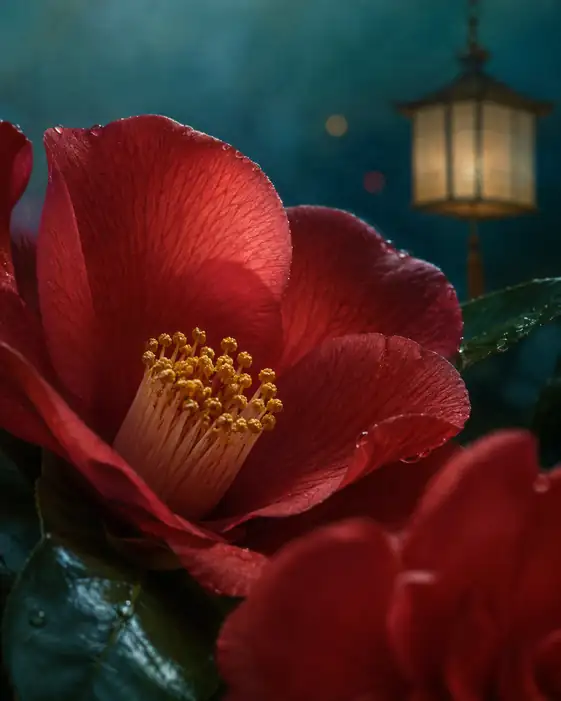 Crimson Camellia Beside the Garden Lantern
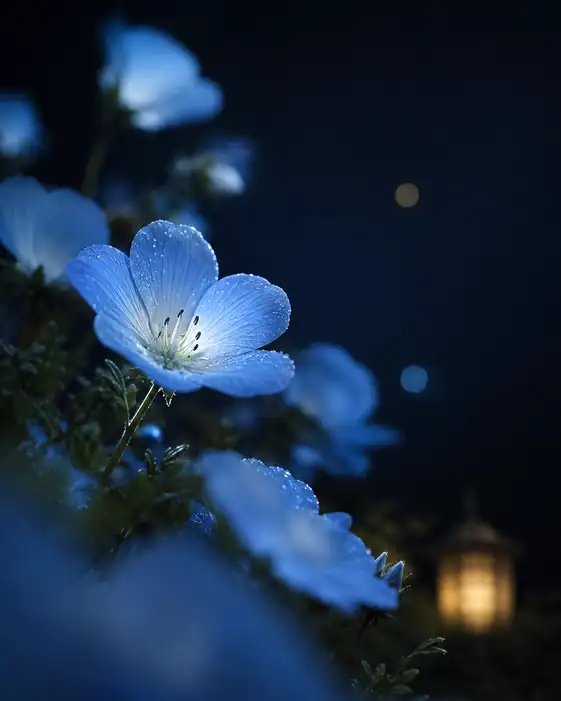 Midnight Nemophila and Garden Lantern
 Dew-Kissed Lycoris Beneath the Lantern
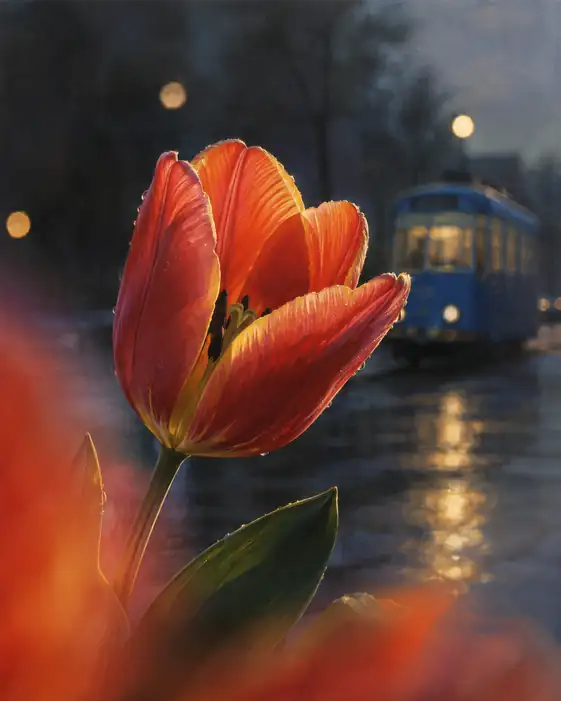 Red Tulip and the Night Tram
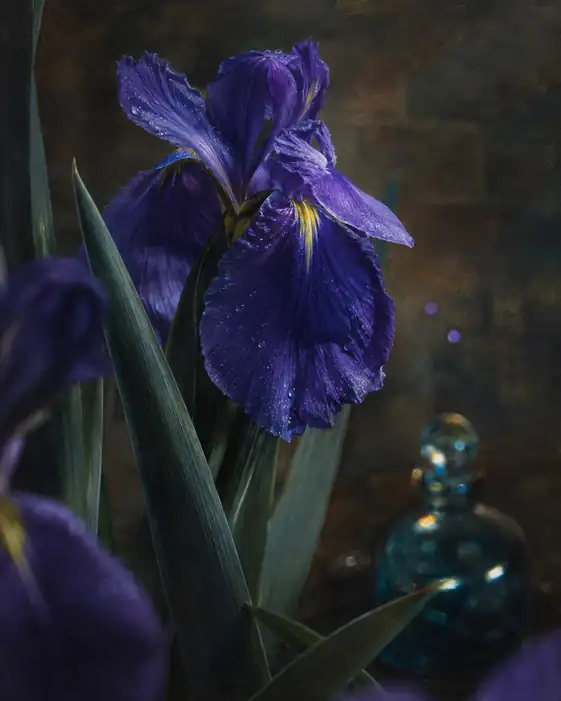 Purple Iris and Vintage Glass Bottle
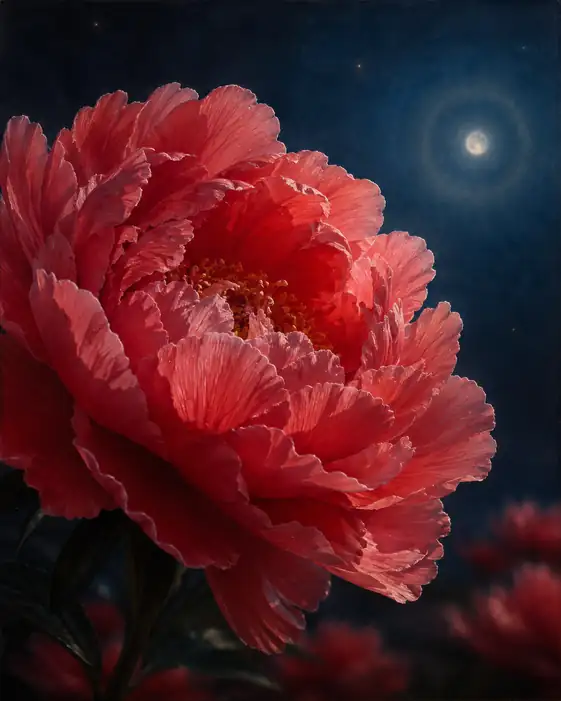 Moonlit Peony in Velvet Night
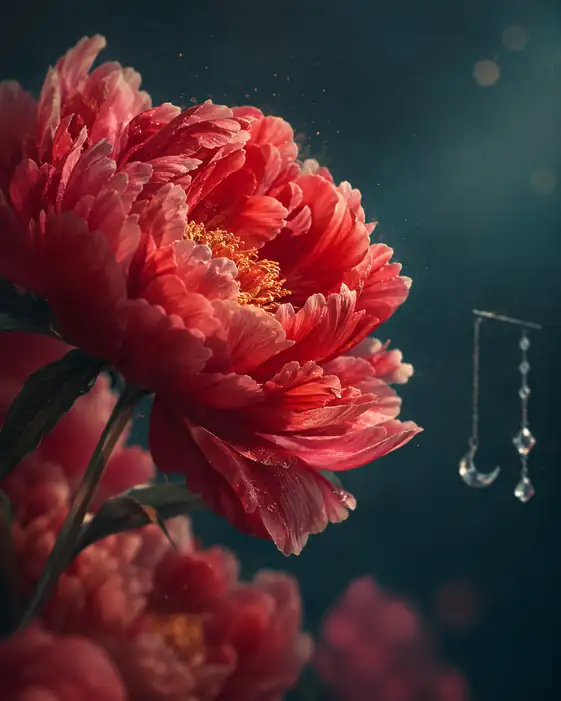 Peony and Crescent Moon Pendant
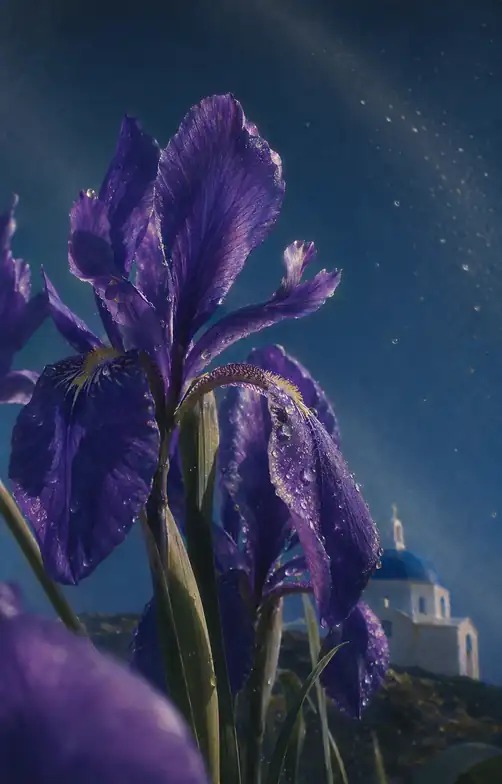 Iris and the Seaside Chapel
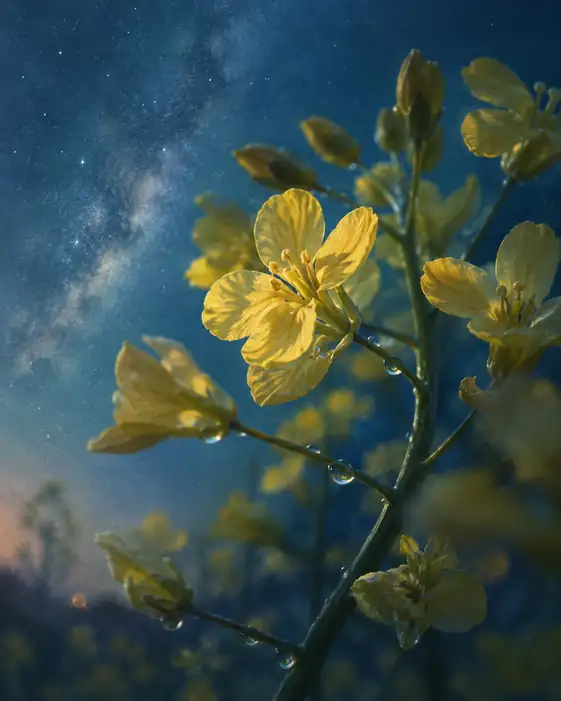 Canola Blossom Beneath Starry Skies
 Crimson Peony in Midnight Mist