
Moonlit Peony in Velvet Night
Critique
Introduction This painting enlarges a crimson peony beneath a small moon in a deep blue night sky. The flower's overwhelming scale and the remote celestial light create a concentrated comparison between earthly abundance and distant stillness. Description The bloom enters from the left and fills most of the frame, opening around a shadowed cluster of ocher stamens. Overlapping petals range from dark carmine to coral edges marked by fine vertical striations. Black-green leaves support the base. A hazy moon and faint circular halo appear at upper right, with sparse stars and blurred red blossoms below. Analysis The flower's broad diagonal expansion is balanced by the moon's small isolated disc. Red and blue establish a strong warm-cool opposition, while the near-black foliage prevents the palette from becoming decorative alone. Edge light traces selected petals and reveals their ribbed texture; deeper folds remain dense and spatial. The open sky functions as necessary relief from the flower's compressed mass. Interpretation and Evaluation The peony and moon embody different kinds of fullness: one unfolds through countless tactile layers, while the other appears as a compact, untouchable light. Their separation gives the composition contemplative tension. Persuasive modeling, restrained highlights, and decisive cropping show technical confidence. The pairing is familiar in theme, yet the severe scale contrast and sparse sky give it distinctive visual force. Conclusion Initial floral grandeur gradually becomes a measured dialogue between nearness and remoteness. The painting's disciplined color, tactile surfaces, and balanced asymmetry sustain both sensory richness and quiet reflection.
Same Subcategory
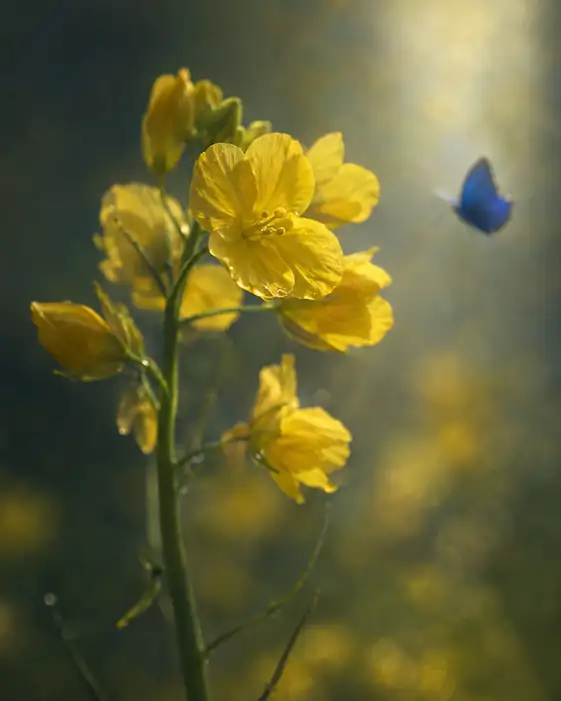 Blue Butterfly and Sunlit Canola Flower
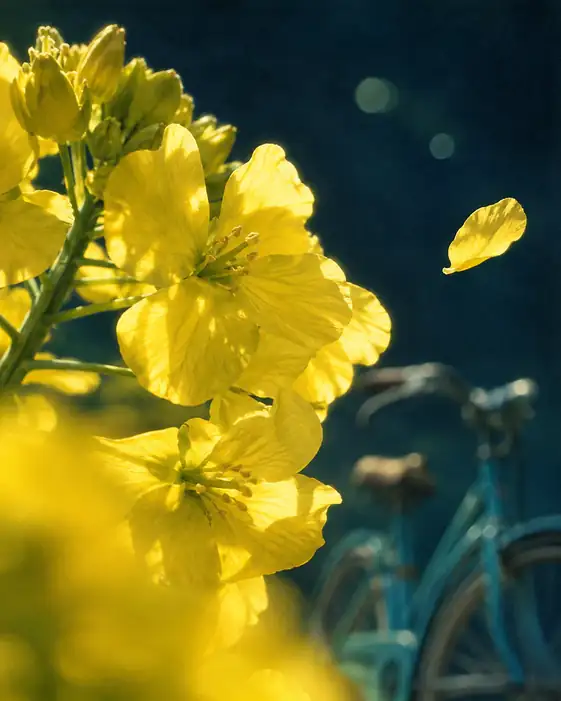 Yellow Petals Drifting by Blue Bicycle
Similar Artworks
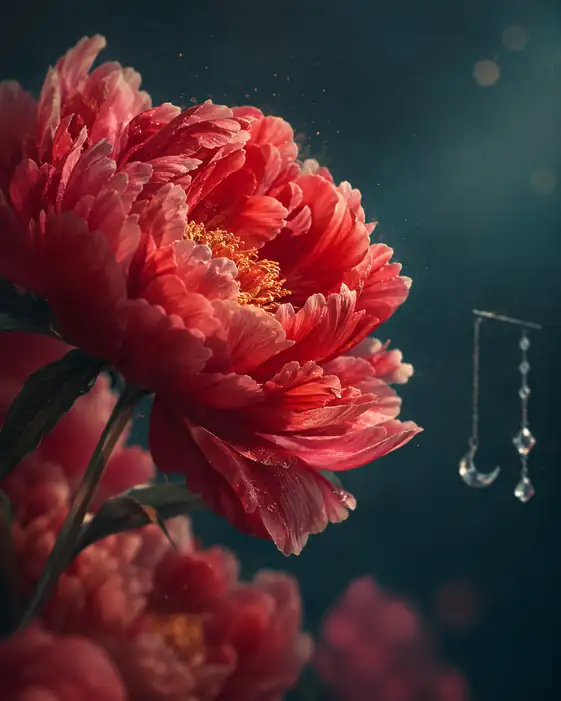 Peony and Crescent Moon Pendant
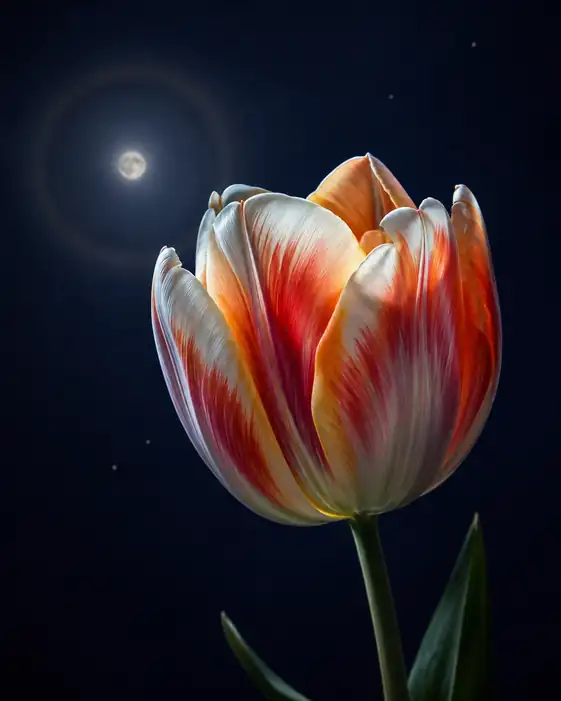 Moonlit Tulip Against the Night
 Crimson Peony and the Evening Meteor
 Crimson Peony in Midnight Mist
 White Plum Beneath the Milky Way
 Golden Tram and Twilight Peony
 Moonlit Mimosa on a Silent Night
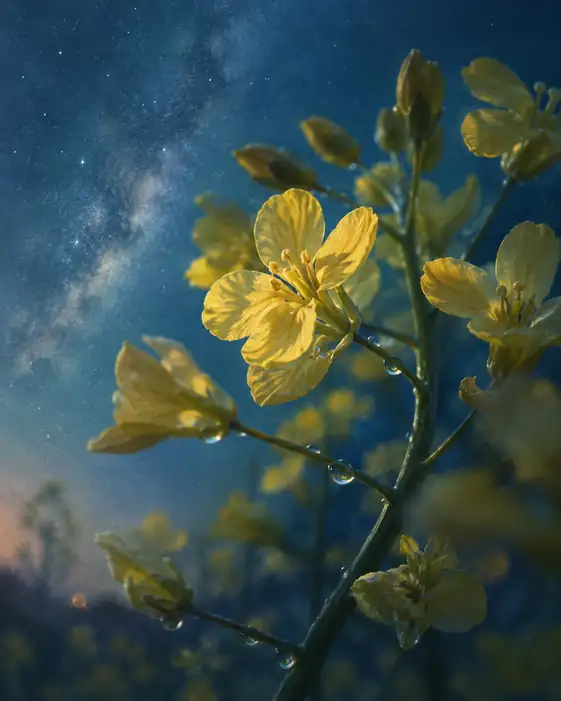 Canola Blossom Beneath Starry Skies
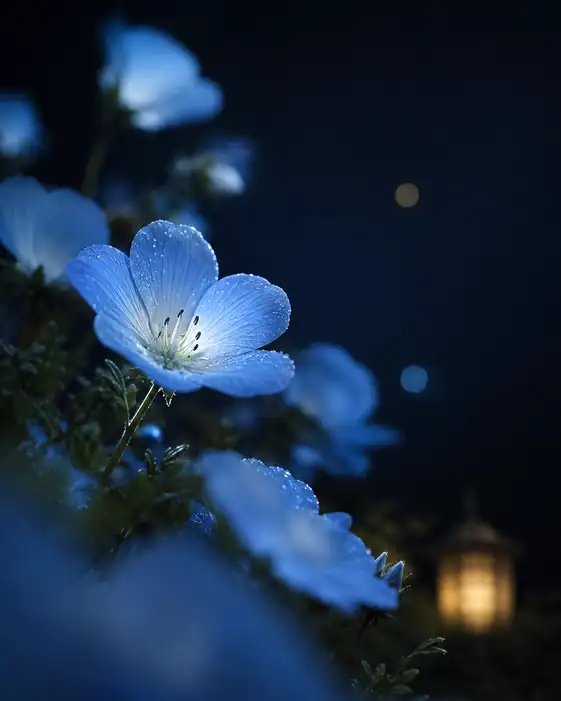 Midnight Nemophila and Garden Lantern
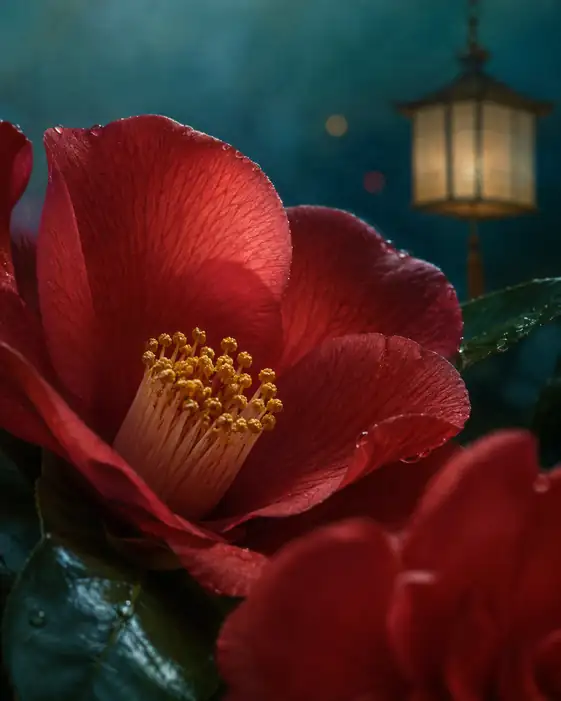 Crimson Camellia Beside the Garden Lantern