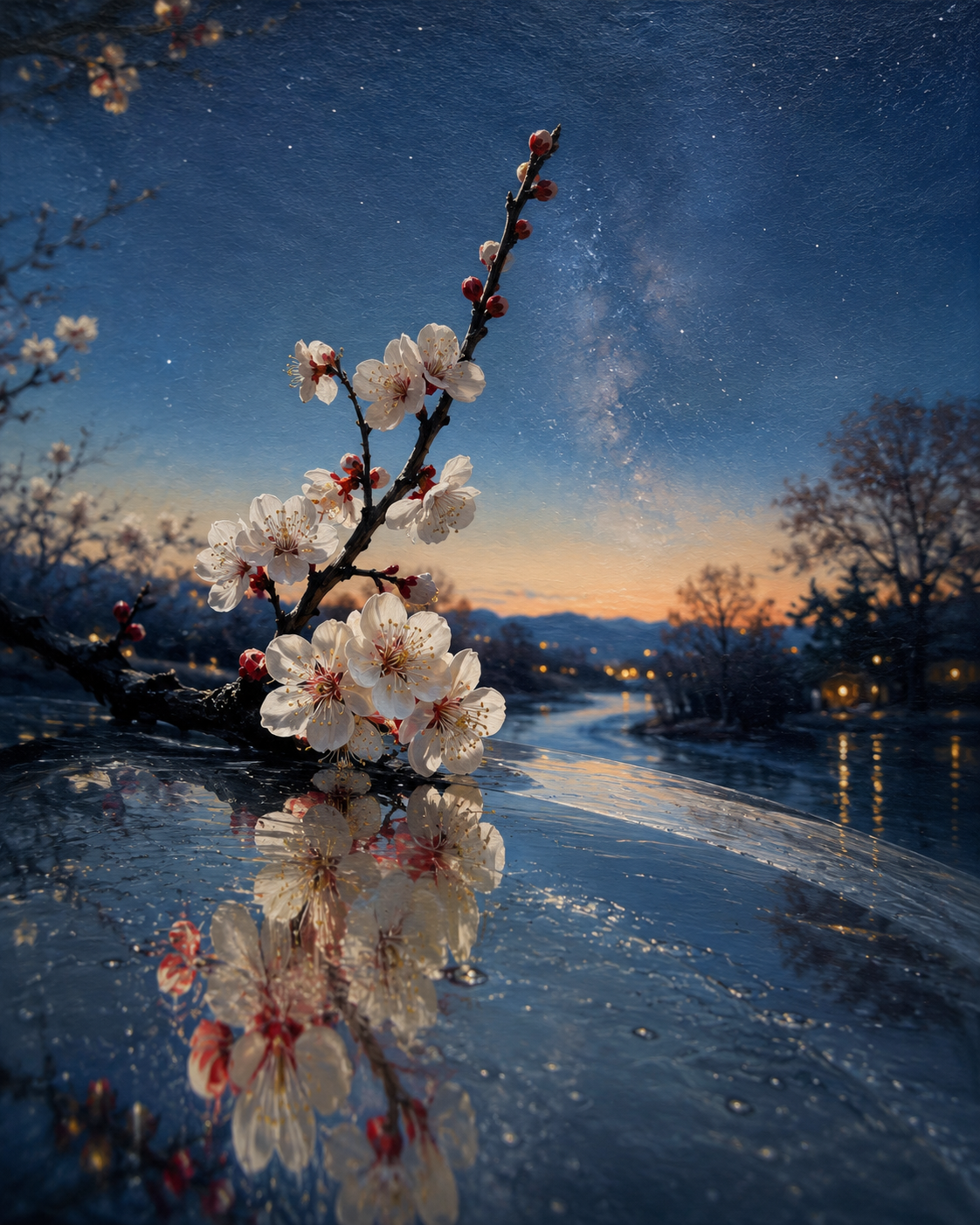
Plum Branch Under the Milky Way
Critique
Introduction This nocturnal landscape places a flowering branch over a glossy wet foreground, with stars, a pale galactic band, and warm settlement lights beyond. The blossoms and their reflection form a vertical bridge between close seasonal growth and the immense night sky. Description A dark branch rises diagonally from the lower left and forks upward, carrying clusters of white blossoms and red buds. The densest flowers gather near the lower center and are sharply reflected in the wet curved surface below. The middle distance opens onto a winding waterway bordered by dark trees and scattered amber lights, some mirrored vertically. Above, deep blue sky grades to orange near the horizon, while a faint Milky Way band rises at right among numerous stars. Analysis The branch’s upward diagonal and its downward reflection create a continuous vertical rhythm around the lower center. White petals and red calyxes stand against navy, while orange lights connect horizon and water. The foreground reflection is crisp enough to repeat flower anatomy but broken by fine surface texture. Distant trees form dark lateral boundaries, directing the eye toward the central river and sky. The galactic band echoes the branch’s ascent at a much larger scale. Interpretation and Evaluation The composition links the brief flowering season to celestial and geographic continuities without erasing their scale differences. Detailed blossoms, wet reflection, distant lights, and atmospheric sky demonstrate broad descriptive skill. The asymmetric design is expansive and stable. Its originality lies in making a small branch structurally correspond to the Milky Way and river through repeated direction and light. Conclusion Blossoms beneath stars connect three depths: reflective foreground, inhabited valley, and cosmos. Vertical echoes, controlled color, and layered clarity give seasonal growth a place within immense space.
Same Subcategory
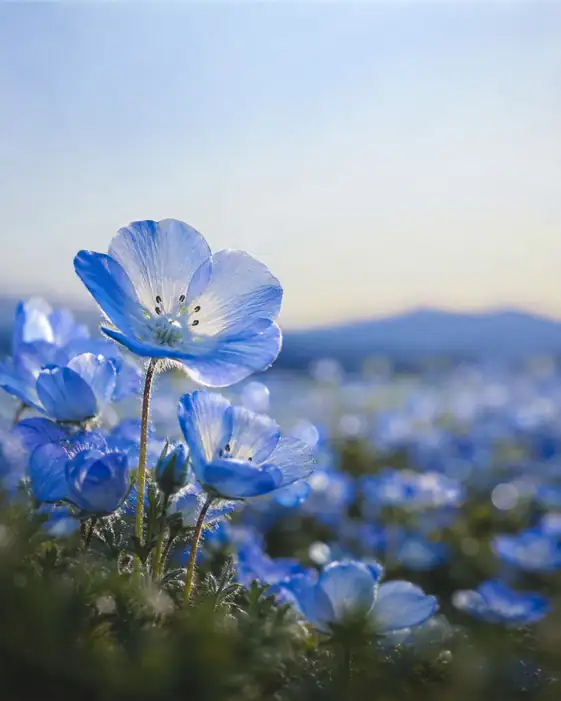 Translucent Blue Petals at Dawn
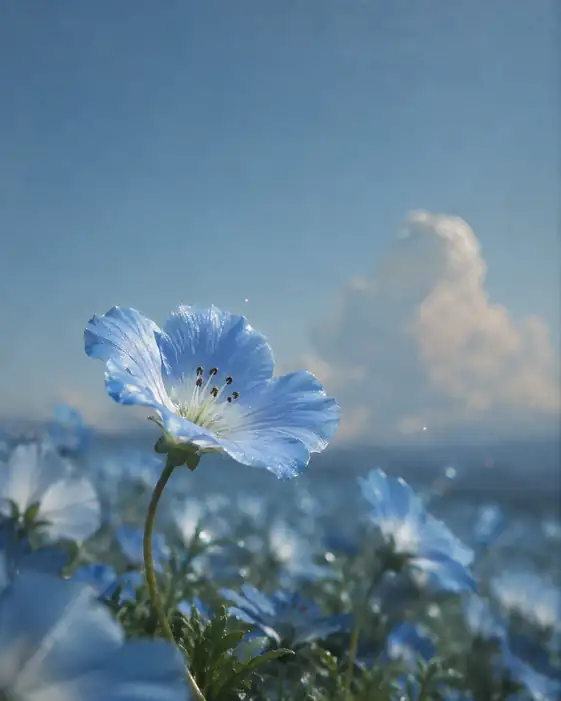 Nemophila and Summer Clouds
Similar Artworks
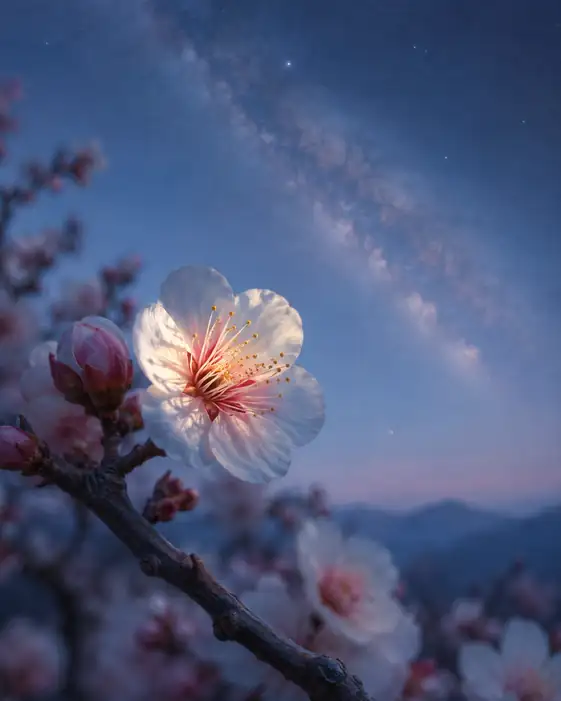 White Plum Beneath the Milky Way
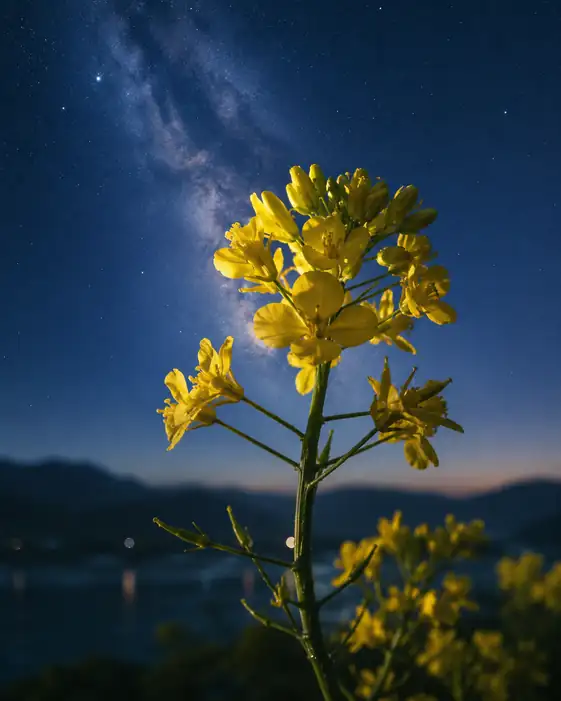 Milky Way and Golden Mustard Blossom
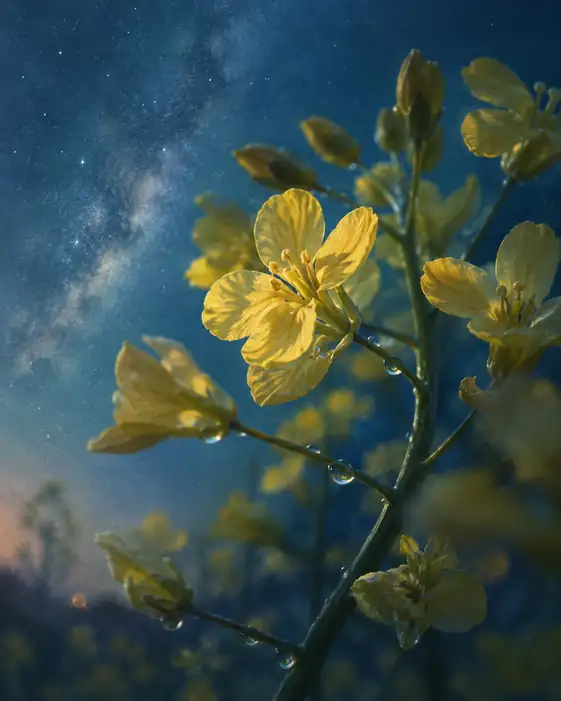 Canola Blossom Beneath Starry Skies
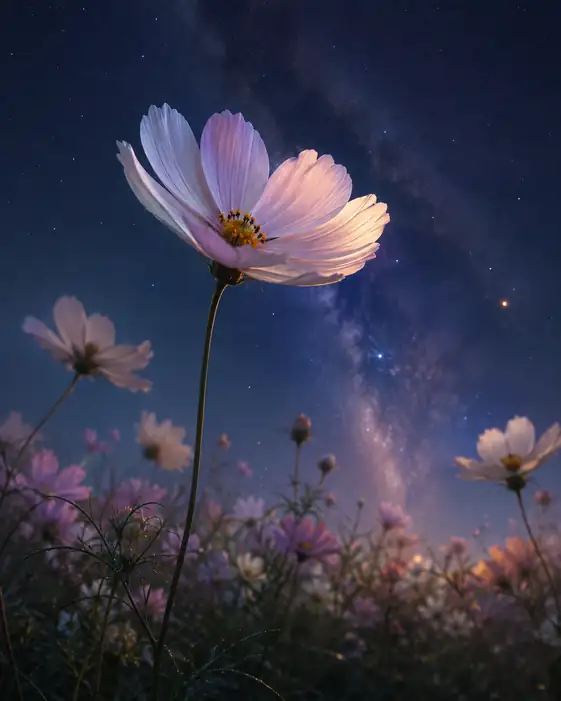 Cosmos Beneath the Starlit Sky
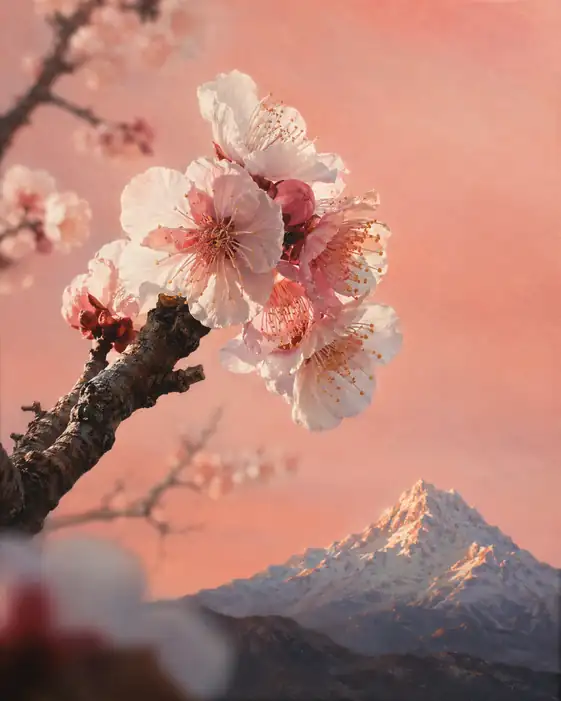 A Bough of Spring Aglow on the Snowy Peaks
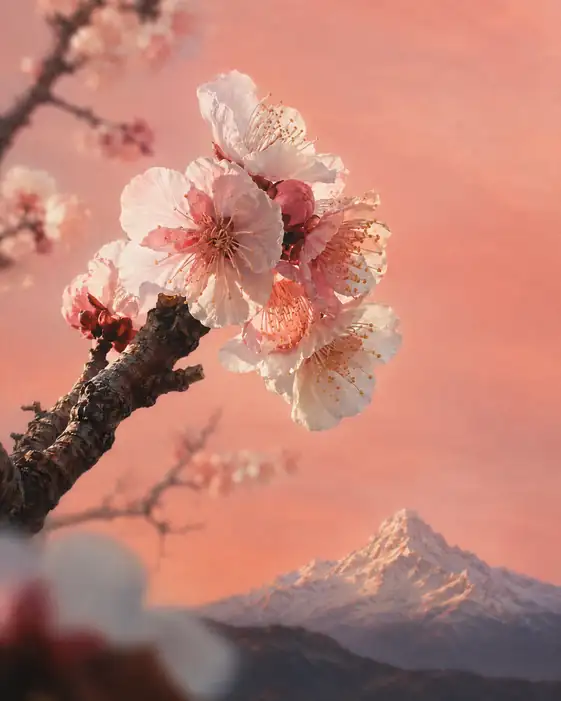 Plum Blossoms Before the Snowy Peak
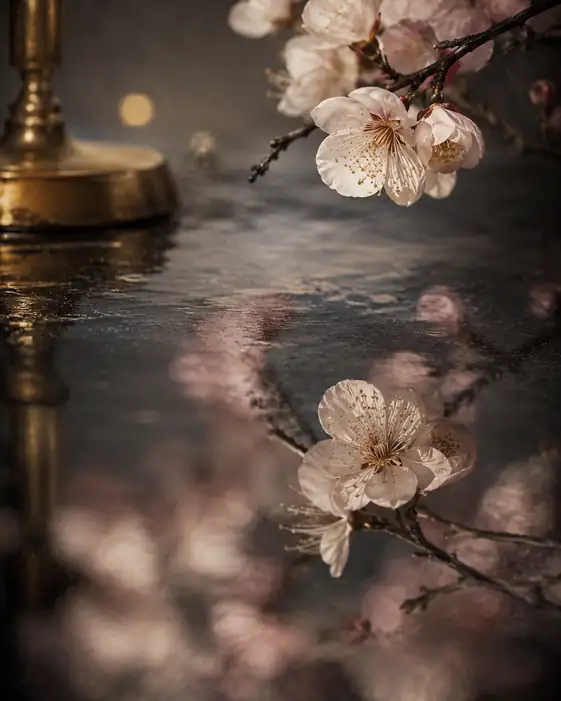 Plum Blossoms Reflected by Candlestick
 Camellia at Sunset by the Rowboat
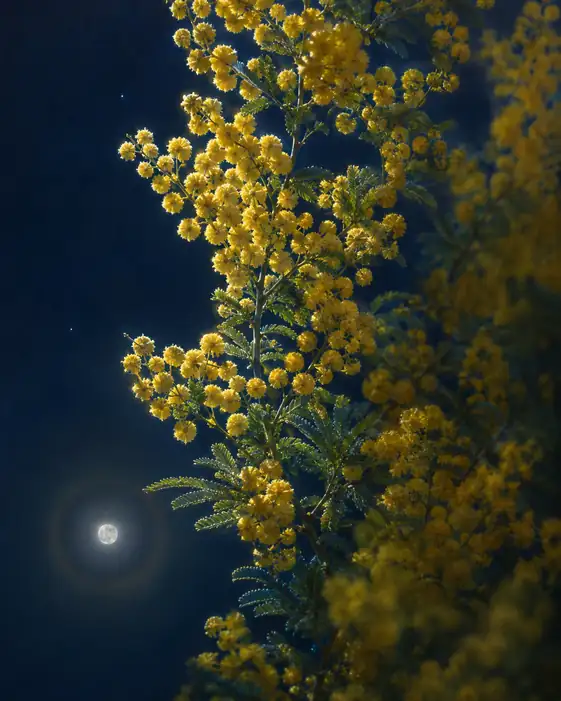 Moonlit Mimosa on a Silent Night
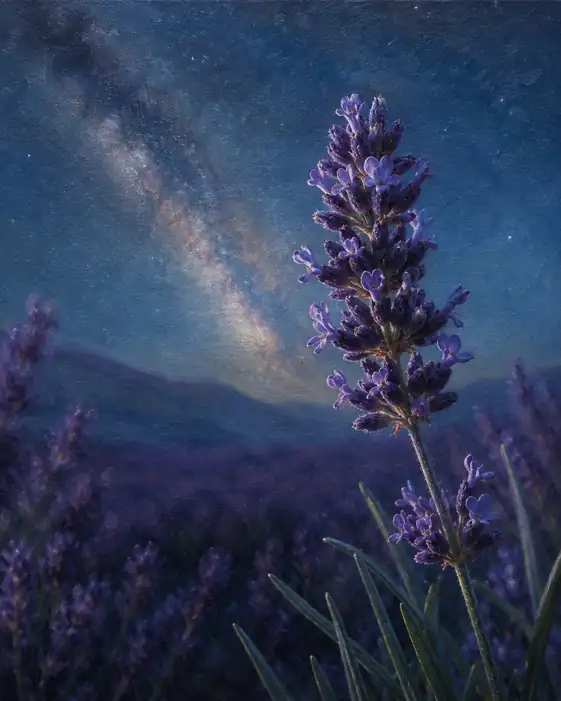 Starry Nocturne Over Lavender Fields