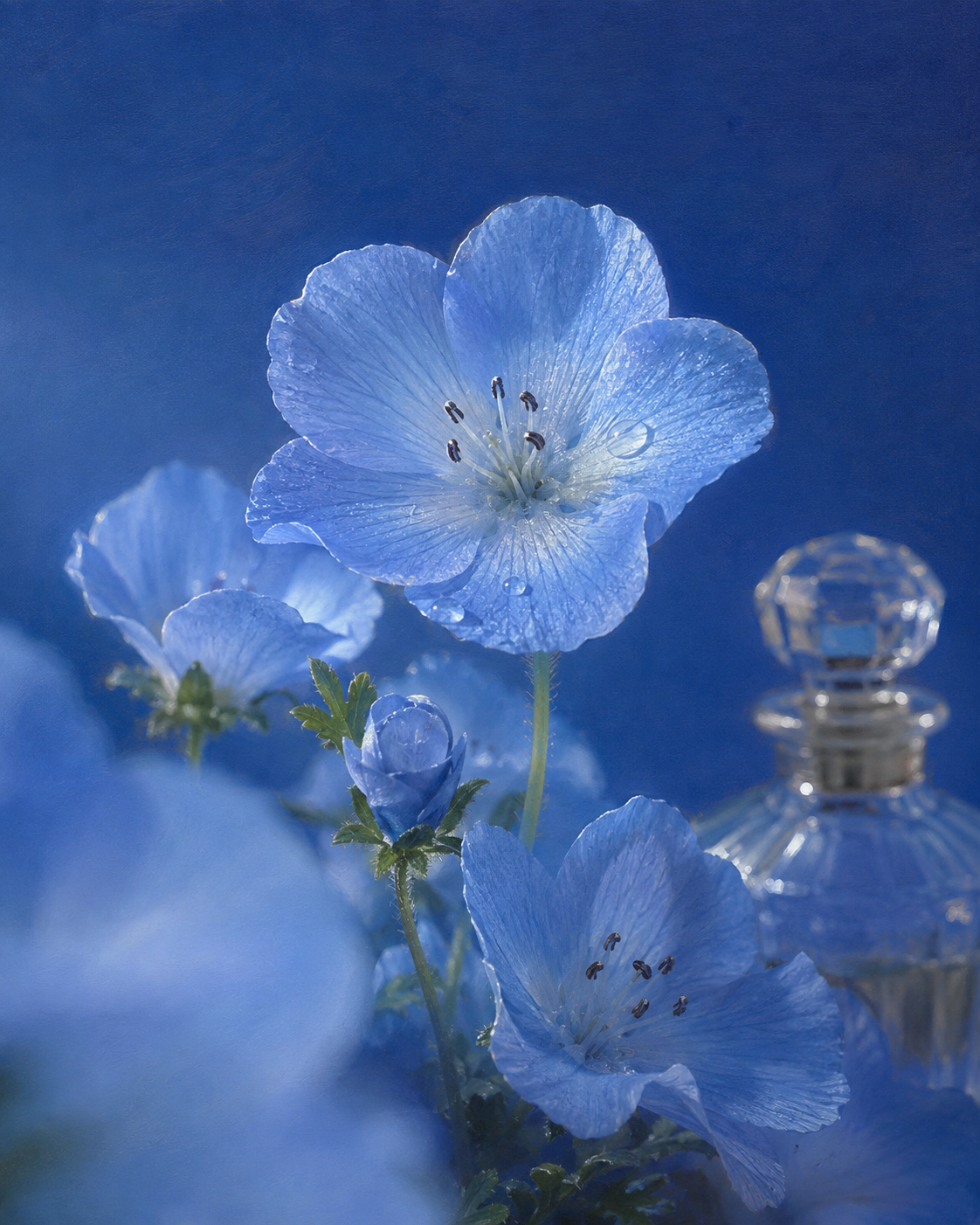
Blue Nemophila and Crystal Perfume Flacon
Critique
Introduction This monochromatic still life gathers pale blue flowers beside a faceted glass perfume bottle against an intense blue background. The restricted palette shifts attention from hue contrast to translucency, texture, and the subtle separation of natural and manufactured forms. Description The principal flower rises near the upper center, five broad blue-white petals opening around dark anthers on slender pale filaments. A large clear droplet rests on the right petal, with smaller beads across the veined surfaces. Another open bloom fills the lower right, while a closed bud and softened flowers occupy the middle and left. At right, a ribbed clear bottle stands behind them, topped by a polygonal crystal stopper. Fine green stems and serrated leaves provide narrow accents amid the blue. Analysis The upper flower and bottle stopper form two elevated rounded focal points, one soft-edged and one faceted. Radial petals contrast with the bottle’s vertical ribs and angular cuts. Blue values range from luminous ice tones to deep cobalt, creating depth without strong hue change. Sharp anthers and droplets shift toward softened background blooms and glass. The lower flower anchors the composition, while the blurred foreground forms create a shallow, enveloping frame. Interpretation and Evaluation The pairing compares biological delicacy with designed transparency, both made visible through light rather than color opposition. Convincing petal veins, water, flower anatomy, and refracted glass demonstrate varied descriptive technique. The asymmetrical arrangement remains coherent through tonal repetition. Its originality lies in using near-monochrome to make small differences of edge, surface, and density carry the visual argument. Conclusion A blue harmony becomes a study of material distinction within one color family. Layered focus, radial and geometric contrast, and controlled luminosity make restraint a source of richness.
Same Subcategory
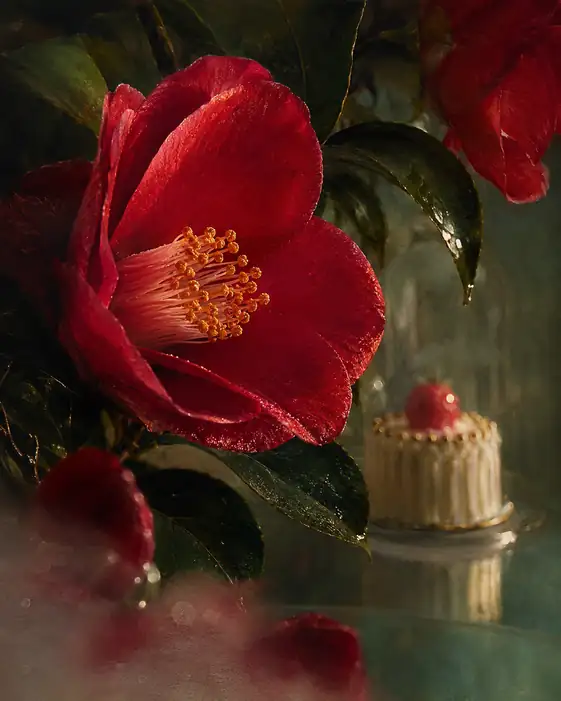 Crimson Camellia and Strawberry Cake
Similar Artworks
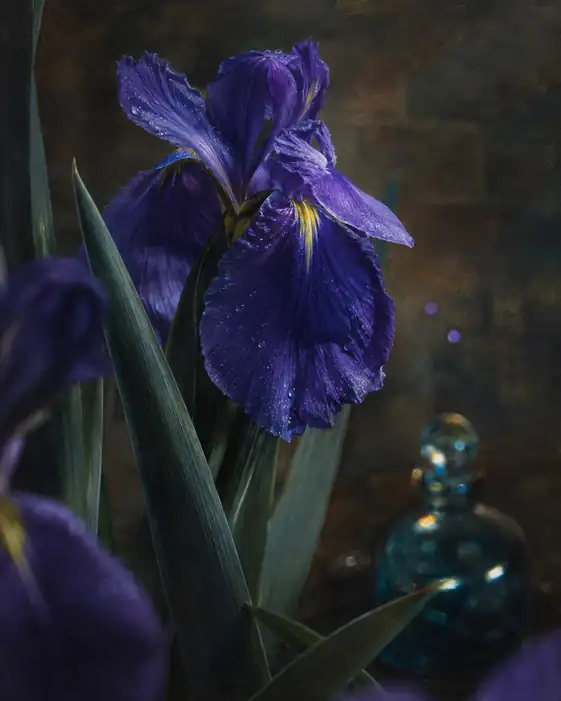 Purple Iris and Vintage Glass Bottle
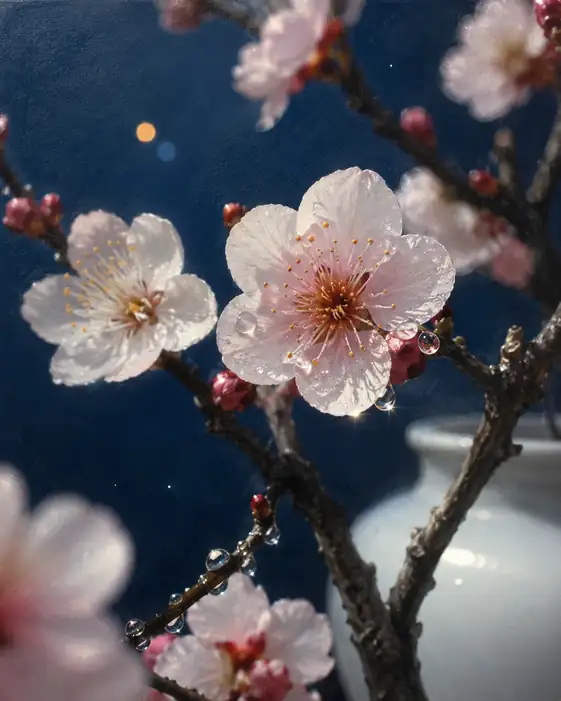 Dew-Kissed Plum Blossoms by White Porcelain
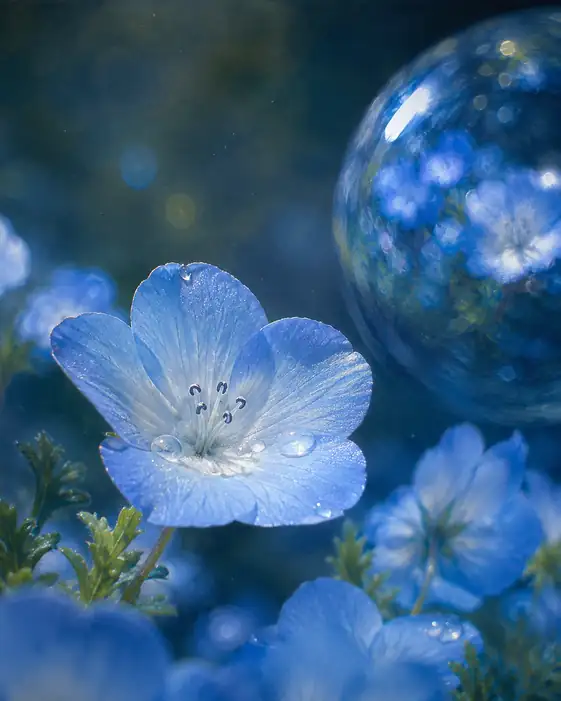 Nemophila Reflected in Crystal Sphere
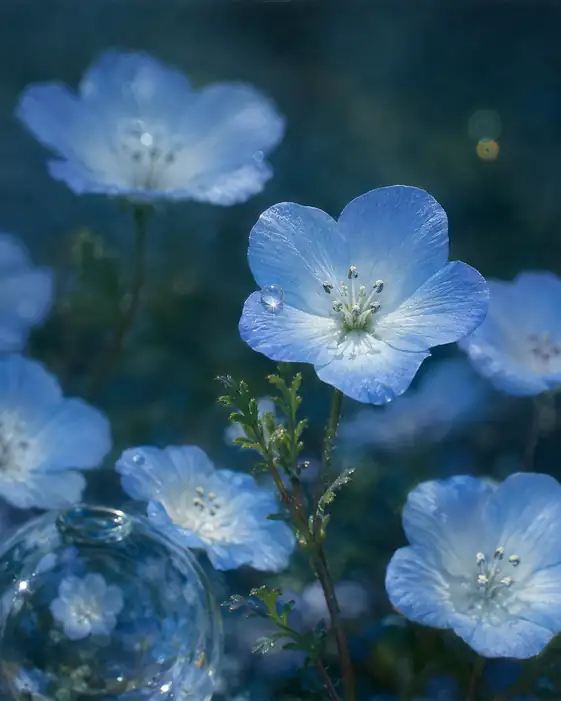 Glass Orb and Dewdrop Reflection
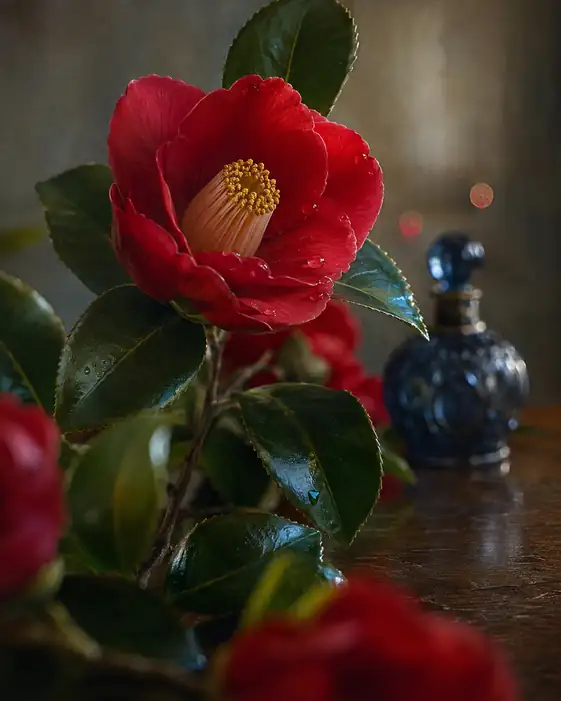 Red Camellia and the Cobalt Bottle
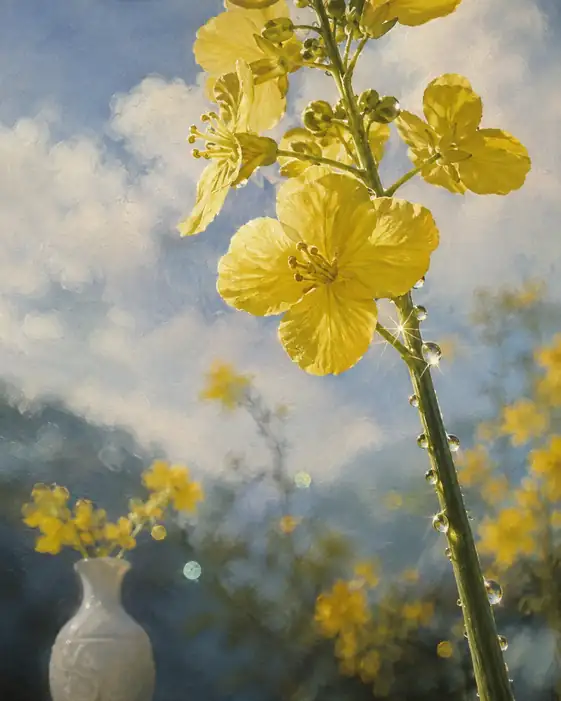 Sparkling Canola and Porcelain Vase
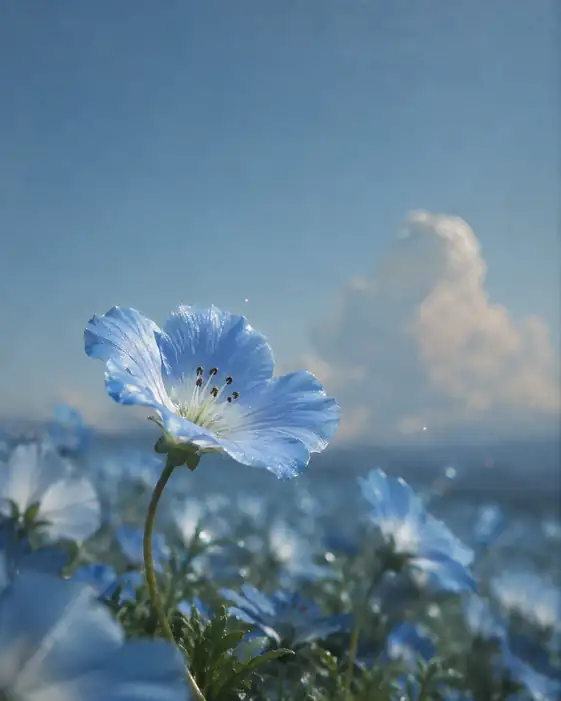 Nemophila and Summer Clouds
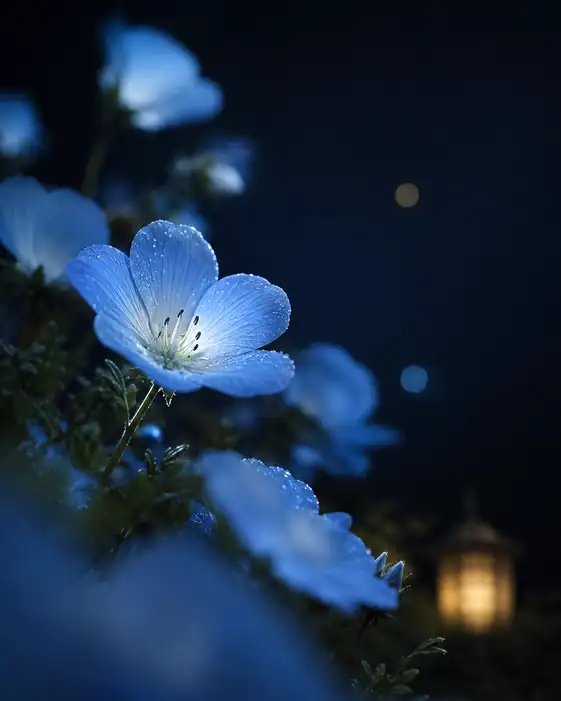 Midnight Nemophila and Garden Lantern
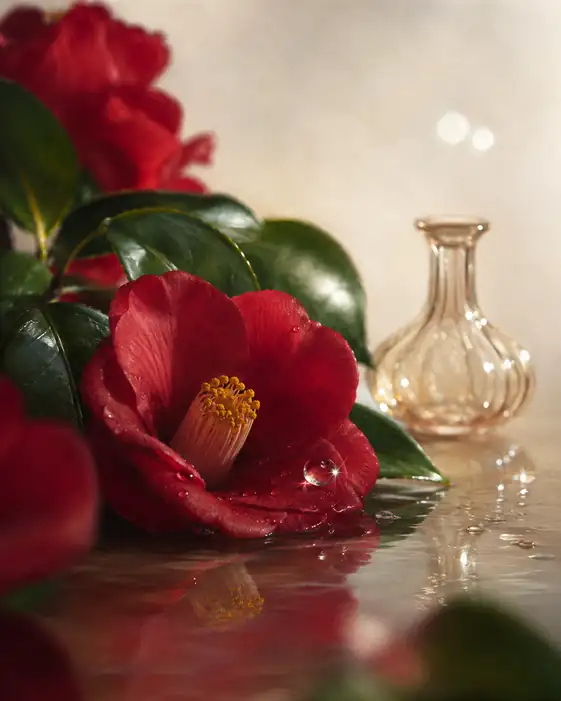 Dewdrop Camellia and Amber Flask
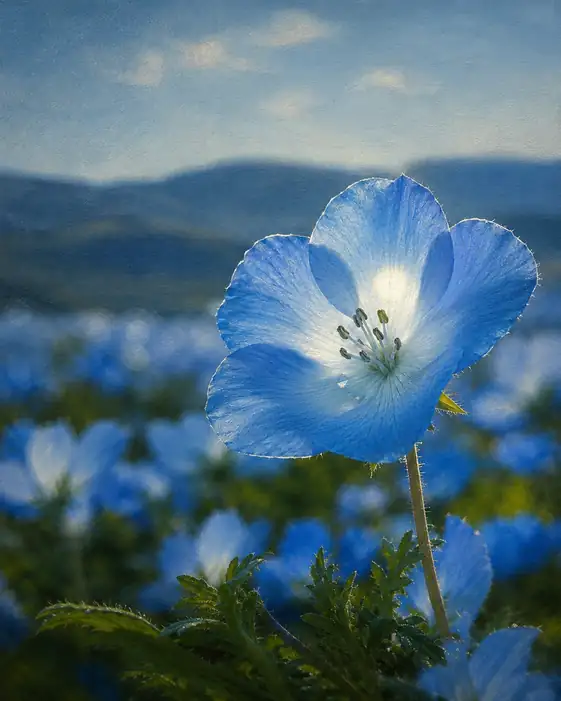 Sunlit Petals in Azure Field