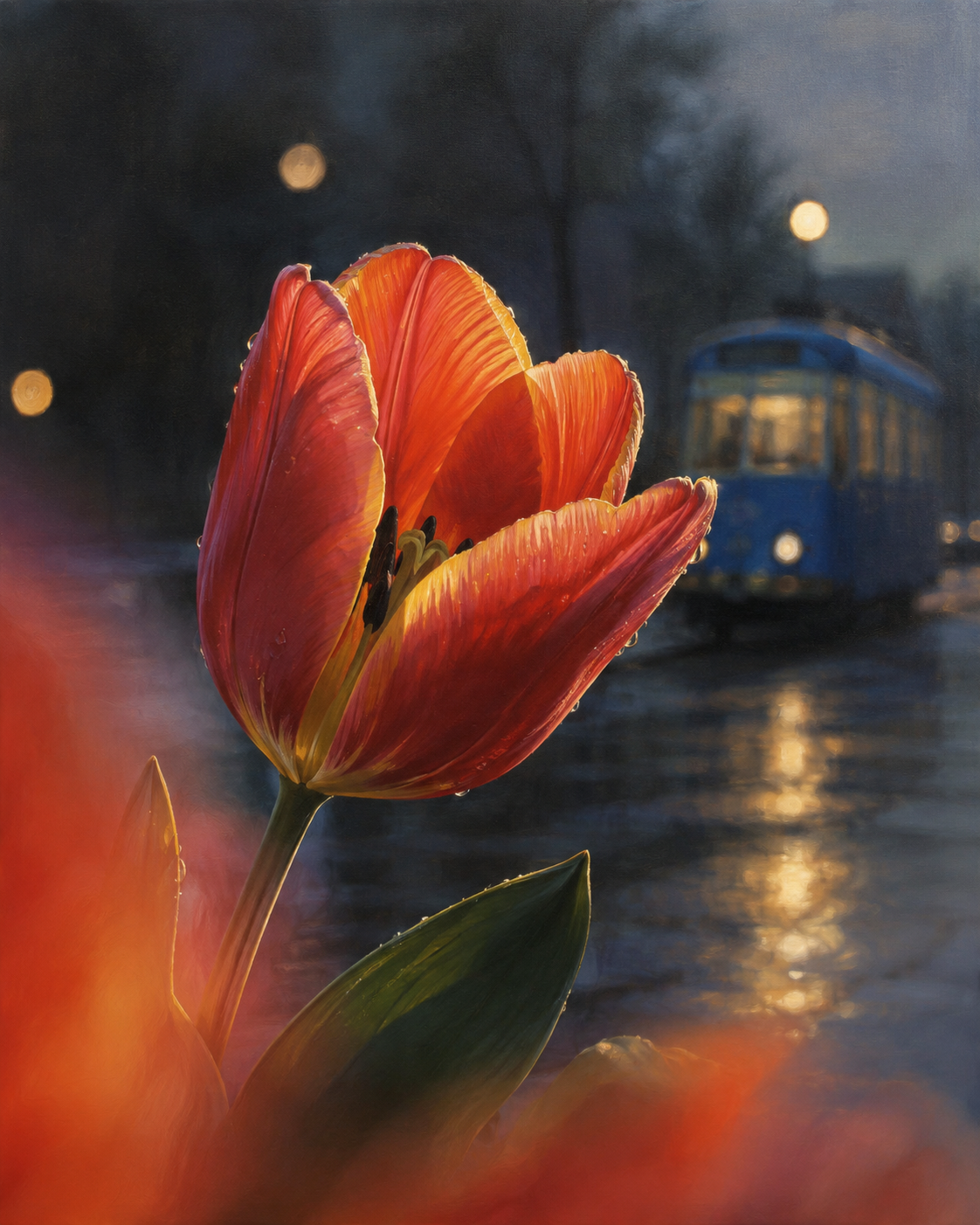
Red Tulip and the Night Tram
Critique
Introduction This rainy urban floral scene enlarges an orange-red tulip before a softly focused blue tram and wet street. Backlighting makes the flower a luminous threshold through which distant transport, lamps, and reflections are perceived. Description The main tulip rises left of center and opens enough to reveal dark anthers and a pale pistil. Orange and crimson petals are edged with gold light and dotted with moisture. A pointed green leaf fills the lower center, while broad red blurs frame the bottom and left. In the upper-right distance, a blue tram faces forward with warm windows and a small round lamp. Streetlights appear as cream circles, and one long gold reflection descends through the wet road. Analysis The flower’s strong vertical stem and cup contrast with the tram’s rectangular body and the roadway’s horizontal depth. Repeated warm lights connect petal edges, vehicle windows, streetlamps, and water. Orange-red advances against blue-gray, while green supplies a darker intermediary. Crisp petal fibers and droplets give way to softened transport and pavement, establishing layered space. The blurred red foreground acts as a low chromatic frame without competing with the principal bloom. Interpretation and Evaluation The composition lets seasonal growth govern an urban transit scene, reversing the expected visual hierarchy. Detailed translucency, anatomy, and moisture demonstrate descriptive skill, while controlled blur evokes rain and distance. The asymmetrical arrangement is stable through color repetition. Its originality lies in treating the tram not as narrative subject but as environmental context that intensifies the tulip’s temporary radiance. Conclusion Flower and vehicle become shared light across rain. Complementary color, depth of focus, and reflected gold make the close tulip an active lens on the city.
Same Subcategory
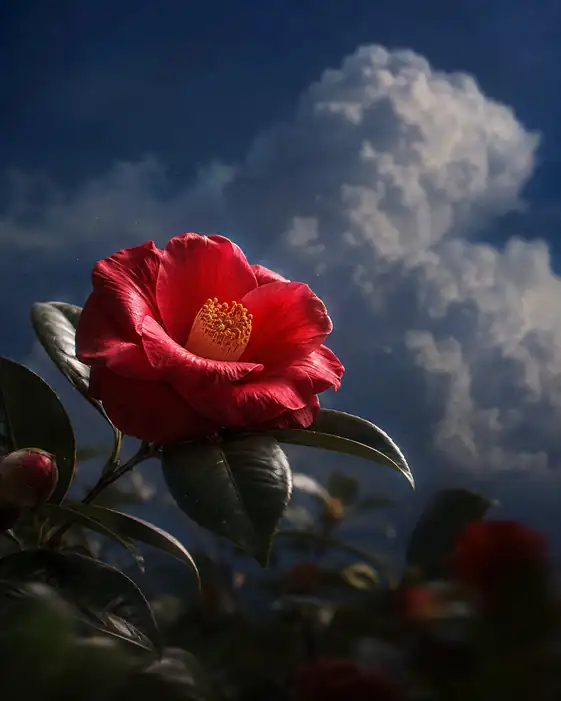 Crimson Camellia Beneath Summer Clouds
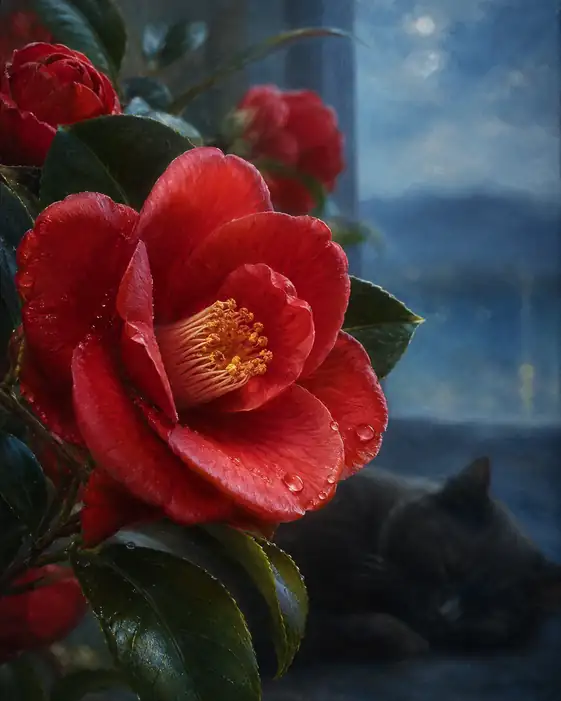 Sleeping Cat Beside Window Camellia
Similar Artworks
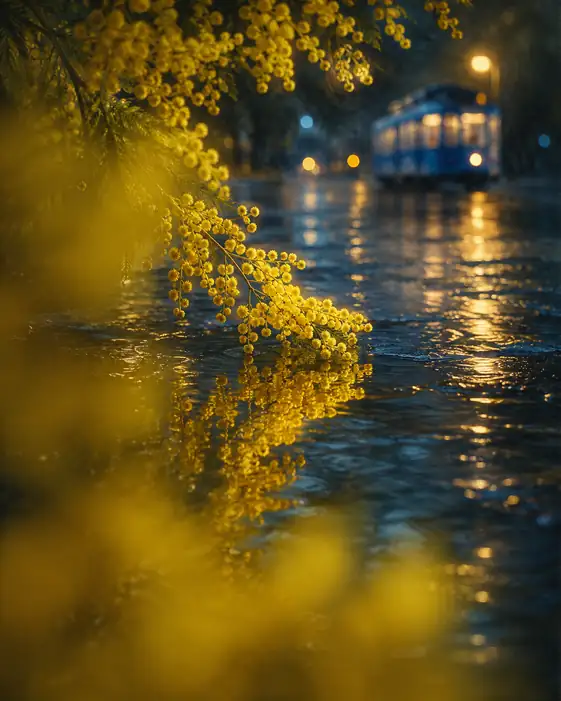 Rainy Night Tram and Mimosa Reflection
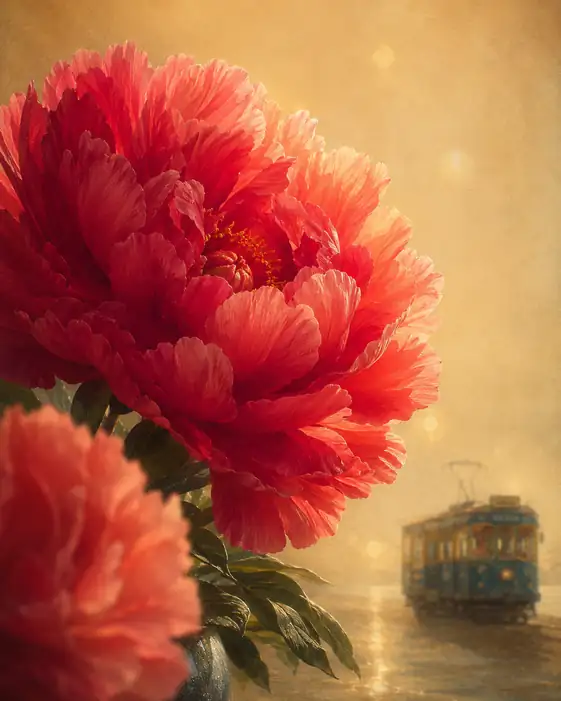 Golden Tram and Twilight Peony
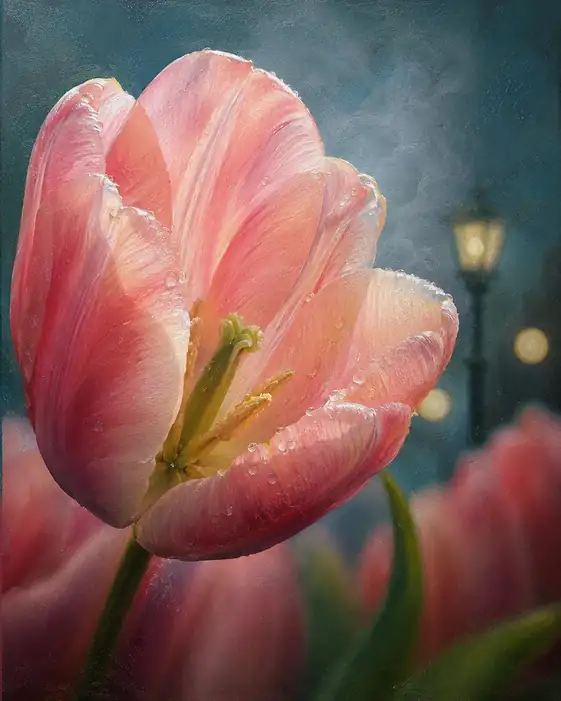 Pink Tulip Beneath the Night Lantern
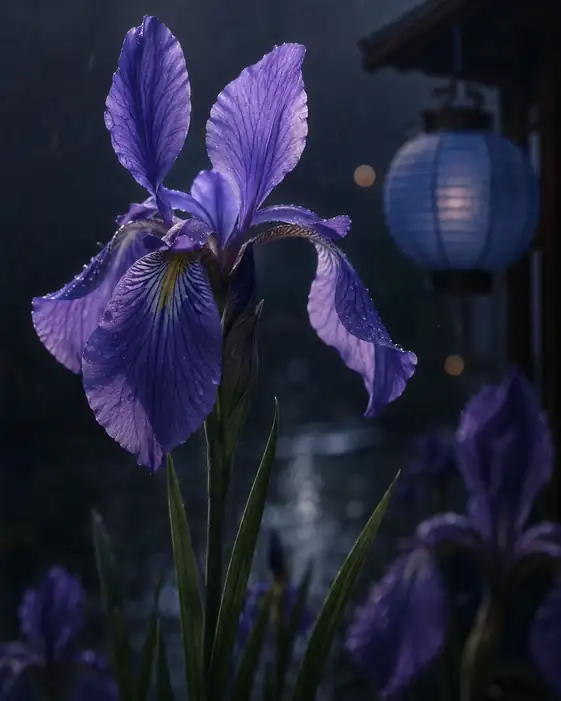 Midnight Iris Beside the Blue Lantern
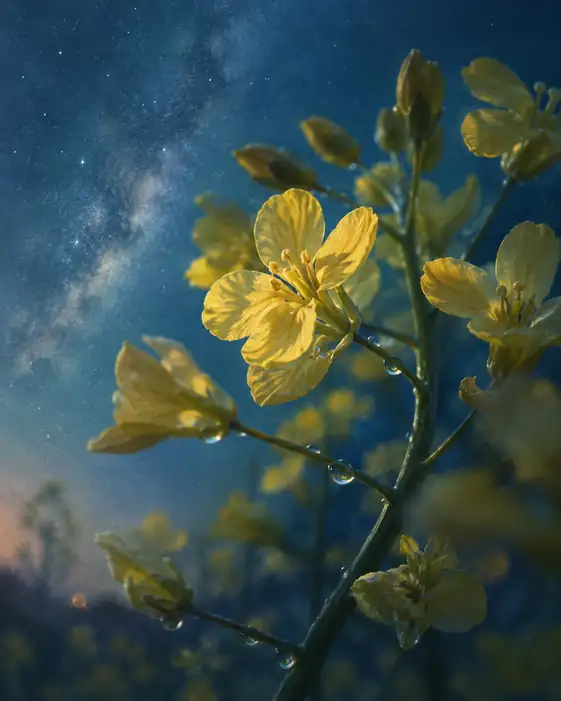 Canola Blossom Beneath Starry Skies
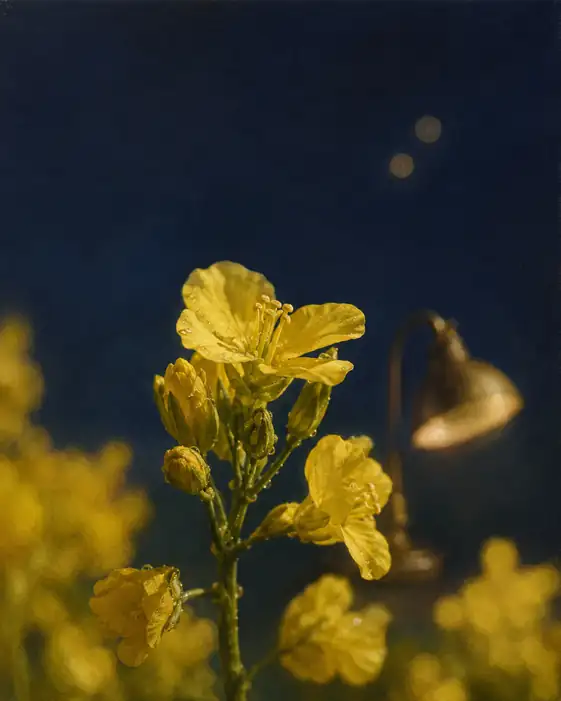 Canola Flower by the Brass Lamp
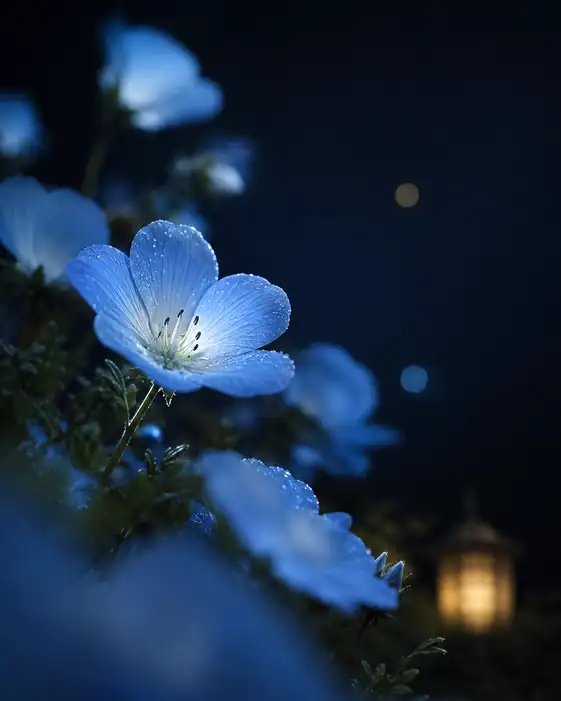 Midnight Nemophila and Garden Lantern
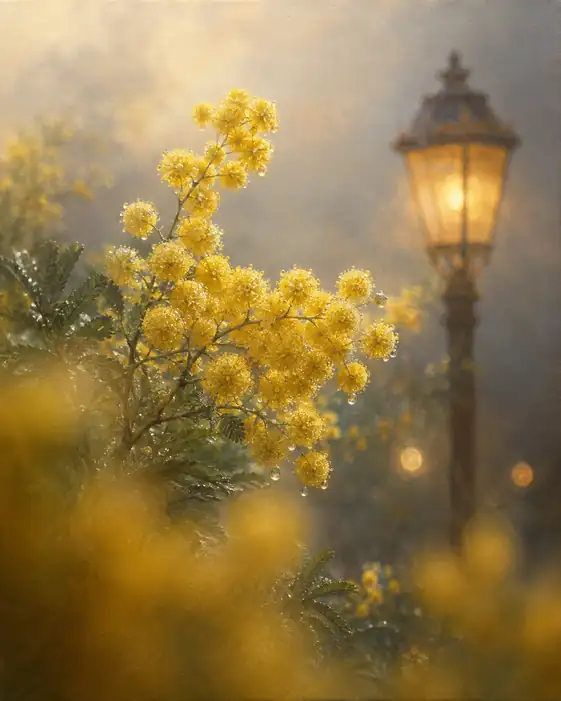 Glowing Streetlamp and Misty Mimosa
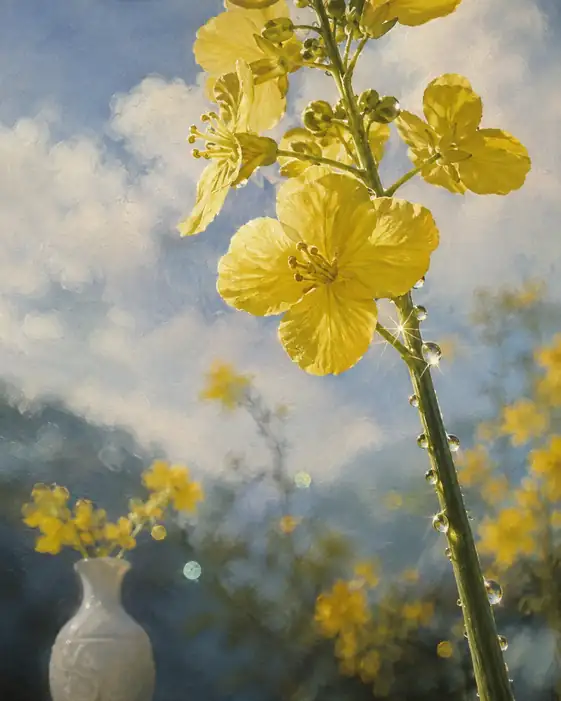 Sparkling Canola and Porcelain Vase
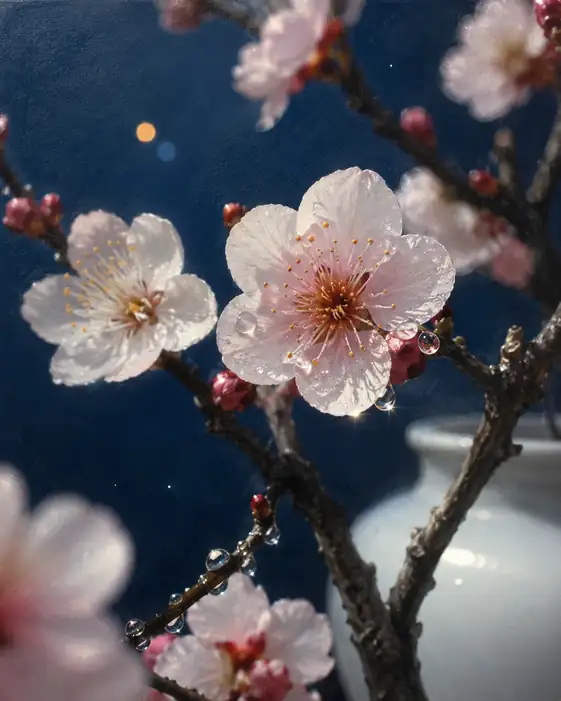 Dew-Kissed Plum Blossoms by White Porcelain