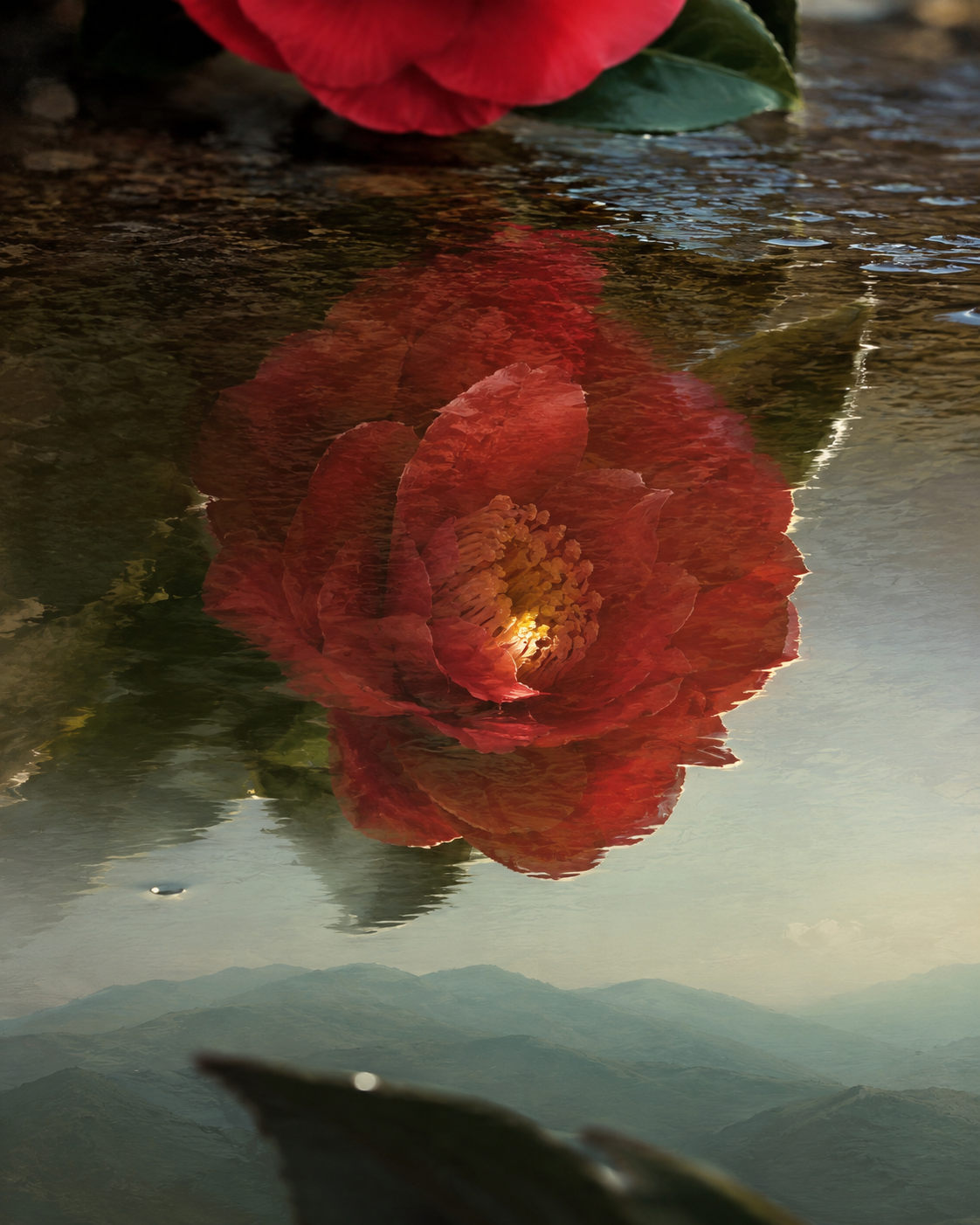
Camellia Mirage on Serene Waters
Critique
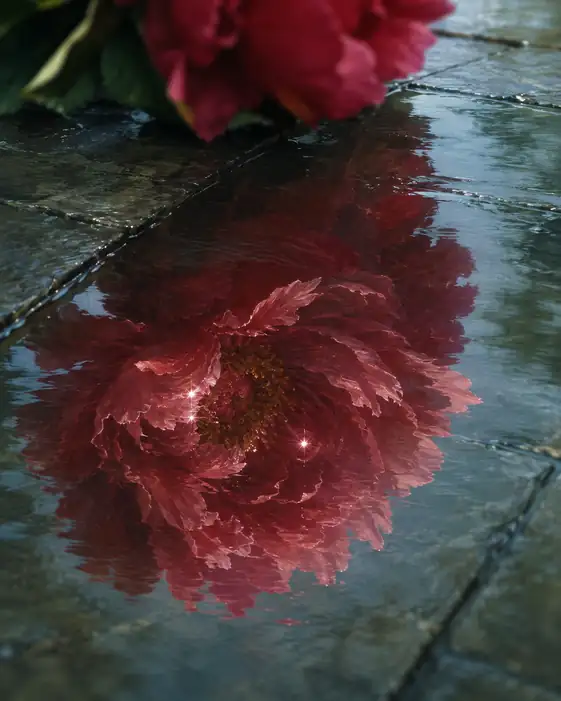
Introduction This vertically inverted landscape makes the reflection of a red camellia the dominant image, while distant mountains also appear within the same shallow water. The composition combines an intimate flower with broad terrain through a surface that rearranges normal scale and orientation. Description Only the lower edge of the actual red flower and a green leaf are visible at the top. Beneath them, a large upside-down camellia occupies the center, its layered crimson petals surrounding a small illuminated stamen cluster. Dark reflected foliage gathers to the left. Along the lower portion, a pale sky and a chain of blue-gray mountains appear inverted, partly interrupted by a blurred leaf at the bottom edge. Fine ripples and bright lines cross the entire surface. Analysis The reflection places flower and mountain on one plane despite their enormous difference in real distance. The camellia’s rounded mass dominates the vertical center, while the low mountain chain supplies a stable horizontal base. Deep red advances against green-black and pale blue. Ripples break petal contours into fine texture, yet the bright flower center remains legible. Cropping the source flower suppresses direct information and makes the viewer reconstruct the scene from its altered image. Interpretation and Evaluation The work treats water as an instrument that collapses near and far rather than merely duplicating them. Convincing layered petals, wavering foliage, surface glare, and atmospheric ridges demonstrate wide descriptive control. Its radical inversion is compositionally clear, and the limited palette retains coherence. Combining a monumental flower image with distant geology gives the reflective motif distinctive conceptual and spatial breadth. Conclusion A camellia above mountains becomes water reorganizing reality. Inversion, scale compression, and selective brightness allow an unstable image to create a persuasive landscape.
Same Subcategory
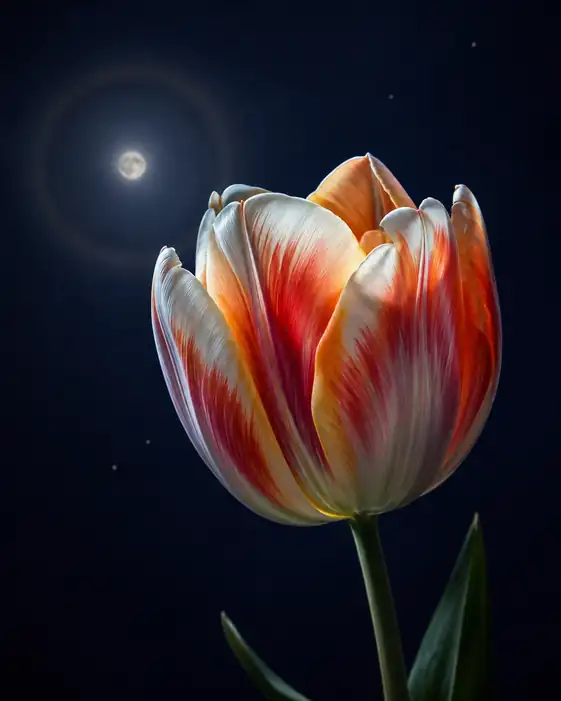 Moonlit Tulip Against the Night
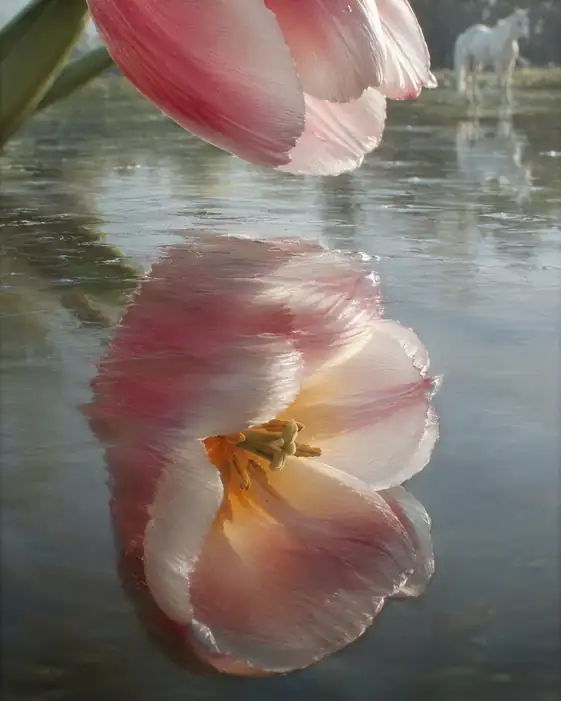 White Steed and Tulip Reflection
Similar Artworks
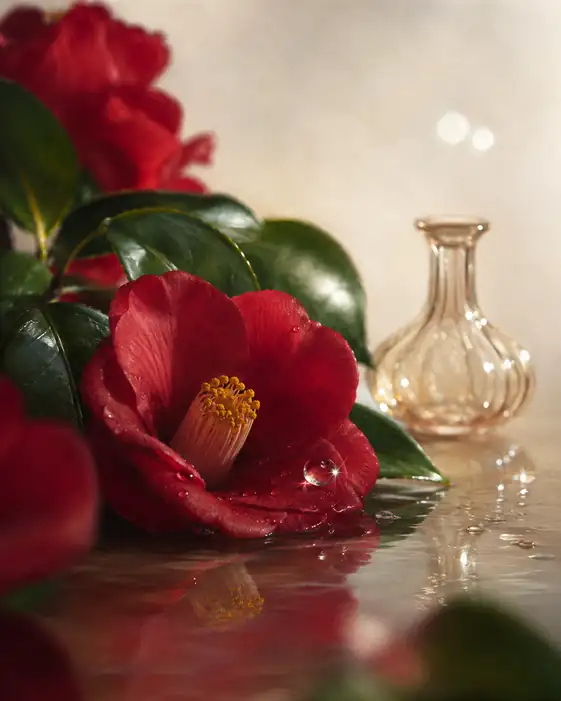 Dewdrop Camellia and Amber Flask
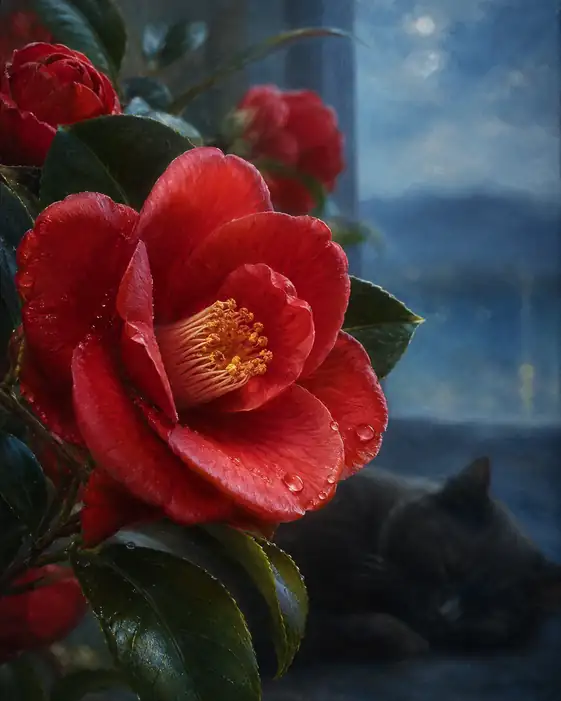 Sleeping Cat Beside Window Camellia
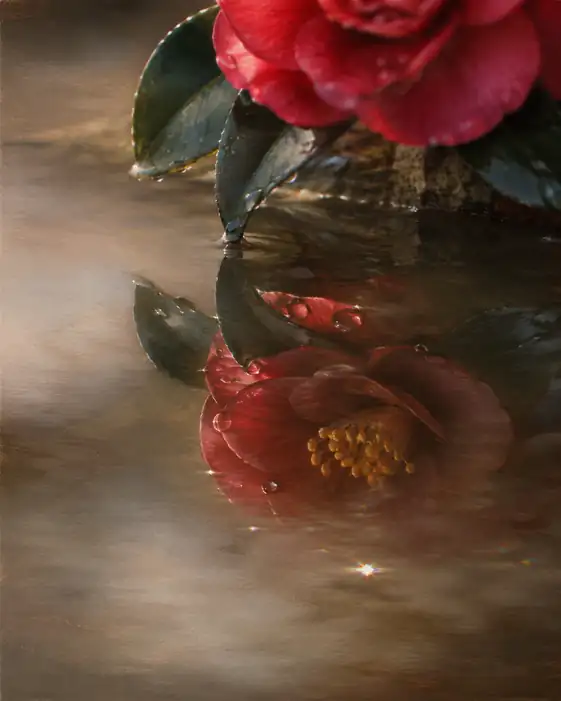 Floating Camellia on Sunlit Stream
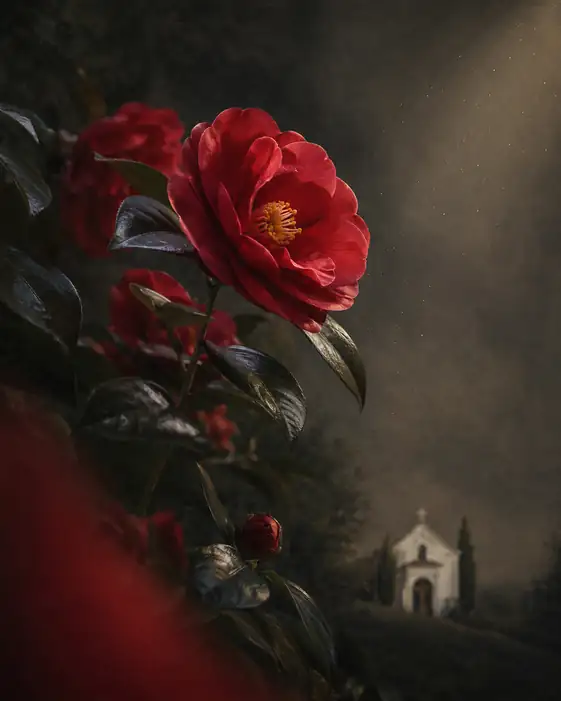 Forest Chapel and the Red Camellia
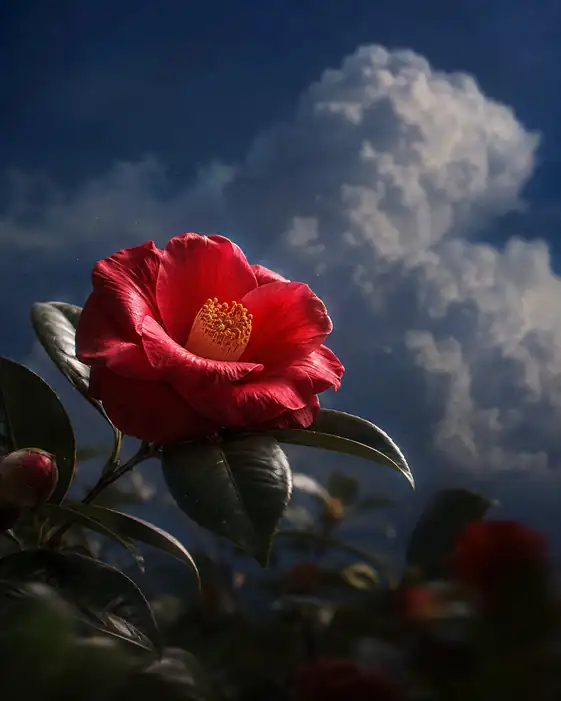 Crimson Camellia Beneath Summer Clouds
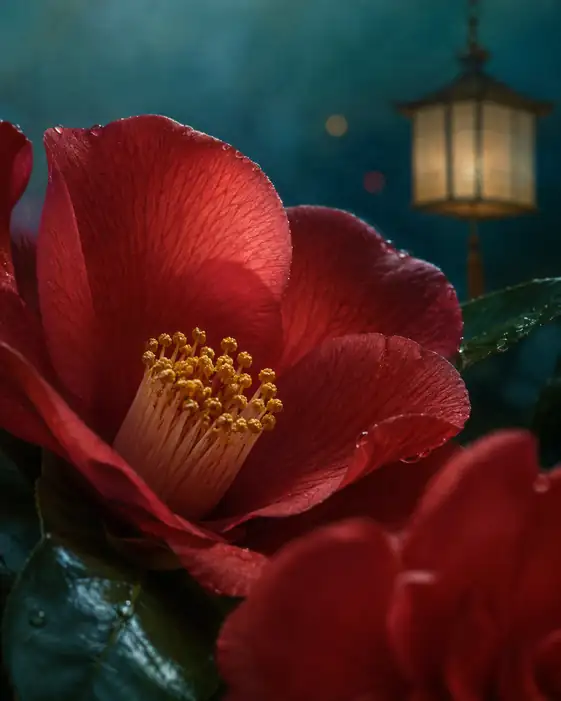 Crimson Camellia Beside the Garden Lantern
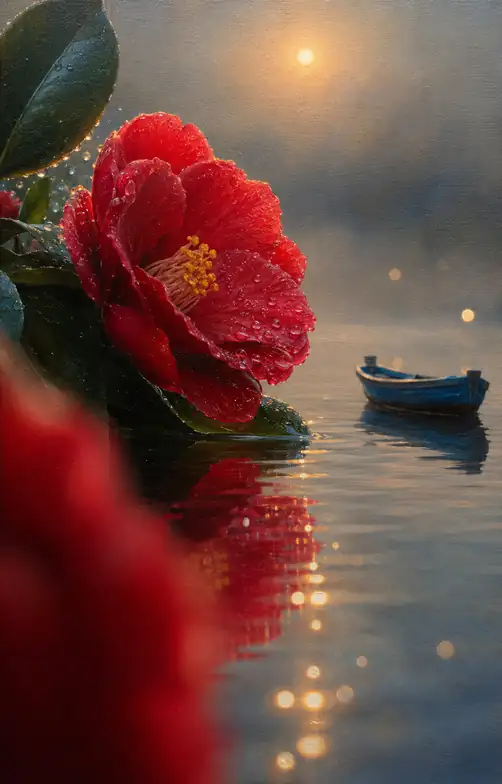 Camellia at Sunset by the Rowboat
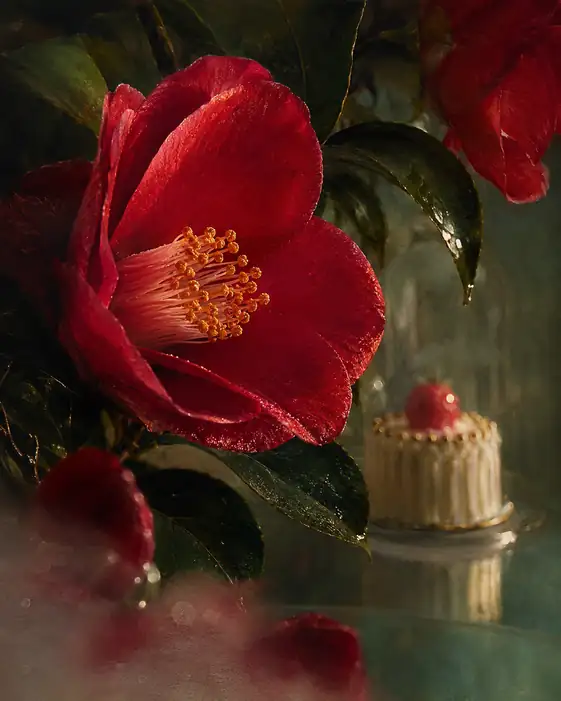 Crimson Camellia and Strawberry Cake
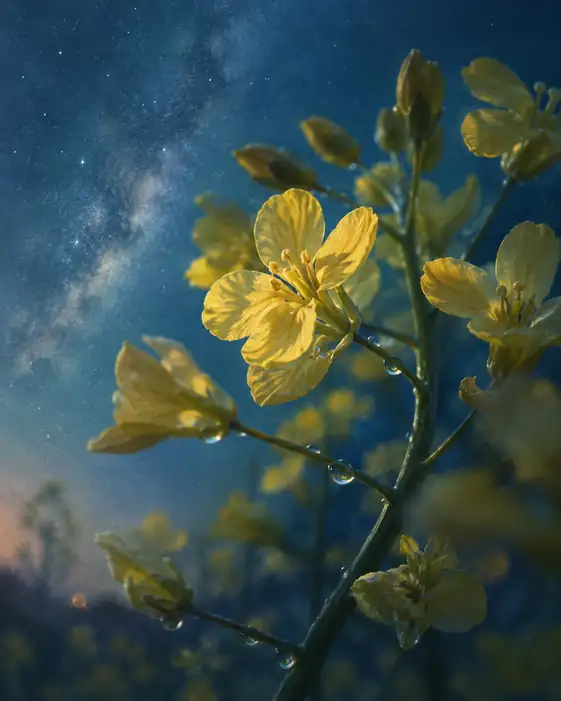 Canola Blossom Beneath Starry Skies
 Crimson Peony Reflected in Cobblestone Puddle