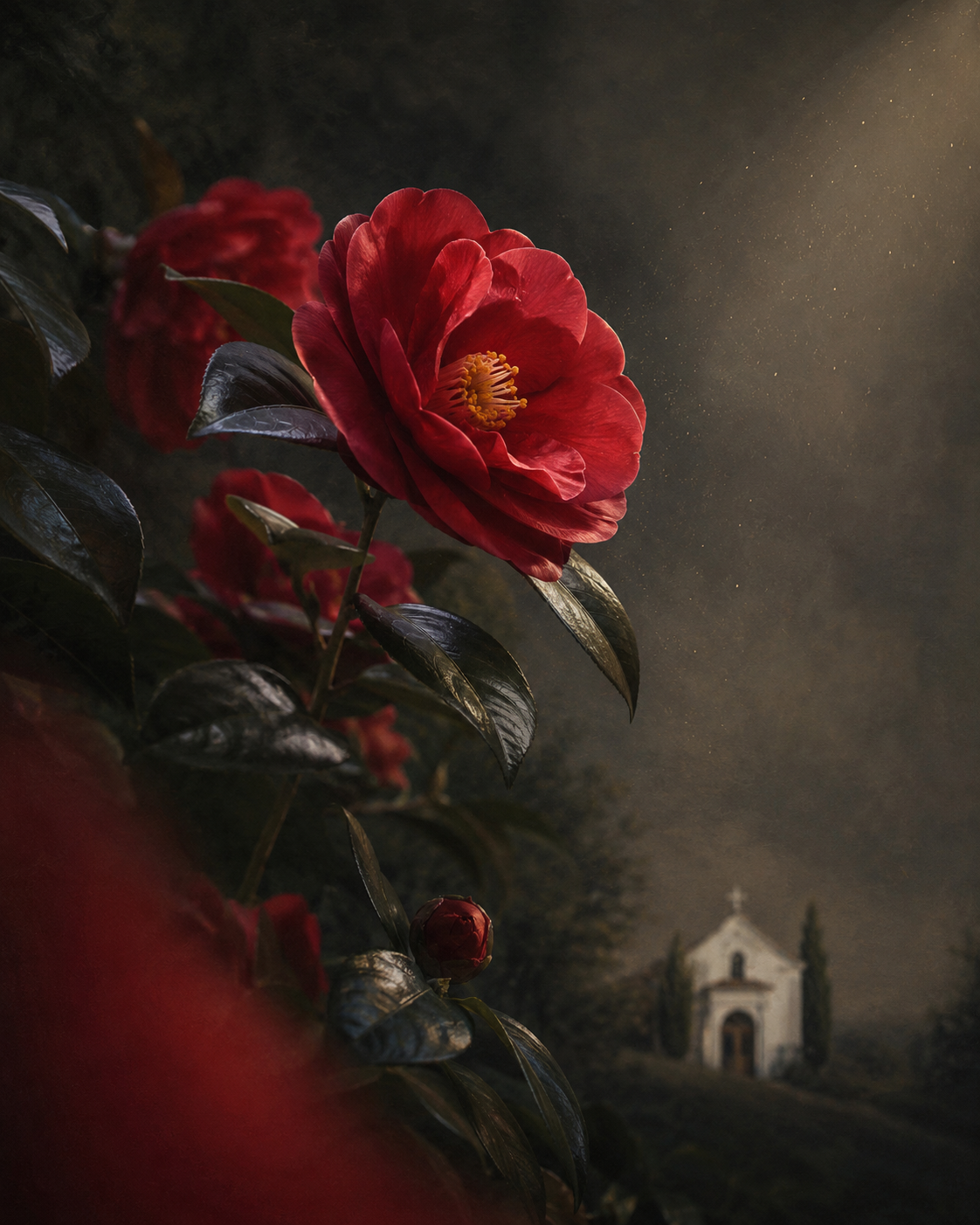
Forest Chapel and the Red Camellia
Critique
Introduction This dark landscape places a red camellia branch close to the viewer and a small white chapel far below at the right. A diagonal shaft of warm light crosses the misty setting, linking botanical abundance with a distant architectural destination. Description The principal camellia opens near the upper center-left, its layered crimson petals surrounding short gold stamens. Glossy dark leaves and several secondary flowers descend along the left edge, with a closed bud near the lower center. A broad red blur fills the extreme lower-left foreground. Across an open brown-gray interval, a tiny chapel with a peaked façade, cross, arched doorway, and flanking cypress-like trees stands at lower right. Fine illuminated particles drift through the upper-right beam. Analysis The flower’s large circular mass is countered by the chapel’s small geometric silhouette at a considerable distance. The branch creates a descending diagonal, while the light travels oppositely from upper right toward the flower. Saturated red and gold emerge from deep green and charcoal-brown. Crisp central petals and leaf highlights give way to softened rear flowers and architecture. Empty space is essential, allowing suspended particles to register and preventing the unequal focal points from competing. Interpretation and Evaluation The contrast of near bloom and far chapel suggests a passage from immediate sensory presence toward reflective distance. Detailed petal layering and leathery leaves demonstrate assured description, while atmospheric blur establishes scale. The asymmetrical composition is bold and controlled. Its restrained dark palette, directional illumination, and unusual placement of sacred architecture as a secondary focus give the floral motif a quiet contemplative range. Conclusion A camellia portrait becomes attention moving from near life to distant shelter. Opposing diagonals, emptiness, and selective light hold intensity and stillness in balance.
Same Subcategory
 Tulip Reflection on Wet Cobblestones
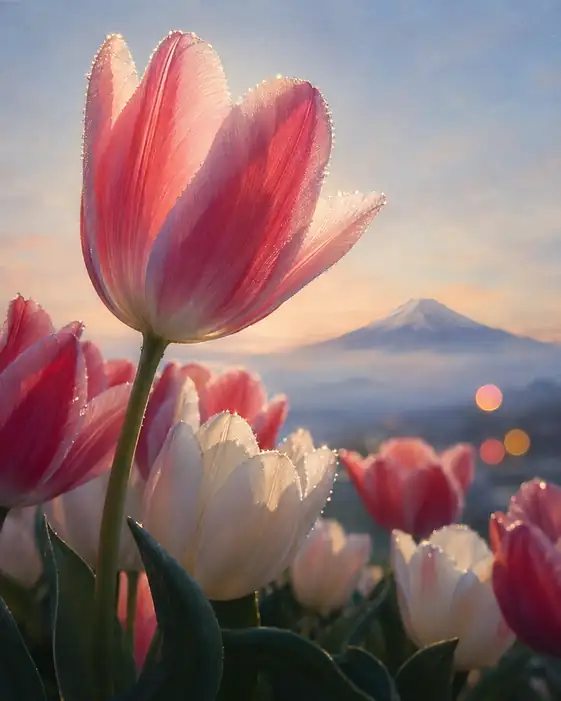 Tulips at Sunrise Before Mount Fuji
Similar Artworks
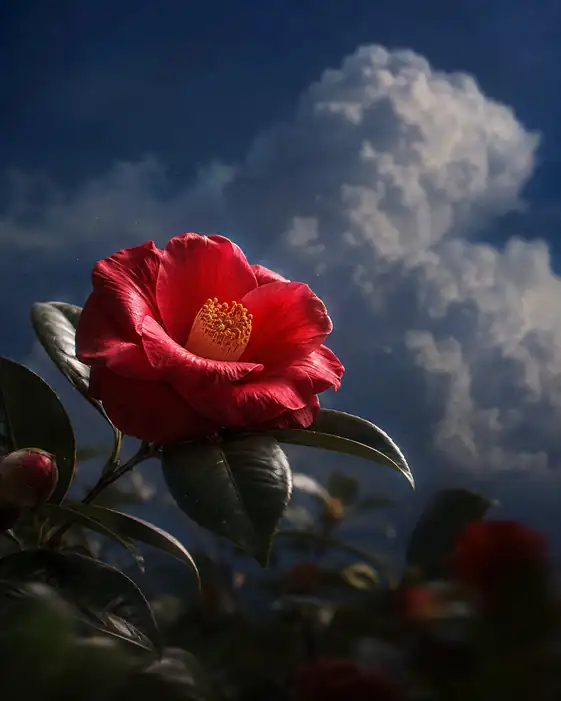 Crimson Camellia Beneath Summer Clouds
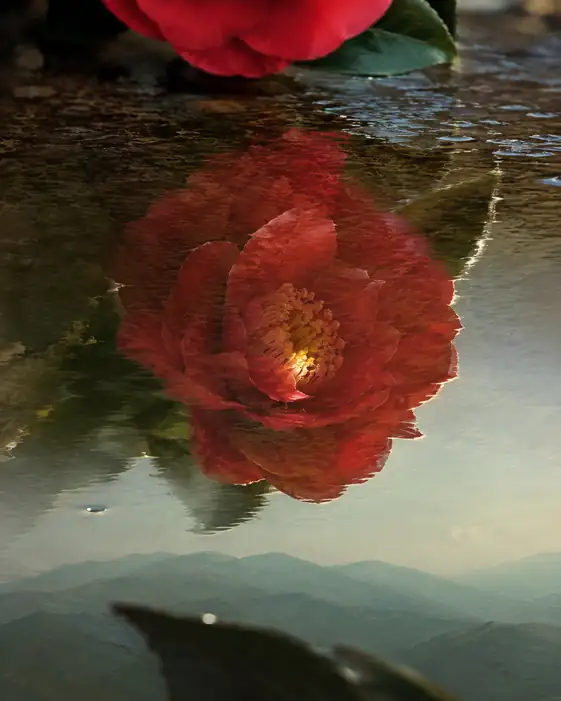 Camellia Mirage on Serene Waters
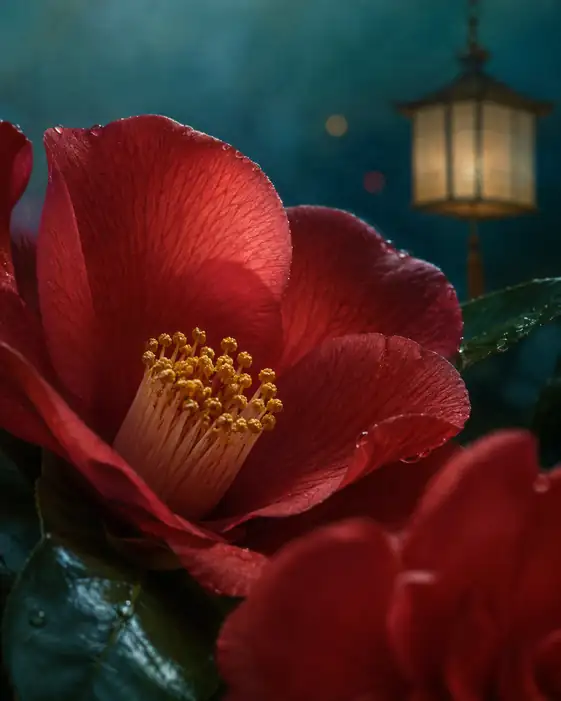 Crimson Camellia Beside the Garden Lantern
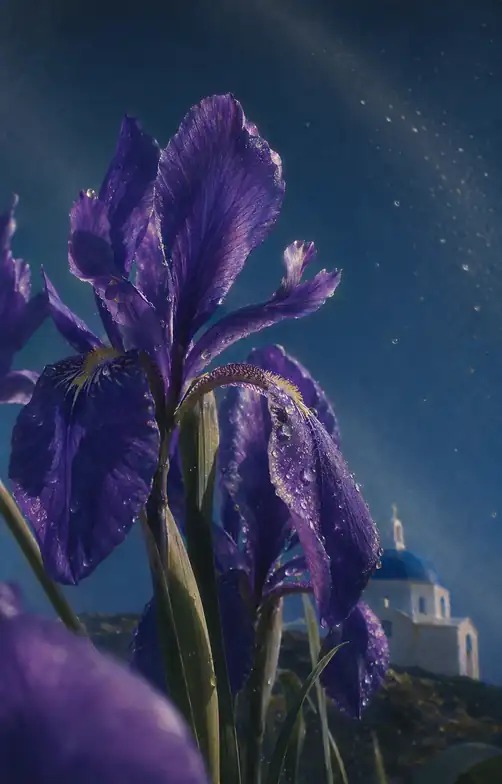 Iris and the Seaside Chapel
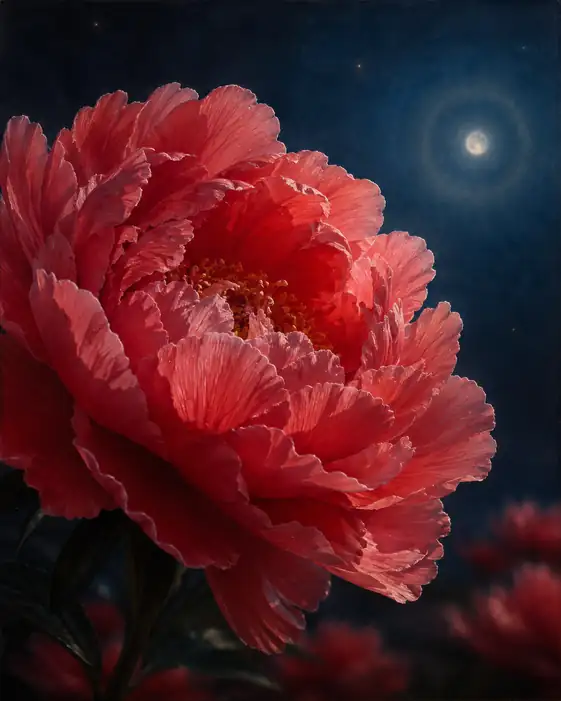 Moonlit Peony in Velvet Night
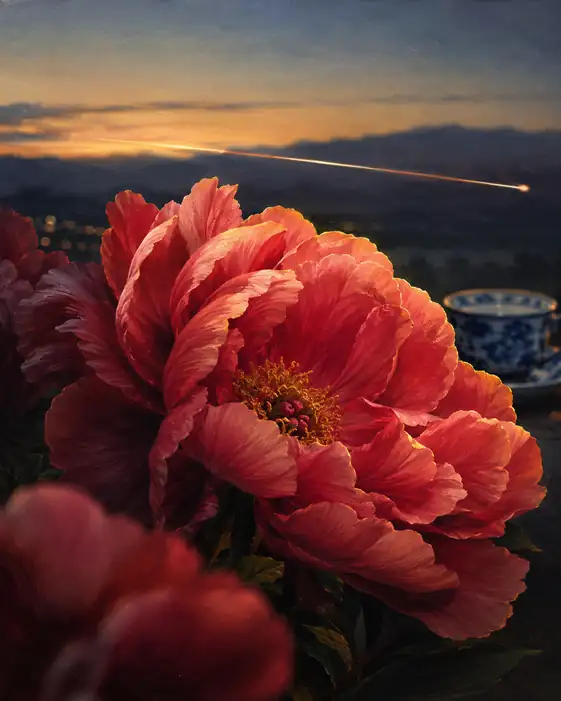 Crimson Peony and the Evening Meteor
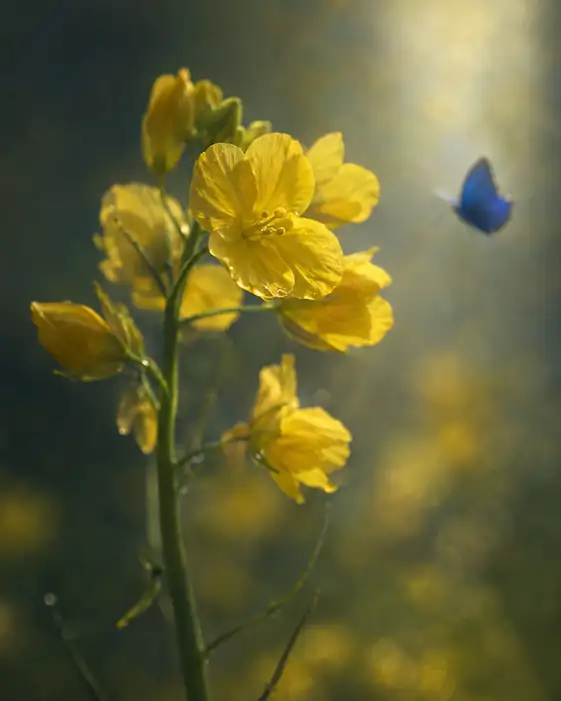 Blue Butterfly and Sunlit Canola Flower
 Spring Plum Blossom and Sparkling Glass
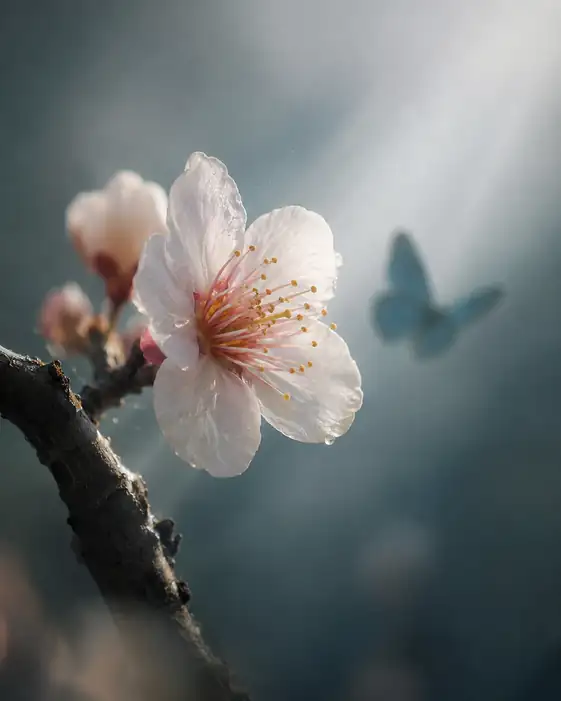 Plum Blossom and the Blue Butterfly
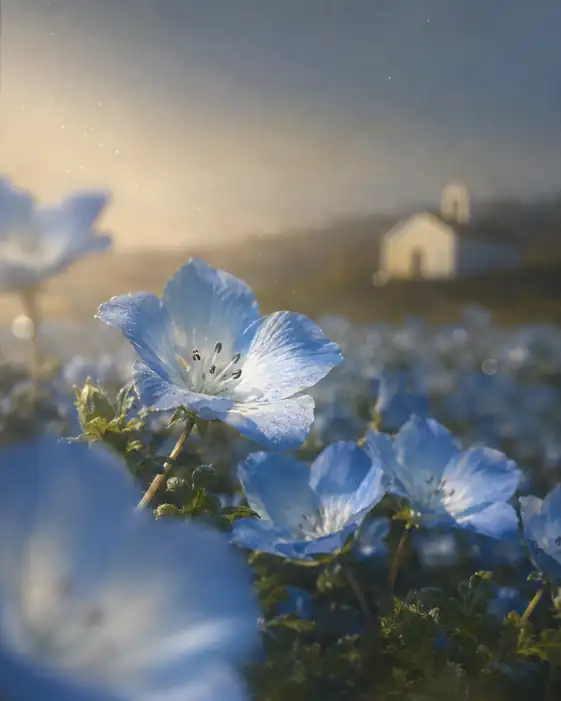 Morning Church in Field of Nemophila