
Tulip Reflection on Wet Cobblestones
Critique
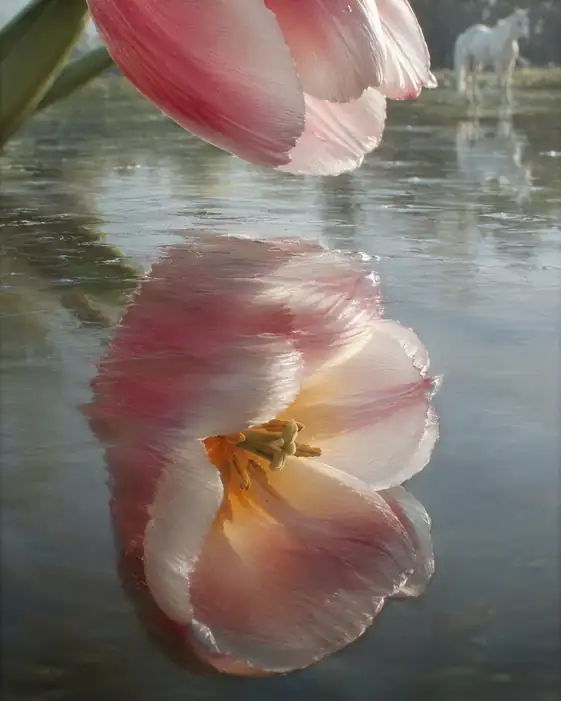
Introduction This close waterside view places red-and-white tulip heads above a shallow reflective surface, giving their wavering images most of the composition. The painting studies the boundary between solid petals and moving water rather than presenting the flowers as a conventional upright display. Description Several heavy tulip cups enter from the upper left and center, cropped so that only lower petals, droplets, and a few green leaves remain visible. Their red markings spread over creamy white surfaces. Below, the flowers reappear upside down as enlarged, rippled forms in pink, white, and green. Flat stones border the water at right and along the bottom, while turquoise patches and a single star-shaped glint punctuate the subdued pool. Analysis The high placement of the actual flowers reverses normal visual hierarchy and makes reflection the central field. Vertical petal folds become horizontal tremors when mirrored, allowing stable and unstable contours to be compared directly. Warm red and cream stand against muted green and turquoise. Sharp droplets on upper petals shift to broken highlights below. The stones provide firm, rough-edged boundaries, while the water’s thin bands carry the eye downward through repeated flower forms. Interpretation and Evaluation The image treats reflection as a material transformation rather than a decorative duplicate. Convincing petal weight, transparent moisture, stone texture, and shallow ripples demonstrate broad descriptive skill. Its cropped, top-heavy composition is unusual yet balanced by the large mirrored mass. Restrained color and the close contact between petals and water give the scene an intimate originality centered on change at a surface. Conclusion Wet tulips become a comparison between object and altered image. Inverted scale, varied edges, and reflected color make the narrow waterline the active center of perception.
Same Subcategory
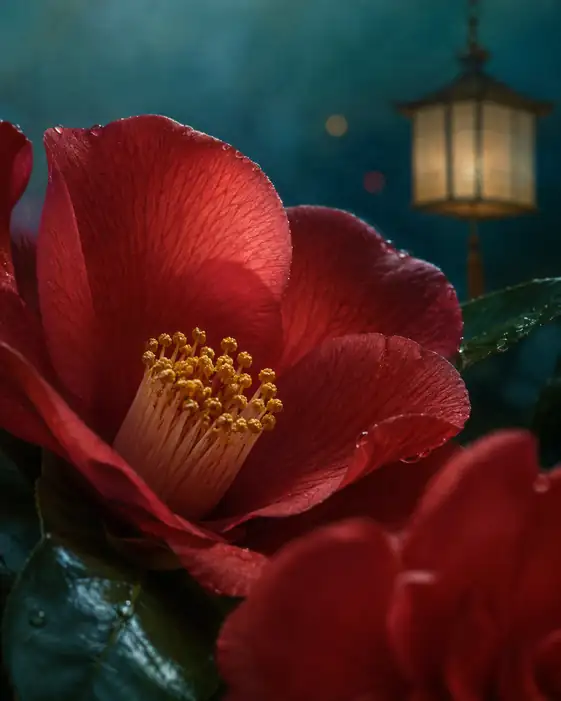 Crimson Camellia Beside the Garden Lantern
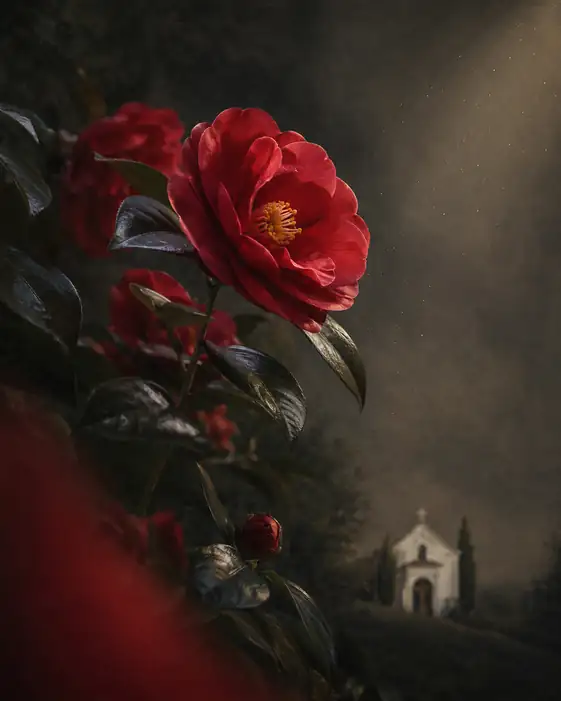 Forest Chapel and the Red Camellia
Similar Artworks
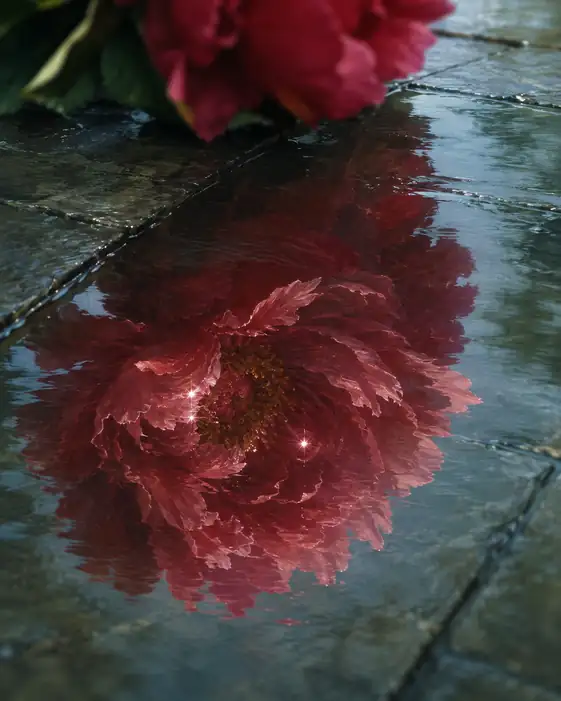 Crimson Peony Reflected in Cobblestone Puddle
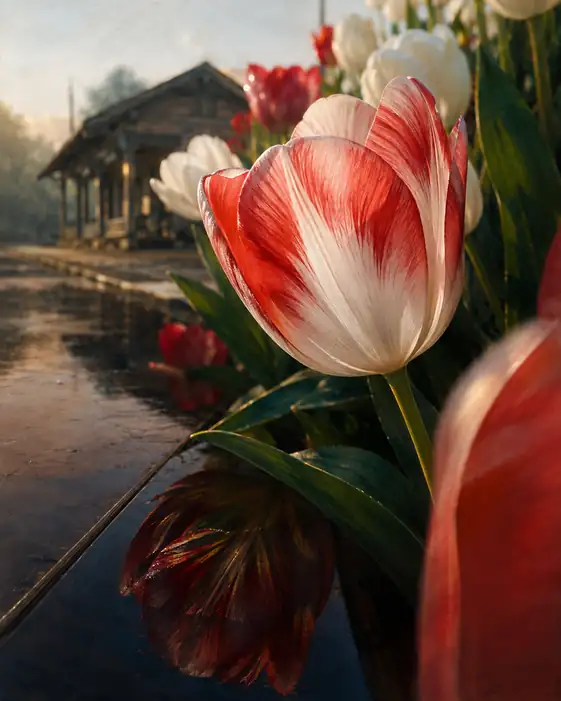 Tulips on Rainy Station Platform
 Mimosa Reflection on Wet Cobblestones
 Sparkling Canola and Porcelain Vase
 White Steed and Tulip Reflection
 Yellow Blossoms and the Vintage Mirror
 Peony Reflection and Embroidered Silk
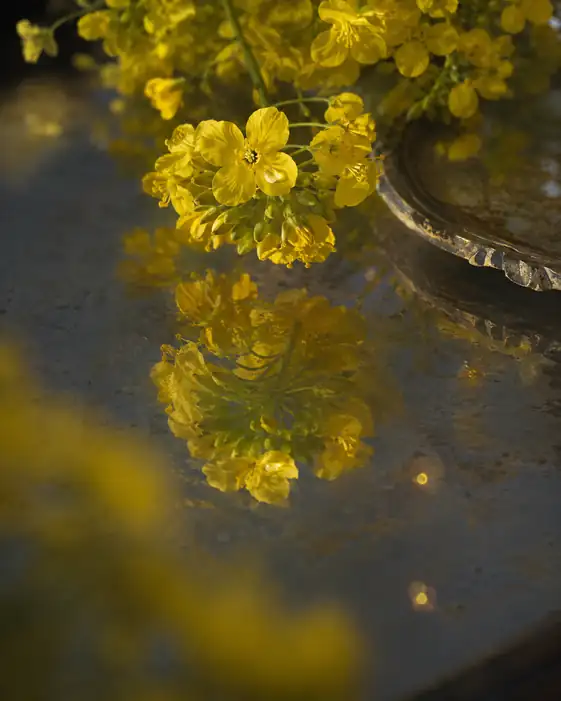 Canola Blossom on Silver Tray
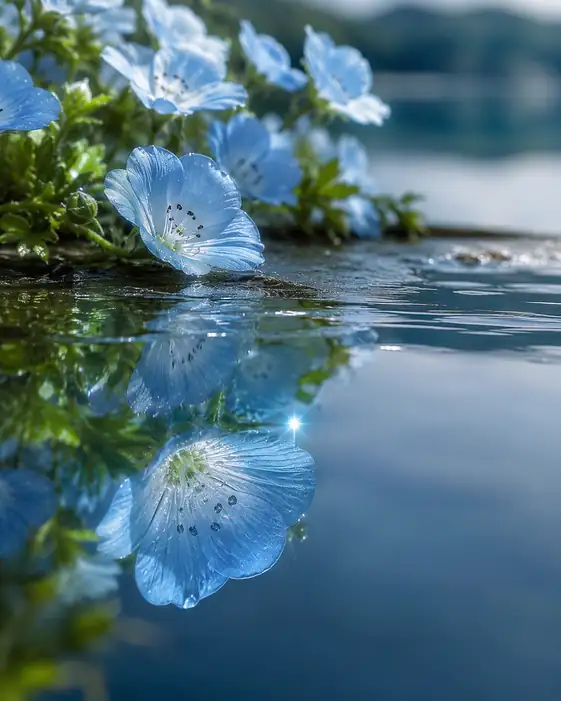 Nemophila Reflection and Water Sparkle
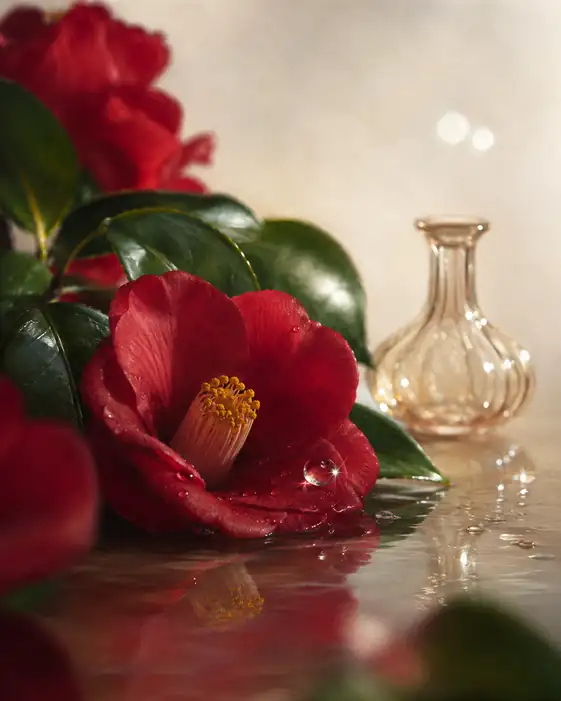 Dewdrop Camellia and Amber Flask