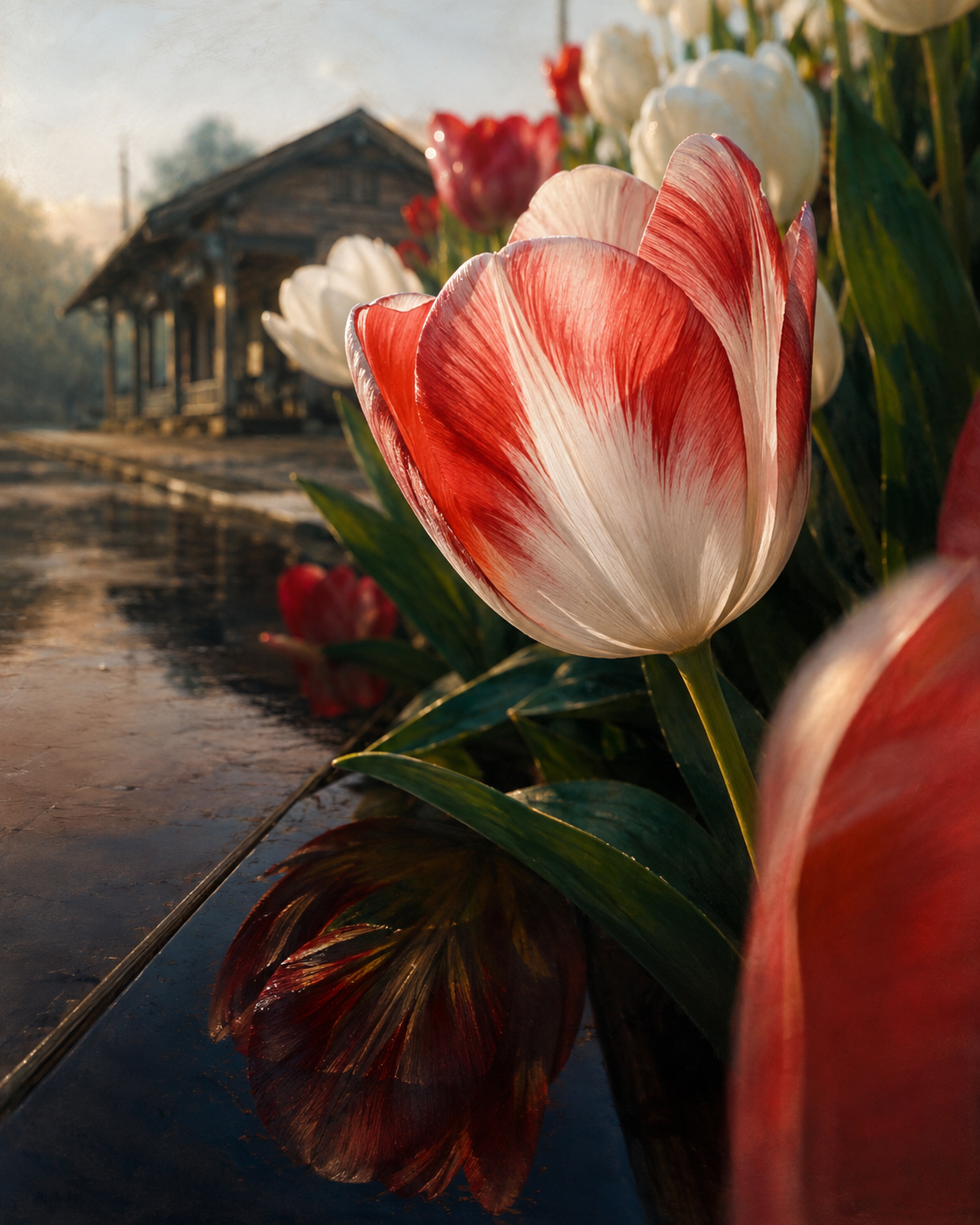
Tulips on Rainy Station Platform
Critique
Introduction This low-viewpoint landscape sets a large red-and-white tulip beside wet rails leading toward a wooden station building. The floral close view and transport setting are joined through perspective, reflections, and morning light, turning a familiar bloom into the threshold of a broader place. Description The principal tulip fills the center-right, its closed cup patterned with vertical red flames over creamy white. Tall green leaves surround it, and white and red tulips rise behind. Another cropped red-white bloom occupies the extreme right foreground. At left, two dark rails or grooves run diagonally toward a softly focused timber building with a peaked roof and platform. The wet ground reflects a dark red flower beneath the main bloom and catches narrow gold highlights. Analysis The rails create strong recession toward the upper left, while the main flower stands as a broad vertical counterweight. Its parallel petal striations echo the linear tracks but retain an organic curvature. Warm red and cream advance from deep green, whereas brown architecture and blue-gray shadows recede. The reflected blossom supplies a downward extension and complicates the distinction between plant and pavement. Sharp foreground petals shift to blurred building edges, making depth immediate. Interpretation and Evaluation The arrangement links seasonal growth to a site organized for departure and arrival. Accurate petal fibers, wet leaves, and reflections demonstrate descriptive control, while the low angle grants the flower unusual monumentality. The asymmetrical composition uses perspective confidently, and the red-white motif is distributed through several distances. Its originality lies in allowing a flower, rather than architecture, to define the viewer’s entrance into the station scene. Conclusion The tulip becomes direction and transition. Lines, focus, and color make the bloom both plant and gateway to the building.
Same Subcategory
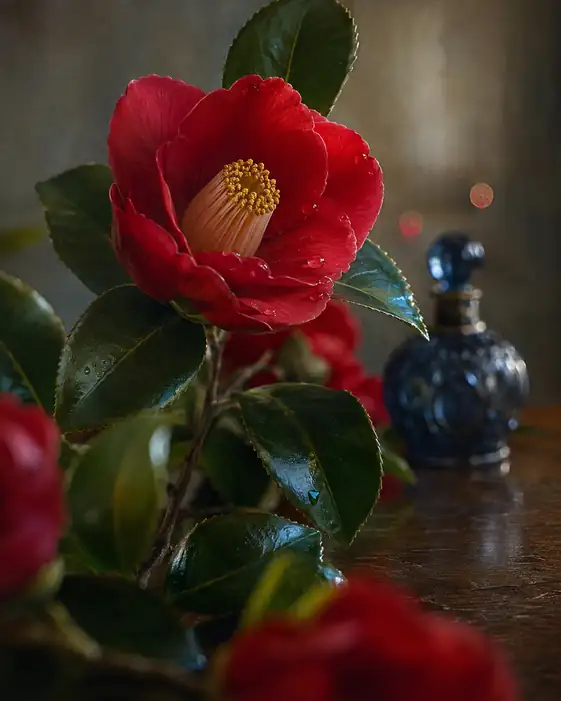 Red Camellia and the Cobalt Bottle
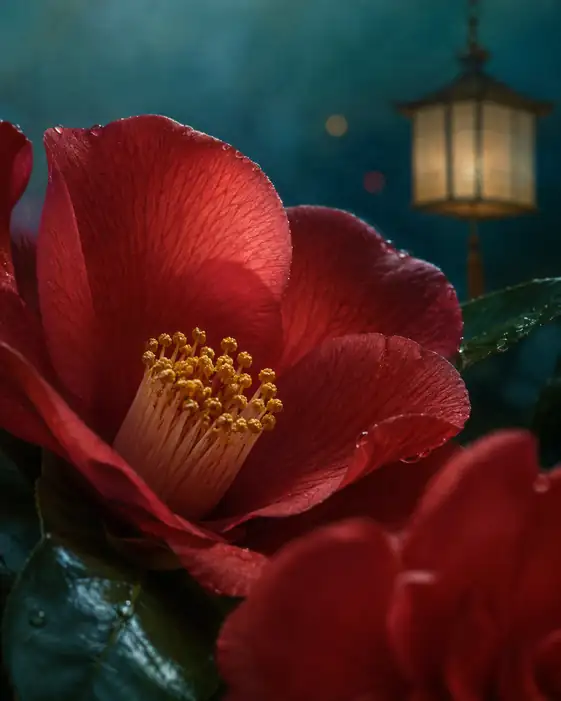 Crimson Camellia Beside the Garden Lantern
Similar Artworks
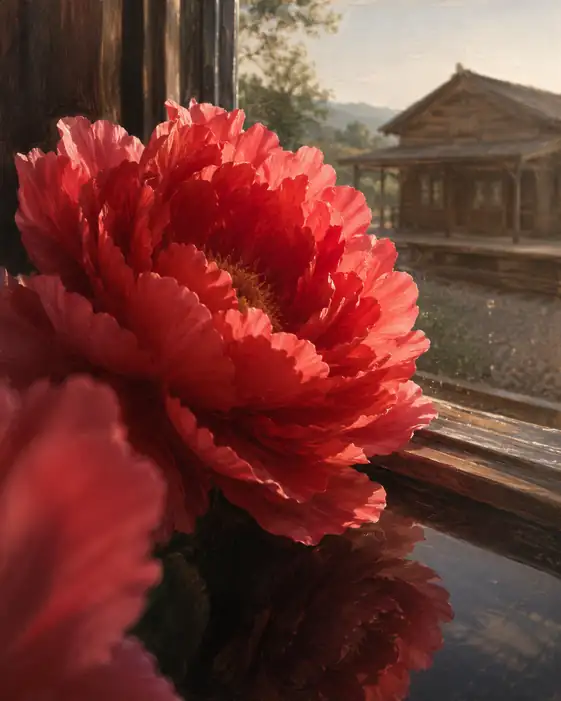 Peony Reflected at Mountain Station Window
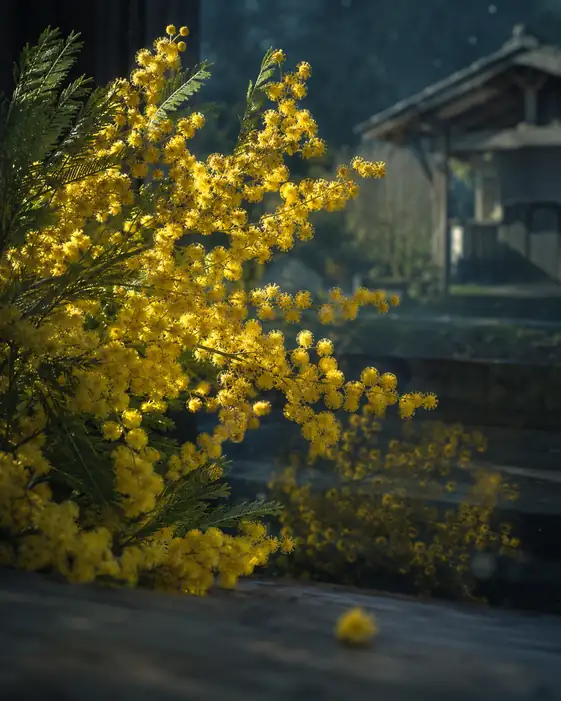 Mimosa in Bloom by the Wooden Station
 Tulip Reflection on Wet Cobblestones
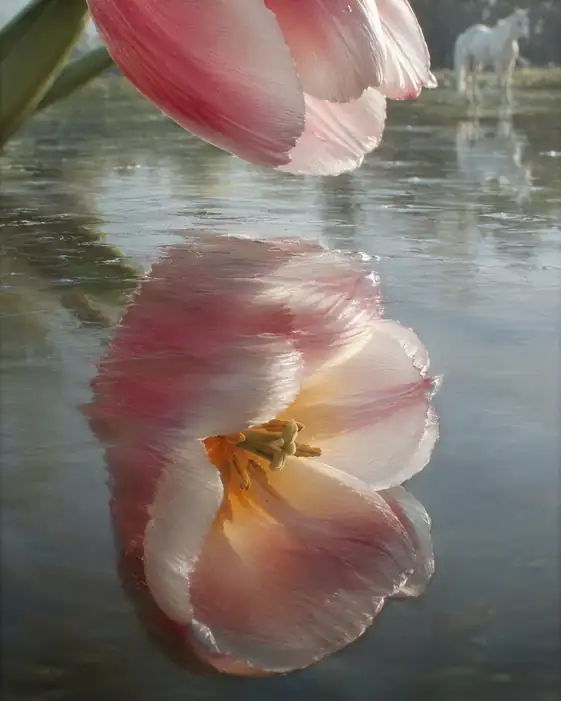 White Steed and Tulip Reflection
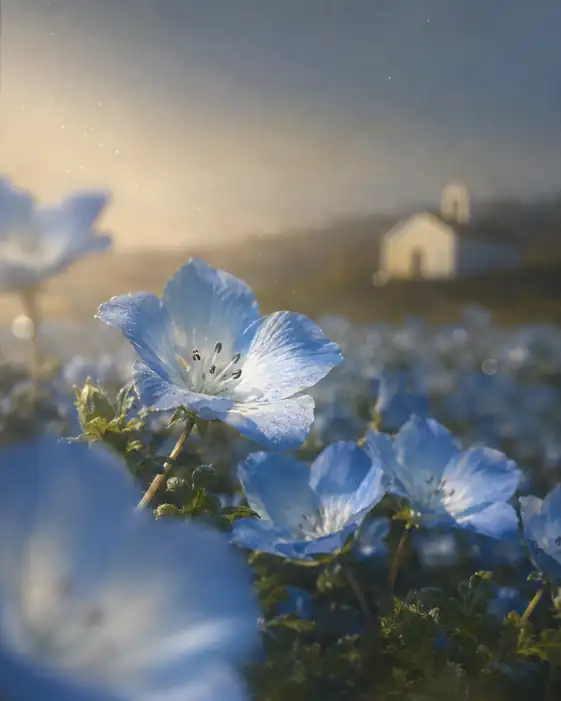 Morning Church in Field of Nemophila
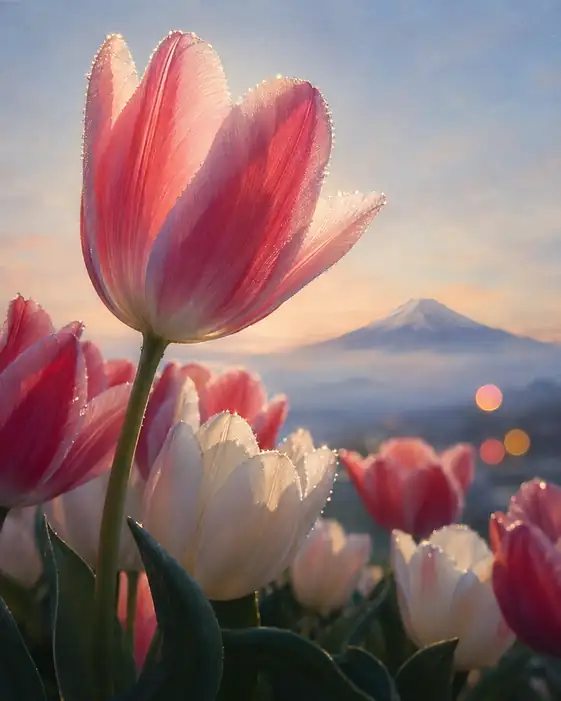 Tulips at Sunrise Before Mount Fuji
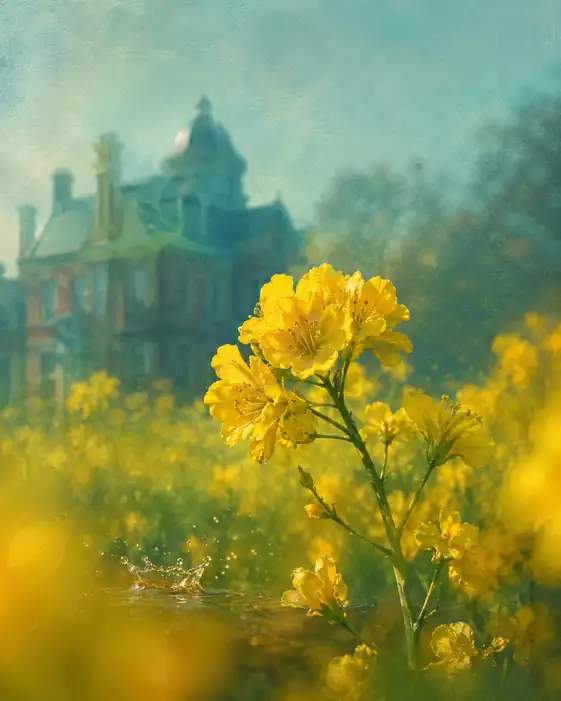 Canola Blossoms Before the Manor House
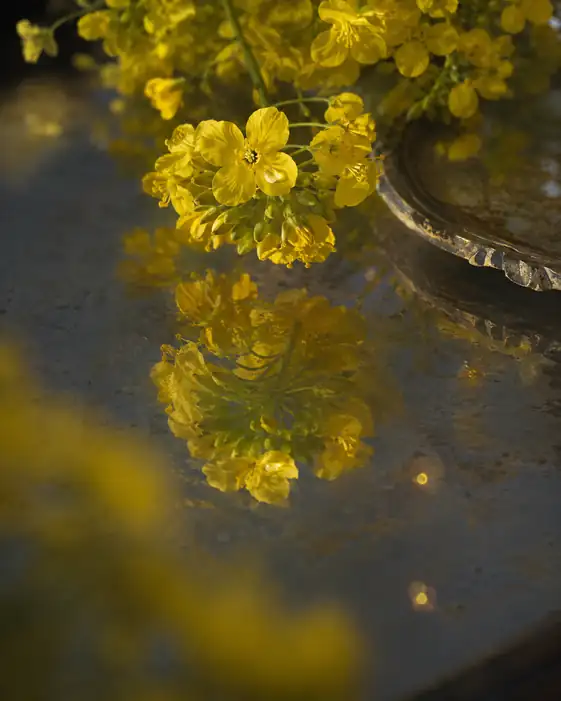 Canola Blossom on Silver Tray
 Camellia at Sunset by the Rowboat
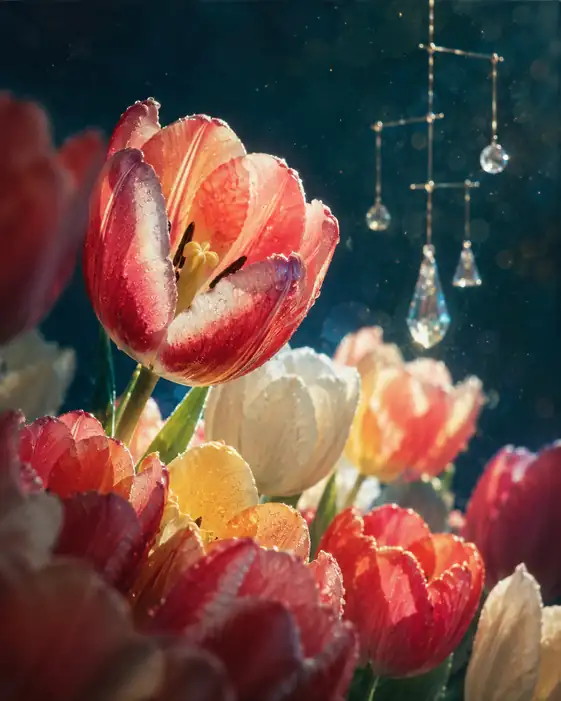 Tulips in Morning Light and Crystal Mobile