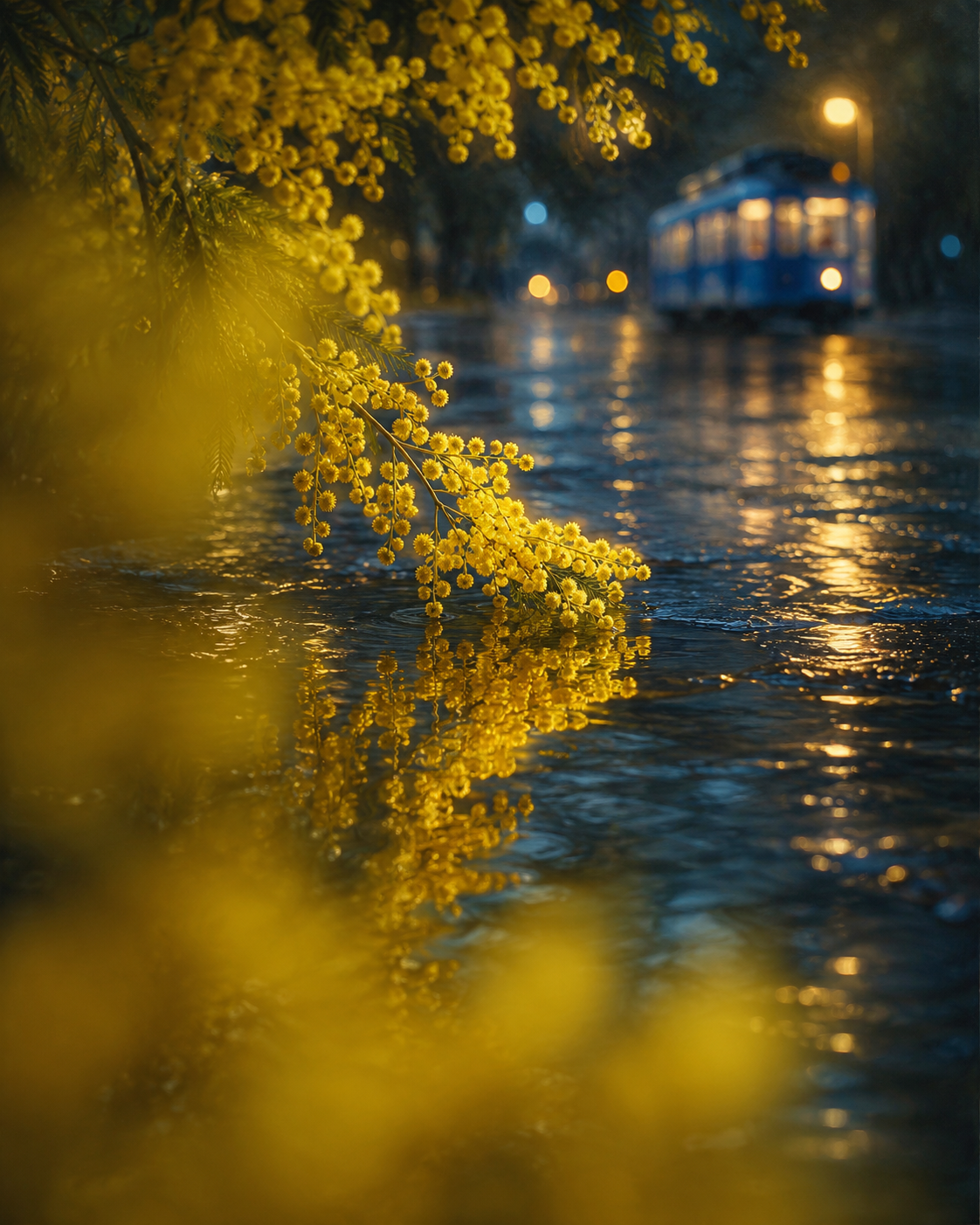
Rainy Night Tram and Mimosa Reflection
Critique
Introduction This rainy urban scene places yellow flowering branches close to the viewer while a blue tram waits or passes in the distance. The work joins botanical detail with public movement, using wet reflections to bind the near plant, roadway, lamps, and vehicle into one nocturnal atmosphere. Description Foliage descends from the upper left, and one sharply observed spray reaches diagonally toward the center until its lowest blossoms nearly touch the flooded pavement. A second yellow mass fills the left foreground in blur. Across the upper right, a blue tram with warm windows and a round headlamp appears softly focused. Streetlights form yellow and blue circles, and their elongated reflections break into ripples across the road. Analysis The crisp diagonal branch leads directly toward the tram, connecting foreground stillness with distant transit. Shallow focus separates the botanical subject, but repeated gold lights and reflections prevent the vehicle from feeling detached. Yellow and deep blue establish a strong complementary structure. The branch’s fine stems contrast with the tram’s broad rectangular body, while the water converts both forms into unstable vertical streaks. Blurred foreground flowers create a luminous frame and increase spatial depth. Interpretation and Evaluation The scene suggests that rain briefly brings cultivated nature and urban infrastructure into a shared visual system. Detailed flower heads and convincing water demonstrate descriptive control, while selective blur evokes humid distance. The asymmetrical composition is held together by directional lines and repeated light. Its originality lies in allowing a modest branch, rather than the tram, to govern how the city is seen. Conclusion Flowers and transport correspond. Color, focus, blossom, and water turn a rainy street into paused motion.
Same Subcategory
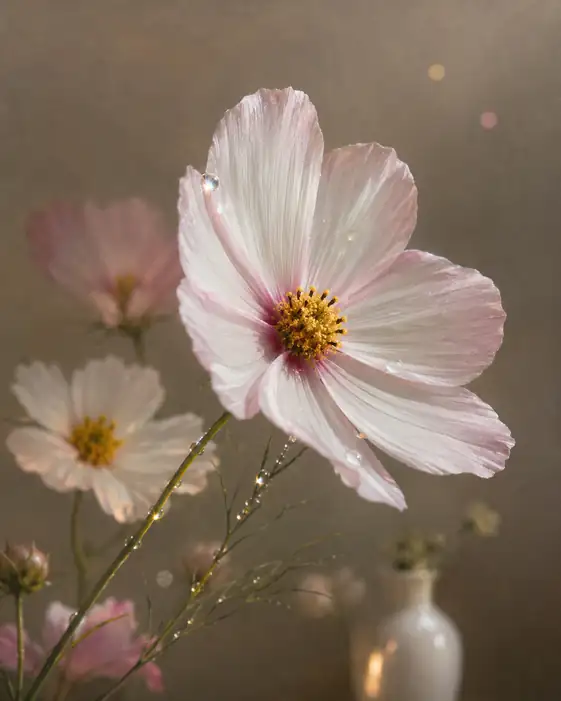 Sparkling Dew on Gentle Cosmos
 Sunlit Table and Floating Cosmos
Similar Artworks
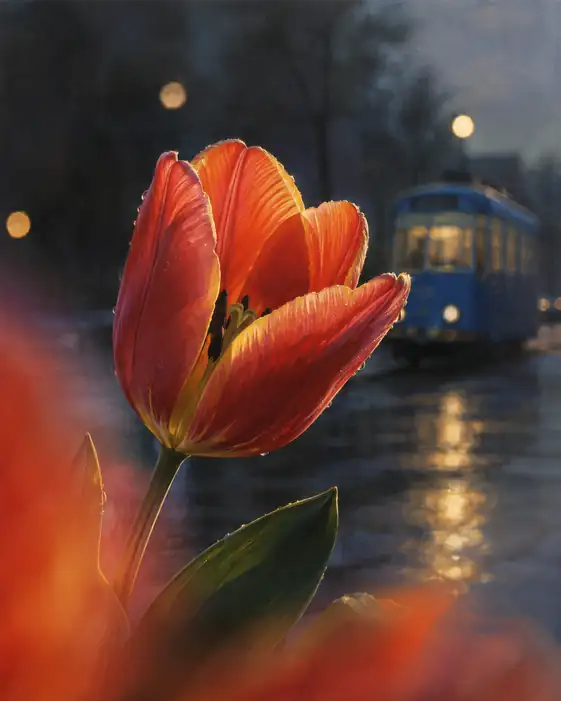 Red Tulip and the Night Tram
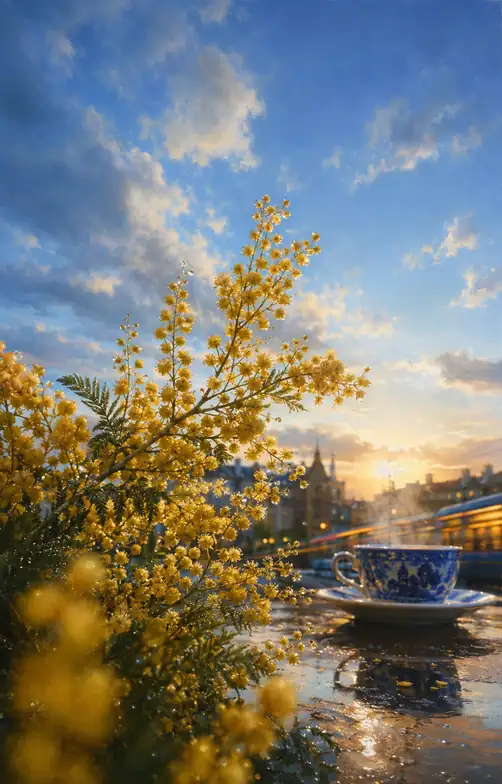 Sunset Tea and Golden Mimosa
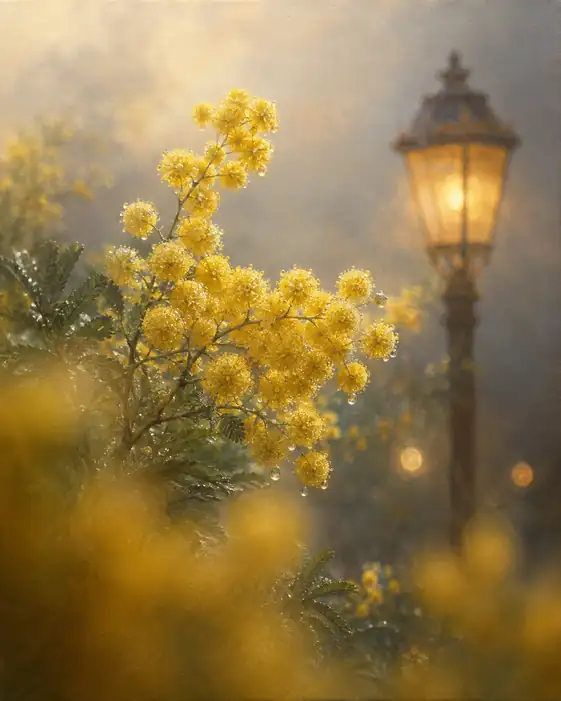 Glowing Streetlamp and Misty Mimosa
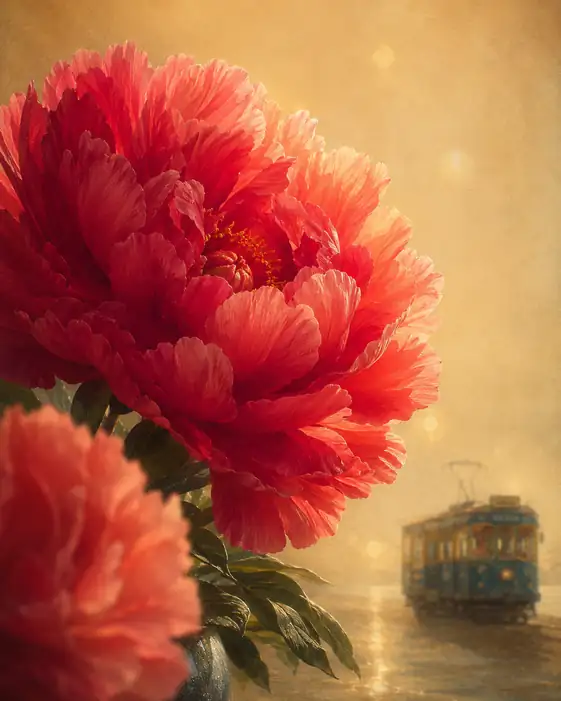 Golden Tram and Twilight Peony
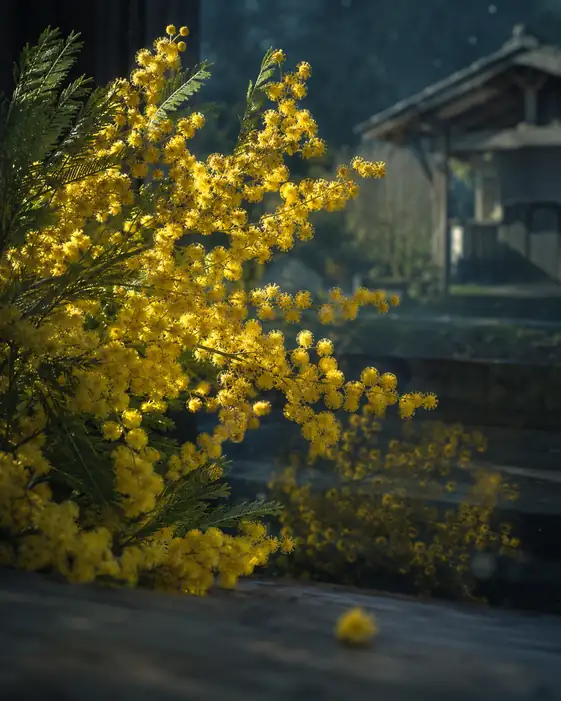 Mimosa in Bloom by the Wooden Station
 Golden Mimosa and Royal Blue Pillow
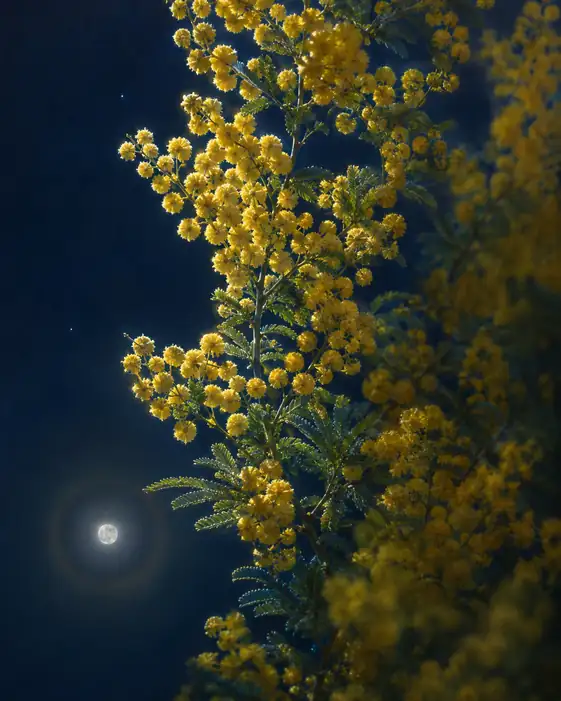 Moonlit Mimosa on a Silent Night
 Golden Mimosa and Distant Mount Fuji
 Golden Mimosa and Crystal Suncatcher
 Canola Blossom Beneath Starry Skies