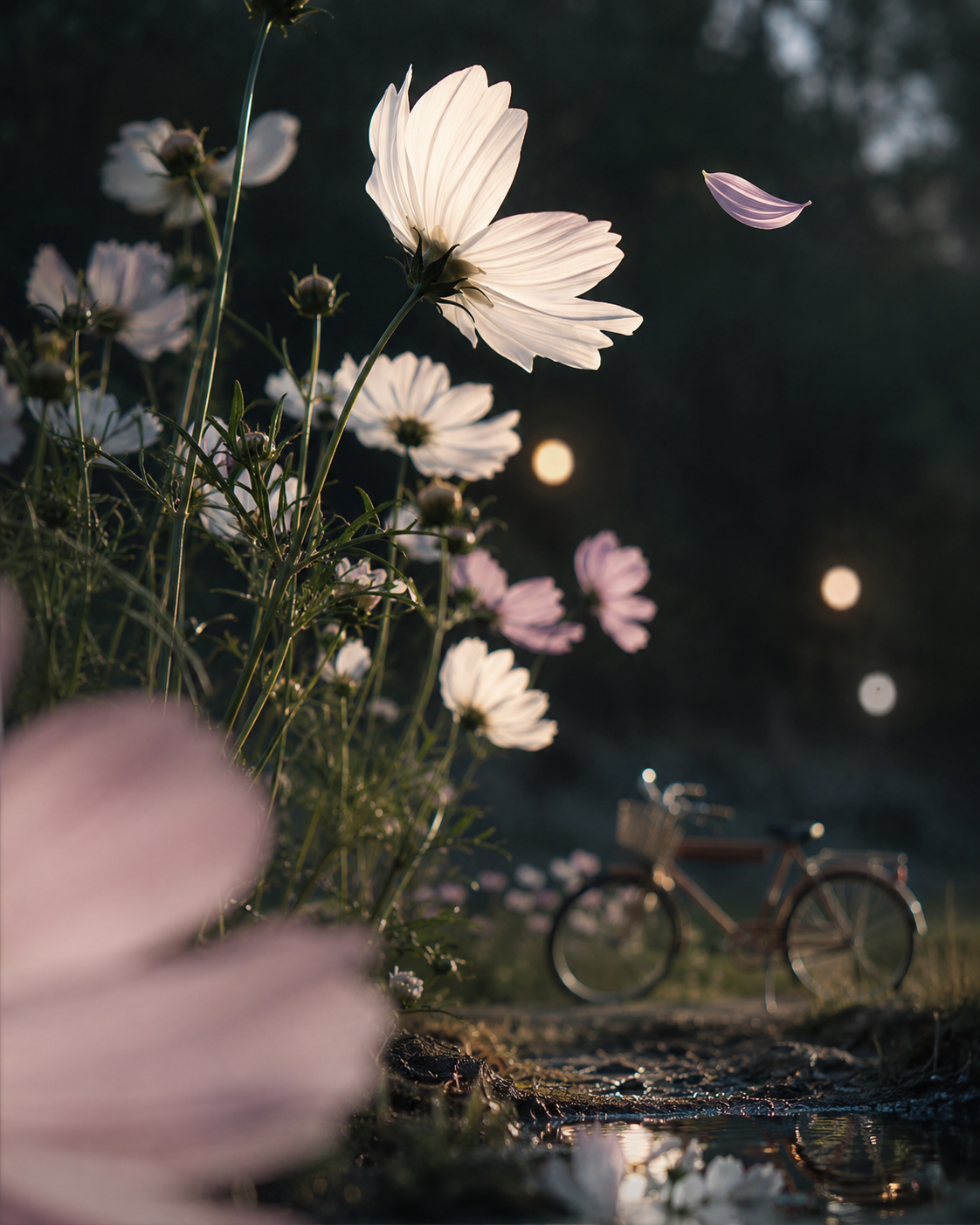
Twilight Breeze and Bicycle in Cosmos Field
Critique
Introduction This low-viewpoint scene combines pale cosmos, a drifting petal, a bicycle, and wet ground in subdued evening light. It expands a floral subject into an inhabited landscape, using depth and interruption to suggest a moment immediately after movement. Description The largest flower rises near the center and is seen partly from behind, its white-pink petals lit against a dark canopy. Several smaller blossoms and buds cluster along the left. A single curved petal floats in the open upper right. Farther back, a reddish bicycle stands across the lower-right field, softened by focus. Circular lights punctuate the darkness, and a narrow puddle at the bottom reflects flowers and warm highlights. Analysis Tall stems create a vertical screen before the bicycle’s horizontal frame and round wheels. The principal bloom forms the brightest shape, balanced by the isolated petal across a wide dark interval. Strong backlighting reveals parallel veins and translucent edges, while the foliage remains nearly black. Repeated circles appear in flower centers, wheels, lamps, and water glints. Extreme foreground blur, crisp middle flowers, and softened bicycle divide the image into distinct spatial layers. Interpretation and Evaluation The unattended bicycle introduces human presence without depicting a person, while the falling petal marks a brief transition. Detailed petal structure and wet reflections show strong descriptive technique. The composition manages many elements through selective focus and a restrained pink, green, and amber palette. Its unusual ground-level viewpoint and displacement of narrative action into traces give the familiar flower field originality. Conclusion Illuminated cosmos becomes a place recently passed through. By coordinating petals, wheels, distant lights, and reflective water, the work turns a garden edge into a study of movement and pause.
Same Subcategory
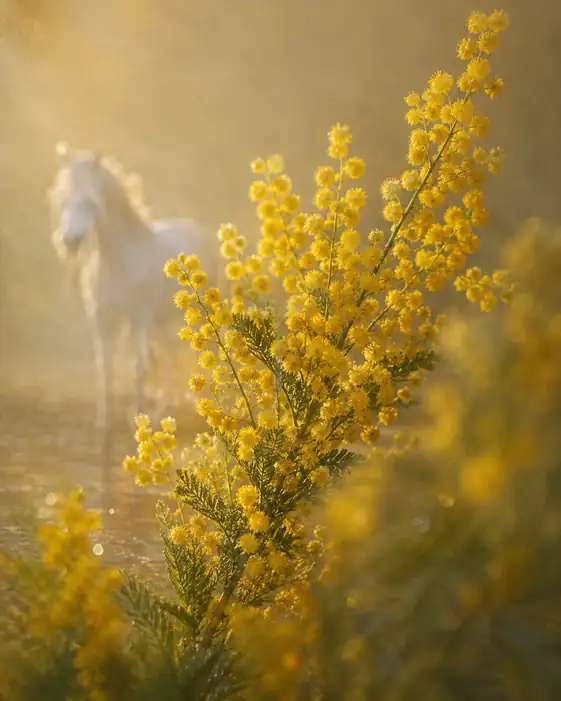 White Steed in Golden Morning Mist
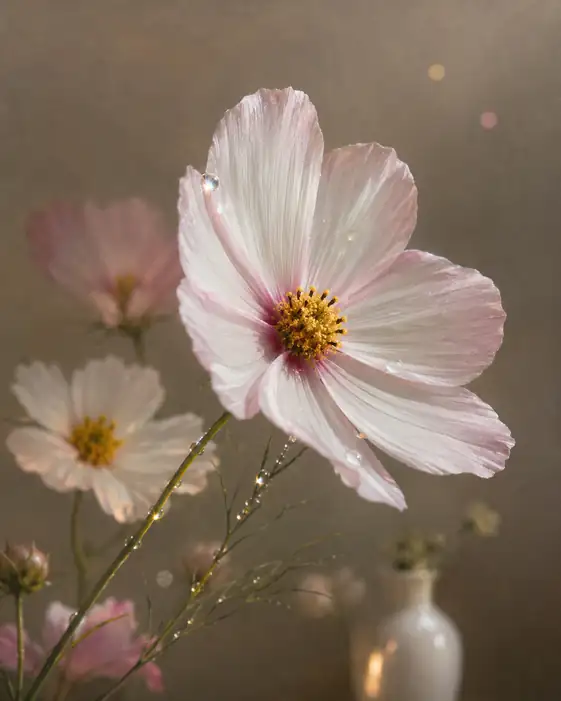 Sparkling Dew on Gentle Cosmos
Similar Artworks
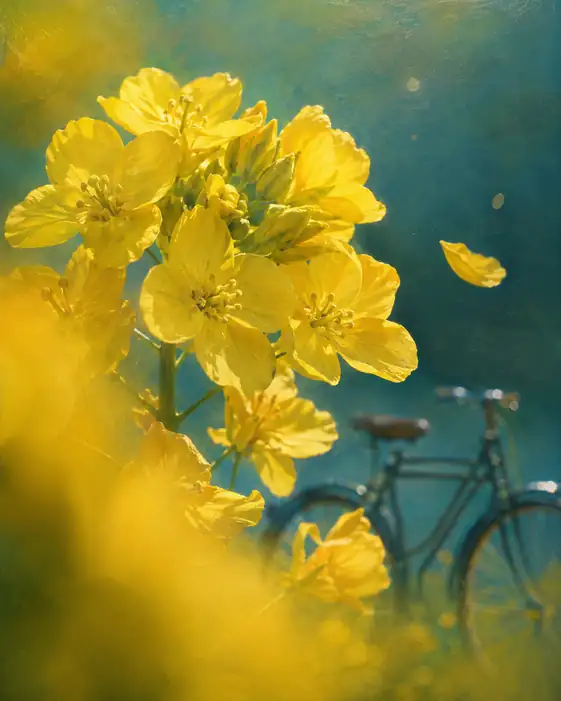 Vintage Bicycle in the Flower Field
 Sunlit Table and Floating Cosmos
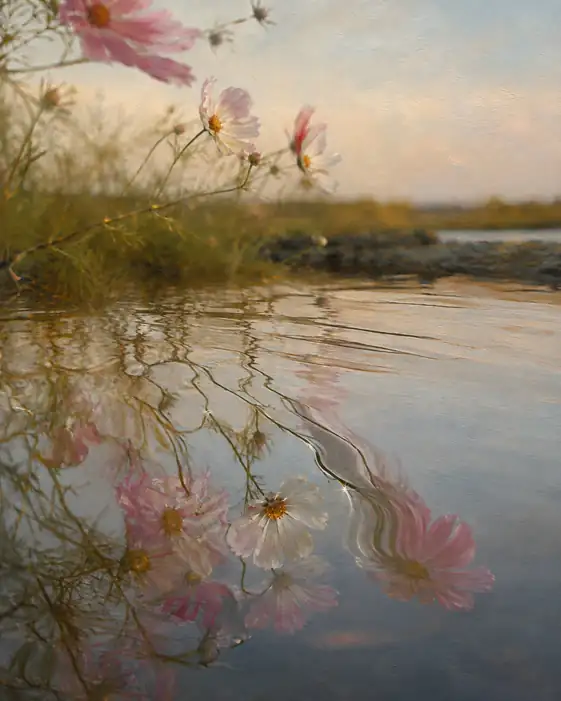 Rippling Cosmos at Sunset Waters
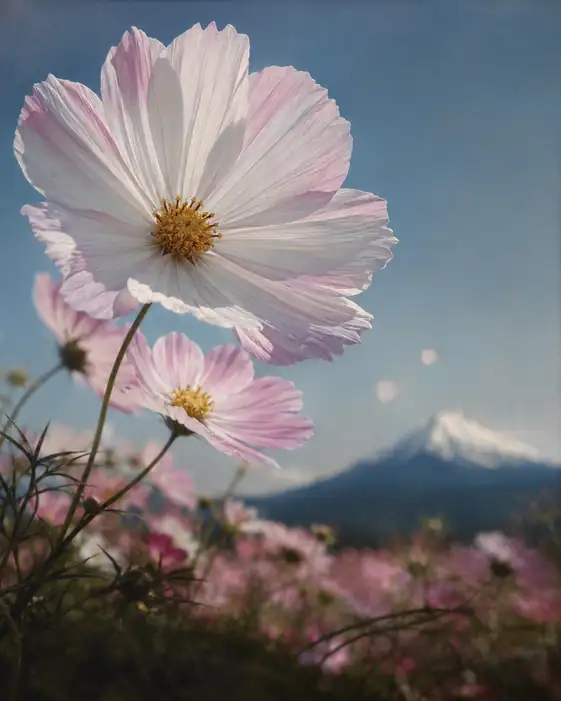 Mount Fuji Beyond the Cosmos Field
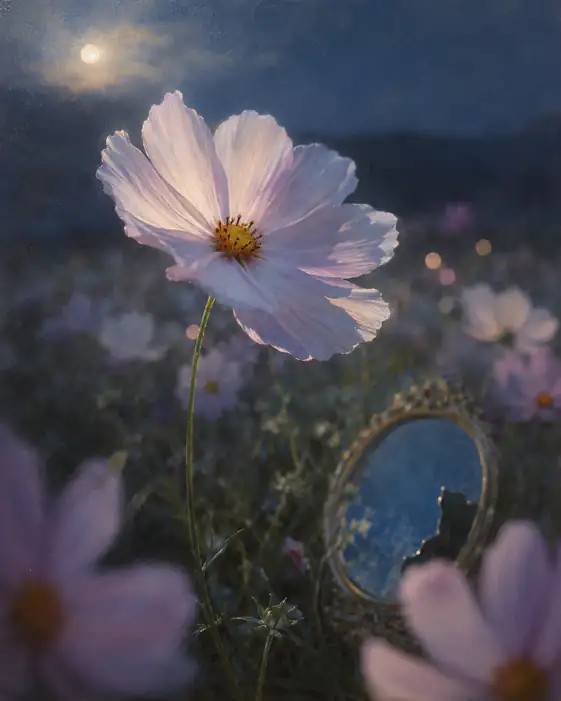 Cosmos in Twilight and Vintage Hand Mirror
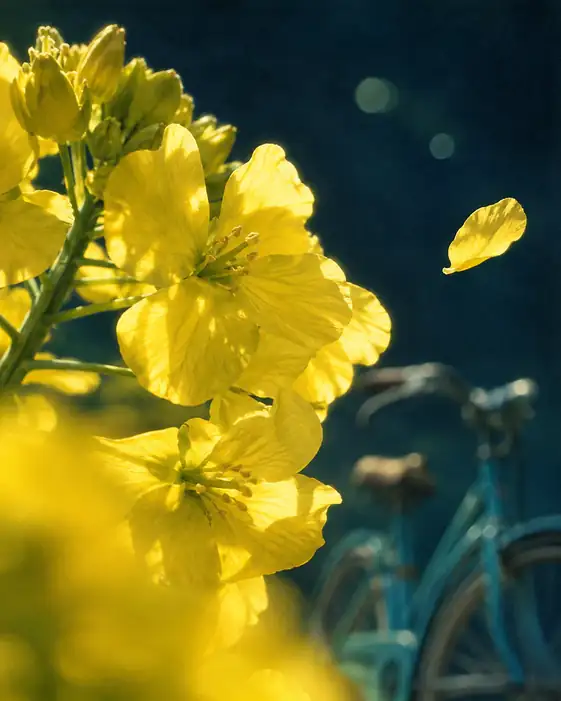 Yellow Petals Drifting by Blue Bicycle
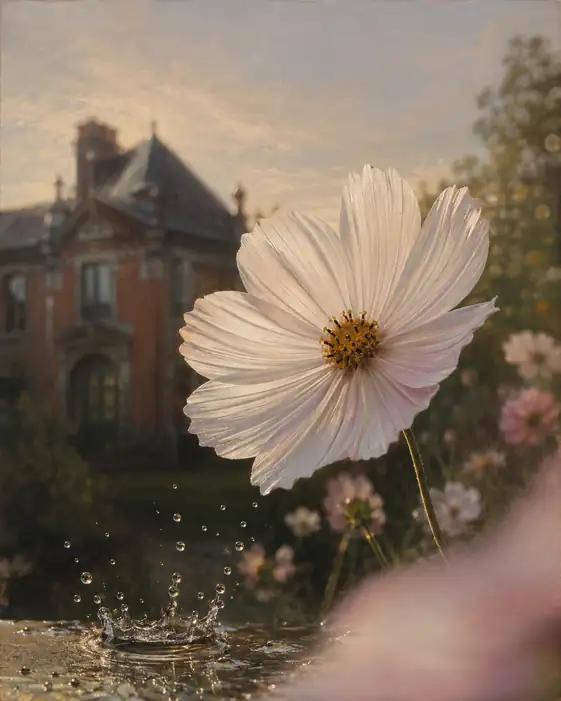 Water Crown and Autumn Cosmos
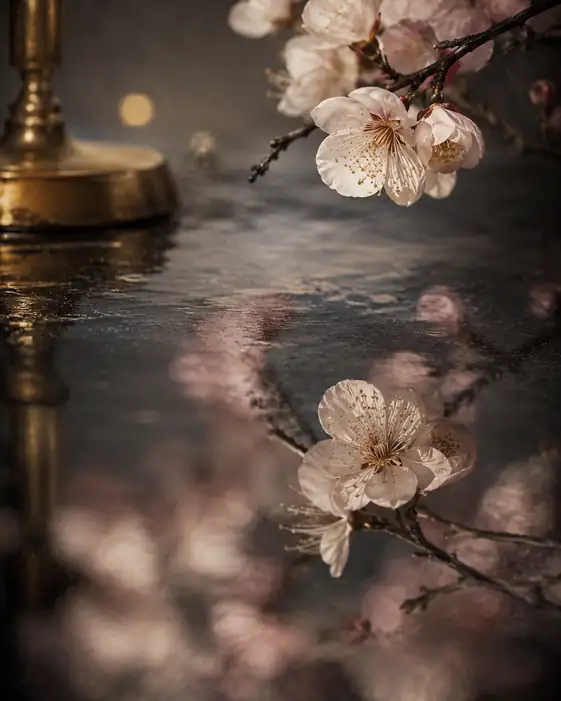 Plum Blossoms Reflected by Candlestick
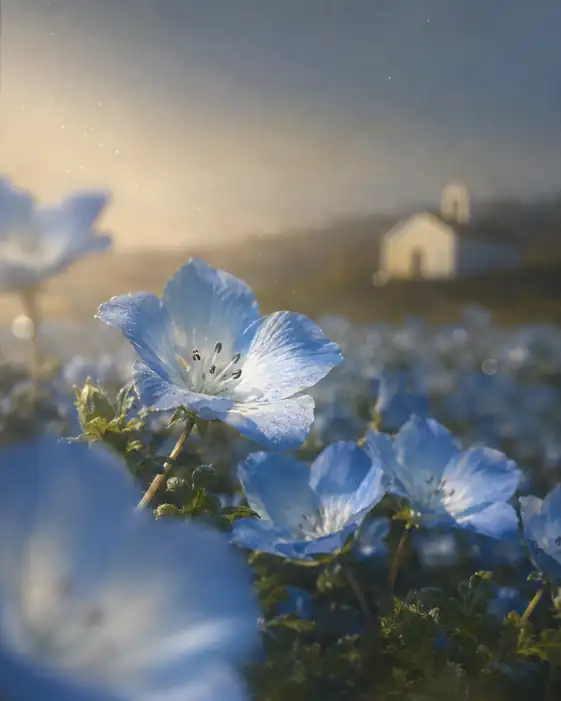 Morning Church in Field of Nemophila
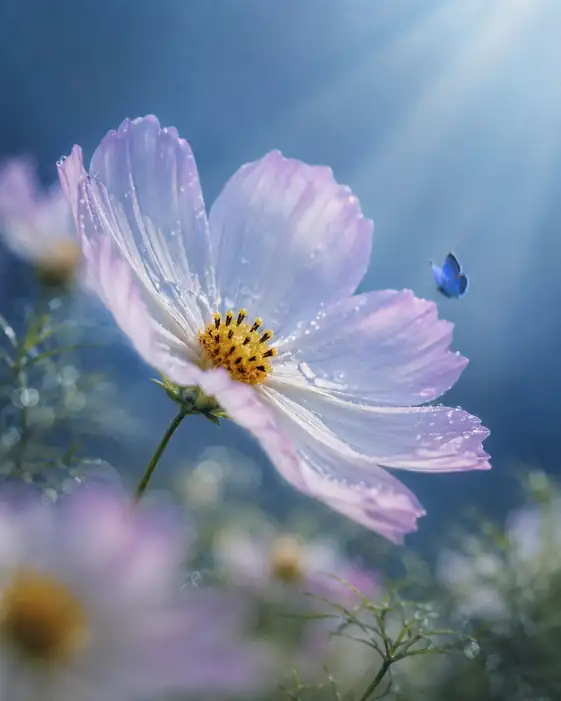 Blue Butterfly and Sunlit Cosmos