
White Steed in Golden Morning Mist
Critique
Introduction This warm-toned landscape brings a spray of yellow blossoms into sharp focus while a white horse stands indistinctly in the background. The unusual pairing transforms a floral close view into a broader pastoral scene, organized less by narrative action than by differences of visibility. Description The principal branch rises from the lower center and divides into several stems, the tallest reaching the upper right. Numerous round flower heads cluster among dark, finely divided leaves. Soft yellow growth frames the lower and right edges. Behind the flowers at left, a pale horse faces forward or slightly sideways, its mane, head, and legs dissolved by haze. The ground carries scattered circular glints under an ocher atmosphere. Analysis Selective focus assigns detailed edges to the central branch and broad, pale shapes to the animal. Repeated upward diagonals give the flowers an aspiring movement, countered by the horse’s quiet vertical stance. Gold dominates both foreground and air, while green leaf shadows and the horse’s near-white body provide tonal separation. Overlapping blurred flowers form a shallow veil at the edges, deepening the route from the crisp plant to the distant figure. Interpretation and Evaluation The horse is present as a remembered or slowly perceived form rather than the conventional protagonist of a pastoral image. Accurate differentiation of clustered blooms, stems, and leaves shows descriptive skill, while atmospheric handling makes distance palpable. The off-center balance between bright branch and pale animal is effective. Its nearly monochromatic color scheme and reversal of focus give the familiar rural subjects a quiet originality. Conclusion Golden flowers expand into an image of attention moving through a field. The elusive horse encourages recognition and makes luminous air a unifying material between plant, animal, and ground.
Same Subcategory
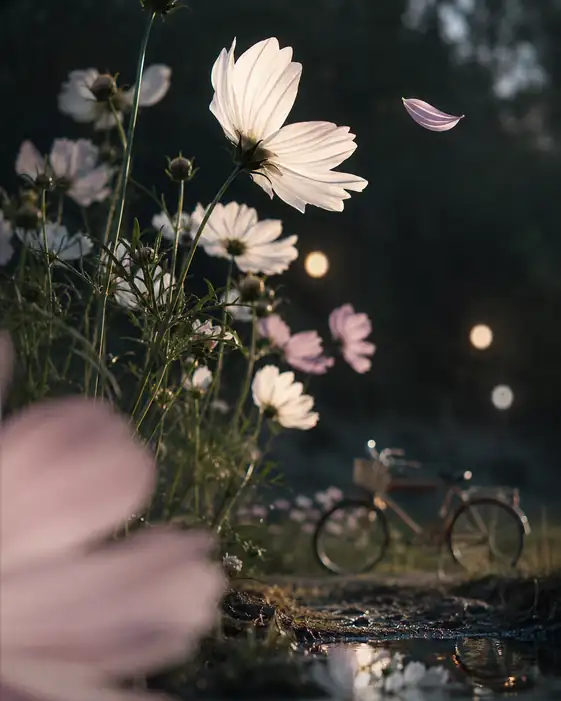 Twilight Breeze and Bicycle in Cosmos Field
Similar Artworks
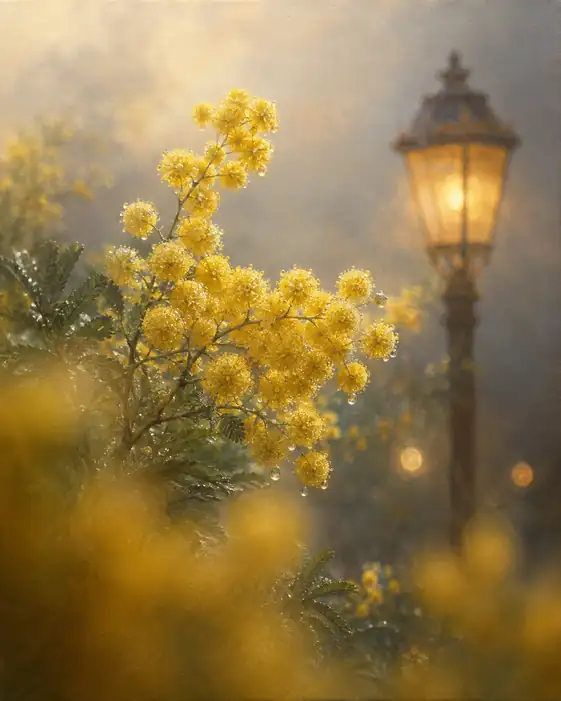 Glowing Streetlamp and Misty Mimosa
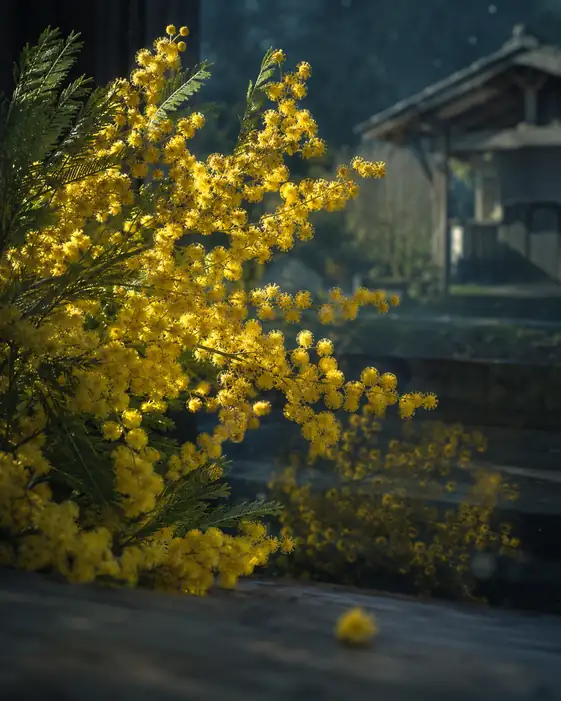 Mimosa in Bloom by the Wooden Station
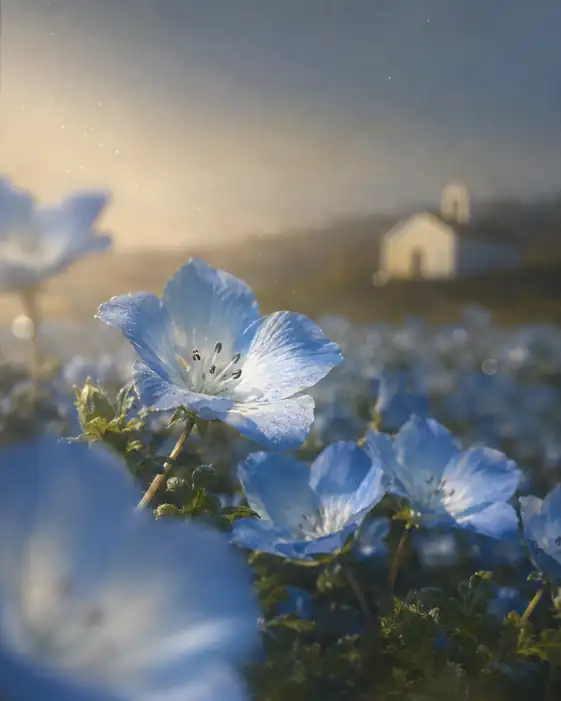 Morning Church in Field of Nemophila
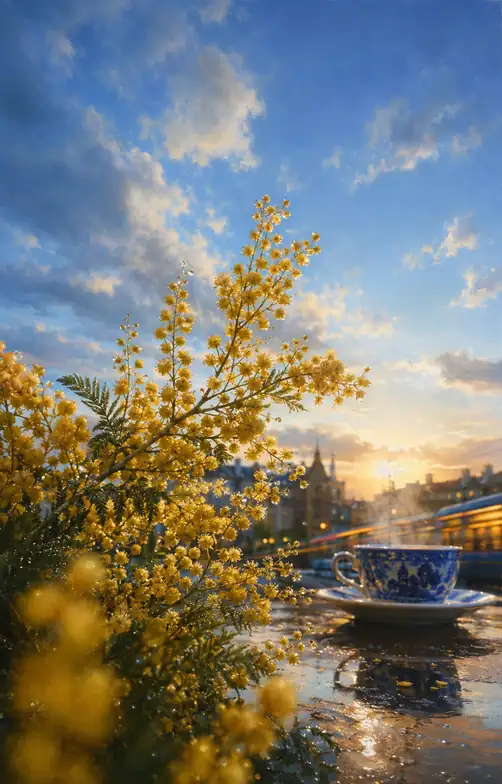 Sunset Tea and Golden Mimosa
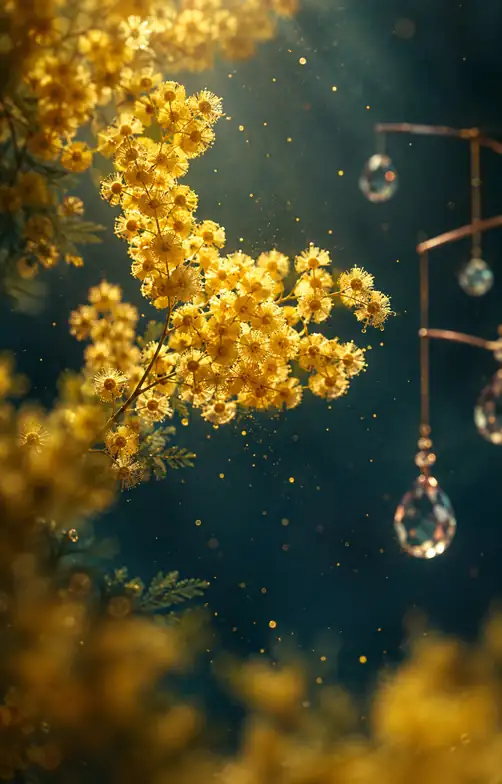 Golden Mimosa and Crystal Suncatcher
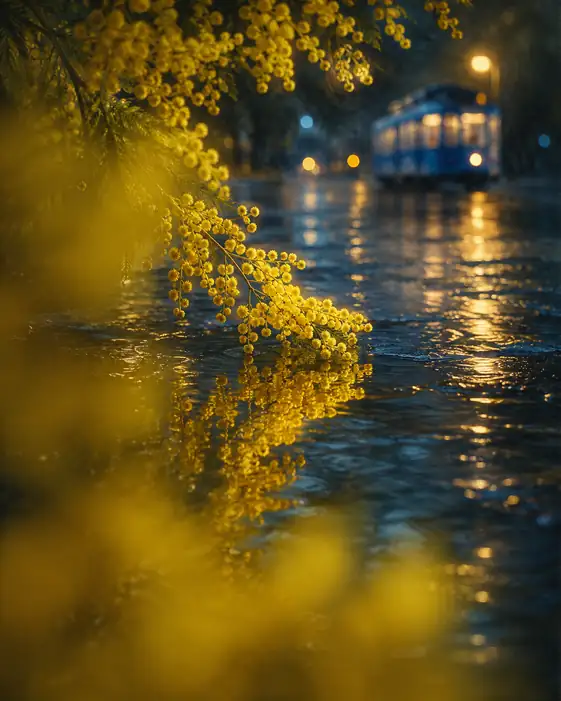 Rainy Night Tram and Mimosa Reflection
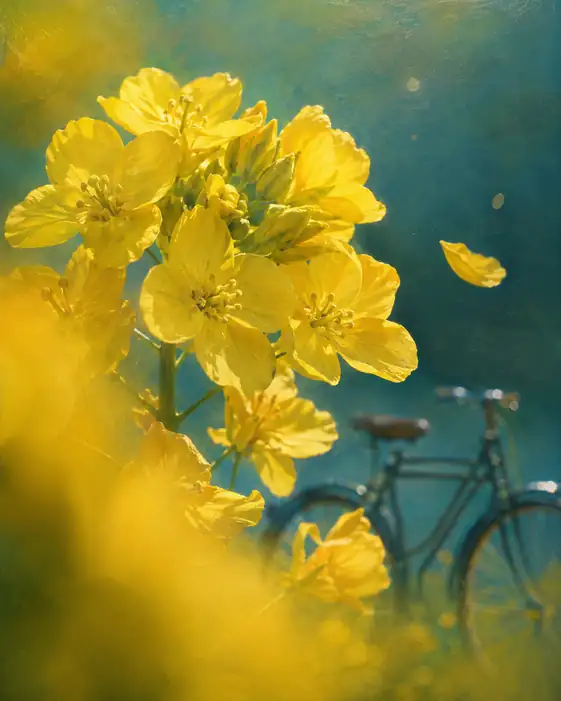 Vintage Bicycle in the Flower Field
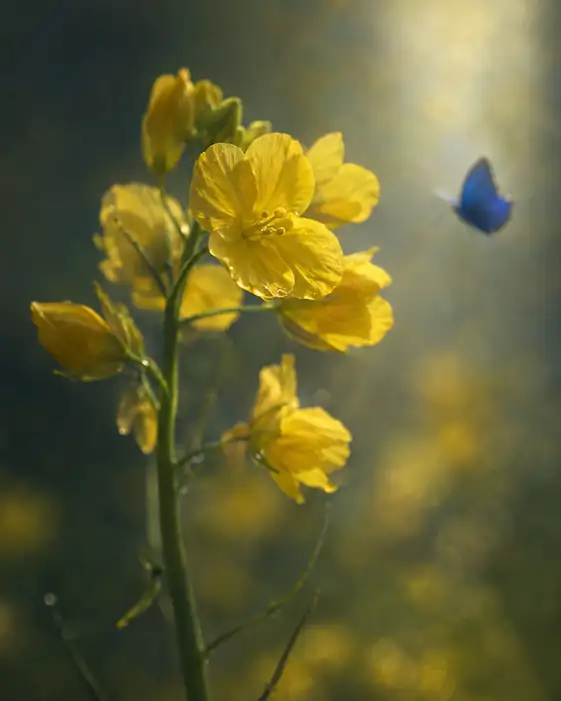 Blue Butterfly and Sunlit Canola Flower
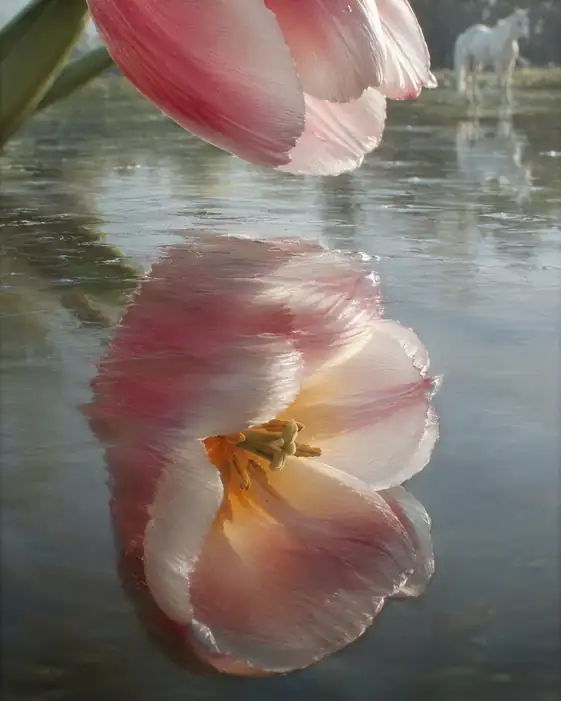 White Steed and Tulip Reflection
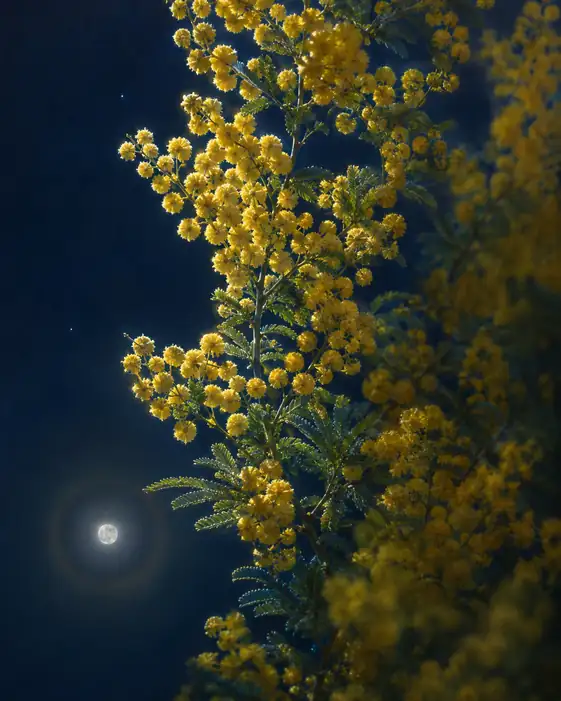 Moonlit Mimosa on a Silent Night