
Mimosa Reflection on Wet Cobblestones
Critique
Introduction This vertically composed floral scene examines yellow blossoms after rainfall, setting their dense radiance against a dark, wet ground. The first impression is one of warmth suspended over cool shadow, yet the reflective surface soon becomes as important as the flowers themselves. Description Branches enter from the upper right and carry clusters of small, tufted blooms toward the center. A dark rounded vessel is cropped by the right edge, while several clear droplets cling to the lowest stems. Below, a broad puddle repeats the yellow mass as a softened, elongated reflection, and scattered highlights mark stones and ripples in the background. Analysis The composition joins the hanging diagonal of the branches to the downward pull of their reflection, producing a continuous vertical movement. Sharp petals, narrow green leaves, glasslike drops, and the vessel’s ridged surface provide contrasting textures. Warm gold is concentrated above and below, while blue-gray pavement and deep brown-black shadows stabilize it. Backlighting catches petal edges and water beads, establishing a precise hierarchy of luminous points. Interpretation and Evaluation The doubled flowers suggest that a brief weather event has transformed an ordinary corner into a study of perception. The painting’s descriptive skill is strongest where solid bloom, transparent droplet, and unstable reflection meet. Its asymmetrical framing is convincing, and its limited color opposition gives the scene coherence without flattening the many surface effects. The close crop also lends the motif an intimate, distinctive scale. Conclusion What appears to celebrate brilliant yellow flowers develops into a meditation on substance and image. Through controlled light, varied edges, and the reflected form, the work turns moisture into a structural element rather than decoration.
Same Subcategory
 Water Crown and Autumn Cosmos
 Mount Fuji Beyond the Cosmos Field
Similar Artworks
 Glowing Streetlamp and Misty Mimosa
 Tulip Reflection on Wet Cobblestones
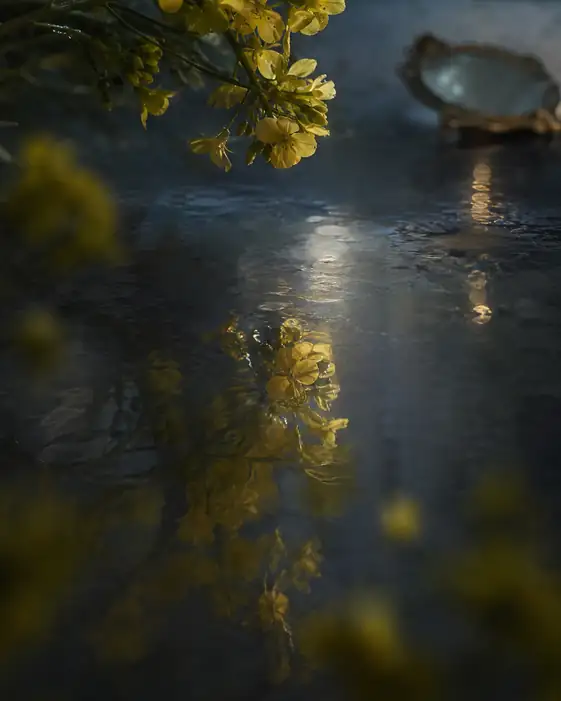 Yellow Blossoms and the Vintage Mirror
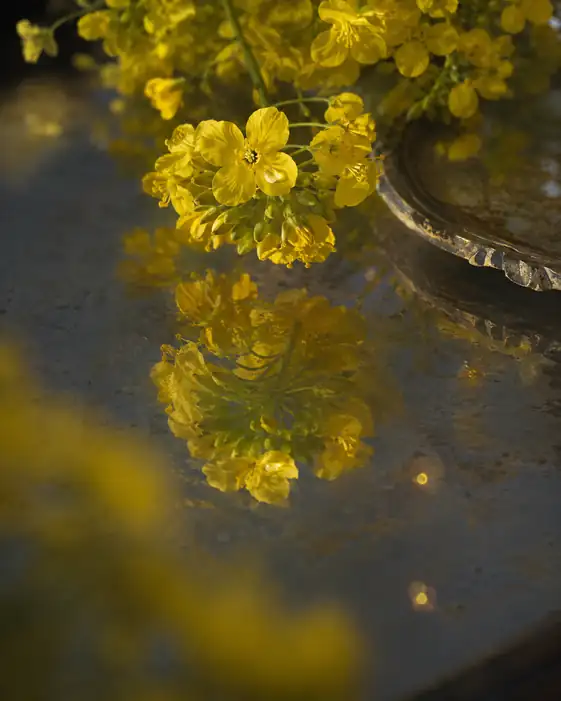 Canola Blossom on Silver Tray
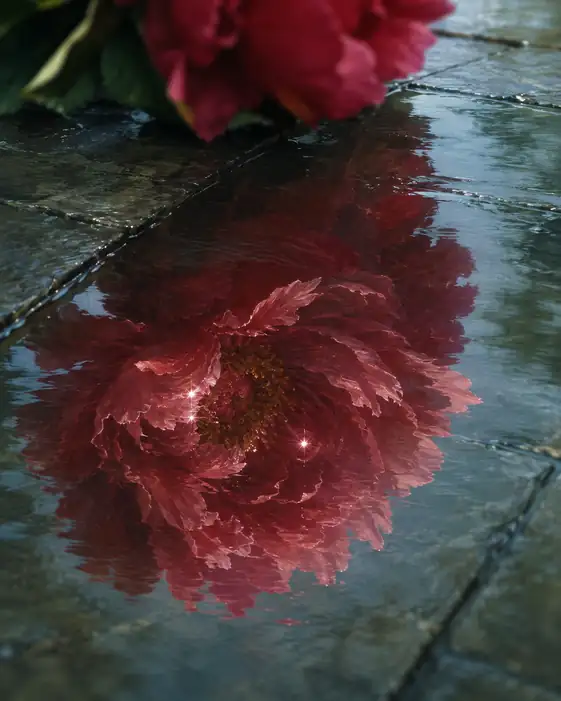 Crimson Peony Reflected in Cobblestone Puddle
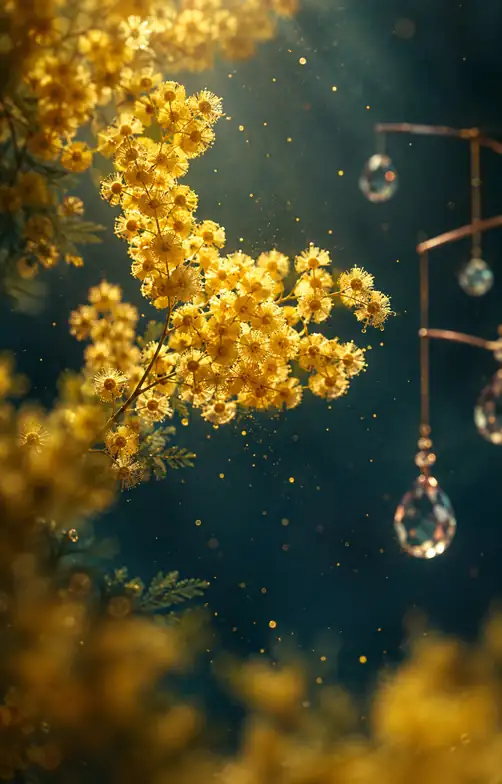 Golden Mimosa and Crystal Suncatcher
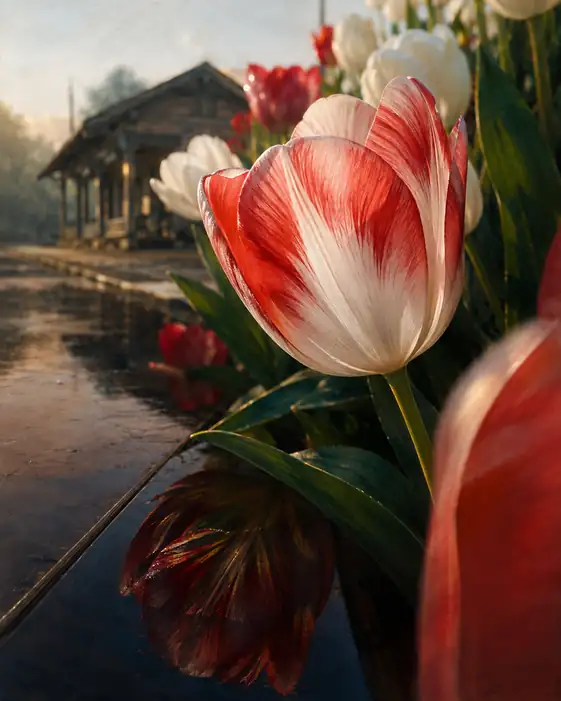 Tulips on Rainy Station Platform
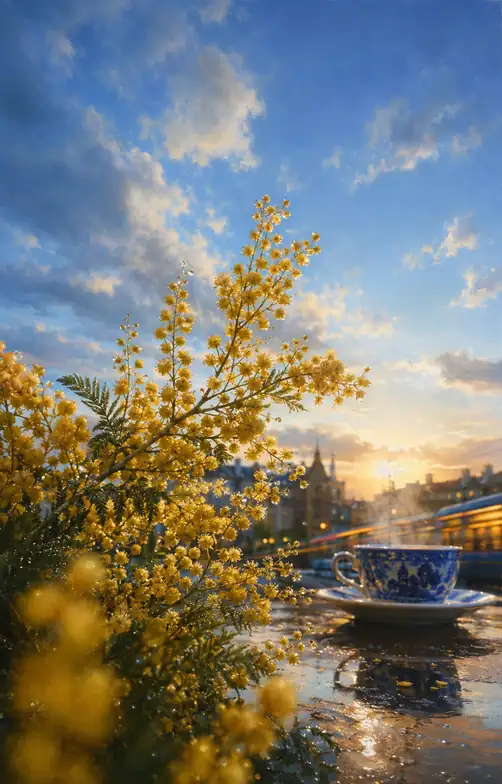 Sunset Tea and Golden Mimosa
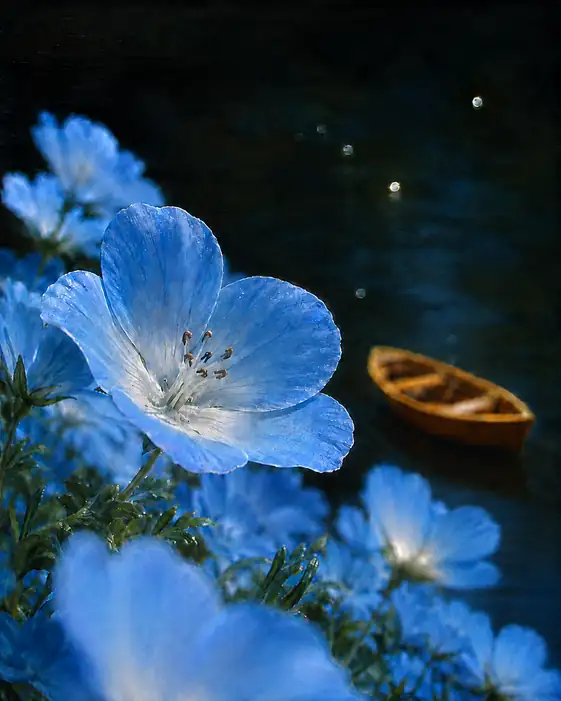 Blue Nemophila and the Lonely Boat
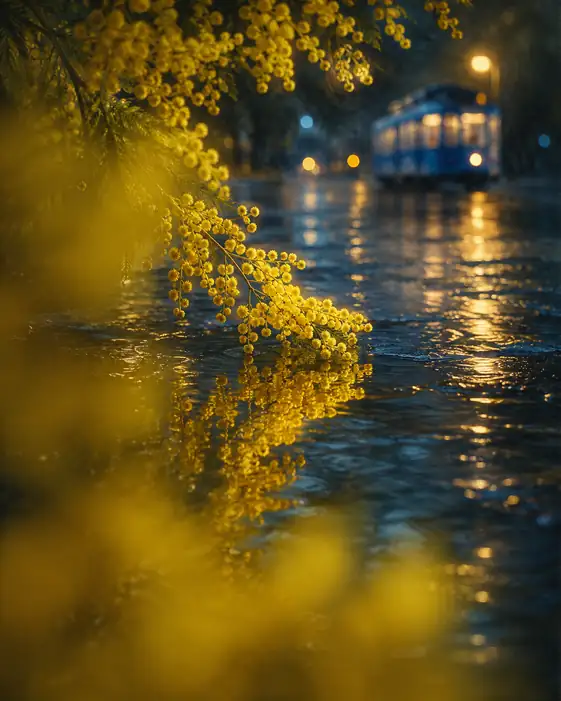 Rainy Night Tram and Mimosa Reflection