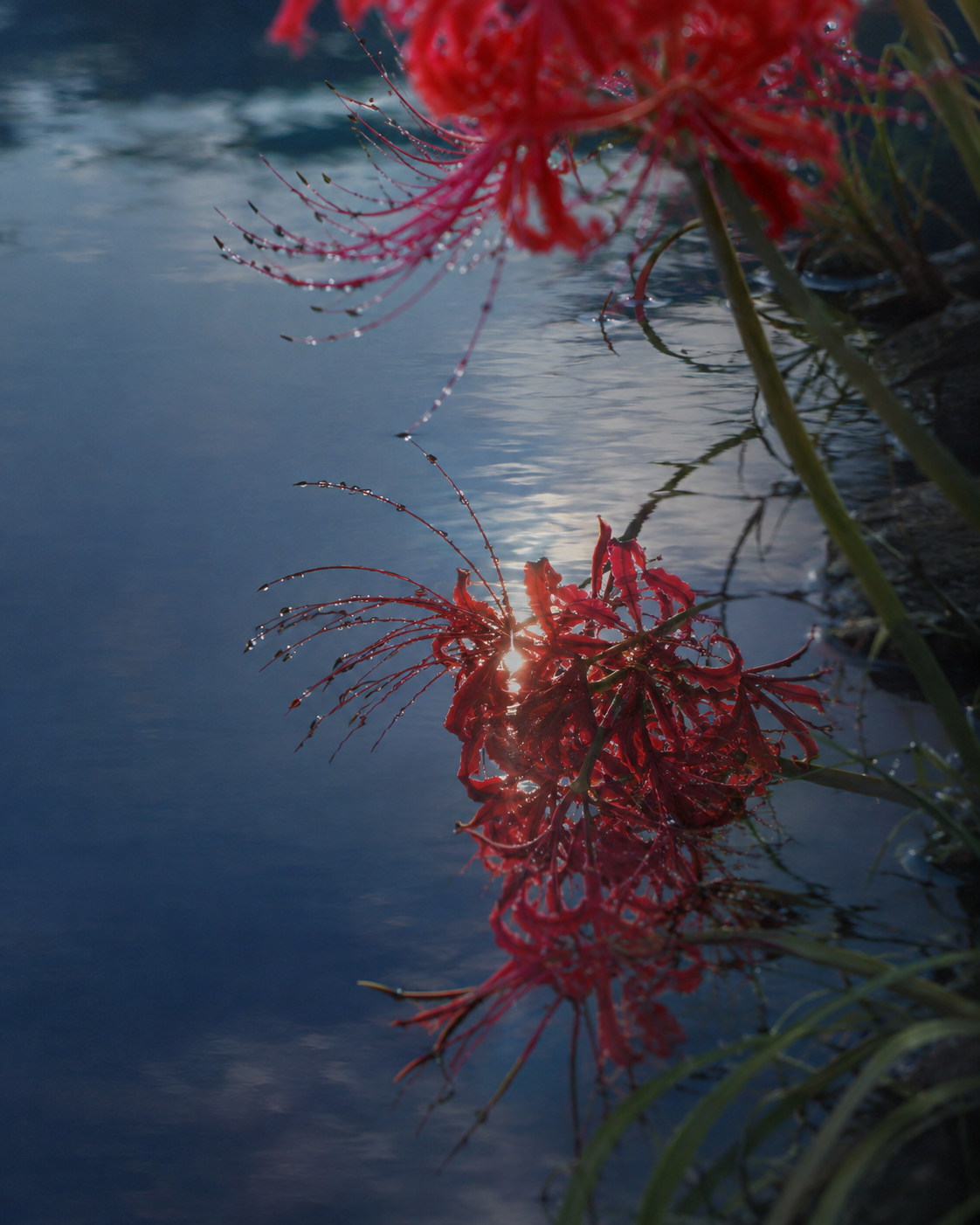
Twilight Solitude by the Waters
Critique
Introduction This image concentrates one spider lily and its reflection. Open water surrounds the flower, clarifying its tangled structure. A flare within the petals makes form, moisture, and reflected sky converge at one point. Description A red spider lily occupies the right-center edge of the water, supported by several green stems. Its curled petals and long stamens carry bright droplets. The flower is mirrored immediately below in a darker, softened form. A second red blossom hangs blurred from the upper edge. Most of the left half remains smooth blue water with faint white cloud reflection and gentle ripples. Analysis The principal flower and its inverted double form a compact vertical axis against expansive negative space. Sunlight flashes at the bloom's center and repeats in the water, tying actual and reflected forms together. Red filaments sweep left into blue emptiness, while stems descend diagonally at right. Crisp droplets contrast with blurred upper petals and wavering reflection, establishing several focus and material states. The limited palette heightens chromatic intensity. Interpretation and Evaluation The reflection can signify memory or a second, unstable identity, but the image remains grounded in precise observation. Light appears trapped briefly within the flower before dissolving into water. The ample blue field suggests silence and gives the complex bloom room to breathe. The cropped flower above may seem redundant, yet it frames the main subject and emphasizes selection from a larger cluster. Conclusion The work succeeds through restraint. One flower, reflection, and flare organize emptiness. Reduced context makes the boundary between living presence and transient image visually exact and emotionally resonant.
Same Subcategory
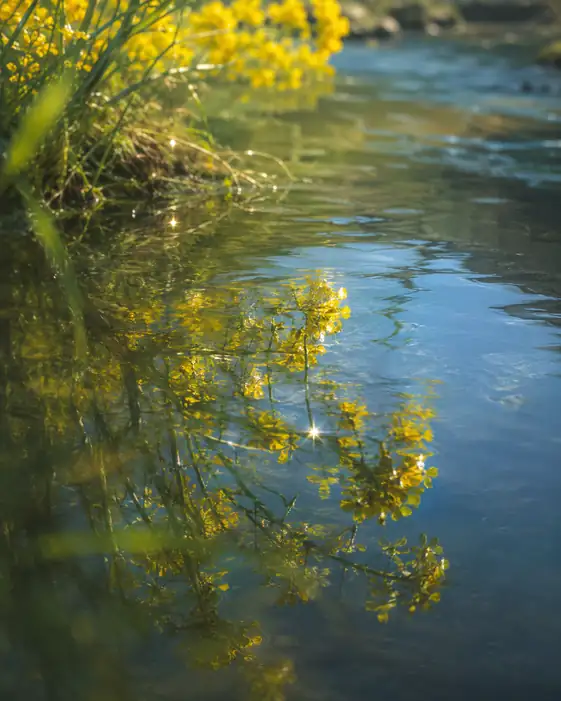 Spring Stream and Mustard Bloom Reflection
Similar Artworks
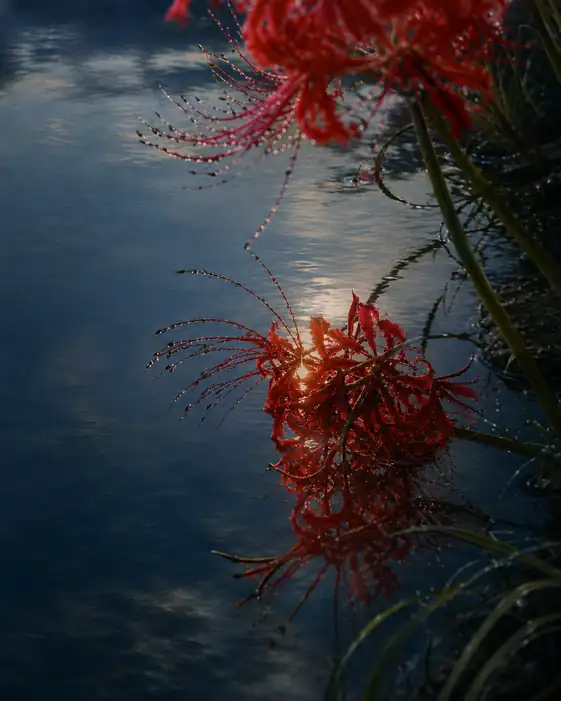 Sunset Sparkle on River Lycoris
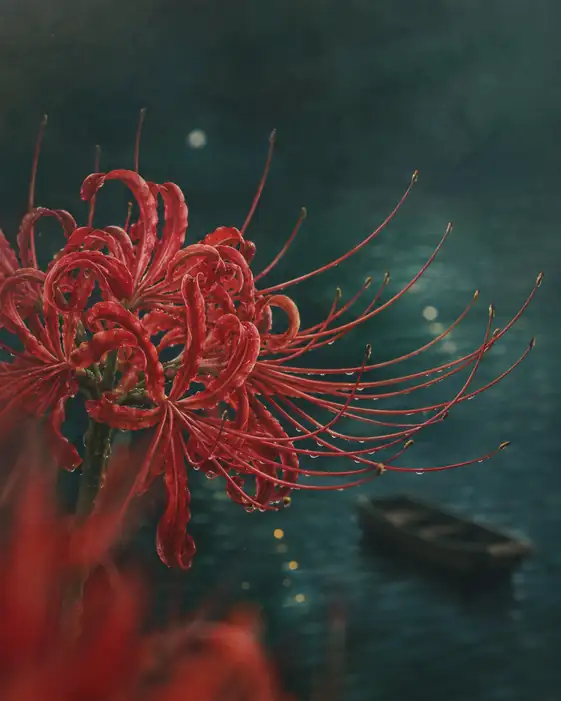 Red Lycoris and the Wooden Skiff
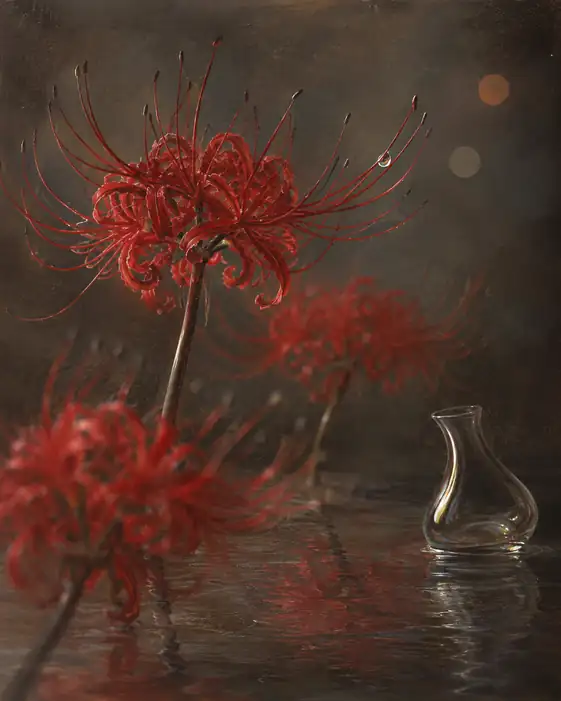 Lycoris and the Empty Glass Vase
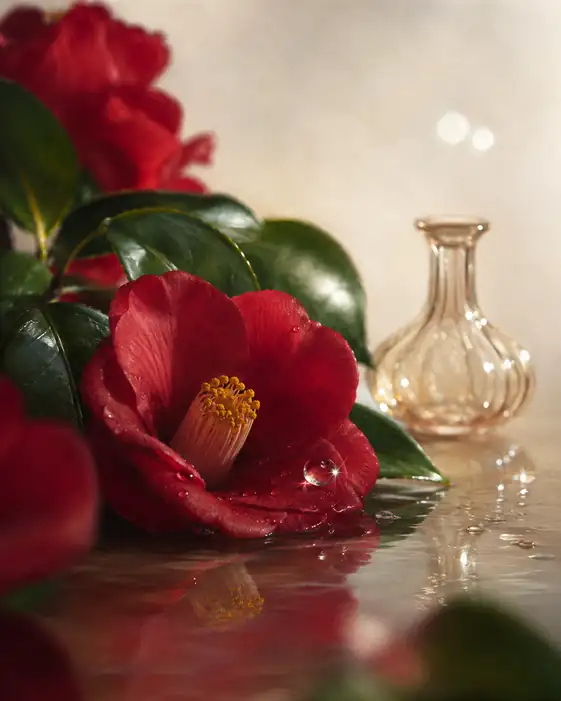 Dewdrop Camellia and Amber Flask
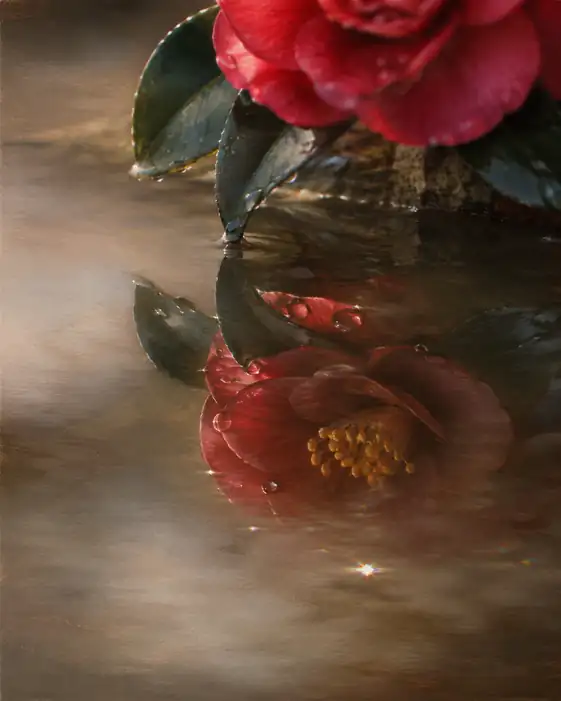 Floating Camellia on Sunlit Stream
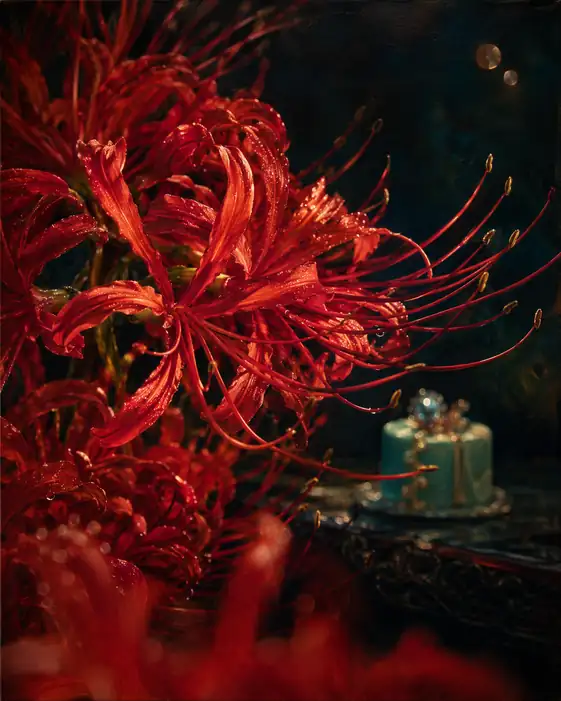 Scarlet Velvet and the Cyan Trinket Box
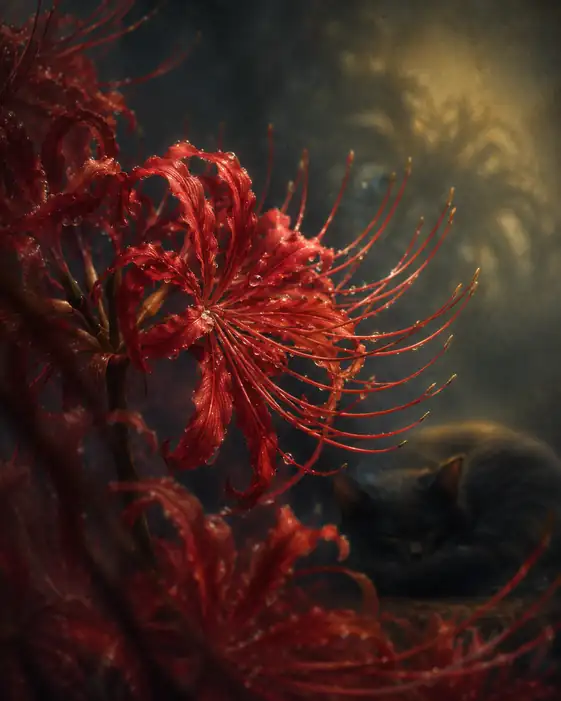 Sleeping Cat in the Lycoris Shade
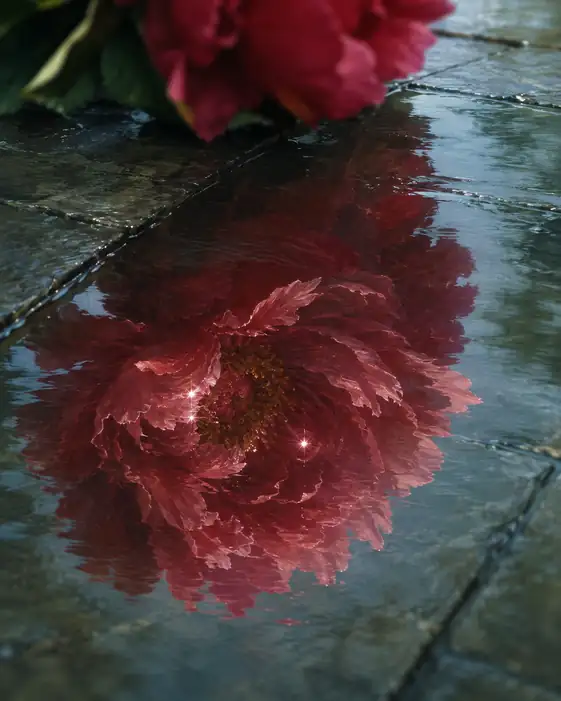 Crimson Peony Reflected in Cobblestone Puddle
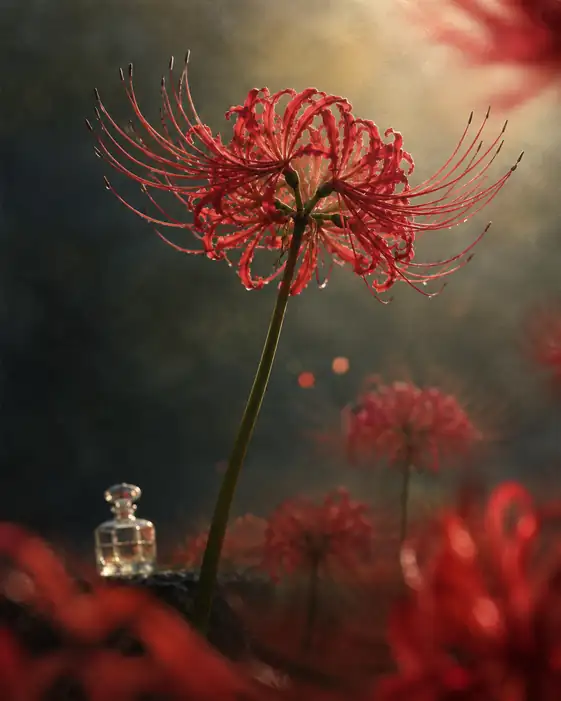 Crimson Flame and Crystal Flacon
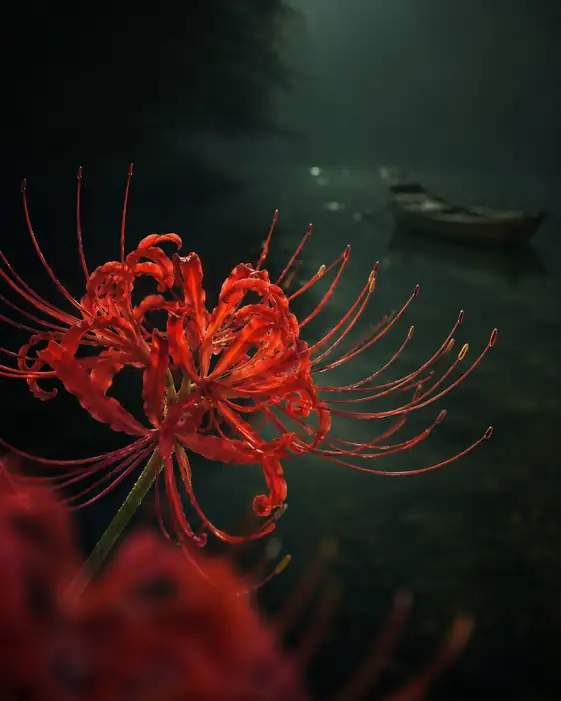 Whispers of the Dark Stream