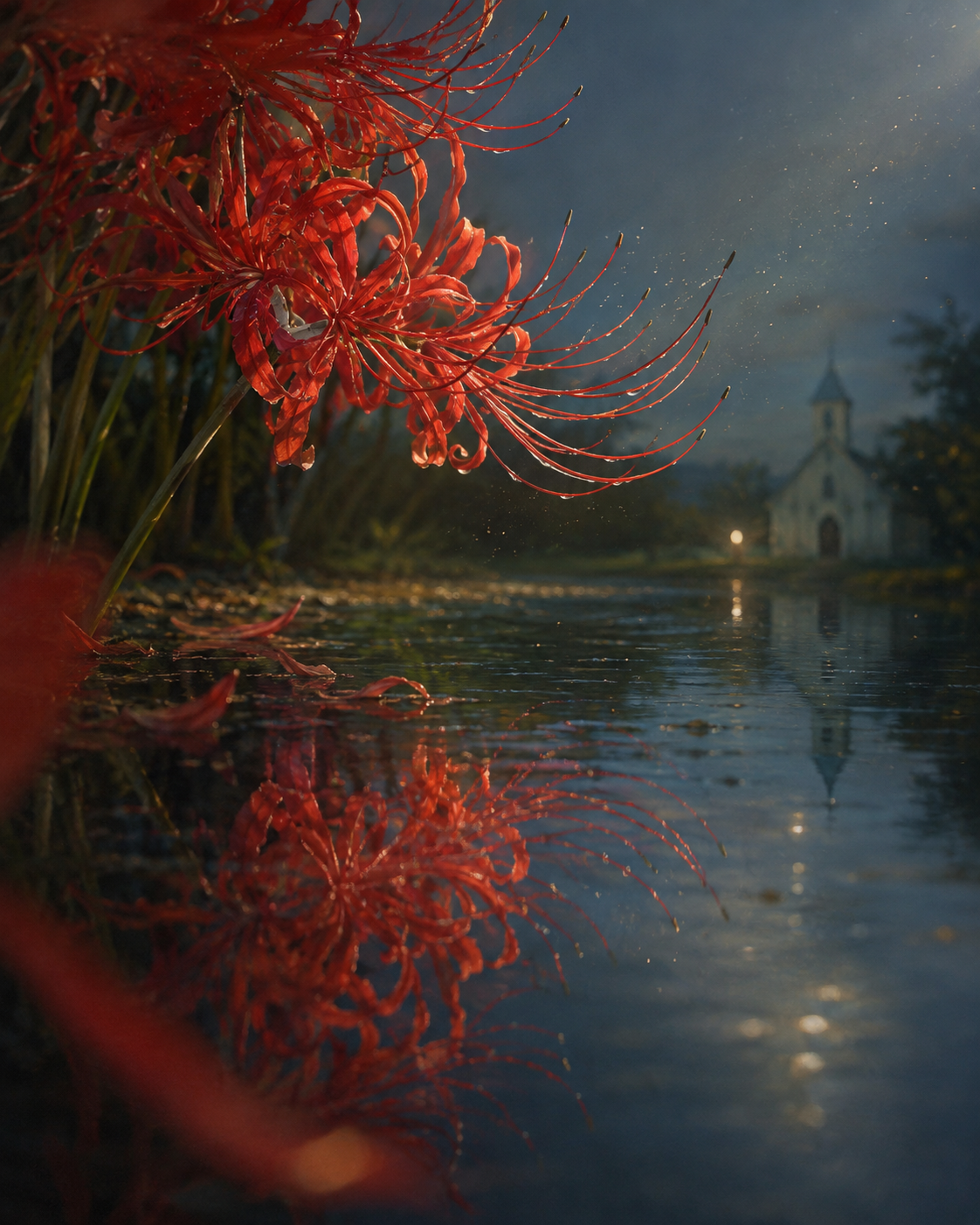
Chapel by the River and Crimson Shadow
Critique
Introduction This image places spider lilies beside water, with a church across the pond. Vivid flowers and pale building create an interval between organic intensity and architectural stillness. Reflection and particles evoke memory, distance, and thresholds. Description Several red spider lilies enter from the upper and left edges, their curled petals and long stamens sharply lit. Fallen red petals lie along the wet bank. The lower half of the frame is dark water, where a large flower and the distant church appear inverted. At right, the softly focused cream church has a small tower, dark doorway, and one bright reflection beneath it. Analysis The composition is strongly asymmetric: dense red forms press from the left while open blue-gray water leads toward the right. Long stamens extend horizontally into this space, acting as visual bridges. The waterline divides actual and reflected worlds near mid-frame. Red advances against cool surroundings, while the pale church anchors distance. Fine airborne specks and water highlights establish depth between the sharply rendered flower and softened architecture. Interpretation and Evaluation The church may suggest continuity, refuge, or collective memory, while the flowers embody brief seasonal intensity. Their separation across water makes the relationship contemplative rather than illustrative. Reflections double both subjects but render them unstable, implying that memory preserves through transformation. The symbolic combination could feel predetermined, yet fallen petals, muddy bank, and restrained church detail keep the scene physically credible and open to personal reading. Conclusion The work succeeds through distance and doubling. Red lines, reflective interval, and quiet architecture create temporal registers. Beauty, place, and memory connect through light traveling across water.
Same Subcategory
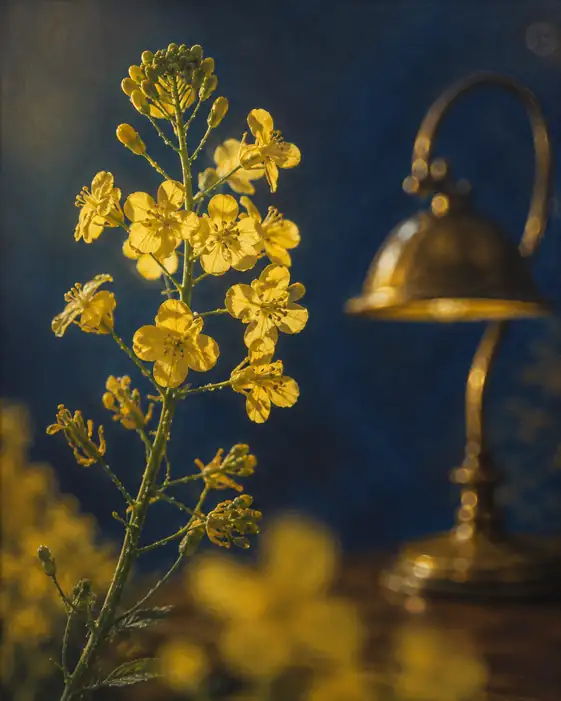 Brass Lamp and Spring Blossom
 Splash of Spring at the Manor
Similar Artworks
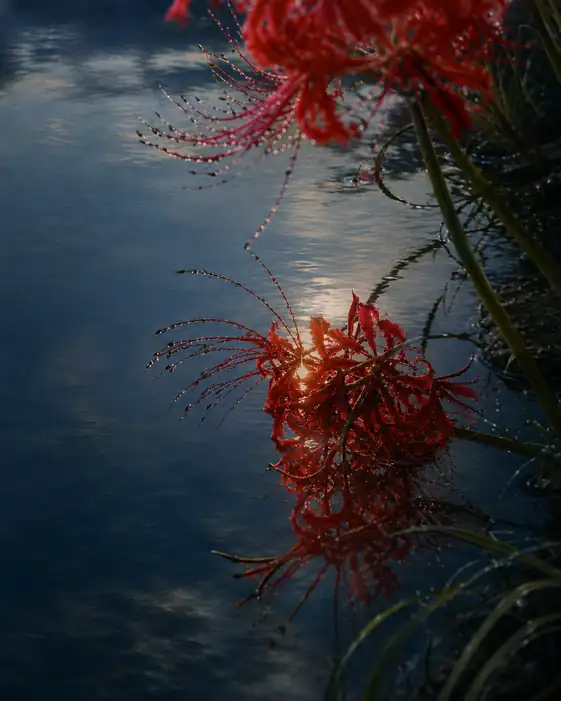 Sunset Sparkle on River Lycoris
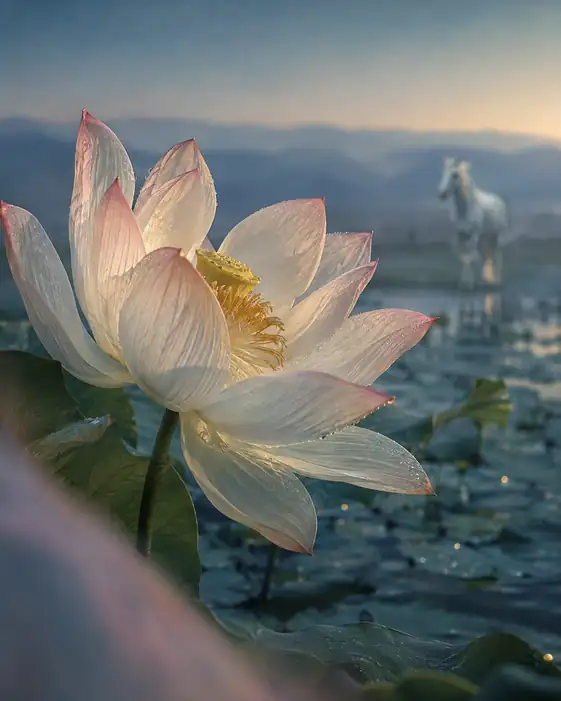 White Steed and the Sacred Lotus
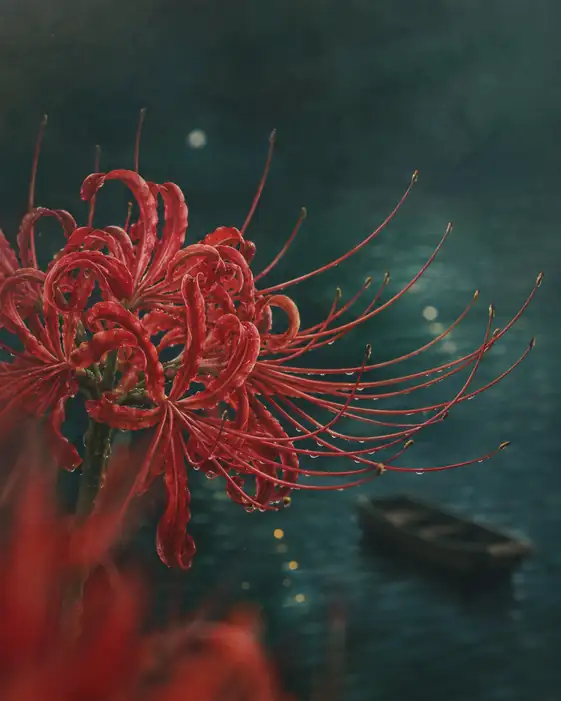 Red Lycoris and the Wooden Skiff
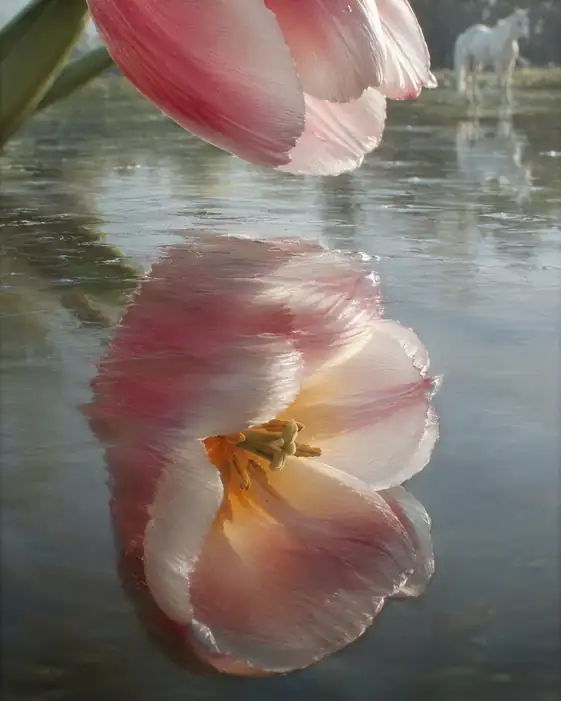 White Steed and Tulip Reflection
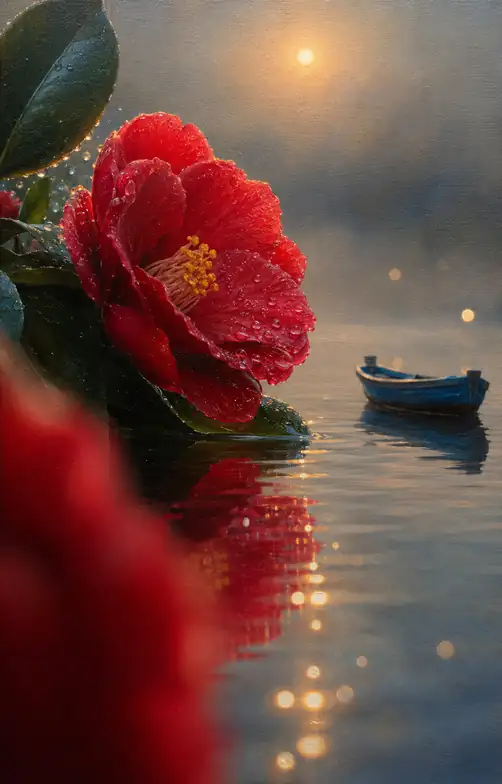 Camellia at Sunset by the Rowboat
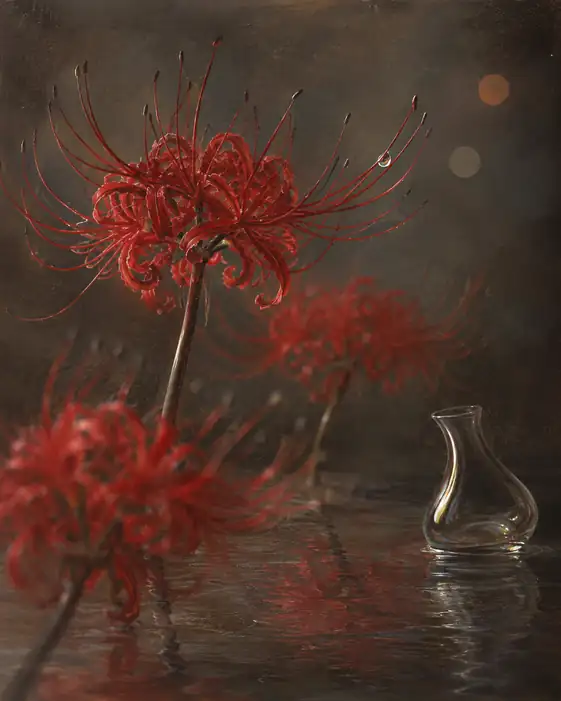 Lycoris and the Empty Glass Vase
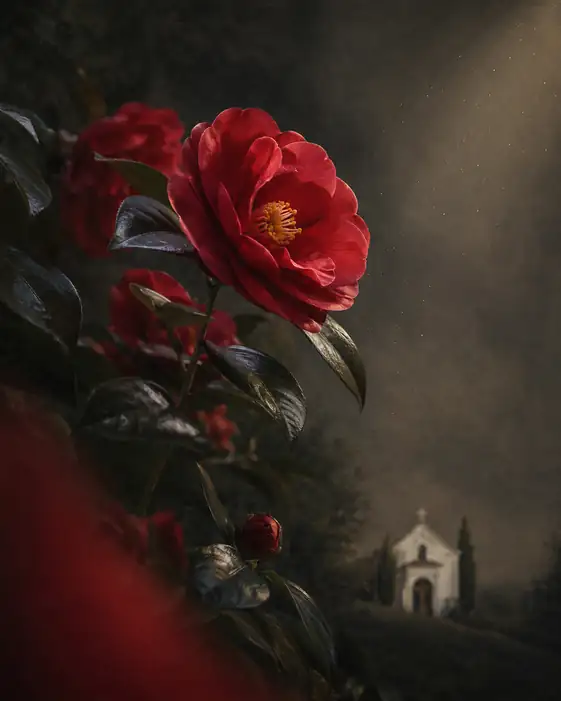 Forest Chapel and the Red Camellia
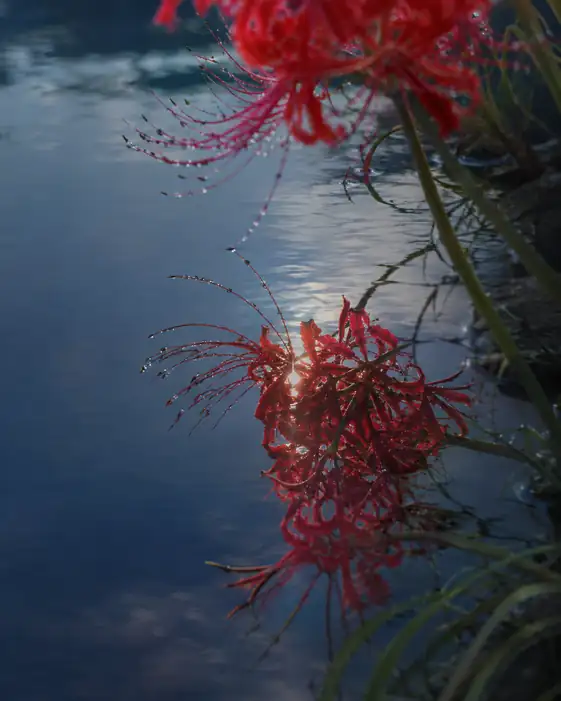 Twilight Solitude by the Waters
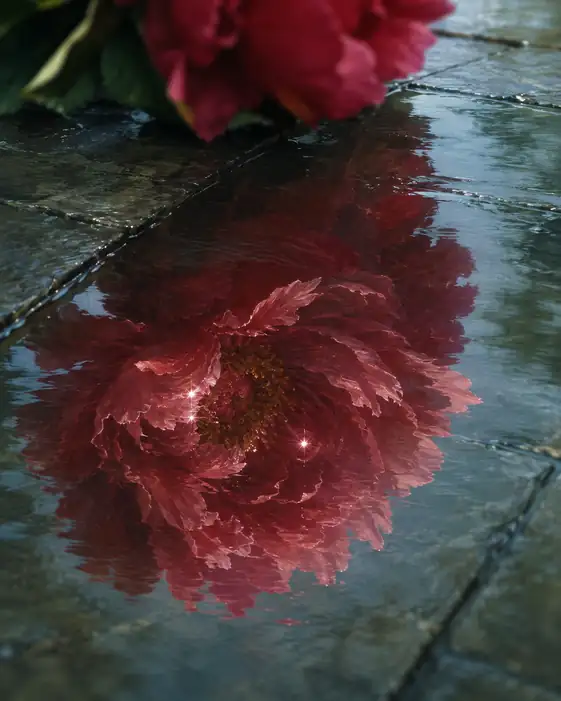 Crimson Peony Reflected in Cobblestone Puddle
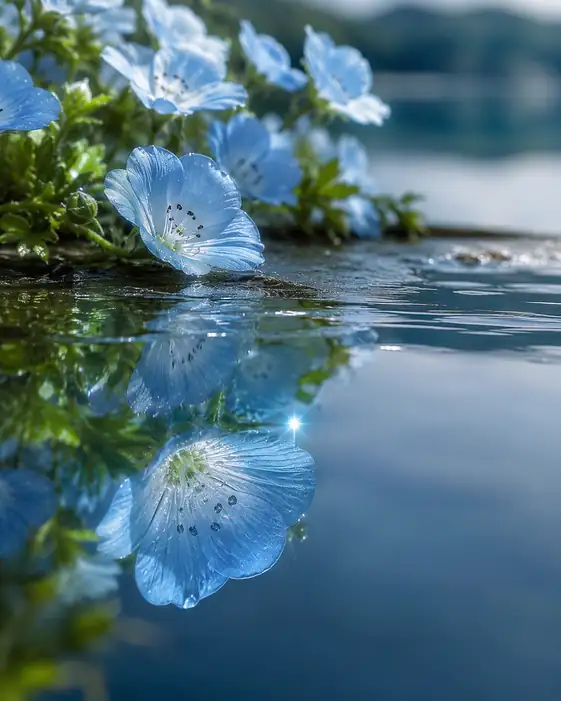 Nemophila Reflection and Water Sparkle