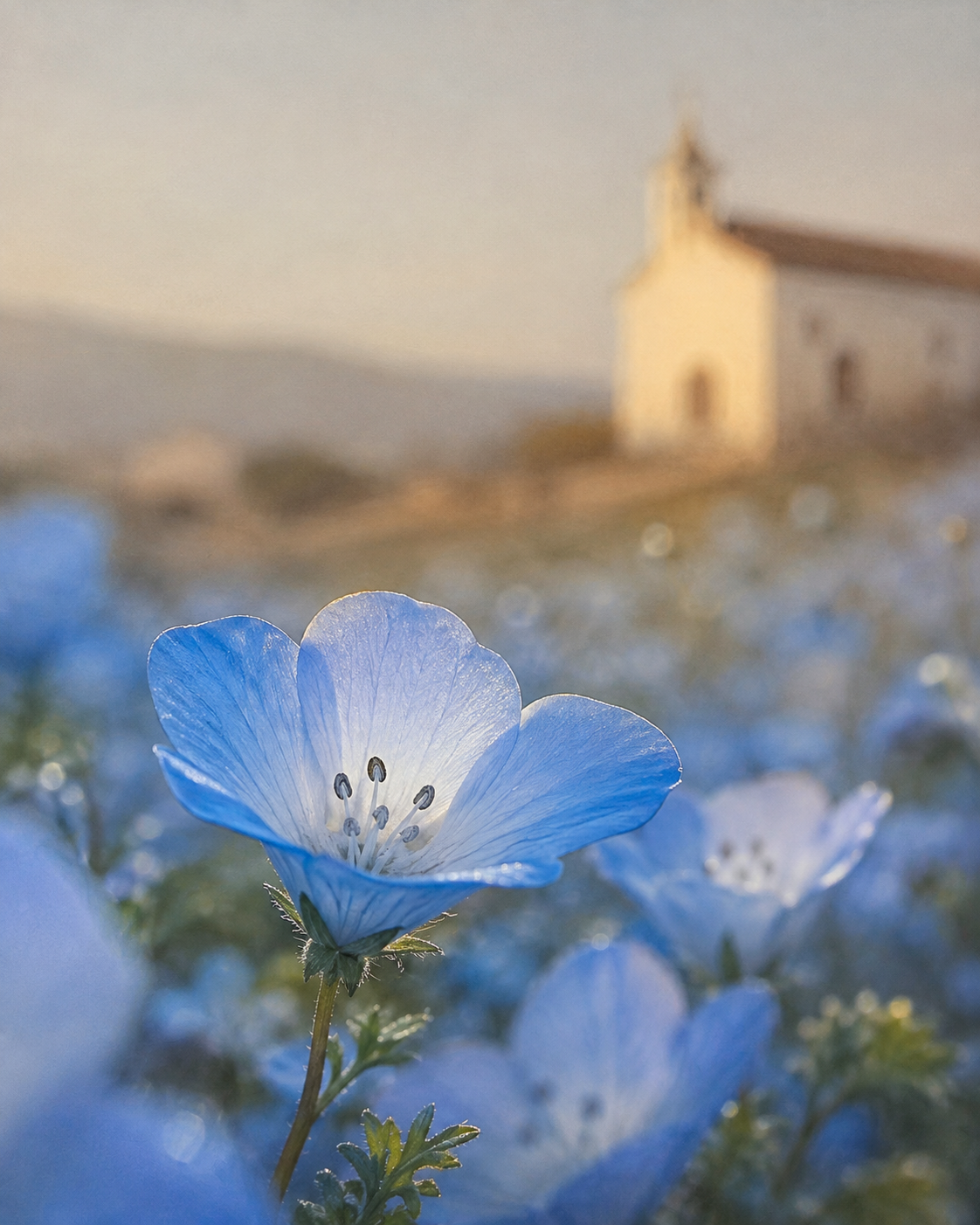
Blue Nemophila and the White Chapel
Critique
Introduction This image places a sharp blue flower before a distant church. A fragile bloom occupies immediate vision, while architecture recedes into memory-like softness. Evening light binds natural and built subjects without explicit narrative. Description A five-lobed blue flower rises left of center on a slender green stem. Pale veins radiate across its translucent petals toward a white throat containing dark stamens. Other blue blossoms dissolve into the lower and middle background. At upper right, a cream church with a small steeple stands out of focus against a bright sky, its long dark roof extending horizontally. Analysis Shallow depth of field establishes a decisive hierarchy while retaining the church as a recognizable counterform. The flower's rounded cup contrasts with the building's upright façade and angular roof. Cool blue dominates the foreground; golden backlight rims the petals and warms the distance, producing chromatic balance. The main stem rises diagonally, while the roofline steadies the upper field. Scattered highlights carry light between the two focal zones. Interpretation and Evaluation The composition invites reflection on transient organic life beside enduring cultural structure. Yet the flower's clarity reverses conventional importance: what is small and temporary receives full attention, while the monument becomes uncertain. This is the image's strongest idea. The church is heavily blurred, perhaps reducing architectural specificity too far, but that softness also prevents it from becoming a competing subject and supports a contemplative atmosphere. Conclusion The work succeeds through selective seeing. Petals, hazy building, and blue repetitions progress from presence to recollection. Light makes flower and church companions, lending the humblest form quiet monumentality.
Same Subcategory
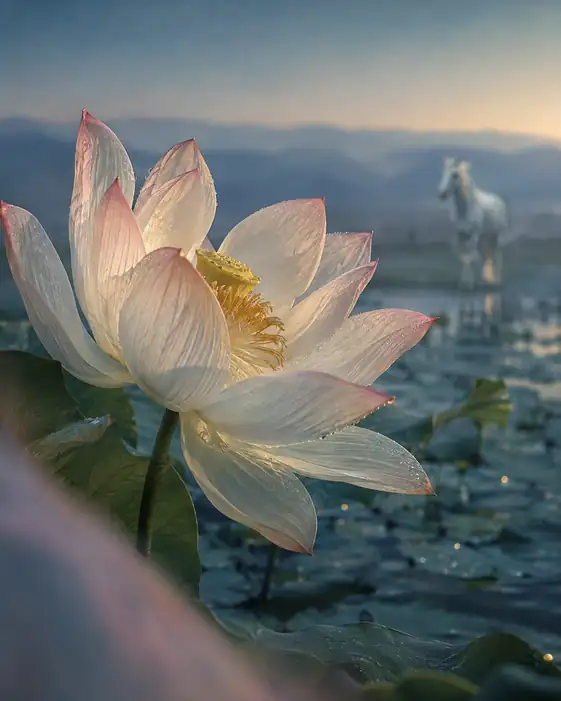 White Steed and the Sacred Lotus
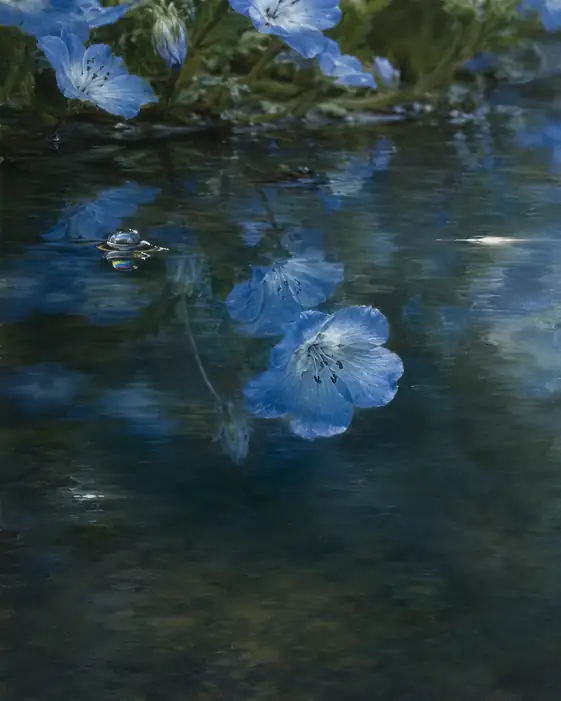 Floating Nemophila on Clear Stream
Similar Artworks
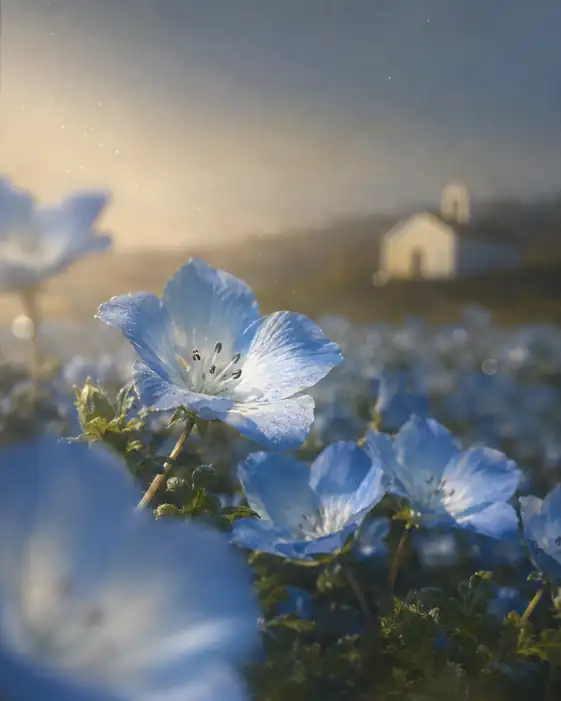 Morning Church in Field of Nemophila
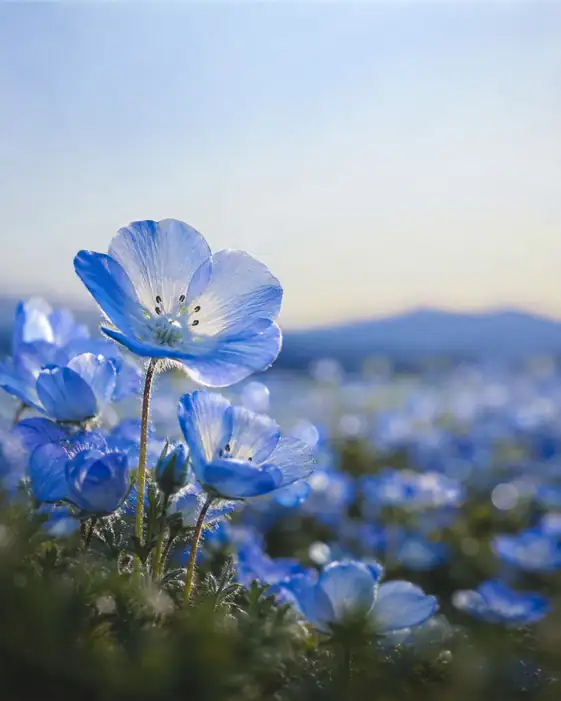 Translucent Blue Petals at Dawn
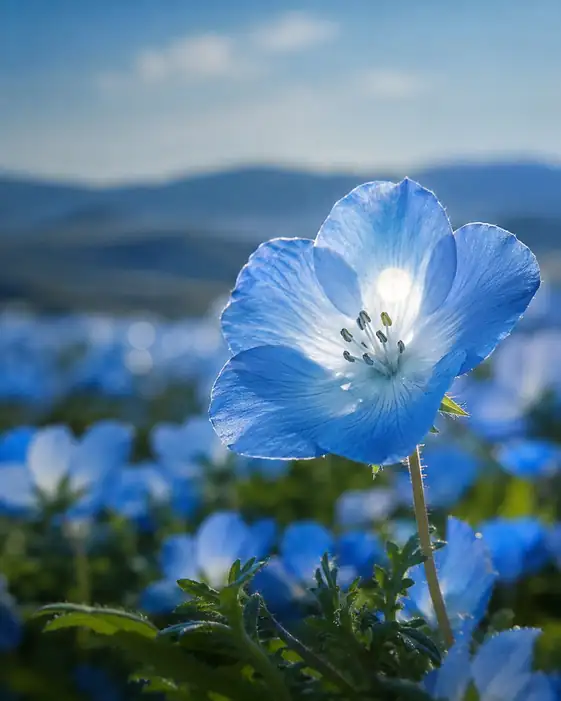 Sky Blossom on the Meadow Hill
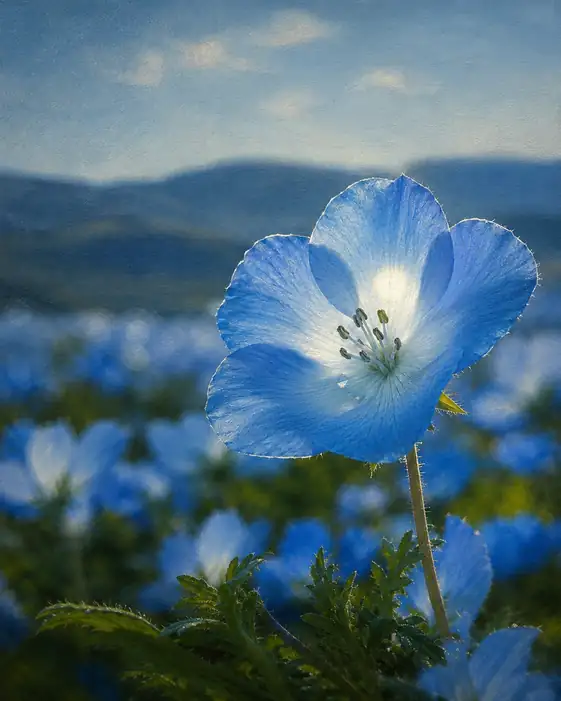 Sunlit Petals in Azure Field
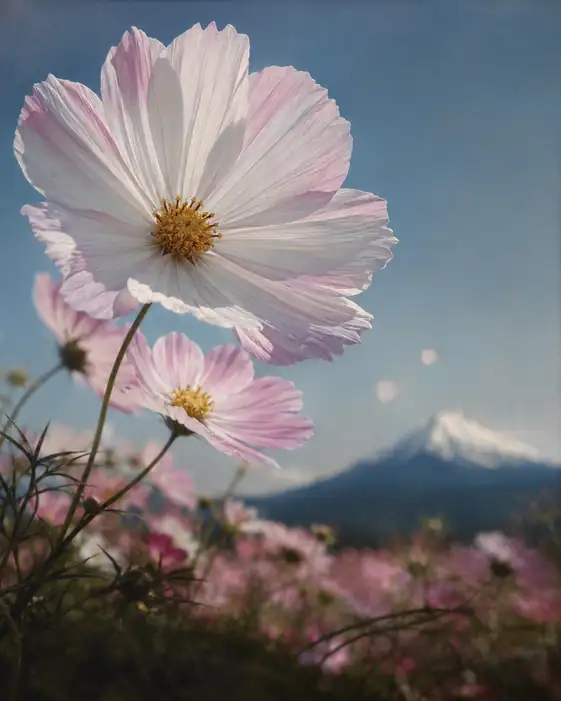 Mount Fuji Beyond the Cosmos Field
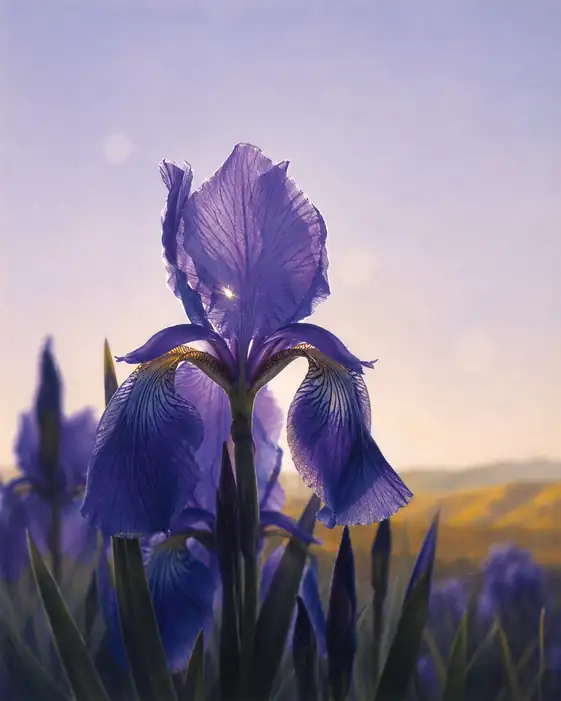 Translucent Iris Against Golden Sunset
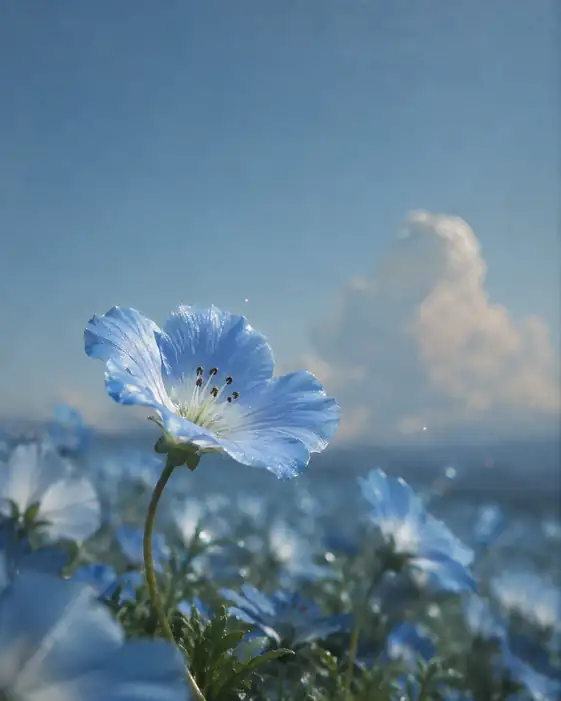 Nemophila and Summer Clouds
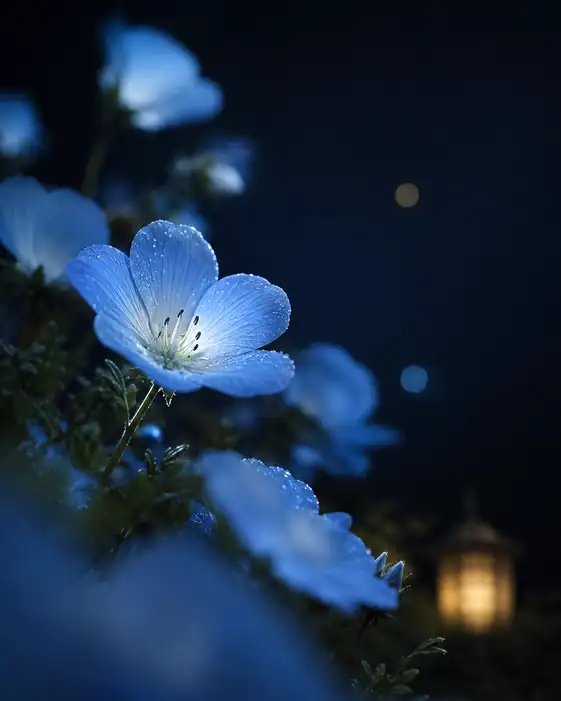 Midnight Nemophila and Garden Lantern
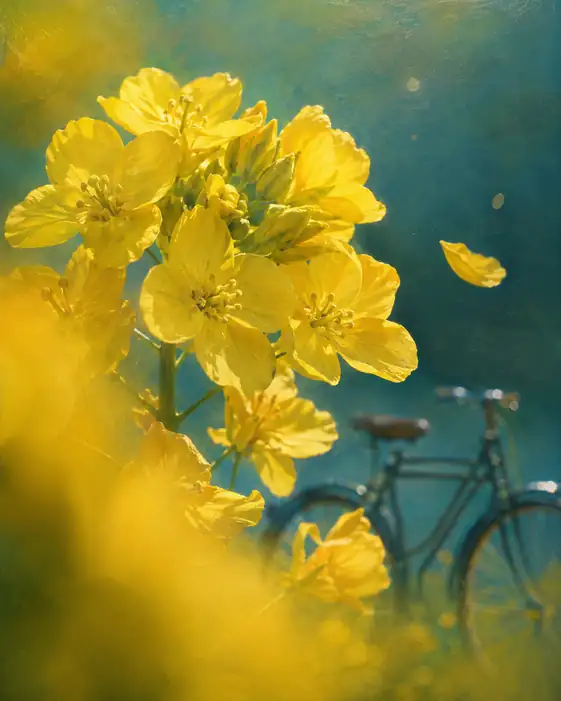 Vintage Bicycle in the Flower Field
 Glass Orb and Dewdrop Reflection