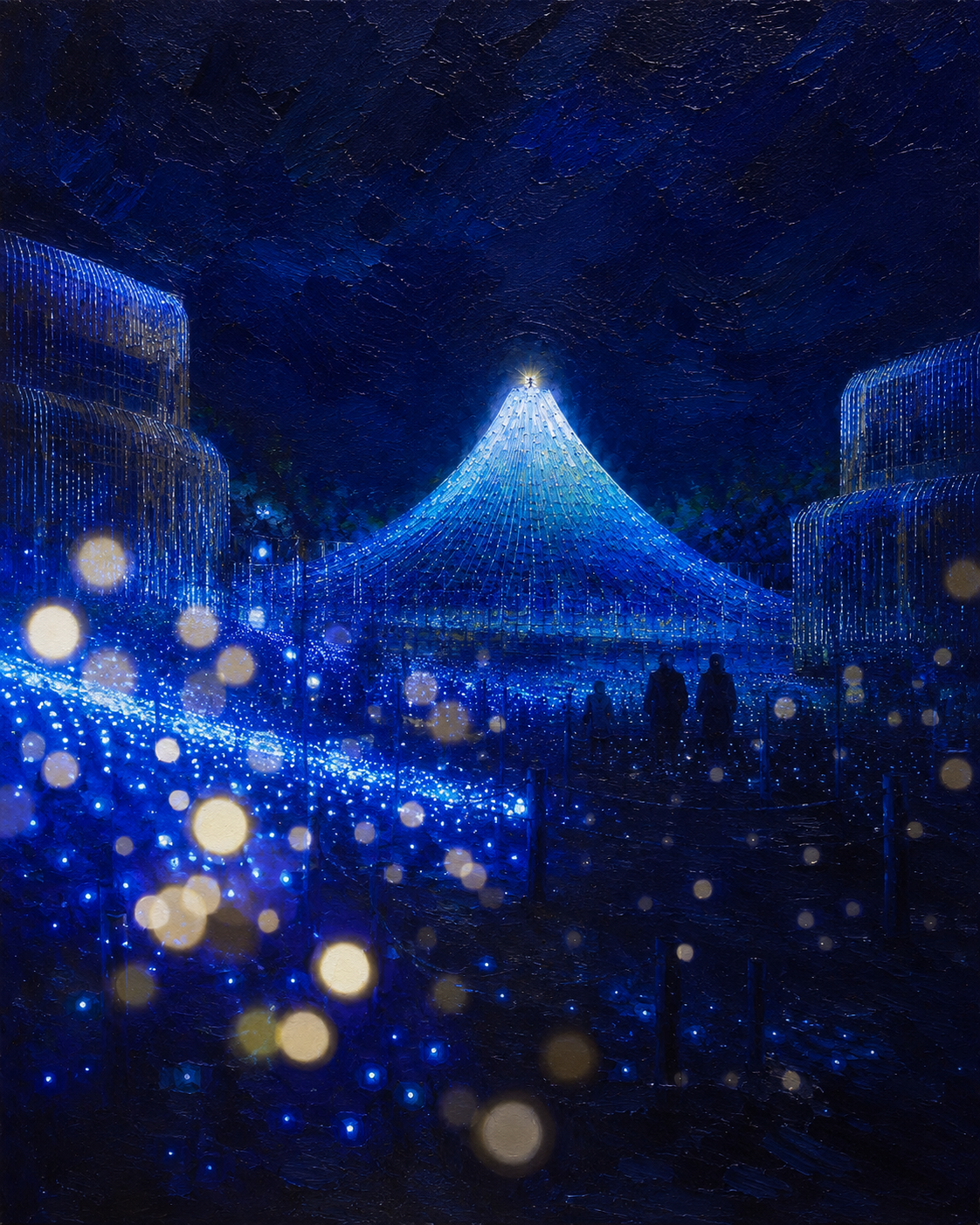
Blue Nocturne and Glowing Specks
Critique
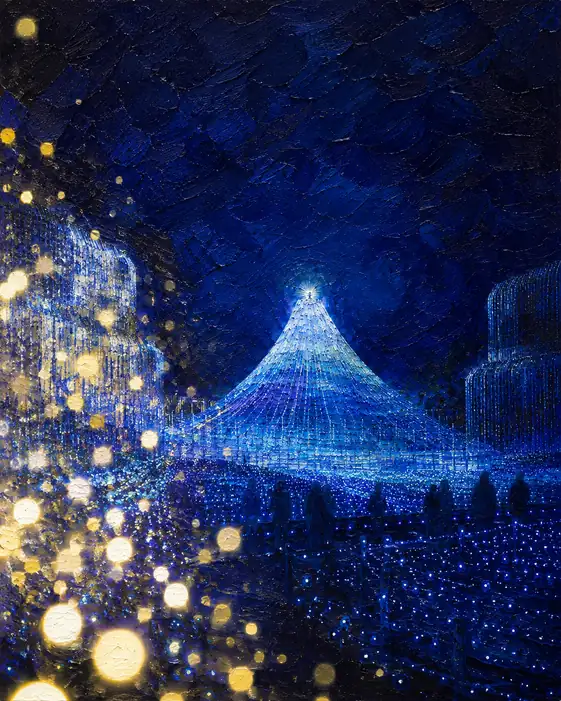
Introduction This painting makes blue illumination architectural and atmospheric. A mountain canopy anchors the festival, while warm circles drift across a disciplined field. Its force comes from the contrast between public order and remembered light. Description A white-tipped blue cone rises centrally beneath an expansive navy sky. Rounded buildings covered with vertical strands stand at both edges. A dark path enters from the lower right and carries several silhouetted visitors toward the mountain. Dense blue points sweep upward across the left foreground, where cream and amber orbs cluster most strongly before dispersing across the path. Analysis The central cone and paired structures establish symmetry, but the sloping left bank and uneven orbs destabilize it productively. A large area of textured sky holds visual pressure above the low horizon. Lines on the canopy converge at the star, while the path and luminous slope guide the eye inward from below. The restricted blue palette creates continuity; warm circles supply depth through scale, softness, and occlusion. Interpretation and Evaluation The circles resemble optical afterimages rather than literal lamps, suggesting that perception overlays the designed site with personal sensation. Three prominent figures near the center give the approach companionship and scale. The broad dark path is equally important: it allows the brightness to remain precious and makes walking appear contemplative. Although the architecture is conventionally centered, its partial veiling by light and shadow prevents sterile monumentality. Conclusion The work treats illumination as an encounter between place and vision. Geometry offers a destination, diagonal ground creates a journey, and floating warmth humanizes the blue environment. Darkness and tactile surface preserve mystery.
Same Subcategory
Similar Artworks
 Walking Through the Village Where Lights Bloom
 Midnight Blue and Firefly Gleams
 Golden Orbs Above the Blue Sea
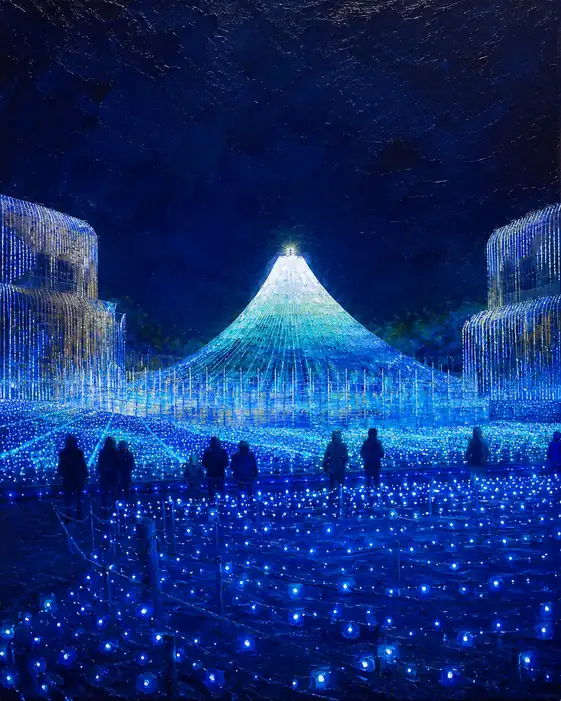 Sapphire Realm and the Mountain of Light
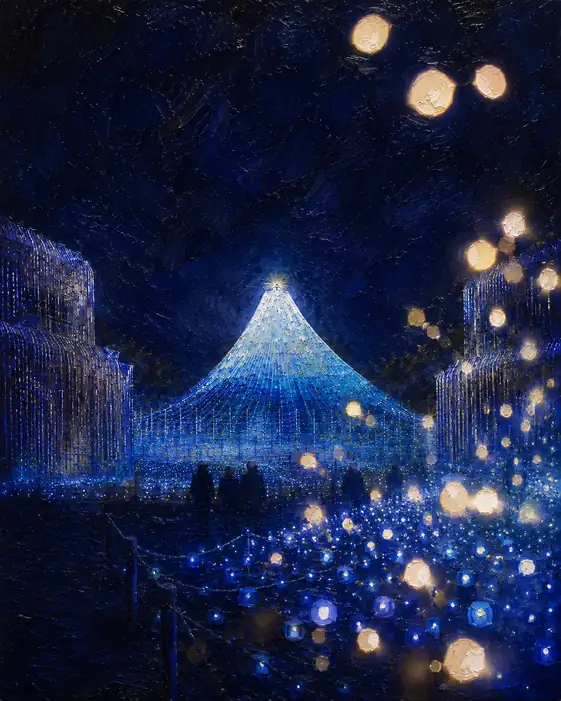 Moonlit Light Path and Sacred Tower
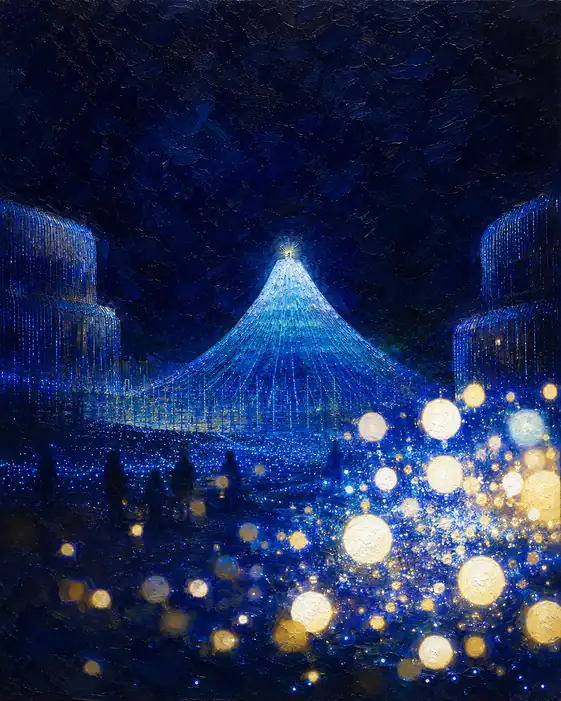 Burst of Light Before the Blue Peak
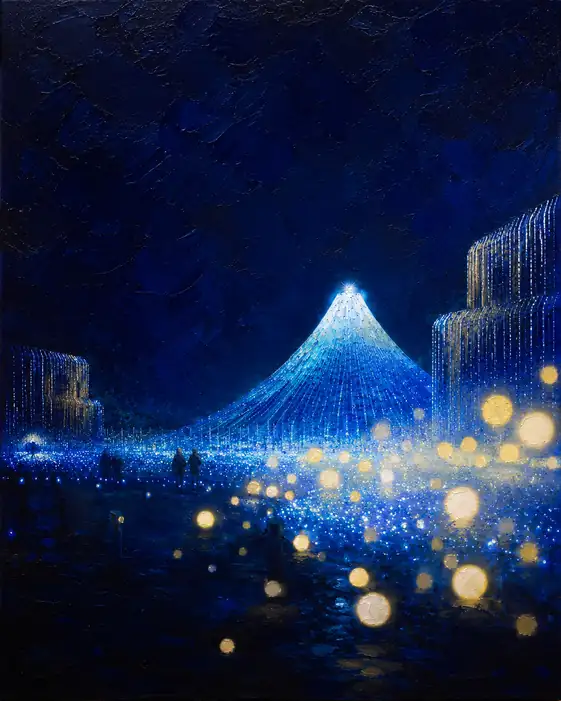 Cascade of Stars Beneath the Peak
 Luminous Mountain and Drifting Orbs
 Violet Arches and the Luminous Mountain
 Prismatic Radiance on Winter Night