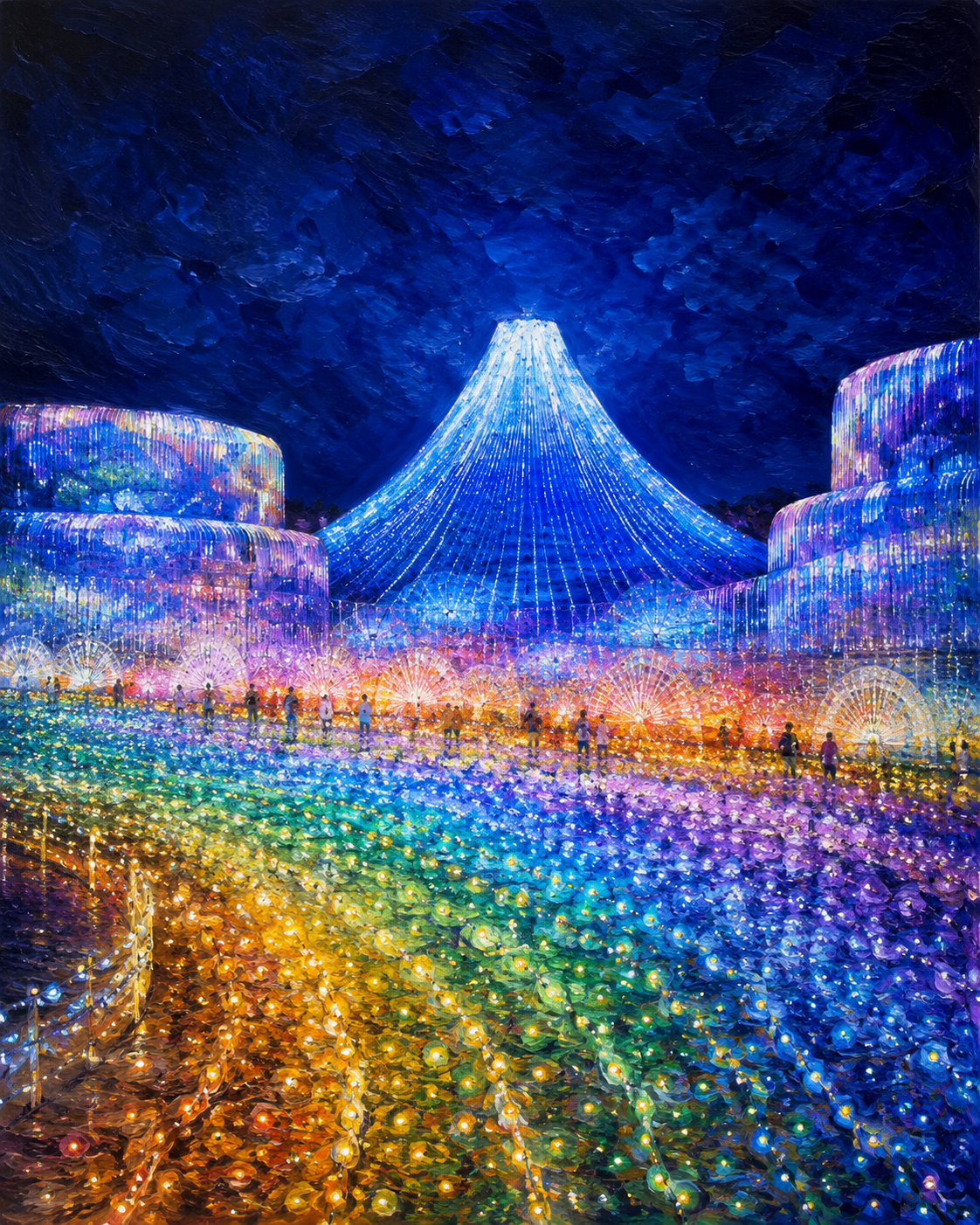
Rainbow Meadow and the Sapphire Peak
Critique
Introduction This installation sets a blue-white mountain between tiered buildings in multicolored light. Foreground diagonal bands of orange, green, cyan, blue, and violet bulbs form a radiant field. Architectural symmetry meets chromatic movement and pedestrian scale. Description The mountain rises to a flat bright summit and descends through evenly spaced blue strands. Rectangular side structures carry vertical curtains shifting among blue, violet, pink, and gold. A row of smaller fan-shaped lights glows orange and white across the middle, where many visitors stand. Foreground color bands sweep from lower left toward upper right, interrupted by posts, ropes, a dark path, and scattered warm bulbs. Analysis The central mountain and balanced side blocks create a stable frontal framework. Within it, diagonal color stripes make the ground feel active and directional. Blue unifies sky, mountain, and buildings, while orange fans and gold points provide warm complementary accents. Repeated vertical curtains contrast with radial fans and sloping ground bands. Human silhouettes divide the luminous horizon and establish the vast scale. Interpretation and Evaluation The installation resembles a spectrum mapped across terrain, letting color organize movement. Visitors occupy a continuous field linking foreground, fan line, and mountain. Dense light points, graduated color, and layered structures demonstrate control. Strict symmetry and rainbow diagonals give clarity, vitality, and originality. Conclusion At first the cool mountain dominates, but the foreground spectrum gradually becomes the main carrier of motion. Warm fans mark a threshold between ground and architecture. Through saturated harmony, distinct geometric rhythms, and measured human figures, the work turns an illumination display into a navigable landscape of color.
Same Subcategory
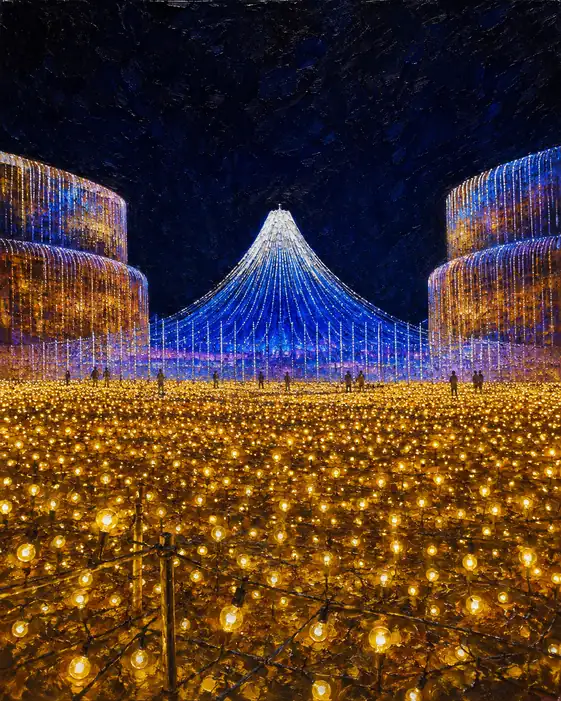 Golden Field Before the Sacred Beacon
Similar Artworks
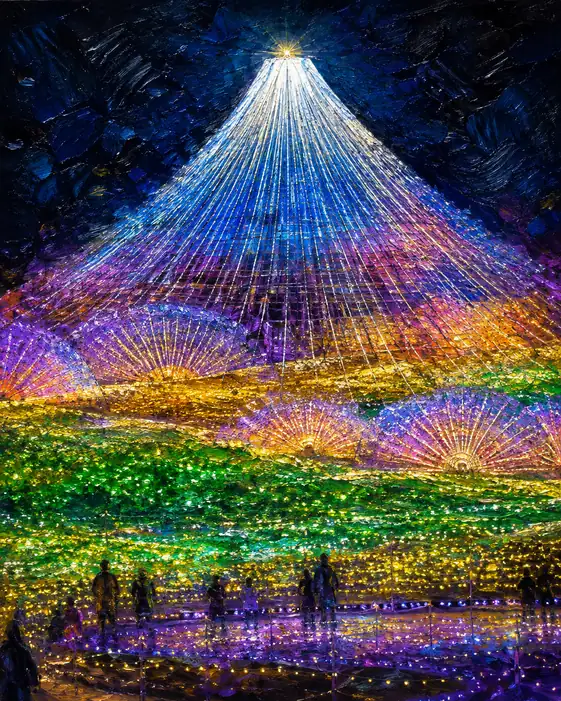 Prismatic Radiance on Winter Night
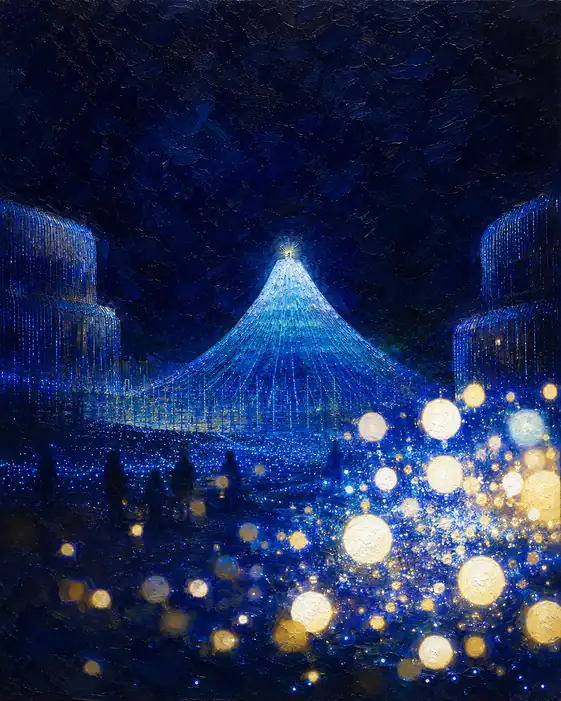 Burst of Light Before the Blue Peak
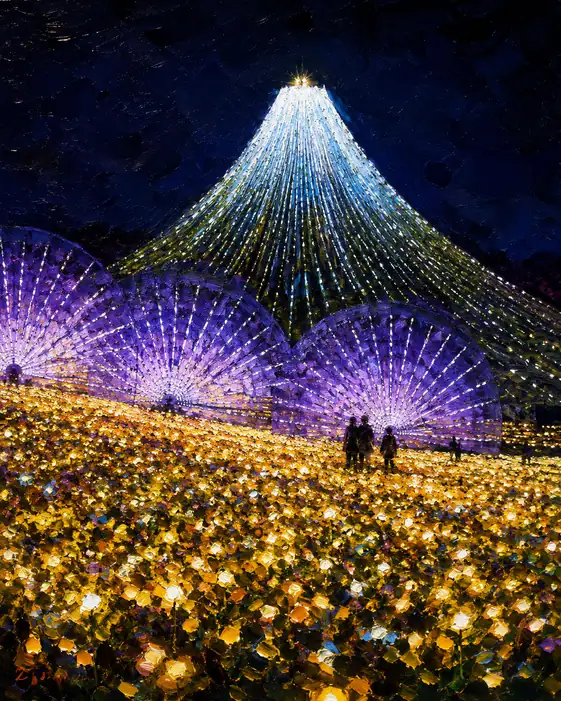 Violet Arches and the Luminous Mountain
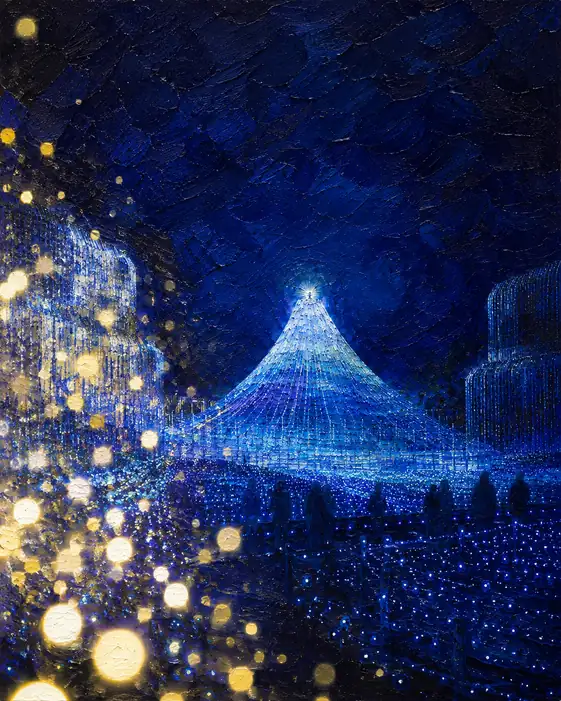 Luminous Mountain and Drifting Orbs
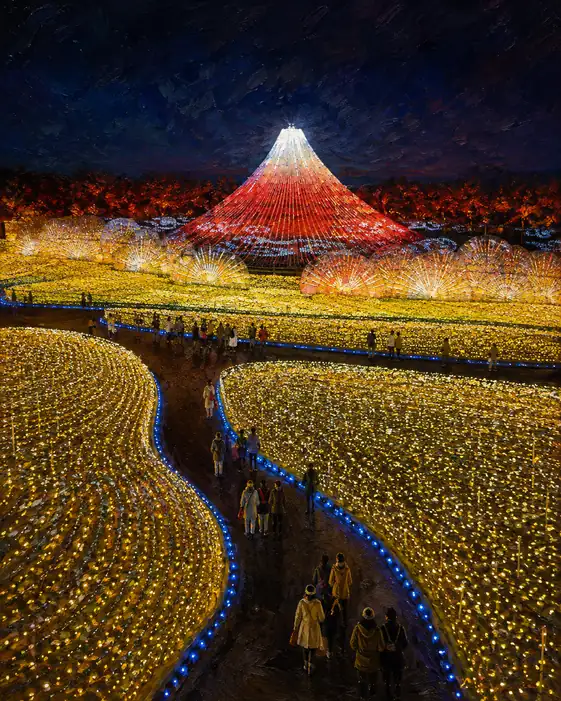 Golden Pathway to the Red Peak
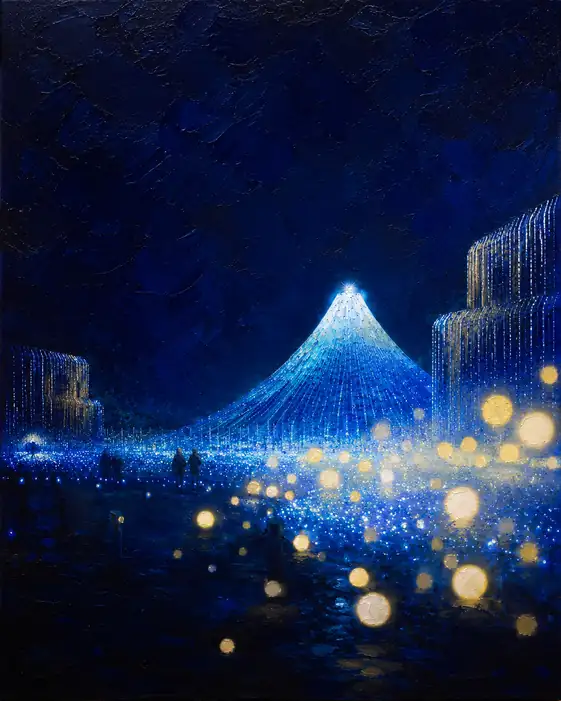 Cascade of Stars Beneath the Peak
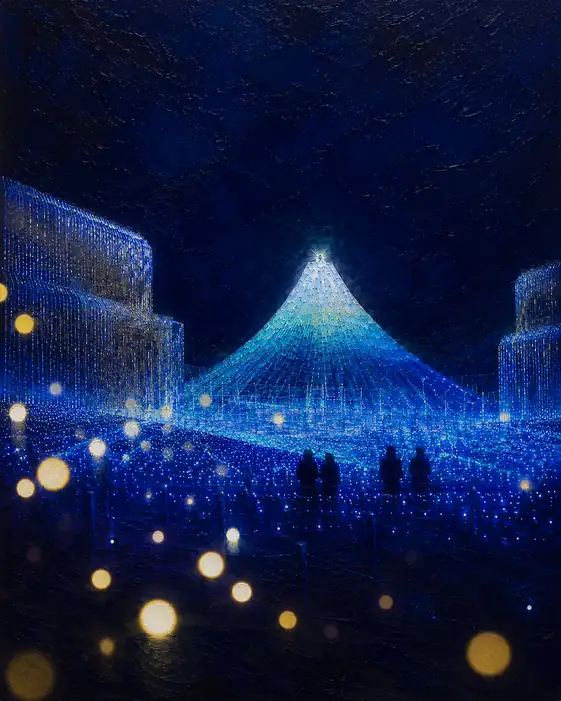 Midnight Blue and Firefly Gleams
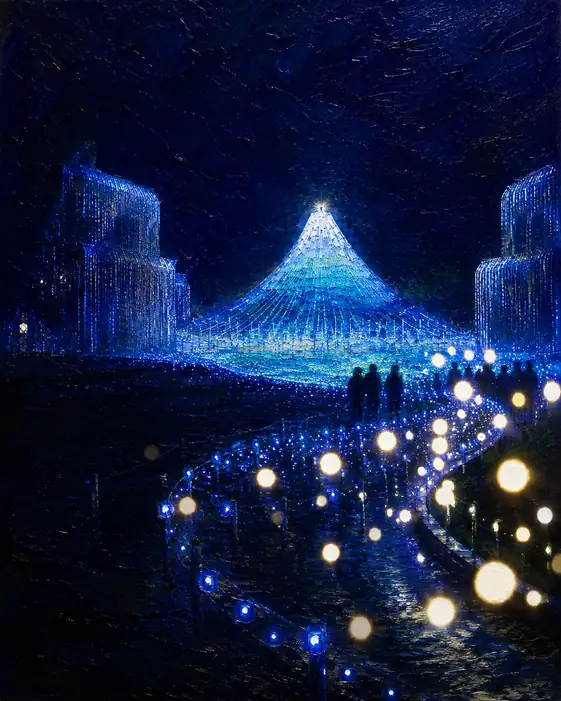 Winding Pathway to the Azure Beacon
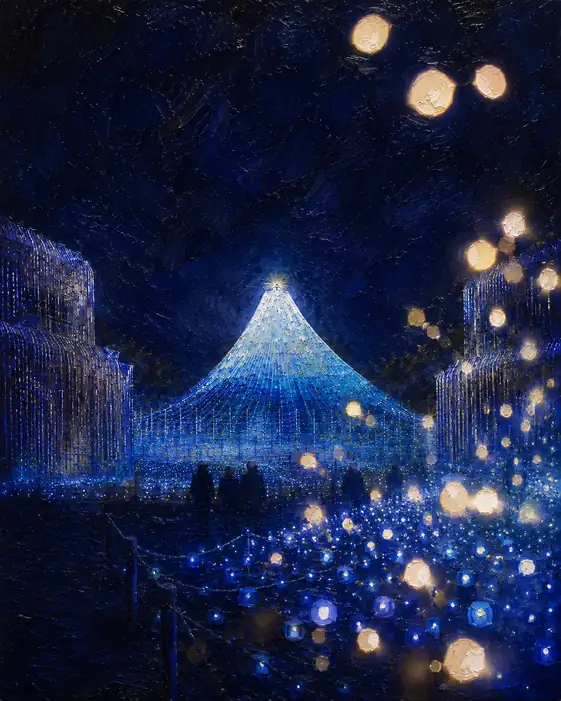 Moonlit Light Path and Sacred Tower
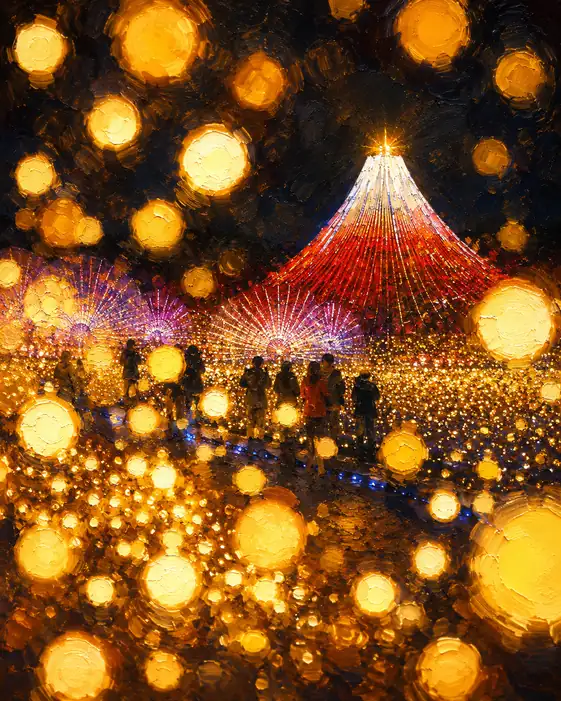 Crimson Mountain and Golden Bokeh