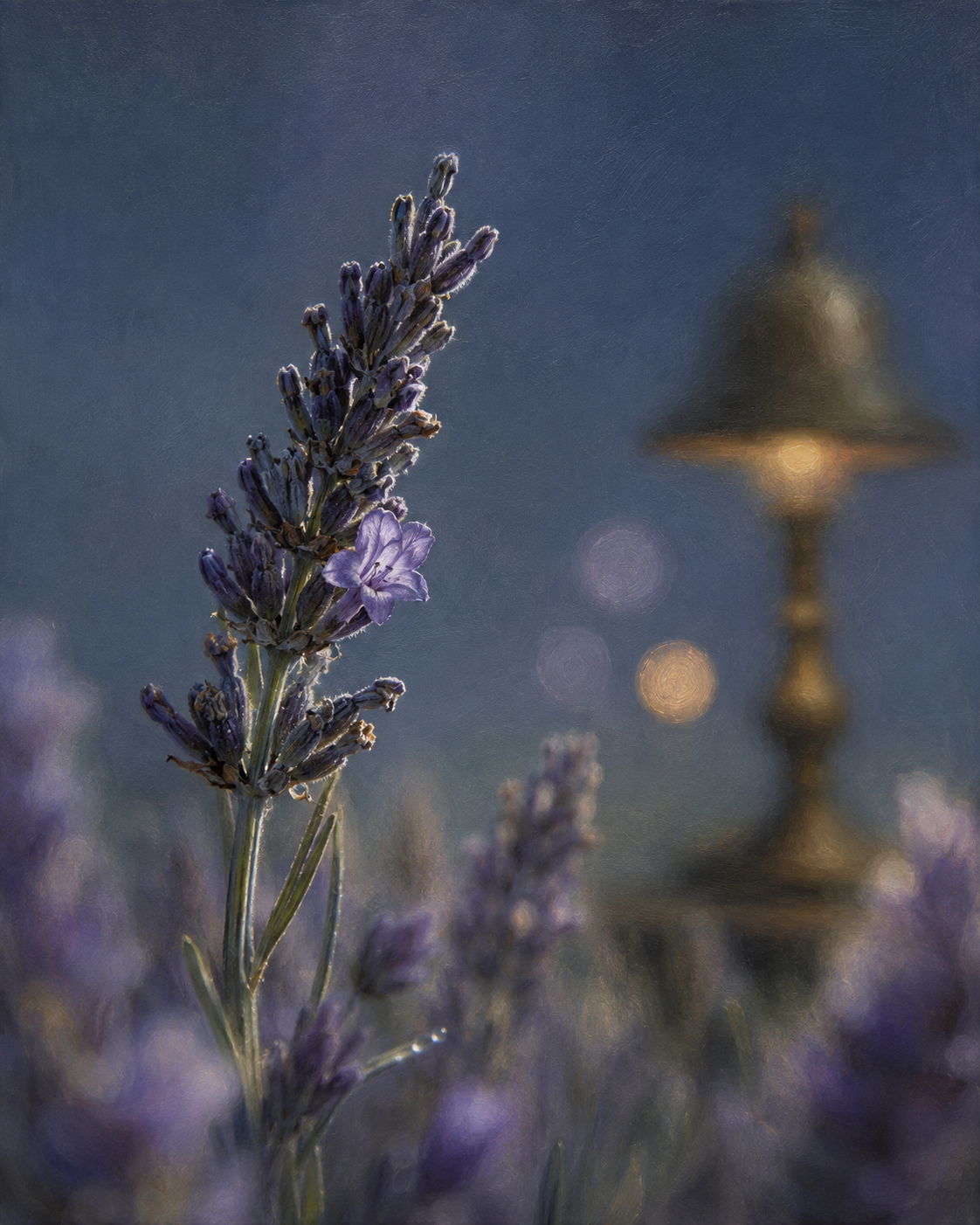
Nocturne of the Golden Lamp
Critique
Introduction This nocturnal composition isolates one lavender stem against a blue field of softened lights. A dark streetlamp occupies the right background, while the flowering spike rises sharply on the left. The scene joins close botanical scrutiny with the atmosphere of an urban or garden evening. Description The main stem leans slightly inward and bears many closed, gray-violet buds around one conspicuously open blossom. Fine rim light traces the fuzzy buds, green stalk, and narrow leaves. Behind them, the lamp becomes a broad dark silhouette containing two amber glows; scattered lavender, gold, and pale circular lights float across the lower distance. Analysis The composition depends on an unequal but stable pairing: the detailed flower fills the left third, and the blurred lamp anchors the right. Their vertical forms echo each other, yet sharp and soft edges establish a strong spatial interval. Cool blue surrounds both objects, allowing the violet flower and small amber lights to form restrained complementary accents. Interpretation and Evaluation The single open corolla among numerous folded buds makes a modest event feel significant. Meanwhile, the lamp’s indistinct illumination suggests public distance, opposed to the intimate natural detail in front. Convincing edge light gives the stem tactile presence, and controlled focus transforms ordinary background lights into measured visual rhythm. This fusion of botanical exactness and nocturnal abstraction shows originality without forcing a symbolic narrative. Conclusion At first the image reads as a simple lavender study, but sustained looking reveals a careful exchange between natural and manufactured light. The lamp and flower share a vertical dignity while remaining materially distinct. Through disciplined color, selective detail, and balanced asymmetry, the work makes one small bloom command a spacious evening setting.
Same Subcategory
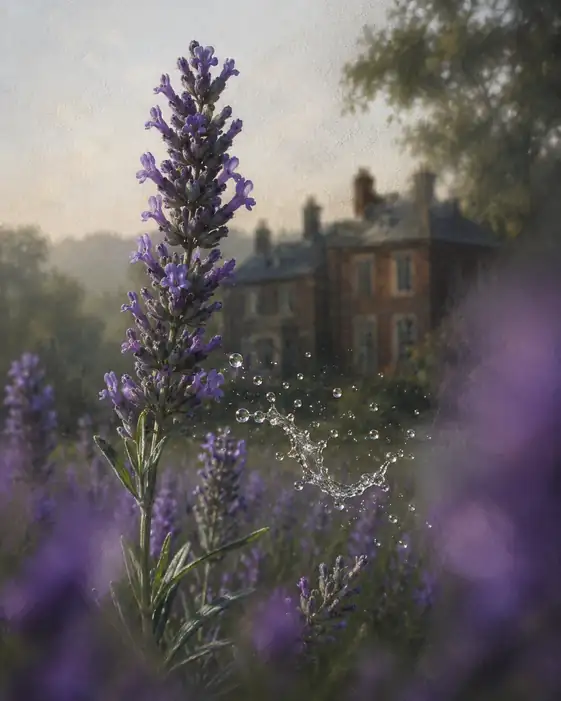 Morning Dew and Manor Whispers
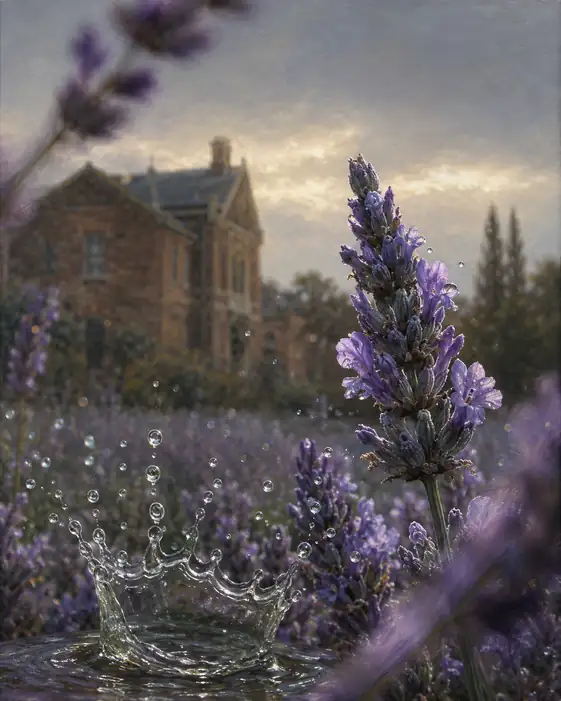 Crown of Rain in the Manor Garden
Similar Artworks
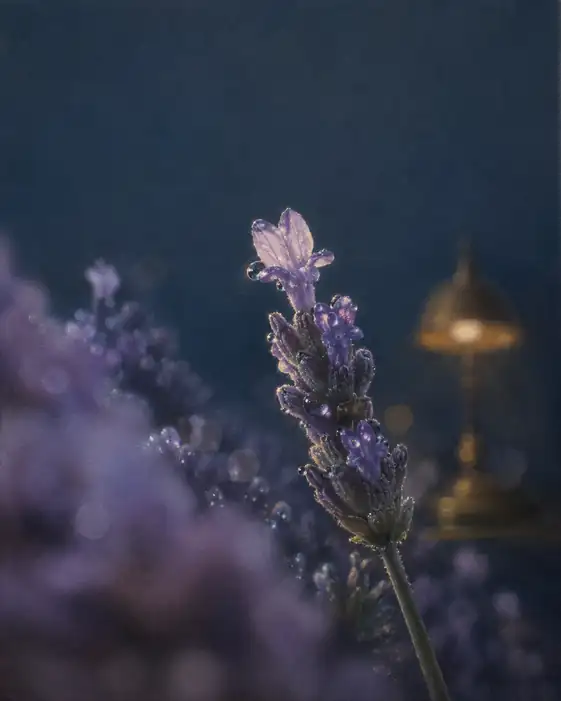 Scent of Lavender in the Brass Light
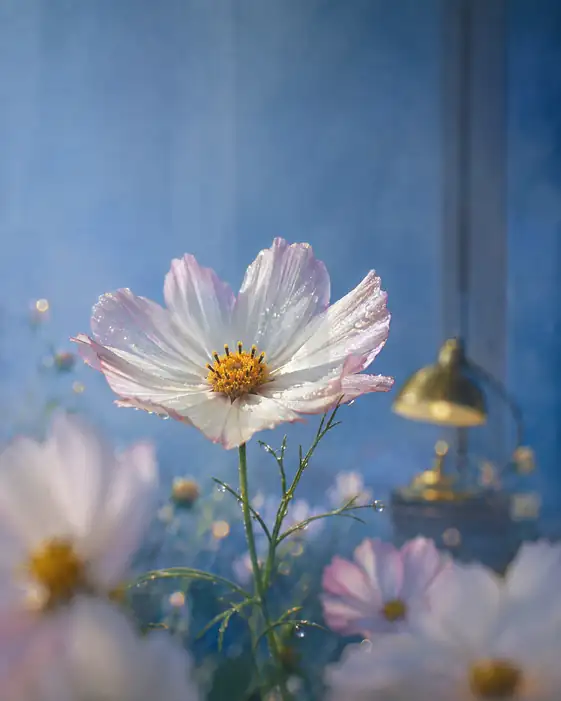 Pink Cosmos and Brass Desk Lamp
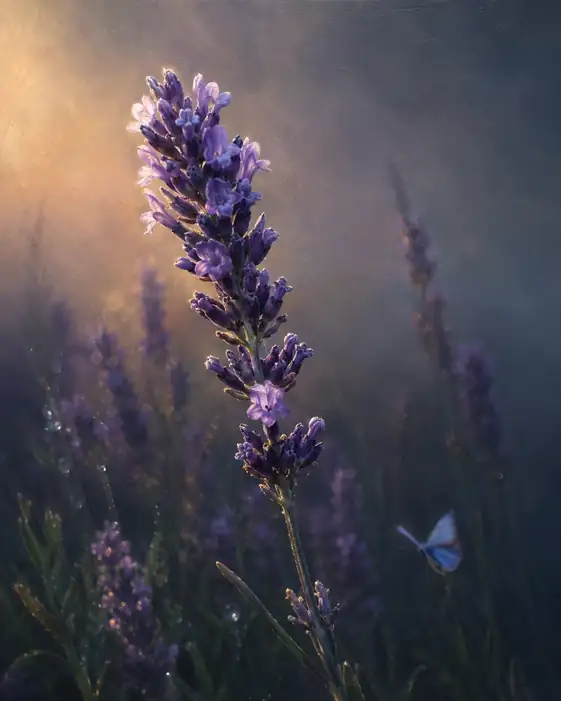 Blue Butterfly in Morning Mist
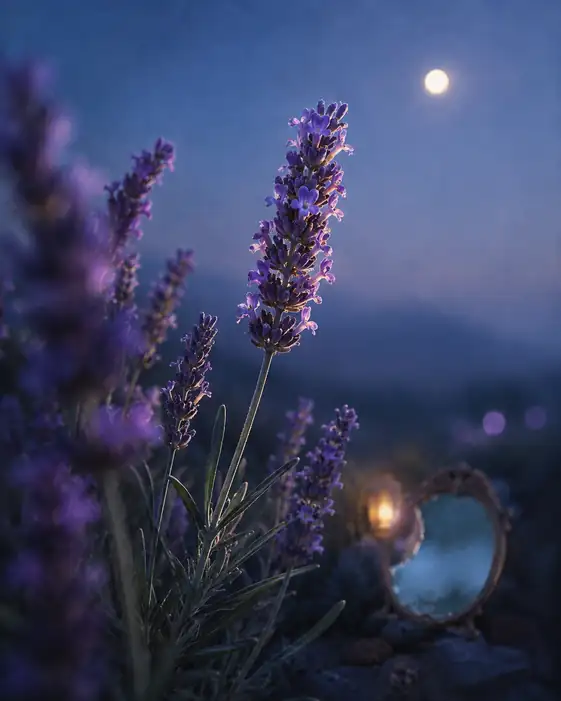 Lavender Standing Under the Moonlit Mirror
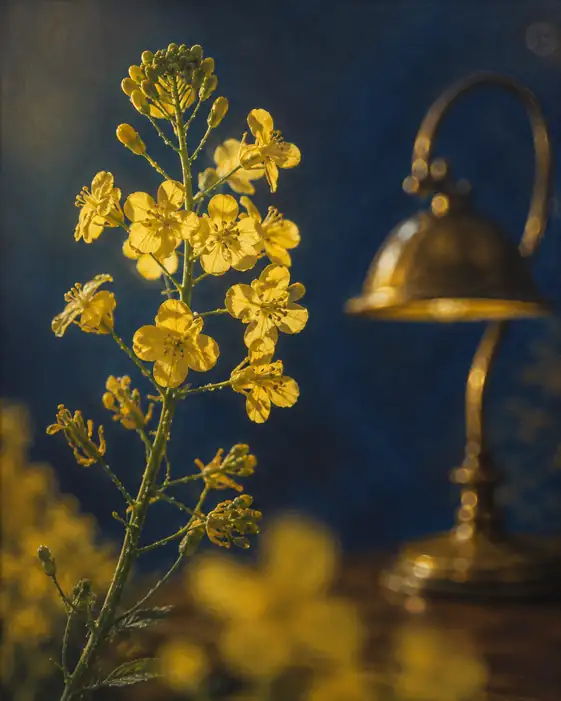 Brass Lamp and Spring Blossom
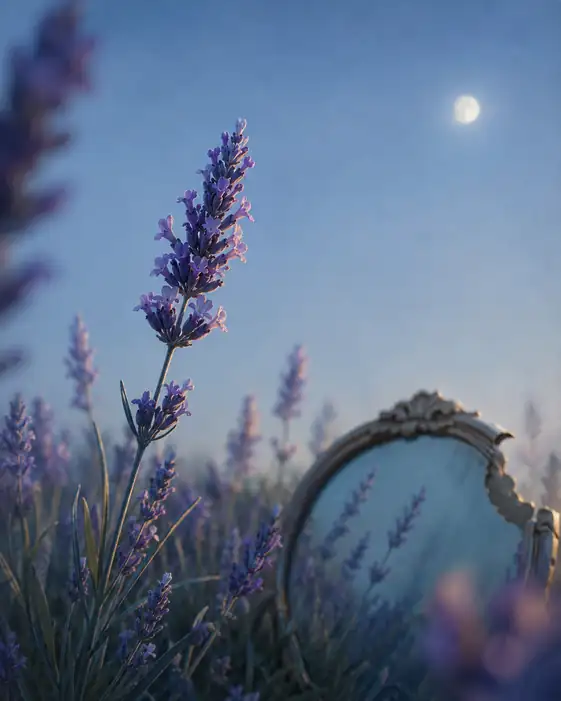 Moonlit Reflection in Lavender
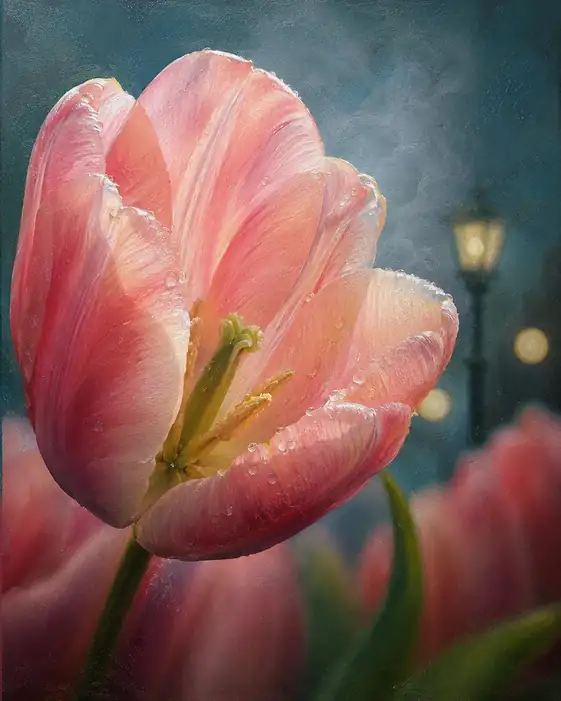 Pink Tulip Beneath the Night Lantern
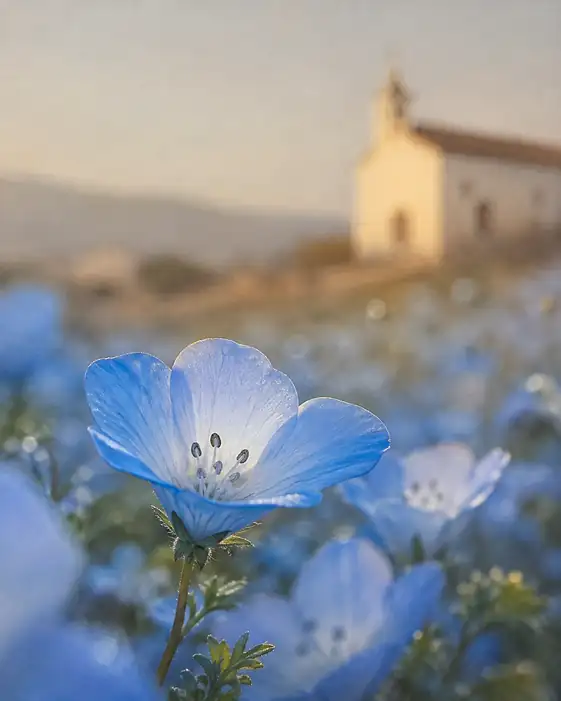 Blue Nemophila and the White Chapel
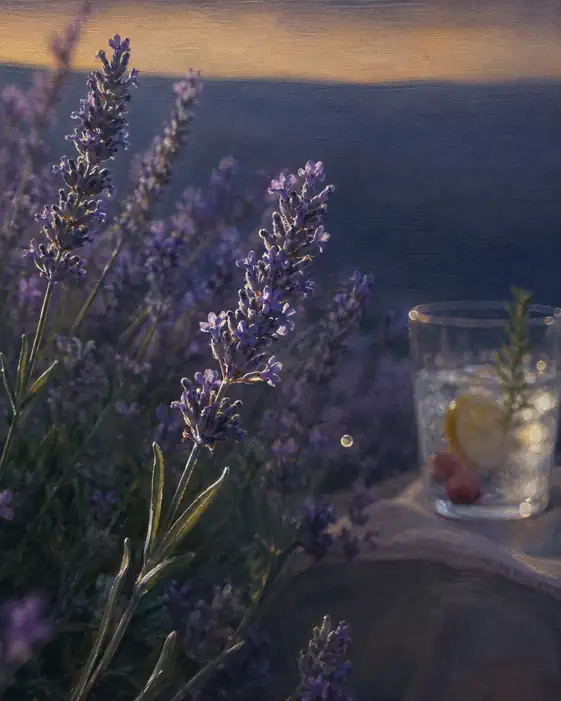 Lavender Sunset and Citrus Sparkle
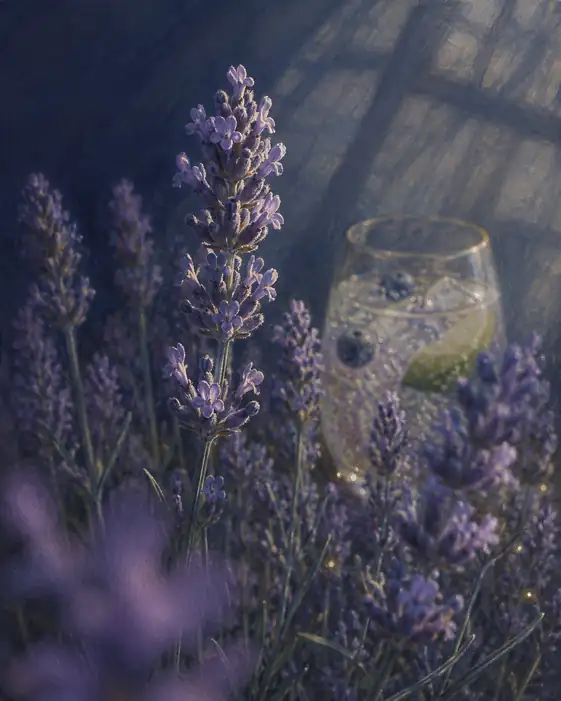 Summer Afternoon with Lavender Fizz