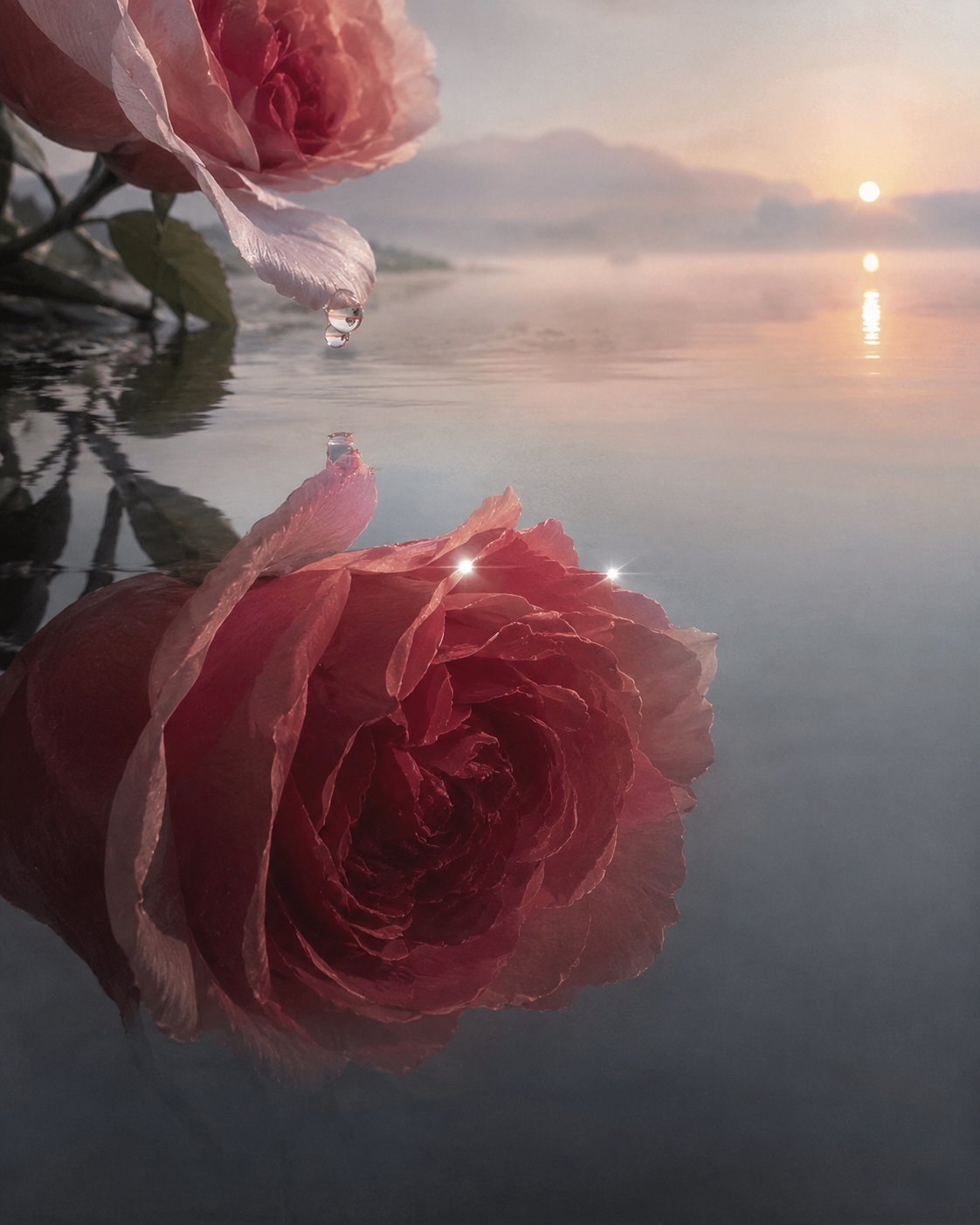
Dawn Reflection on the Morning Lake
Critique
Introduction This image stages a rose between sky and water, uniting a near flower with sunrise. Its restrained palette and spacious surface remain contemplative despite the bloom’s scale. Description A pale pink rose enters from the upper left, accompanied by dark stems and leaves. Two clear droplets hang from its lowest petal. Below, an inverted crimson reflection fills the lower-left quadrant, with two star-like highlights on its upper petals. Smooth gray-blue water extends to distant mountains. At upper right, a low sun and its narrow golden reflection mark the horizon. The right half remains largely open and softly luminous. Analysis The composition balances the heavy flower-reflection pair on the left with the small sun and broad negative space on the right. A high horizon grants the water most of the frame. Pink, burgundy, silver-blue, and pale gold form a quiet harmony. The droplets create a vertical link between physical rose and reflected rose, almost touching across the surface. Sharp highlights punctuate otherwise soft transitions, while distant mountains are reduced to overlapping silhouettes. Interpretation and Evaluation The suspended droplets emphasize a moment immediately before change: their fall could disturb the reflection and alter the image. The rose’s double therefore feels temporary, held together by exceptional stillness. Sunrise adds renewal, but its distance and subdued light keep the mood meditative rather than triumphant. The open right field might seem sparse, yet it provides necessary silence around the dense flower and allows the tiny sun to command attention. Reflection becomes both a visual subject and a measure of calm. Conclusion Disciplined emptiness joins flower, droplet, reflection, sun, and reflected sun. The romantic emblem becomes an equilibrium dependent upon water remaining still.
Same Subcategory
 Rose Petals in the Golden Horizon
 Rose Ascending to the Golden Clouds
Similar Artworks
 Lotus at Dawn Before Mountain Mist
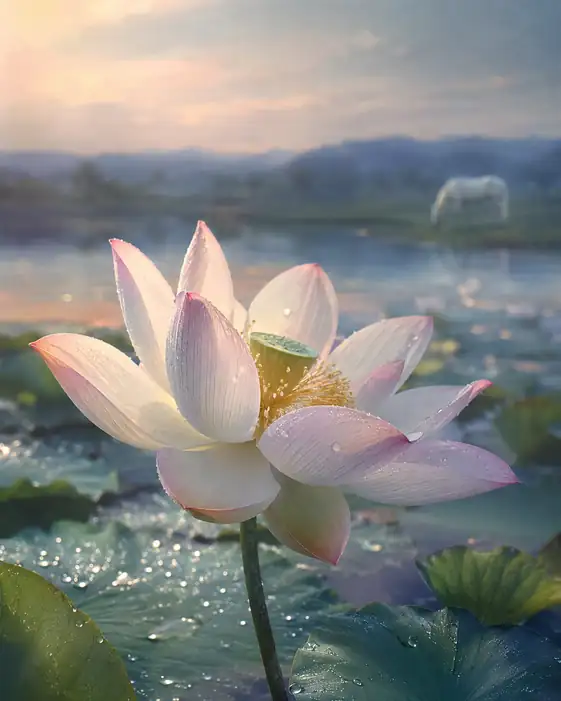 White Horse and Lotus at Dawn
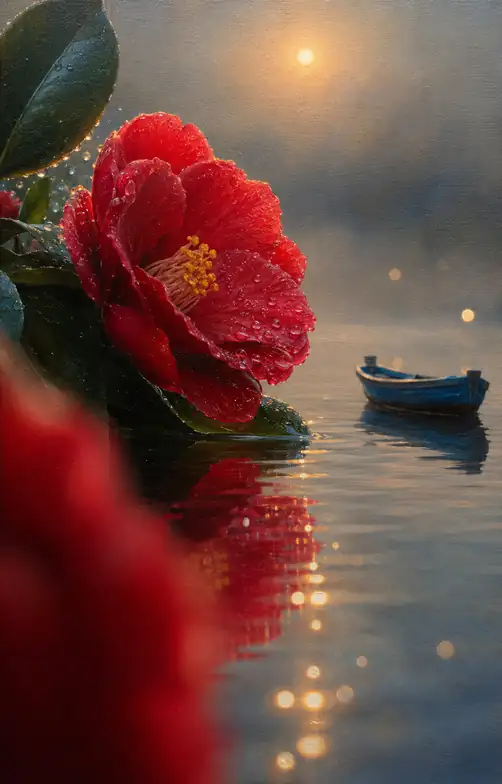 Camellia at Sunset by the Rowboat
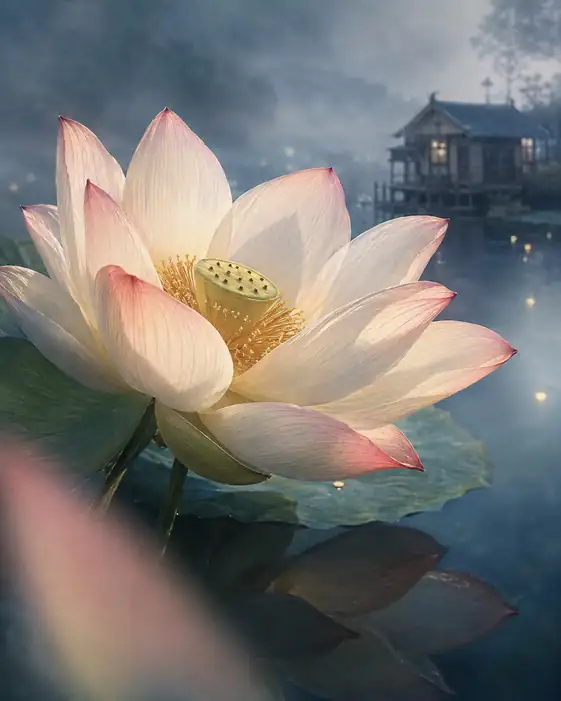 Lakeside Hut in Morning Mist
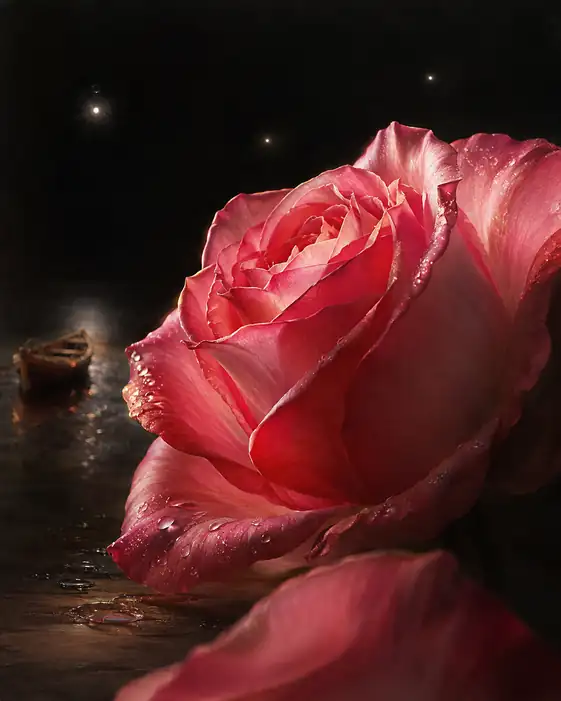 Leaving the Flowerlight Behind
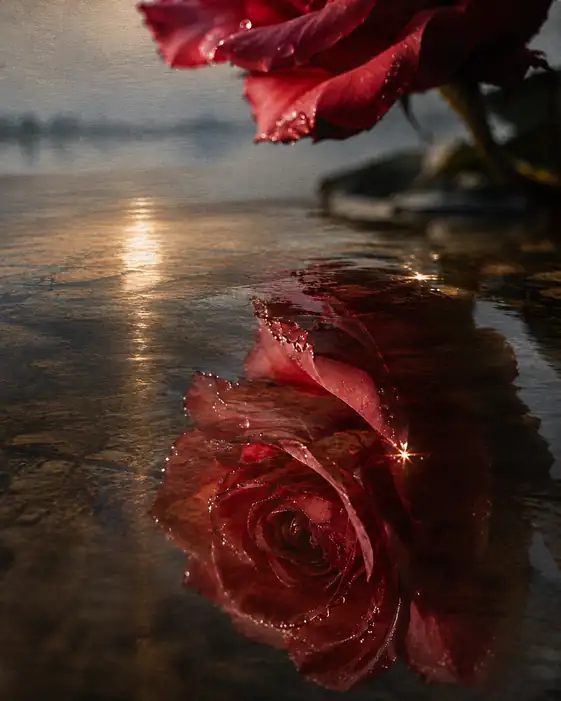 Golden Mirror of the Crimson Rose
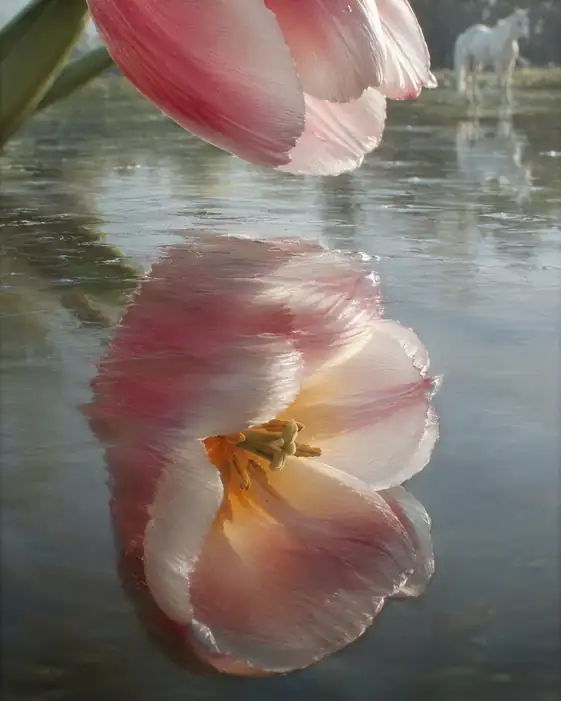 White Steed and Tulip Reflection
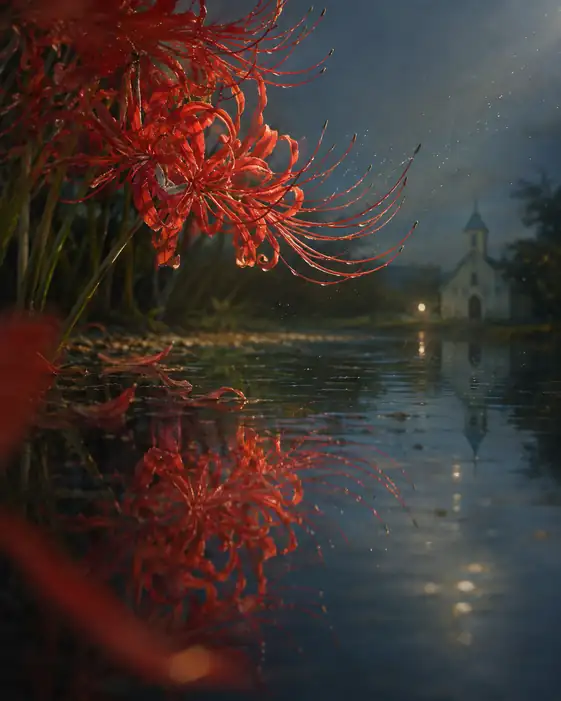 Chapel by the River and Crimson Shadow
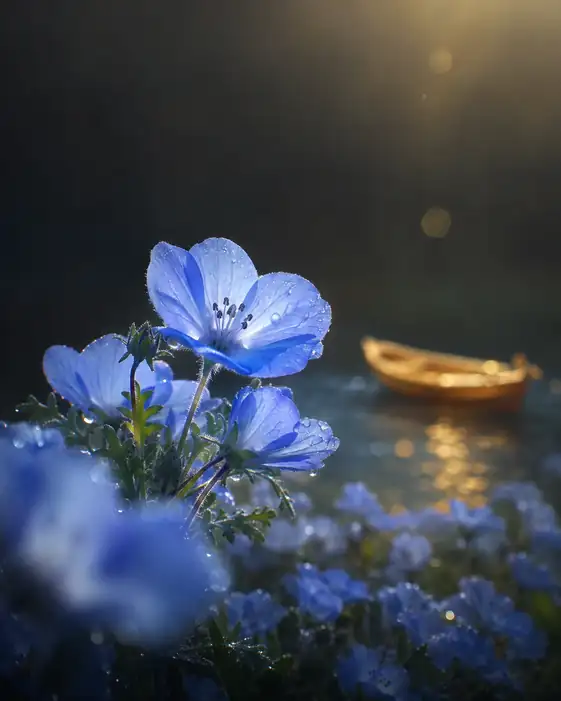 Leaving the Blue Glow of Flowers Behind
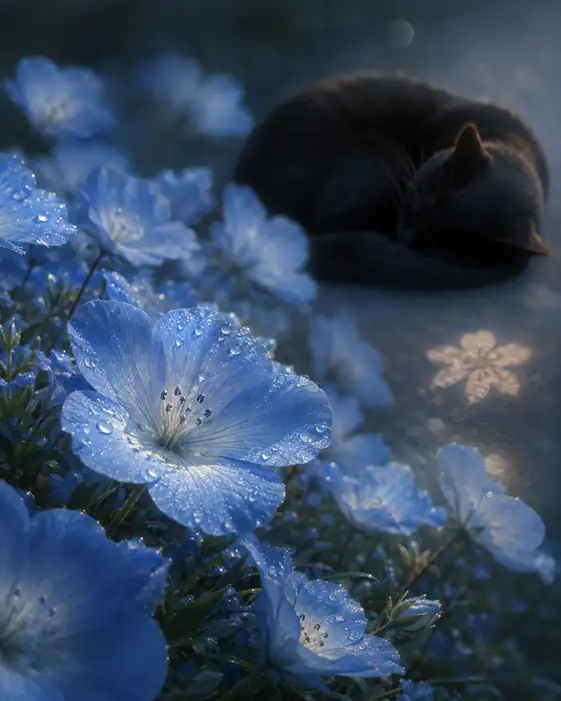 Sleeping Black Cat in Nemophila Garden