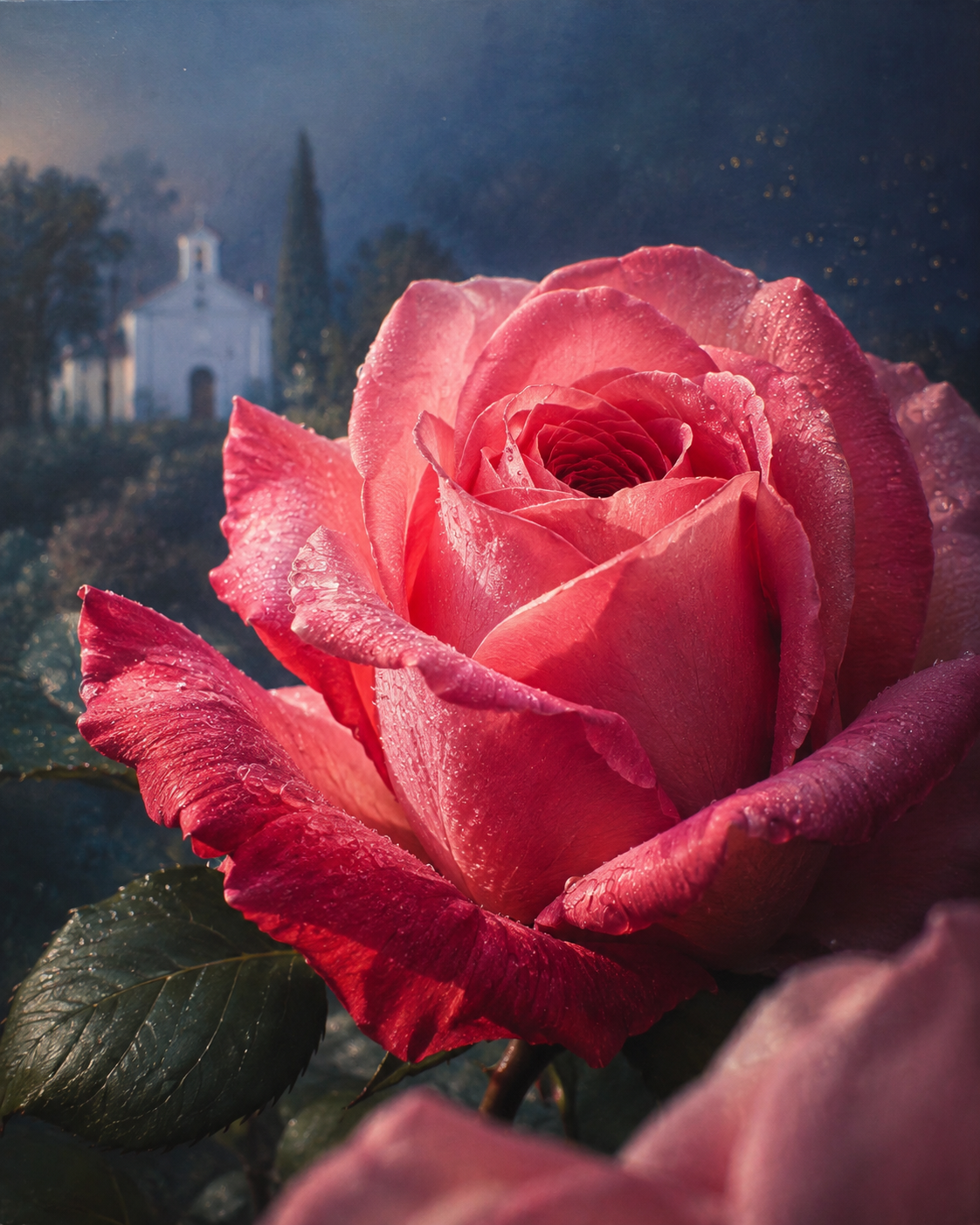
Dewy Petals Beside the Village Chapel
Critique
Introduction This rose portrait combines close observation with distant architecture. The immense dew-covered bloom dominates the present, while a small chapel extends the image toward contemplation. Description A coral-pink rose fills most of the frame, opening toward the viewer with a deep red spiral center. Broad outer petals carry numerous droplets and shift toward darker crimson along the lower-left edge. Glossy green leaves and a sturdy stem appear below. Soft pink foreground forms crop the bottom and right edges. In the upper-left distance stands a white chapel beside a tall cypress, surrounded by shadowy vegetation and faint golden specks. Analysis The flower’s concentric structure forms an emphatic focal center slightly right of middle. Its bright mass is counterbalanced by the chapel and cypress at upper left. Strong side light reveals petal veins, water, folds, and translucent rims; the background remains cool, soft, and low in contrast. Coral, crimson, green, and deep blue create a rich but controlled harmony. Foreground blur frames the sharp bloom, while the chapel’s reduced scale greatly expands perceived depth. Vertical architecture echoes the flower’s upright central petals. Interpretation and Evaluation The juxtaposition moves from corporeal immediacy to distant reflection. Droplets and wrinkles emphasize the rose’s vulnerable present, while the chapel appears stable but unreachable. The bloom suggests earthly abundance and a threshold to contemplation. Exaggerated scale risks overwhelming the landscape, yet the white silhouette retains symbolic force. Golden points connect flower with garden. Conclusion The work succeeds through dramatic scale, tactile lighting, and a clear two-stage depth structure. It lets the viewer dwell first within the physical complexity of a single rose, then travel outward toward a quiet architectural promise beyond it.
Same Subcategory
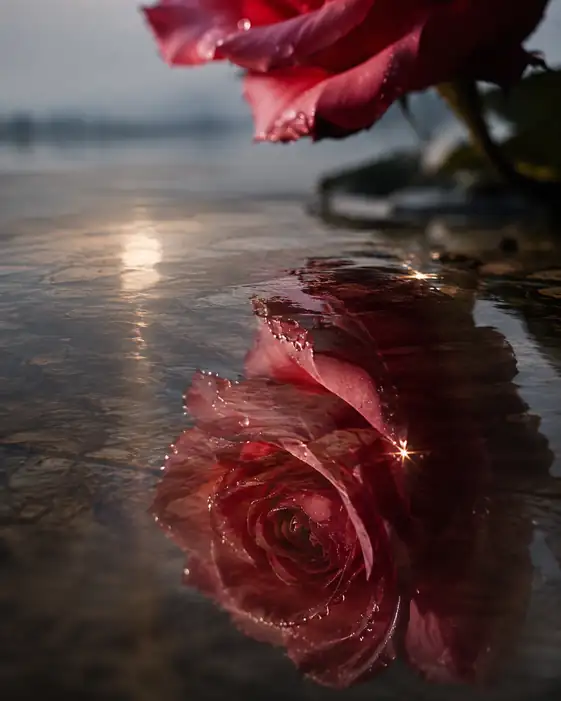 Twilight Ripples of the Red Petal
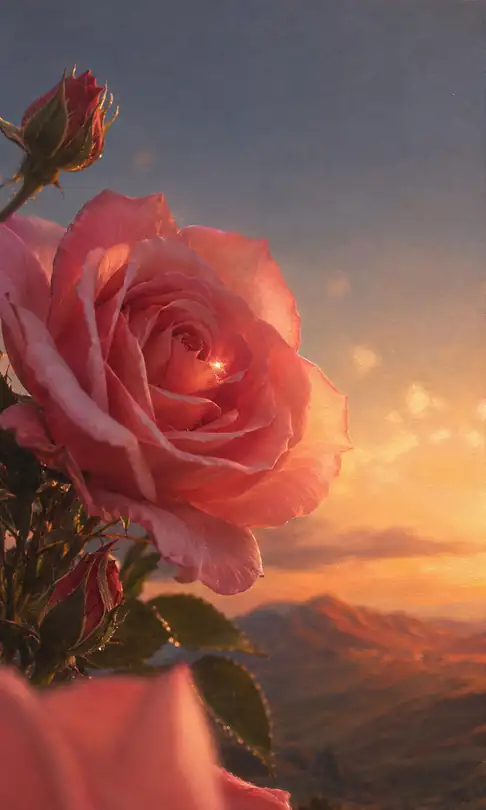 Rose Petals in the Golden Horizon
Similar Artworks
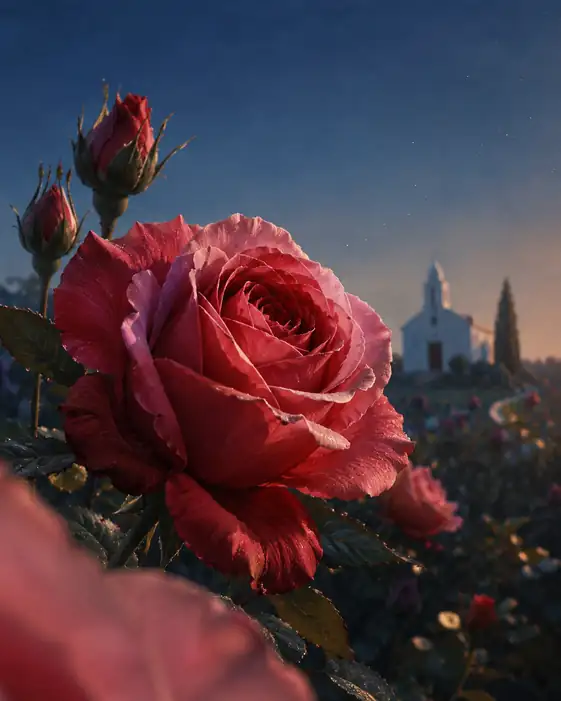 Crimson Bloom Before the White Chapel
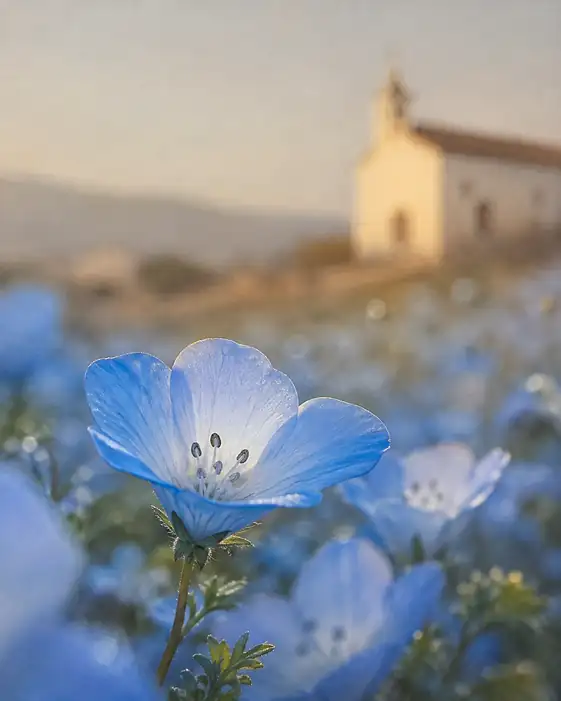 Blue Nemophila and the White Chapel
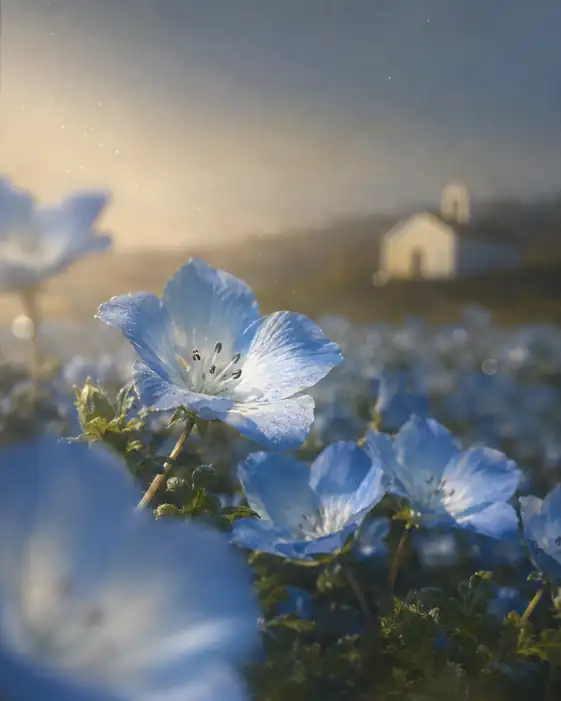 Morning Church in Field of Nemophila
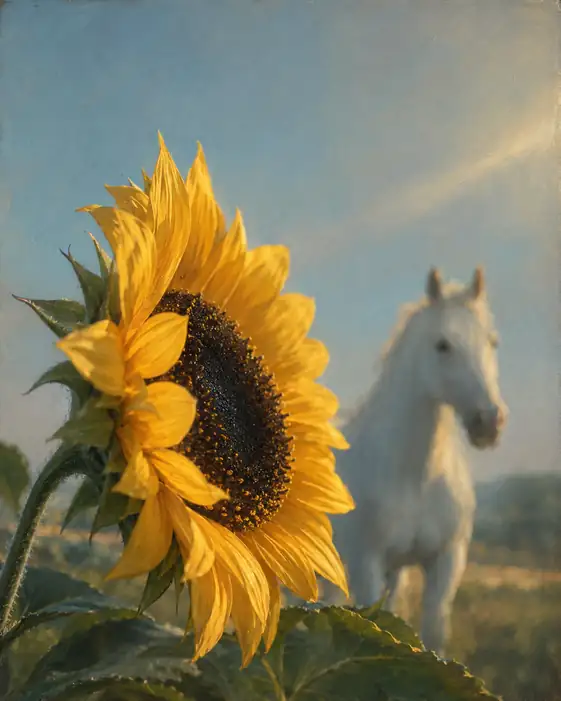 Morning Light on Petals and Steed
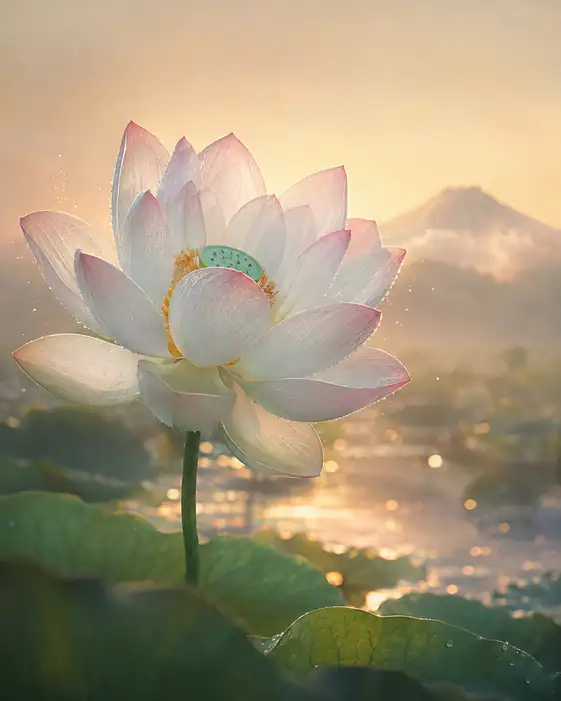 Lotus at Dawn Before Mountain Mist
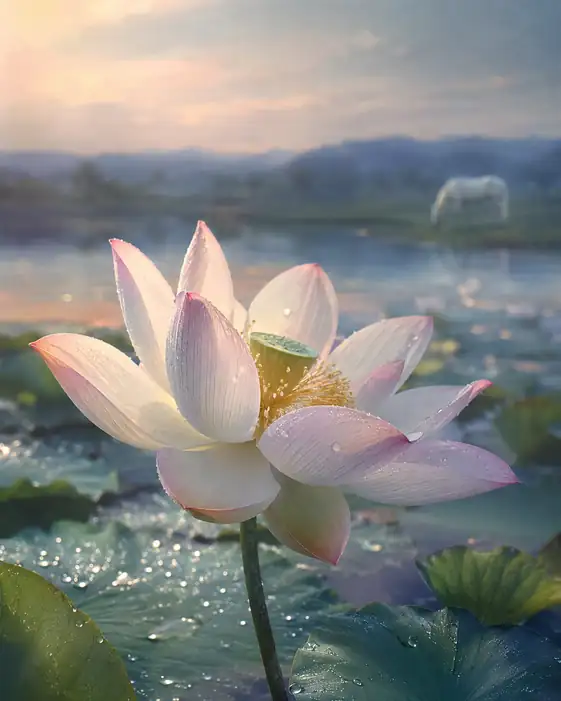 White Horse and Lotus at Dawn
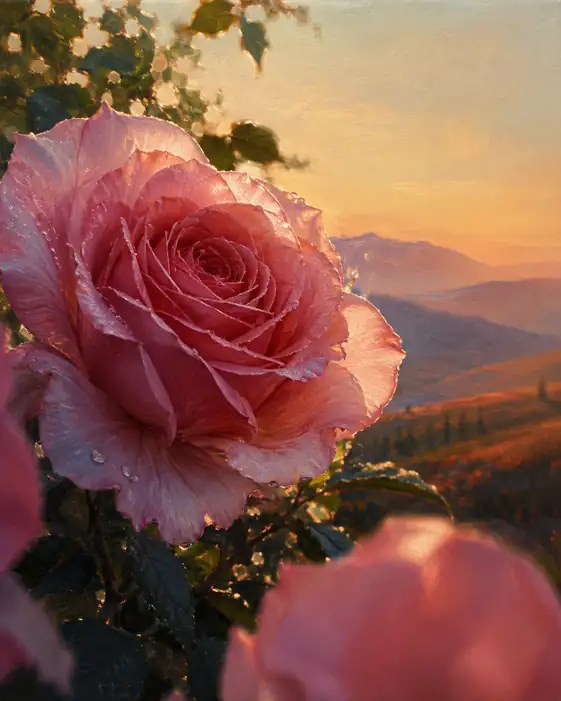 Sunrise Over the Hills and the English Rose
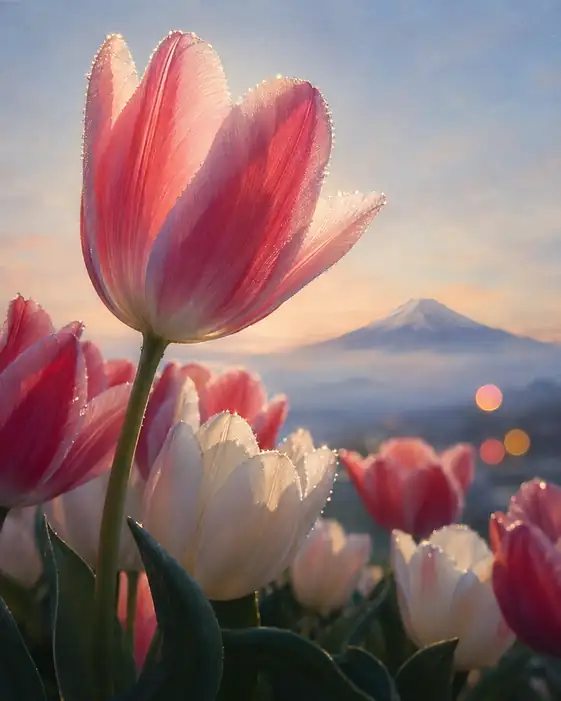 Tulips at Sunrise Before Mount Fuji
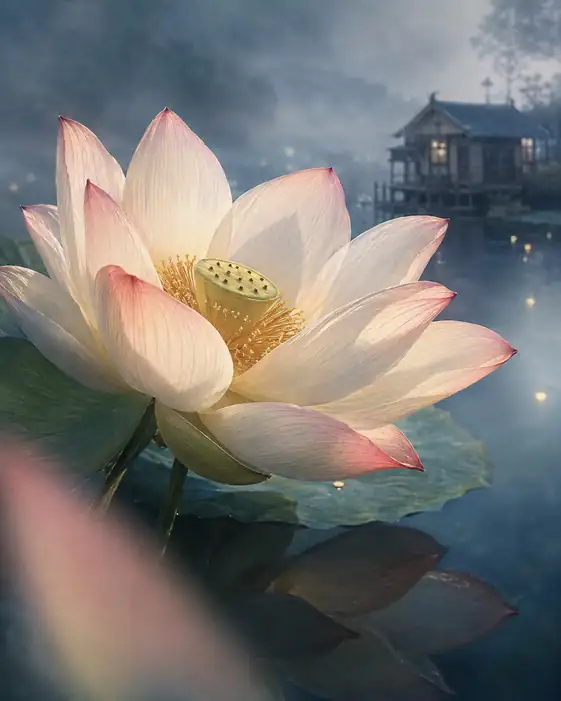 Lakeside Hut in Morning Mist
 Iris and the Seaside Chapel