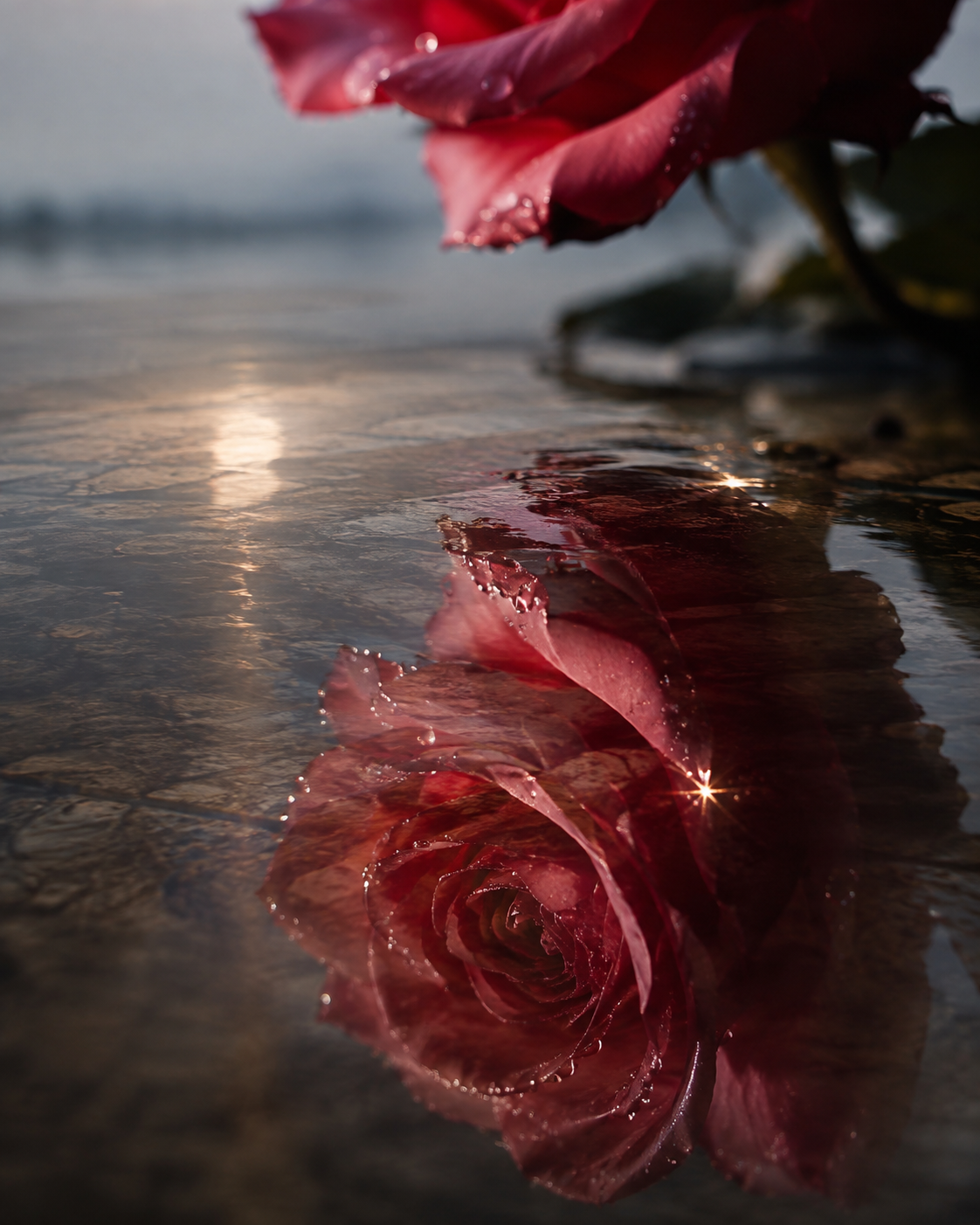
Twilight Ripples of the Red Petal
Critique
Introduction This image presents a rose indirectly, placing its reflection at the center while the flower hovers above. Sunset and shallow water make the scene precise yet elusive. Description The real bloom is cropped across the top, where wet crimson petals and a dark stem remain softly focused. Its inverted reflection extends through the lower-right half, revealing a spiraling center and broad overlapping petals. A muted golden column of sunlight falls on the left side of the reflective surface. Two sharp starbursts appear near the reflected flower. A pale, blurred horizon crosses the upper third, and fine ripples cover the foreground. Analysis The reflected rose forms a diagonal from lower center to upper right, opposed by the near-vertical band of sunlight. Warm red, copper, and gold sit within a field of blue-gray and brown. Selective focus sharpens only portions of wet petal edges, encouraging the eye to assemble the flower across interruptions. The high horizon gives the reflective plane unusual breadth. Droplets repeat as small highlights, while the two starbursts serve as precise accents amid softer tonal transitions. Interpretation and Evaluation Because the reflected flower is fuller than its source, an indirect image seems to hold more truth than immediate sight. Water introduces fragility: a slight disturbance could erase the rose. Sunset adds another temporary phenomenon, joining two vanishing appearances. The heavy upper crop purposefully directs attention to reflection itself. Subdued surroundings prevent decorative excess. Conclusion The picture is strongest as a meditation on temporary visibility. Its disciplined asymmetry, limited focus, and restrained sunset palette make the reflected rose feel discovered rather than arranged, suspended briefly between material surface and remembered image.
Same Subcategory
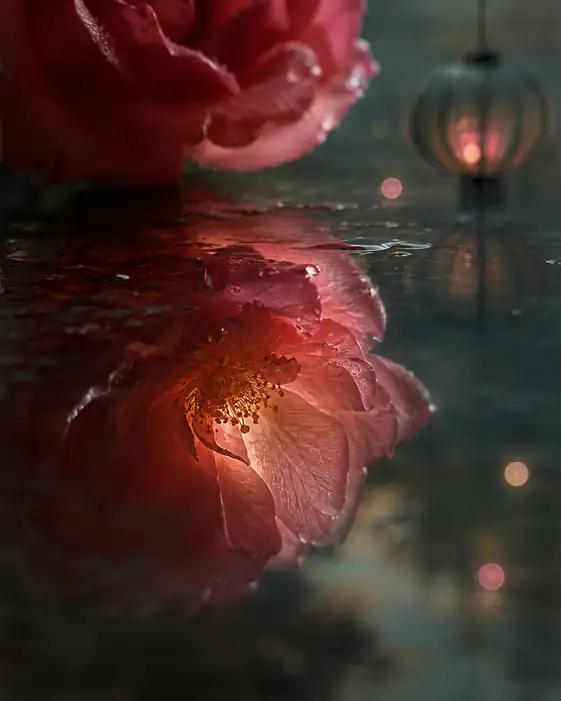 Lantern Glow on the Inverted Rose
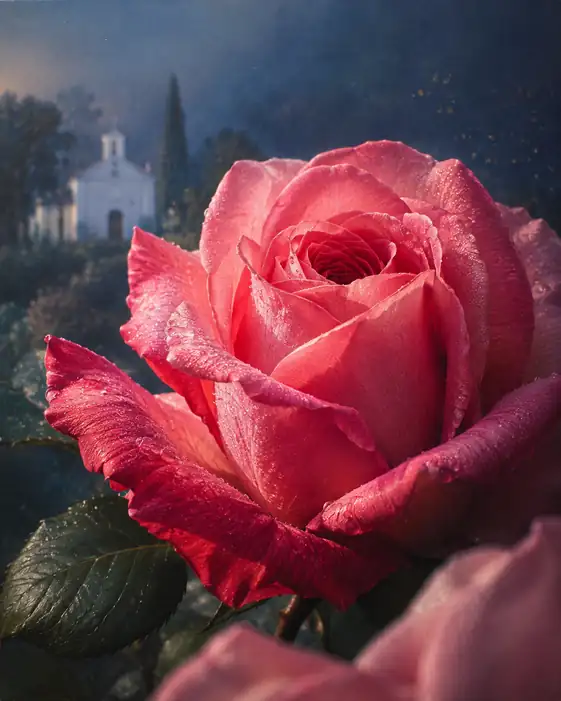 Dewy Petals Beside the Village Chapel
Similar Artworks
 Golden Mirror of the Crimson Rose
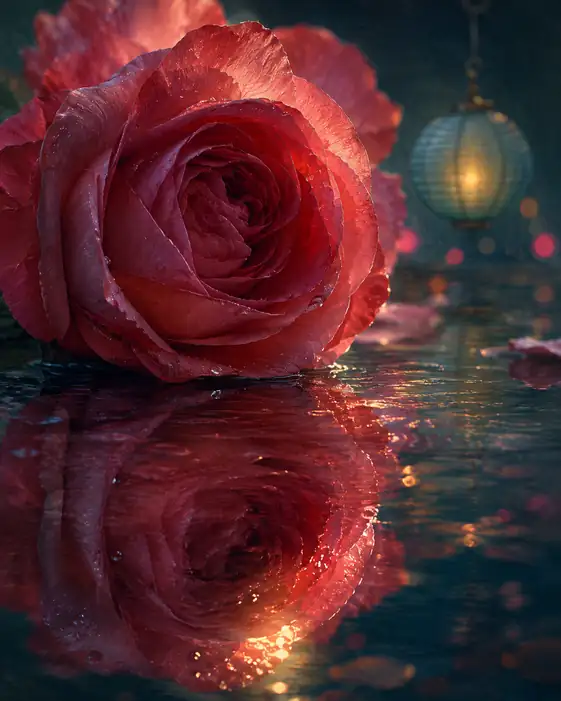 Crimson Reflection and the Floating Lantern
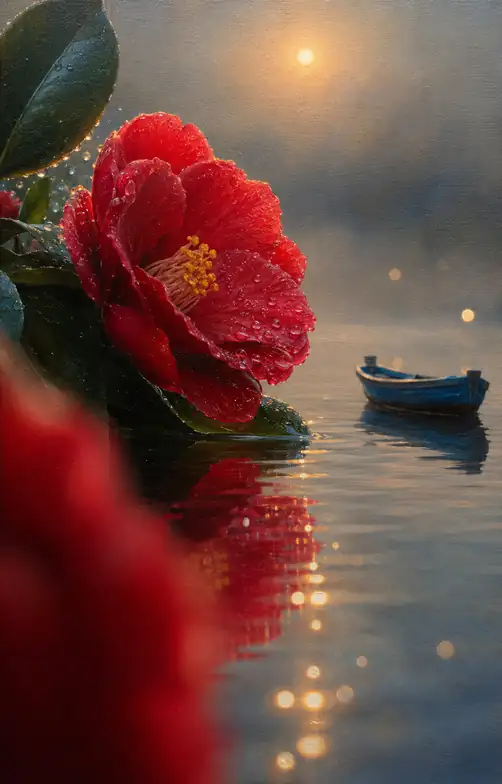 Camellia at Sunset by the Rowboat
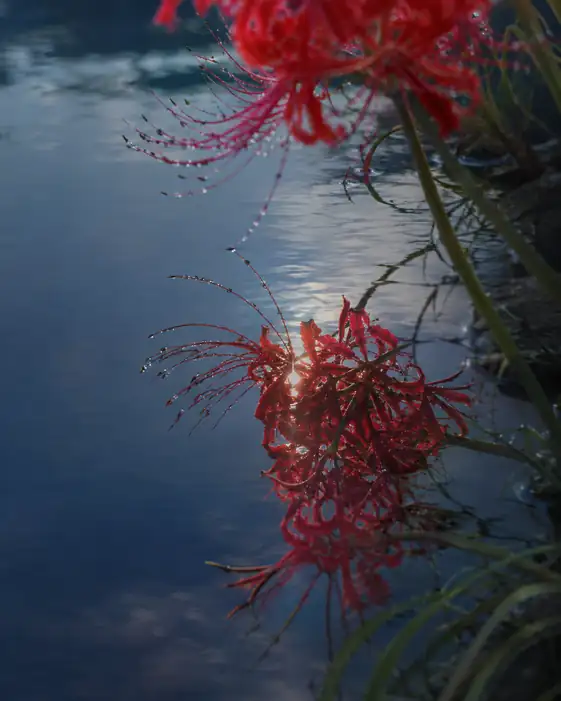 Twilight Solitude by the Waters
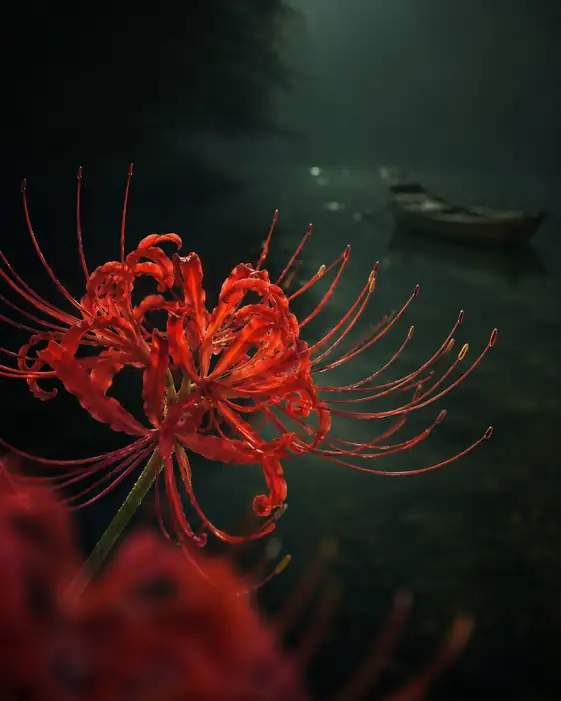 Whispers of the Dark Stream
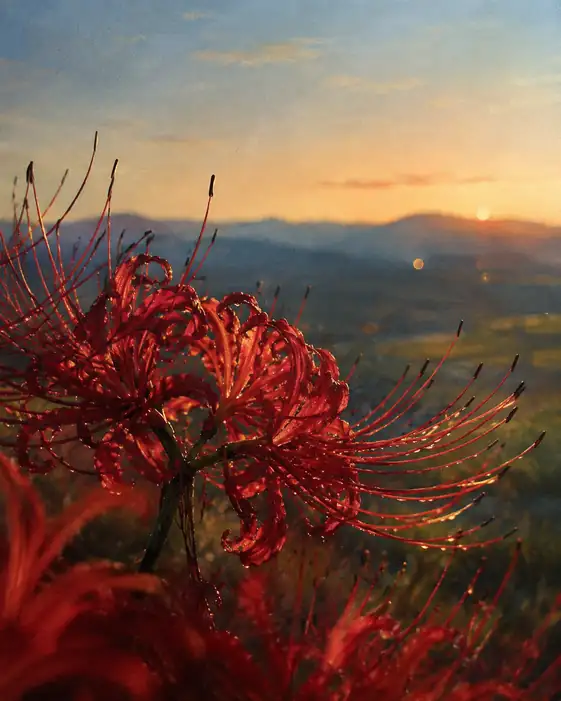 Twilight Glow on Spider Lily
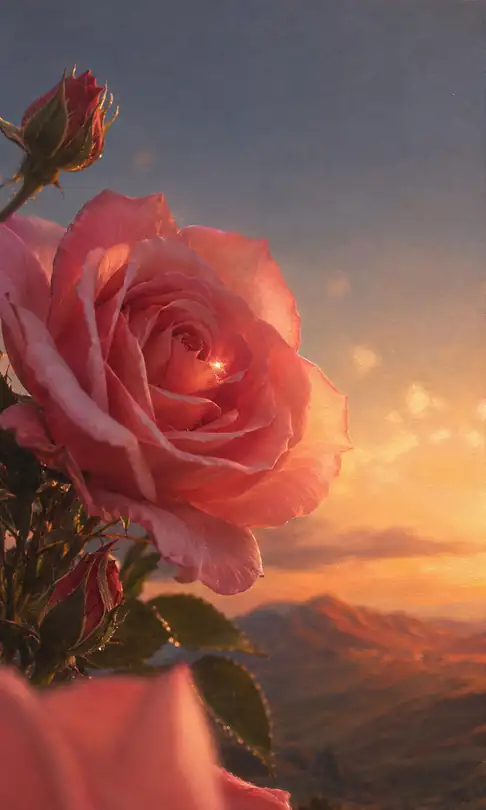 Rose Petals in the Golden Horizon
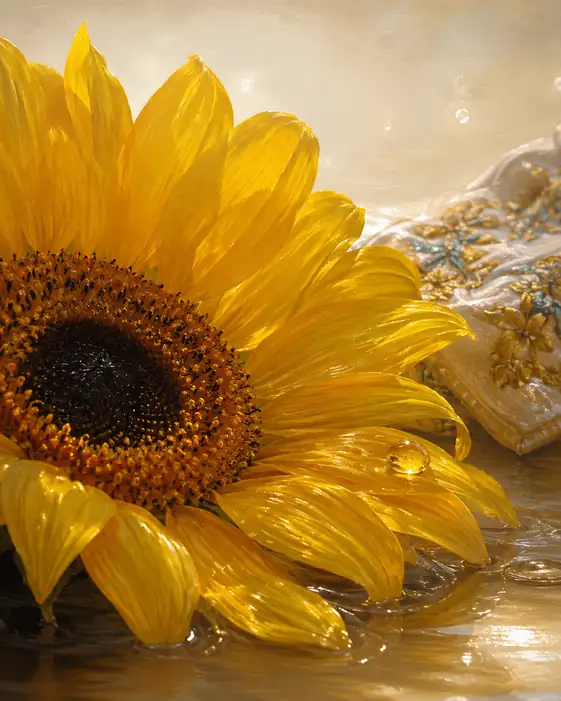 Floating Gold on Water and White Silk
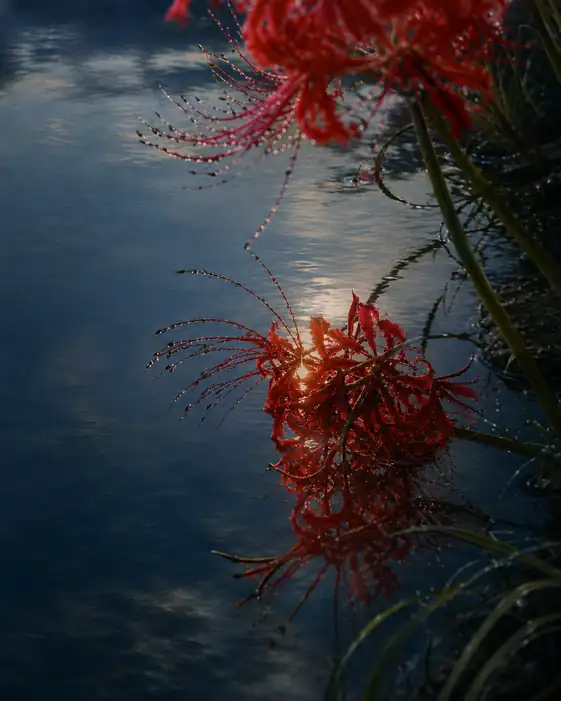 Sunset Sparkle on River Lycoris
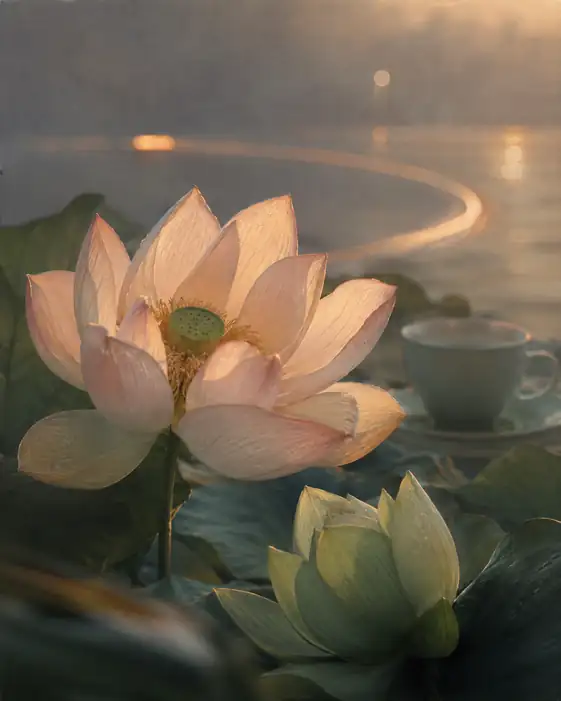 Morning Tea by the Lotus Shore