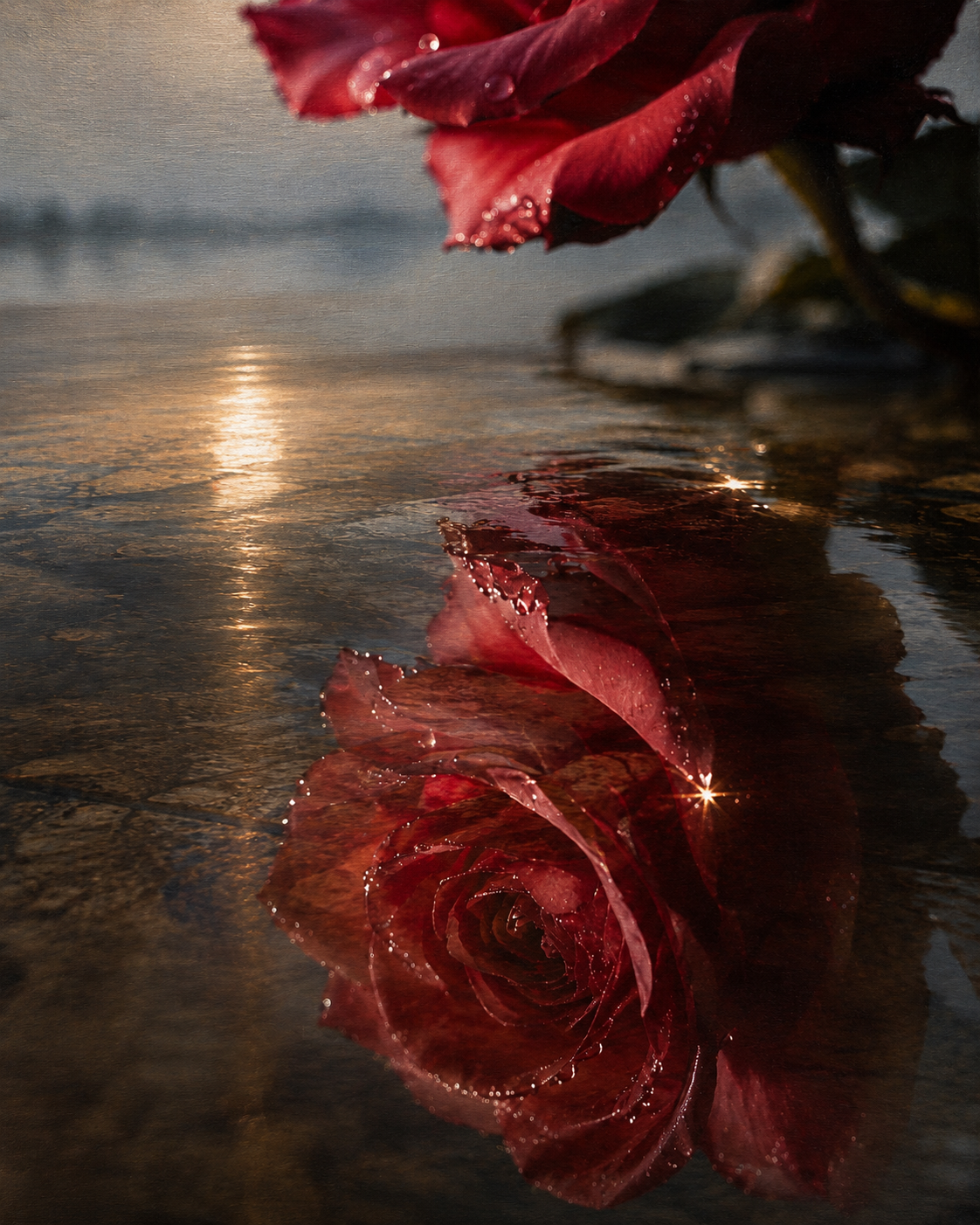
Golden Mirror of the Crimson Rose
Critique
Introduction This study presents a rose chiefly through reflection. The bloom is cropped above, while its darker counterpart expands across a wet surface, turning botany into an investigation of image and sunset light. Description Red petals and droplets hang from the upper edge beside a shadowed stem and leaves. Below, a broad reflective plane holds an inverted rose whose spiral center occupies the lower half. A bright vertical band of low sunlight glows at left, and two star-shaped highlights flash near the reflected petals. A blurred horizon separates sky from surface. Irregular lines texture the foreground. Analysis The composition reverses normal hierarchy: the reflected flower is more complete than the physical one. Its diagonal mass balances the vertical solar reflection at left. Deep burgundy, muted gold, slate blue, and black create a restrained palette despite the saturated subject. Droplets outline petal edges as bright beads, while surface ripples interrupt the reflected form. The high horizon compresses distant space and directs attention downward. Sharp starbursts punctuate the broad, low-contrast surface and establish a rhythm of small luminous events. Interpretation and Evaluation The work distinguishes possession from perception. The rose remains partly inaccessible, yet its unstable likeness appears in full, suggesting memory assembled from incomplete presence. Sunset shares the plane with the flower, linking natural cycles to personal symbolism. The dark lower field risks heaviness, but spiral and highlights reward looking. Surface texture prevents mechanical duplication. Conclusion By cropping the source and privileging its watery double, the image makes uncertainty its central strength. It is a persuasive meditation on how beauty may become most visible at one remove, shaped by moisture, light, and the imperfections of the surface that receives it.
Same Subcategory
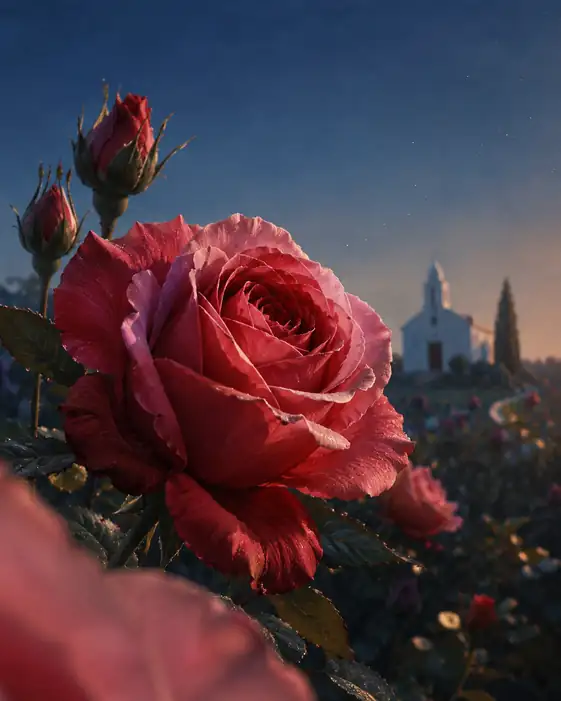 Crimson Bloom Before the White Chapel
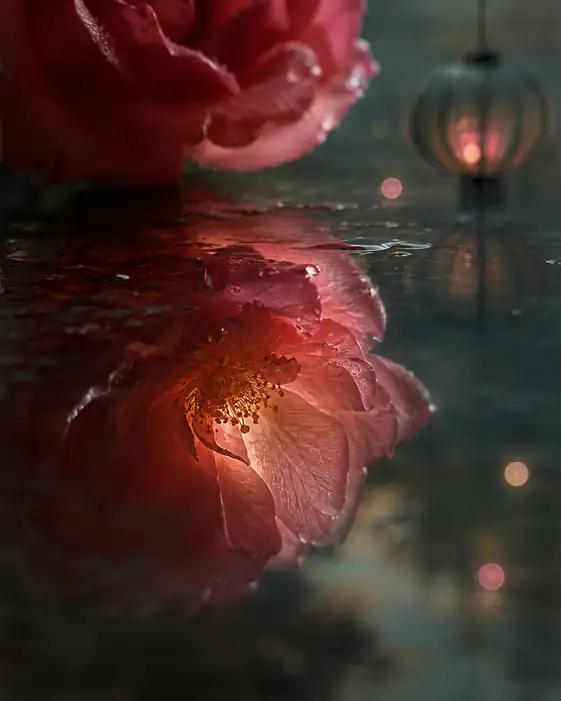 Lantern Glow on the Inverted Rose
Similar Artworks
 Twilight Ripples of the Red Petal
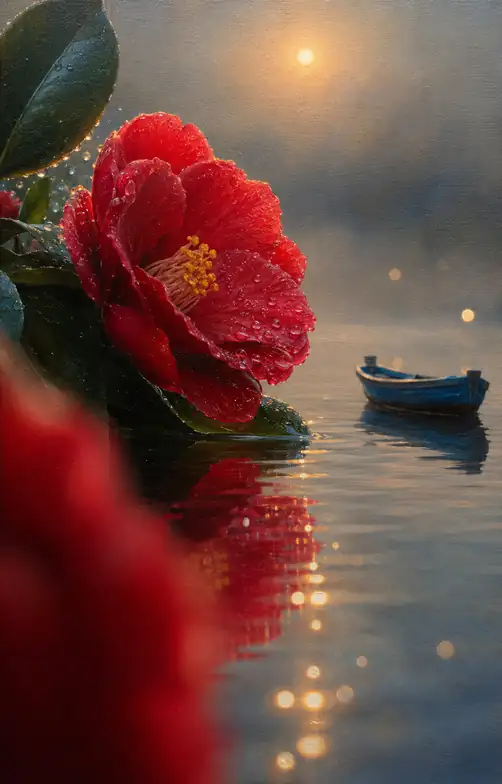 Camellia at Sunset by the Rowboat
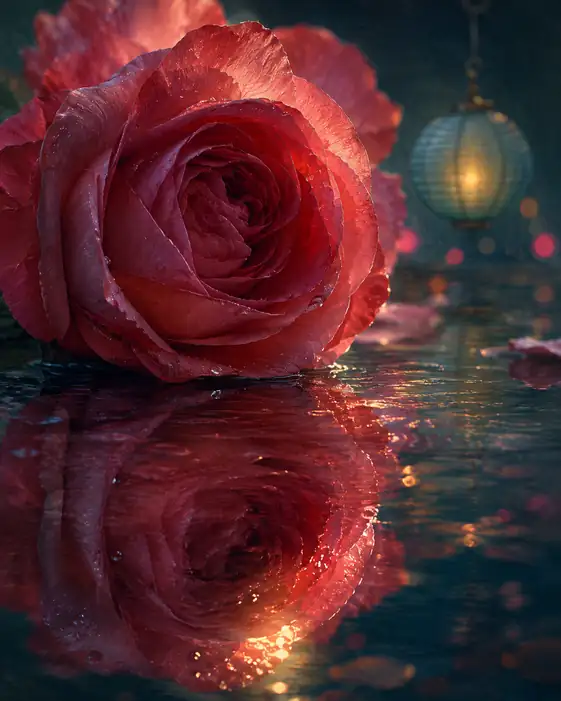 Crimson Reflection and the Floating Lantern
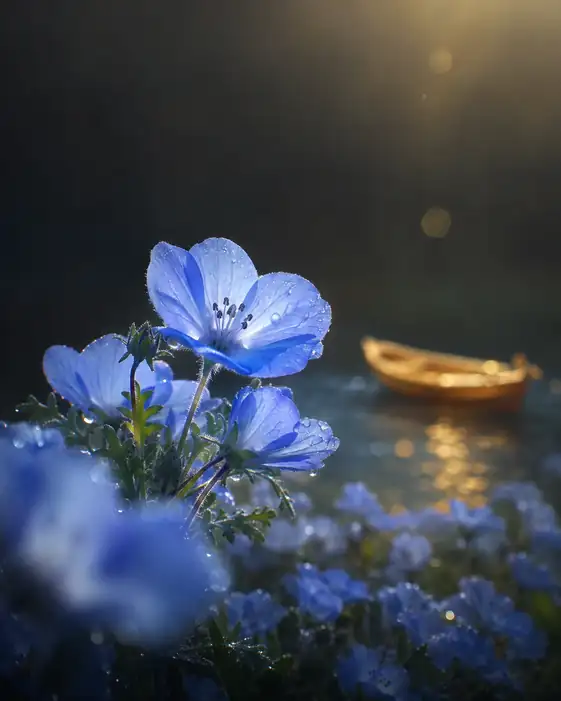 Leaving the Blue Glow of Flowers Behind
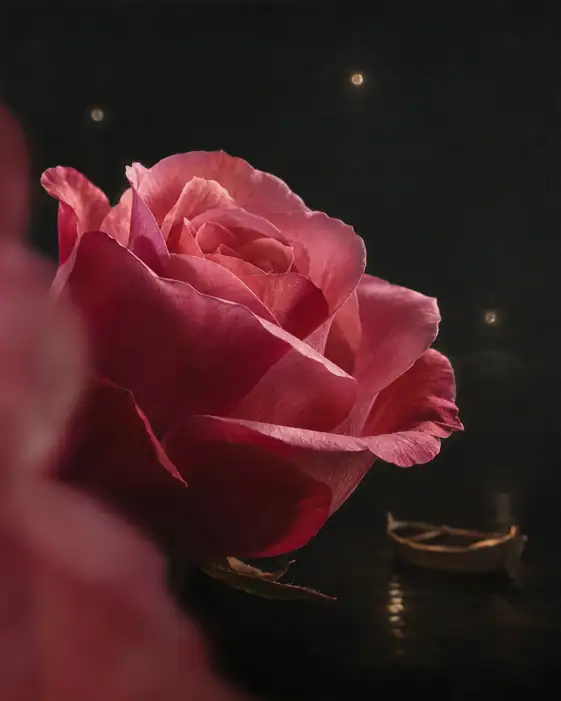 Night Voyage Beneath the Rose-Lit Sky
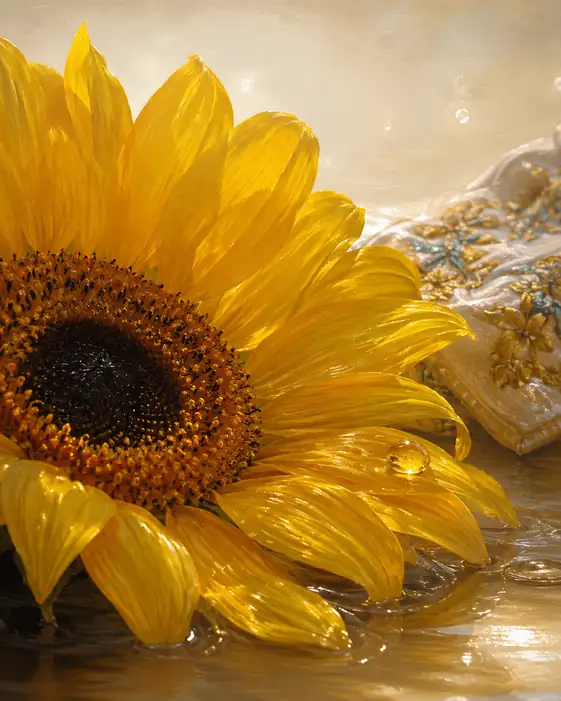 Floating Gold on Water and White Silk
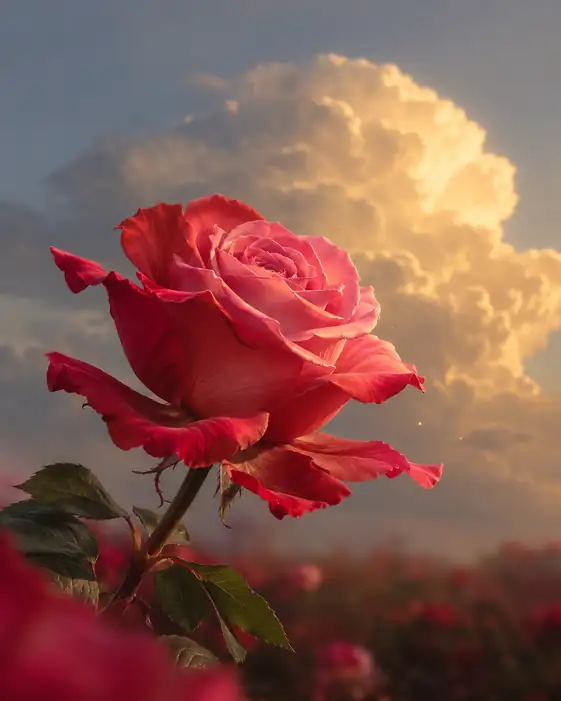 Rose Ascending to the Golden Clouds
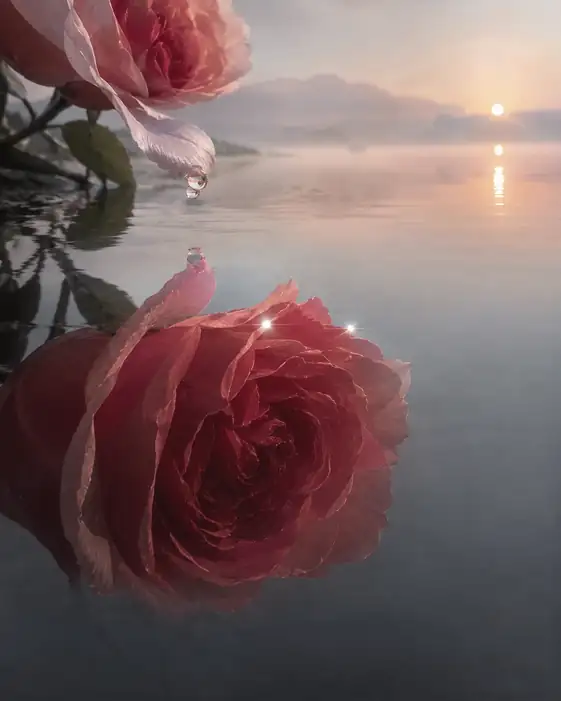 Dawn Reflection on the Morning Lake
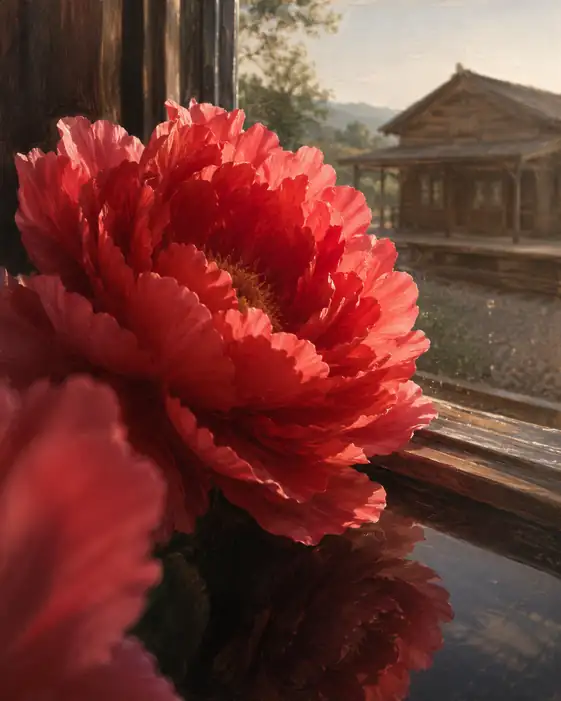 Peony Reflected at Mountain Station Window
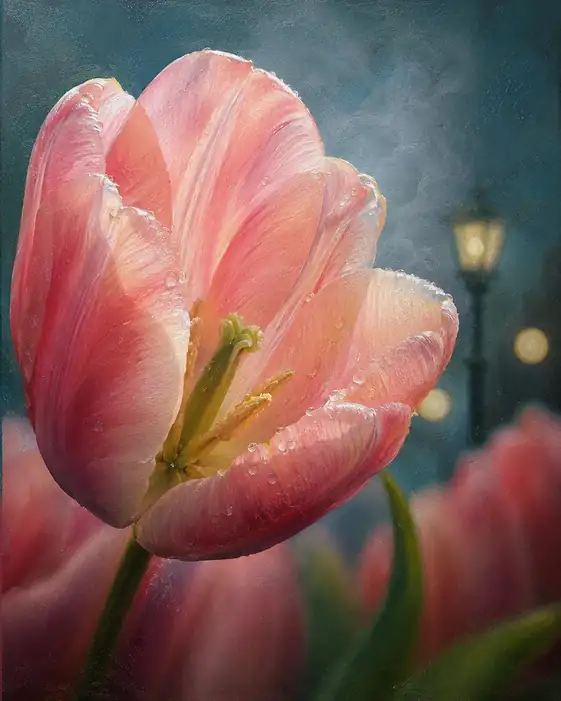 Pink Tulip Beneath the Night Lantern