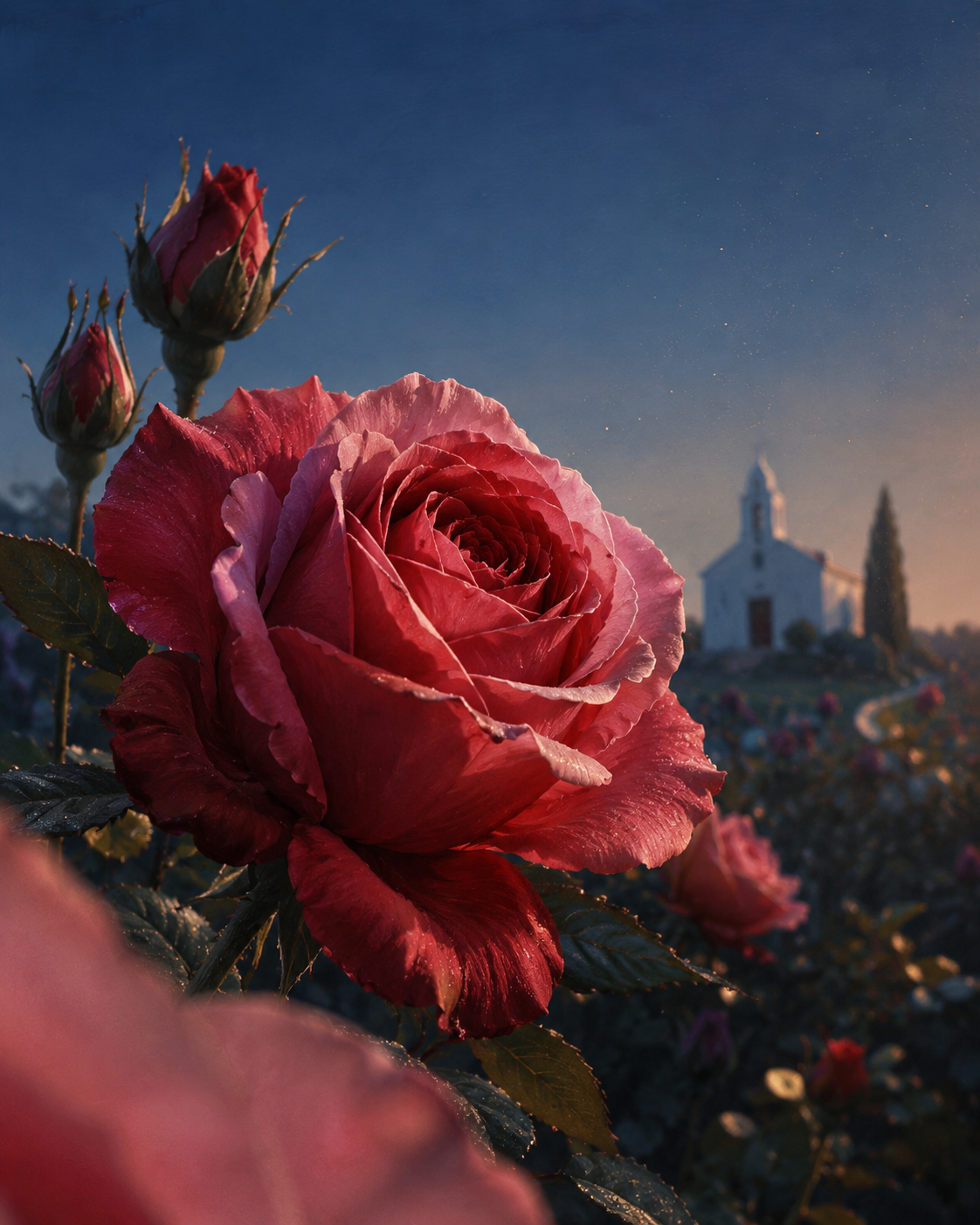
Crimson Bloom Before the White Chapel
Critique
Introduction This image joins a rose portrait to a garden landscape. A monumental crimson bloom commands the foreground, while a distant chapel introduces spiritual and spatial resonance. Description The main rose fills the lower-left center, its layered red and pink petals carrying fine droplets. Two unopened buds rise behind it. Dark glossy leaves spread below, and a blurred pink flower crosses the bottom edge. In the right distance, a small white chapel stands beside a tall cypress. A winding path and scattered flowers lead toward it beneath a deep blue sky warmed near the horizon. Analysis Scale contrast makes the rose architectural and the chapel miniature. The bloom’s spiral anchors the foreground, while the chapel forms a diagonal secondary focus. Warm coral opposes cool blue; foliage mediates between them. Shallow focus preserves petal texture while dissolving the garden. Buds echo the cypress and tower. Golden particles animate the upper-right space. Interpretation and Evaluation The garden may be read as a passage from immediate sensory life toward distant contemplation. The rose is tangible, wet, and temporary; the chapel is remote, simplified, and apparently enduring. Their juxtaposition gives the flower a ceremonial dignity without requiring explicit narrative. The foreground blur is substantial but effectively places the viewer within the planting rather than outside it. The chapel’s softness prevents it from becoming a competing subject, although its recognizable silhouette gives the composition a clear destination. Conclusion The work succeeds by balancing botanical abundance with atmospheric distance. Its most compelling device is the dialogue of scales: a single rose becomes a world in the foreground, while architecture and path quietly extend that world toward memory, devotion, or imagined arrival.
Same Subcategory
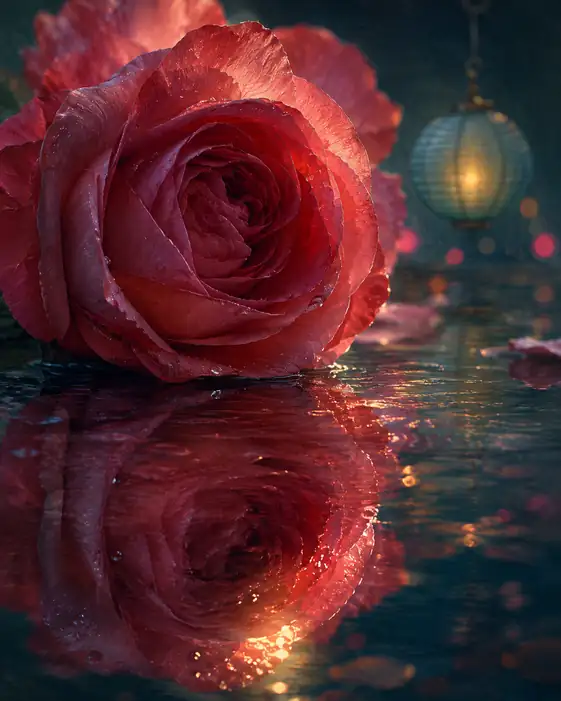 Crimson Reflection and the Floating Lantern
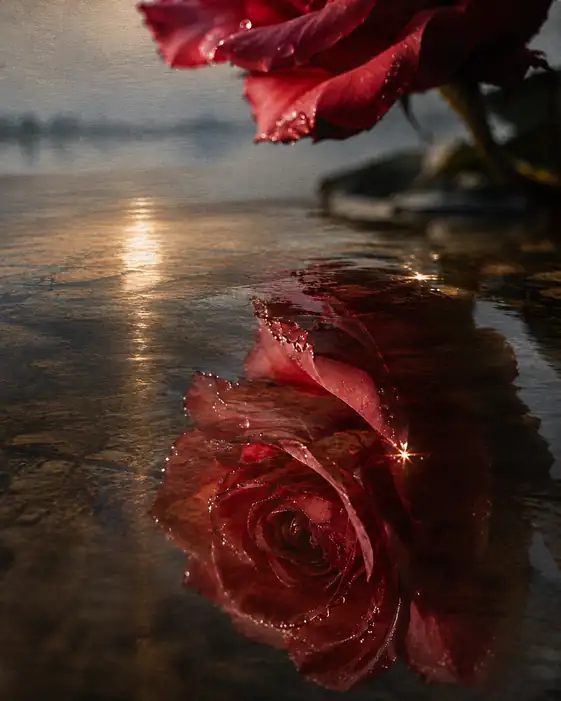 Golden Mirror of the Crimson Rose
Similar Artworks
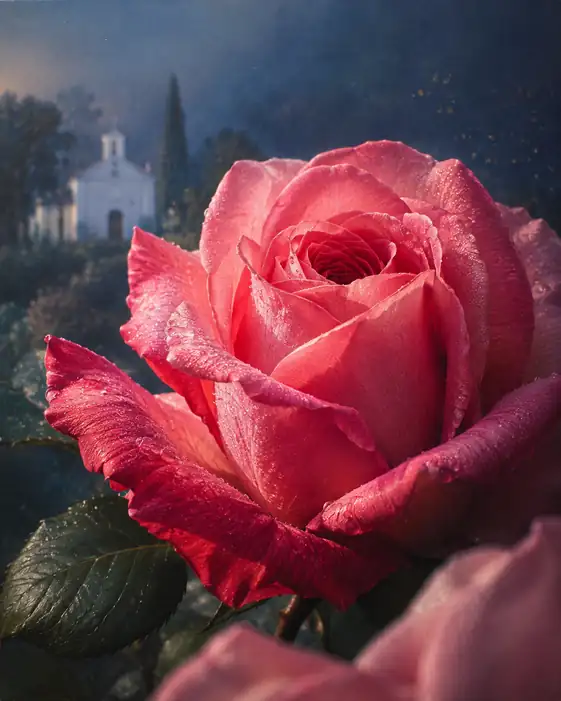 Dewy Petals Beside the Village Chapel
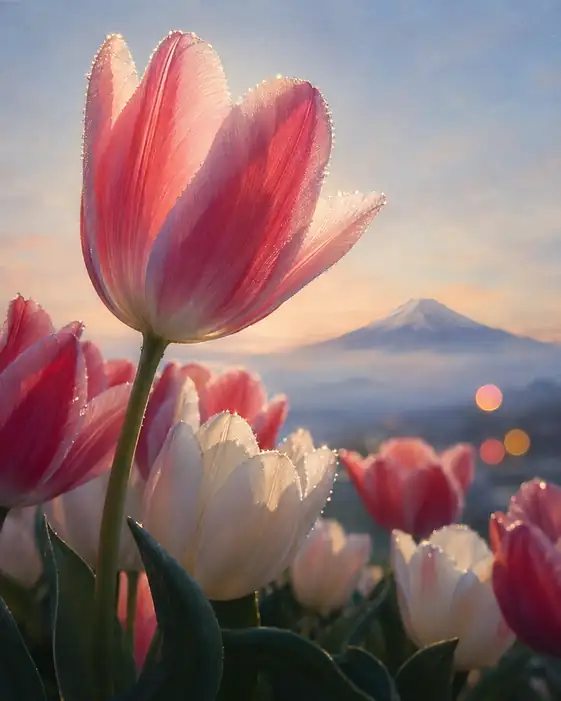 Tulips at Sunrise Before Mount Fuji
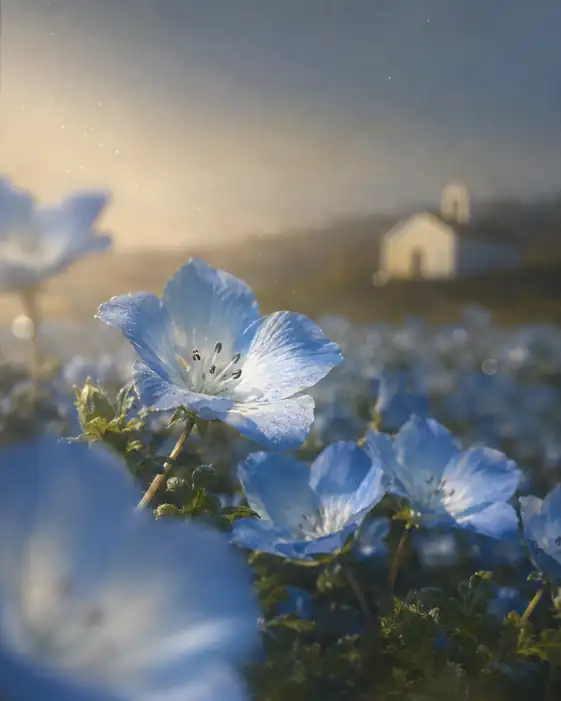 Morning Church in Field of Nemophila
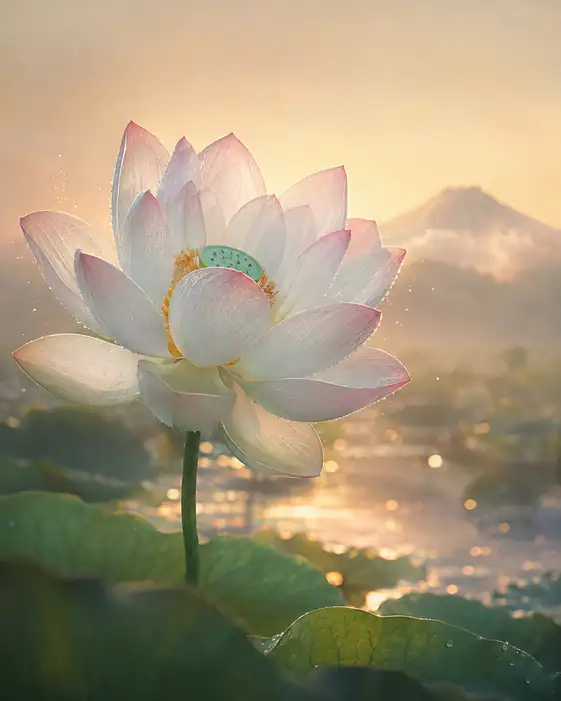 Lotus at Dawn Before Mountain Mist
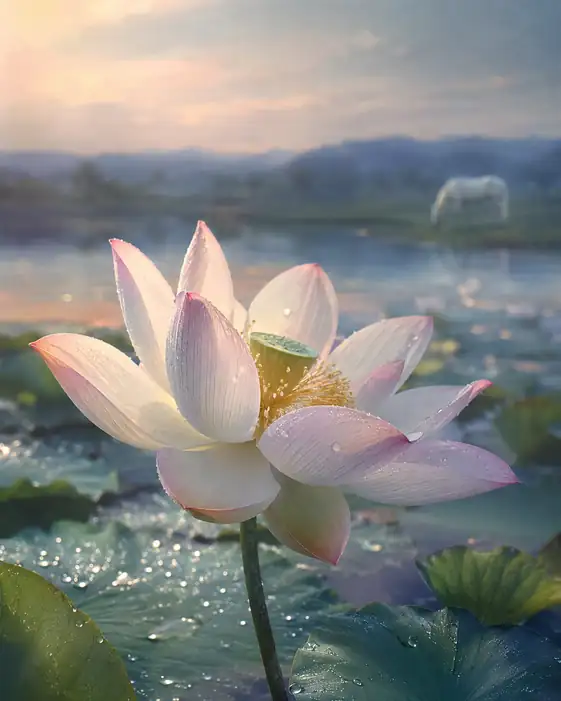 White Horse and Lotus at Dawn
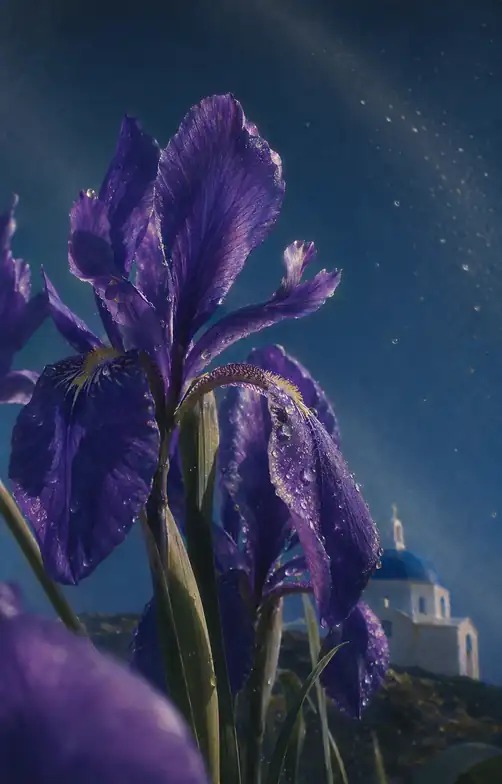 Iris and the Seaside Chapel
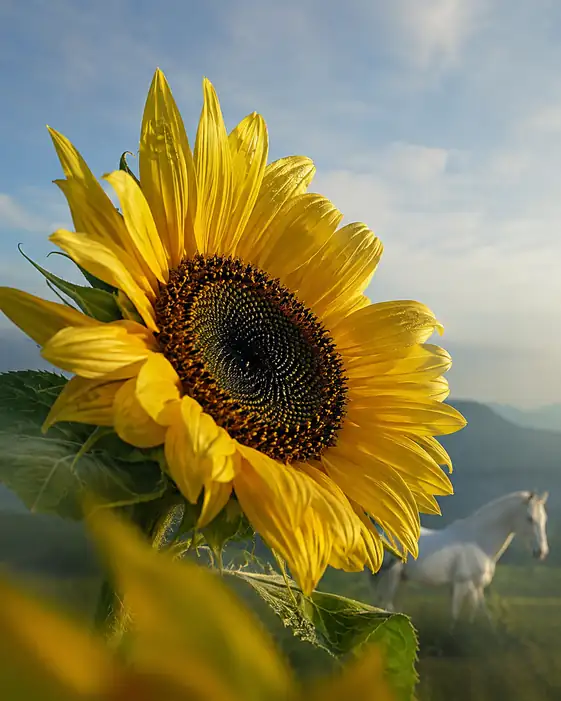 Pastoral Reverie with Sunflower and Steed
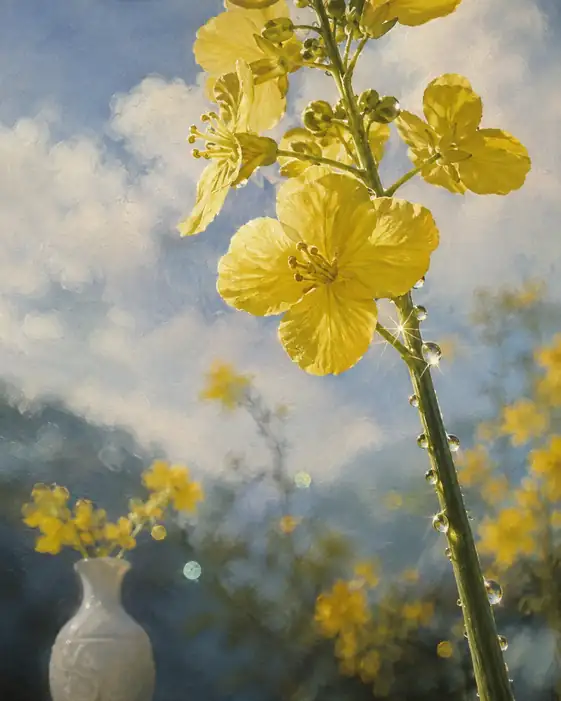 Sparkling Canola and Porcelain Vase
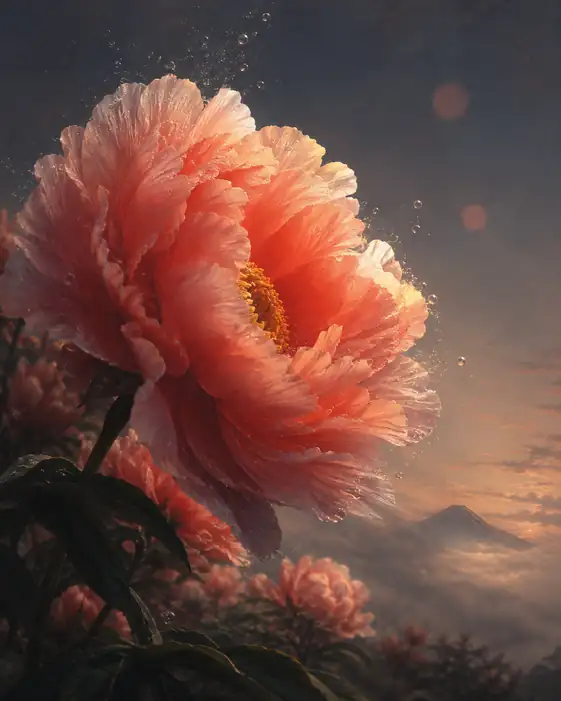 Crimson Peony and Dawn Over Mount Fuji
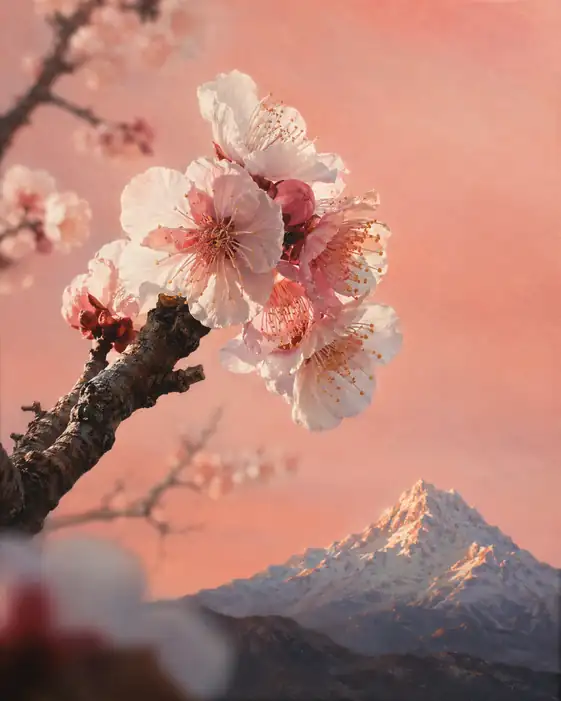 A Bough of Spring Aglow on the Snowy Peaks