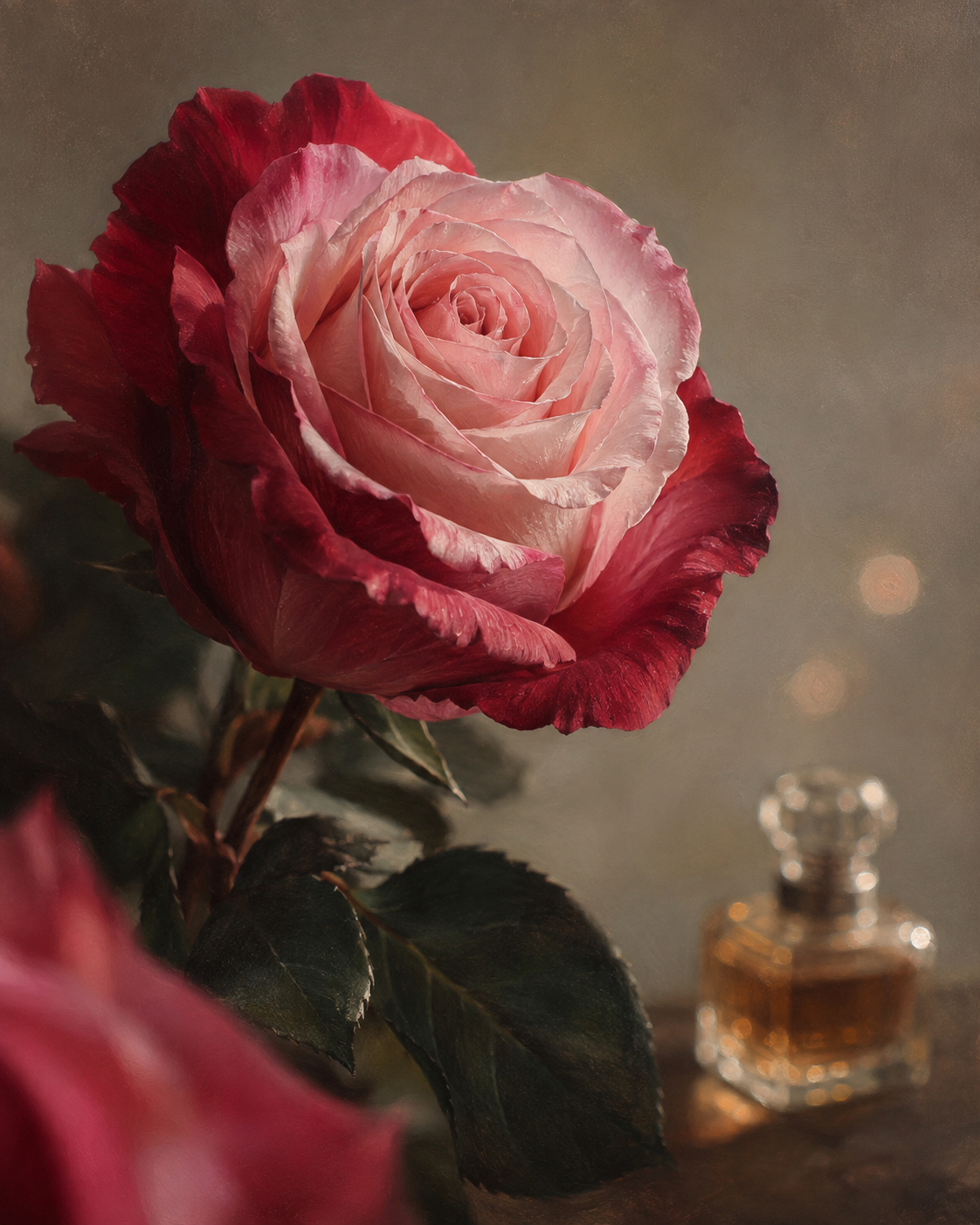
Amber Flacon and the Two-Toned Rose
Critique
Introduction This still life treats a two-toned rose as an object of quiet ceremony. Its pale center and crimson perimeter occupy a restrained interior, where an amber perfume bottle suggests scent and memory. Description A large rose rises from the left-center. Blush petals spiral inward, surrounded by wine-red outer petals with velvety edges. Dark serrated leaves fill the lower half. A second flower becomes a soft foreground shape. At lower right, a square perfume bottle sits out of focus; three warm lights float above it. Analysis The flower’s spiral supplies a focal center, while dark outer petals frame the luminous interior. Its mass is balanced diagonally by the bottle. Shallow focus moves from blurred foreground through the sharp rose to softened glass and lights. Crimson, blush, black-green, amber, and gray-brown form the palette. Petal wrinkles contrast with heavy leaves and faceted glass. Upper-right space preserves the silhouette. Interpretation and Evaluation Pairing rose with perfume connects living fragrance to its preserved counterpart. The flower appears immediate and vulnerable, whereas the sealed bottle suggests scent held for recollection. Red outer petals resemble curtains opening onto a tender center. The bottle’s blur is judicious: recognizable without competing. The heavy foreground flower establishes proximity and prevents a flat specimen study. Conclusion The image combines controlled focus, tactile color, and symbolic economy. Its strongest quality is the measured conversation between rose and perfume: one present and perishable, the other contained and enduring, both joined by warm light and the suggestion of remembered scent.
Same Subcategory
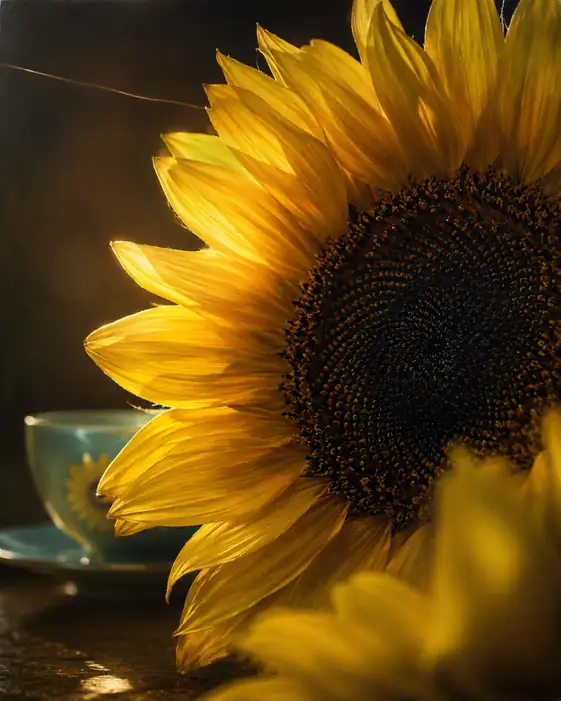 Light Architecture on Morning Wood
Similar Artworks
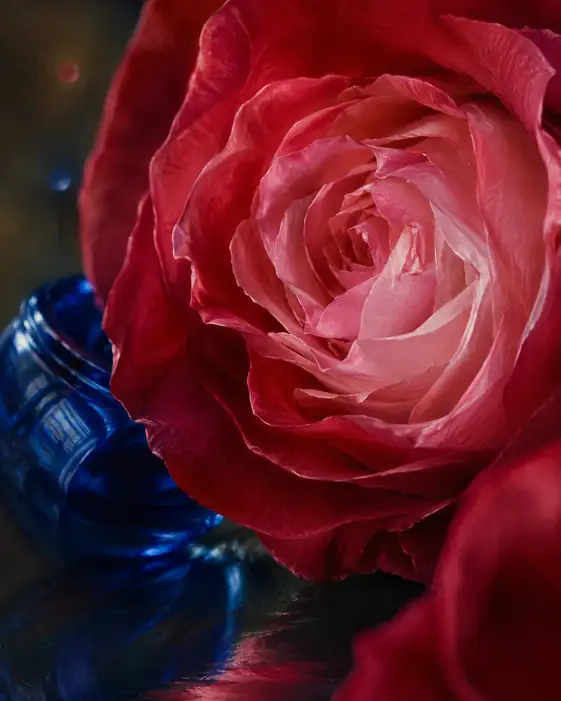 Velvet Petals and the Lapis Flacon
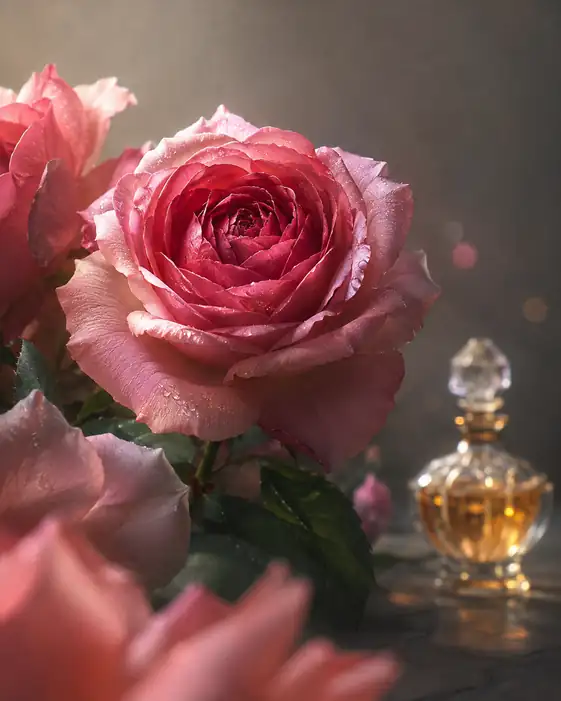 Dew-Kissed Blossom and Crystal Scent
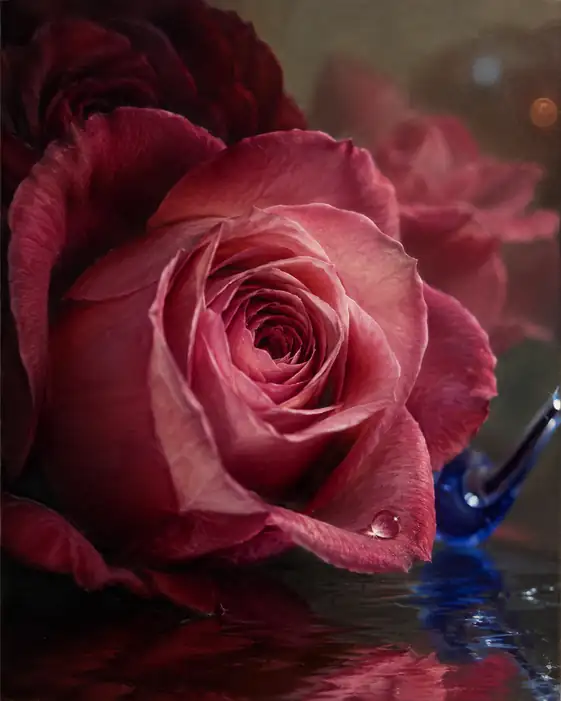 Rose Petals Mirrored Beside the Blue Vial
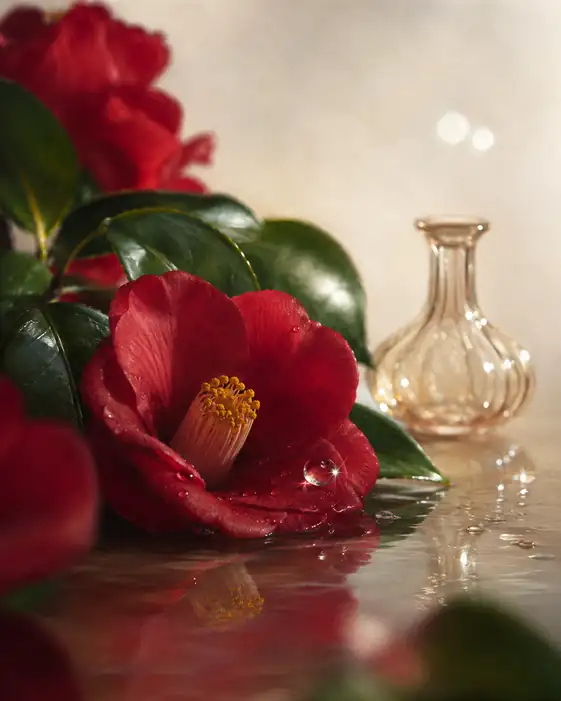 Dewdrop Camellia and Amber Flask
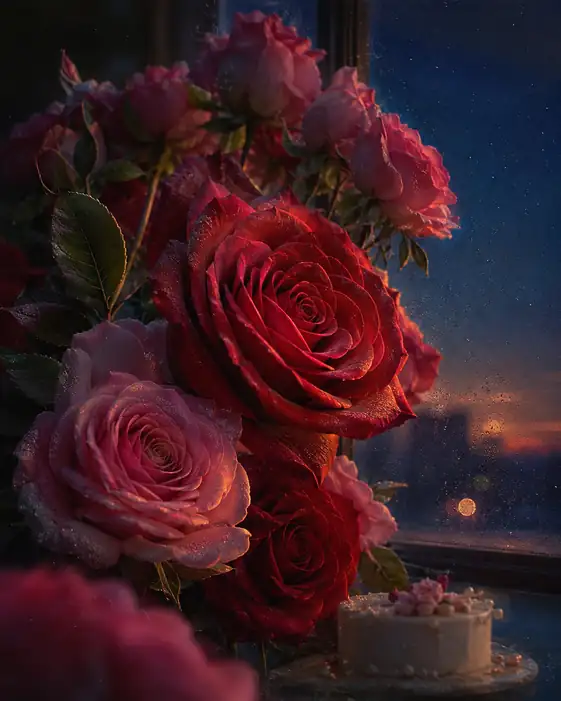 Celebration at the Rain-Veiled Window
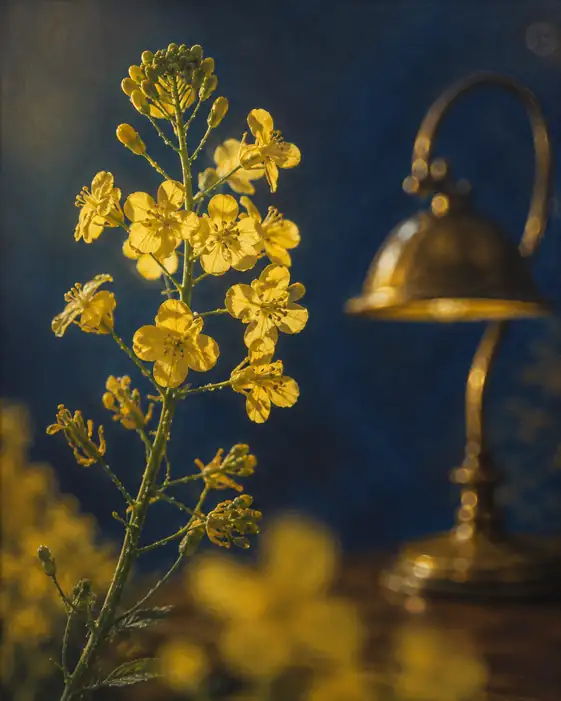 Brass Lamp and Spring Blossom
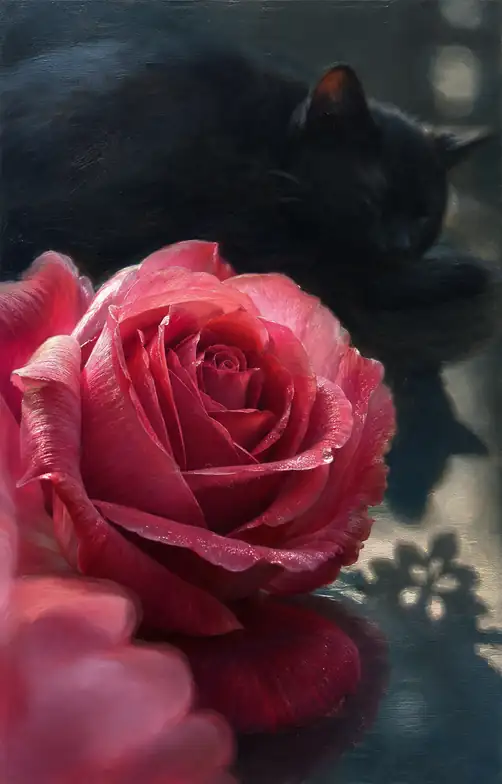 Peaceful Slumber Beside the Blooming Rose
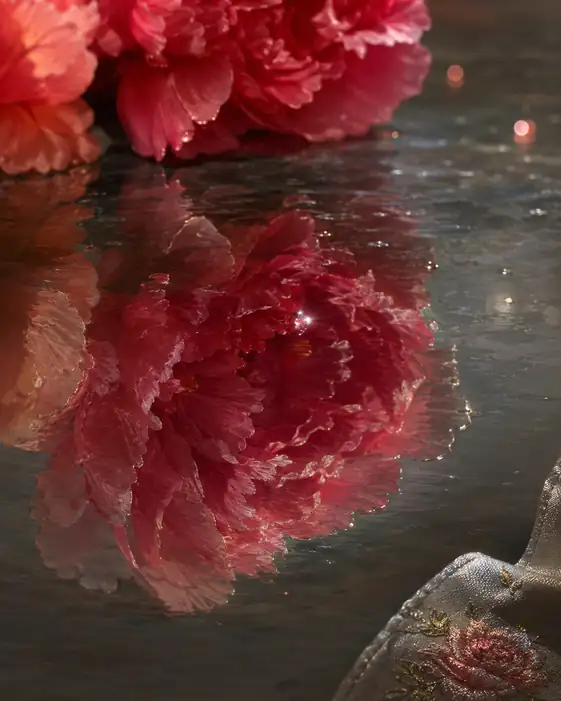 Peony Reflection and Embroidered Silk
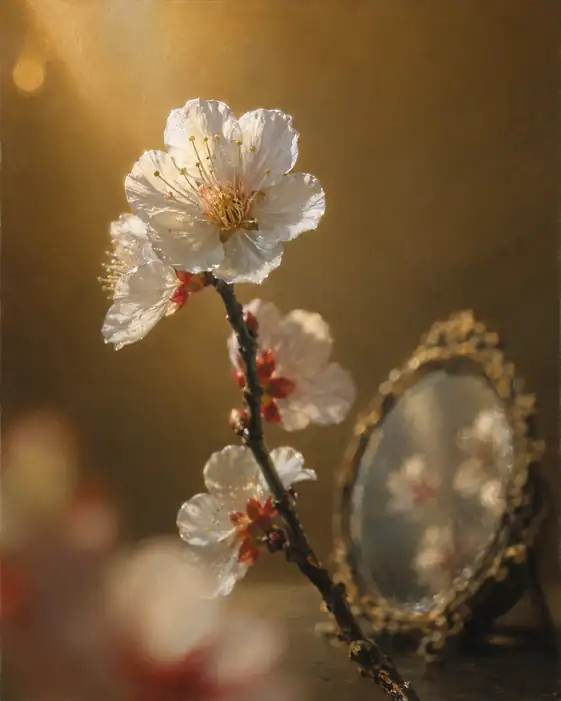 White Plum Blossom and Gilded Mirror
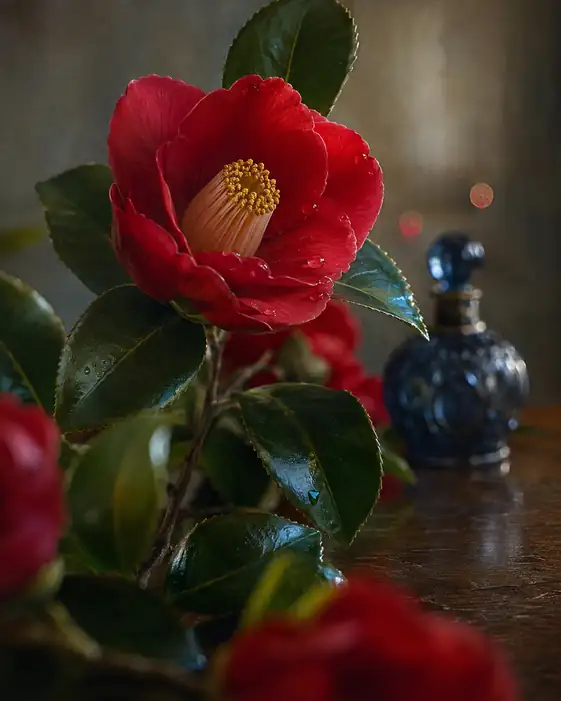 Red Camellia and the Cobalt Bottle