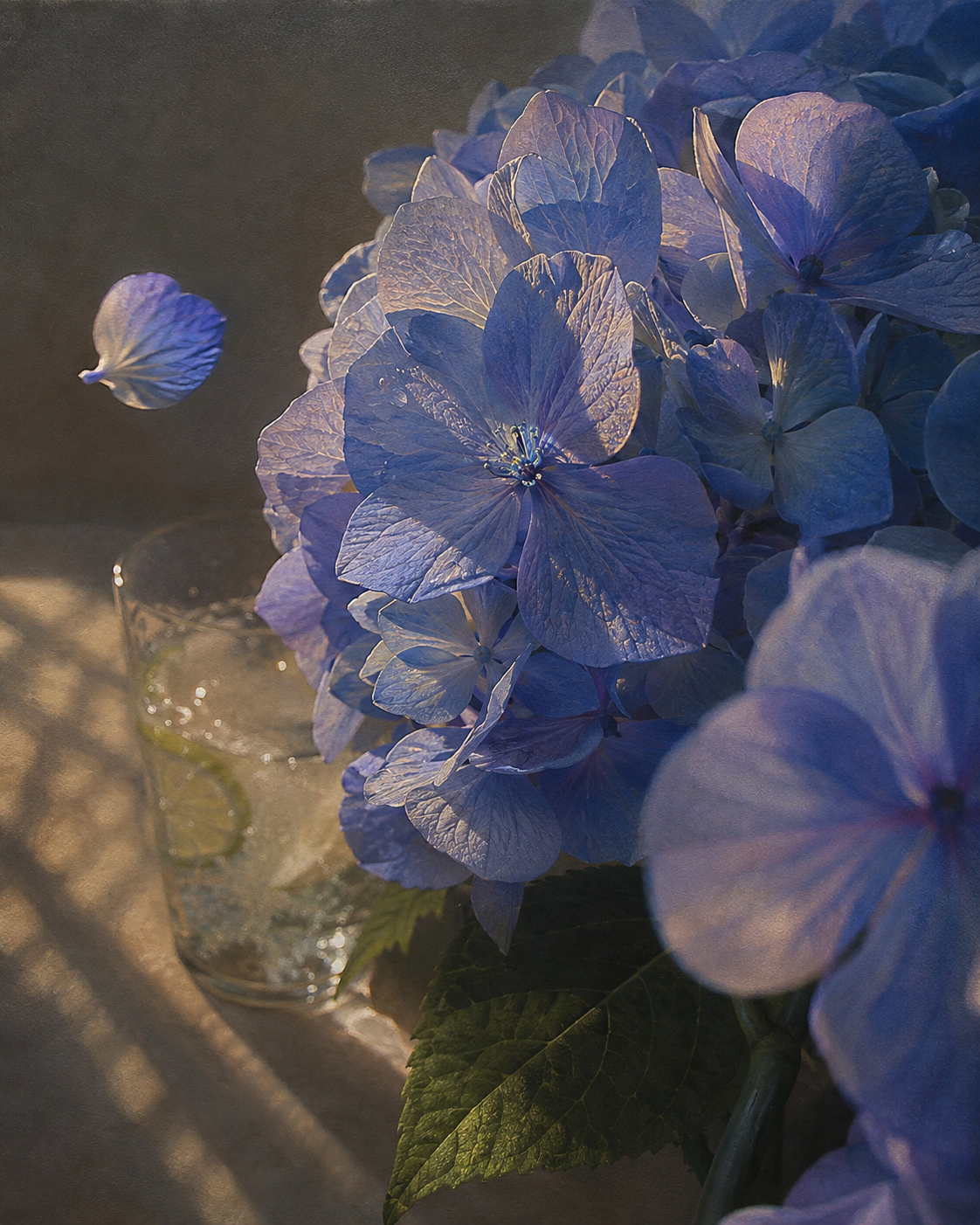
Summer Evening Glass and Drifting Petals
Critique
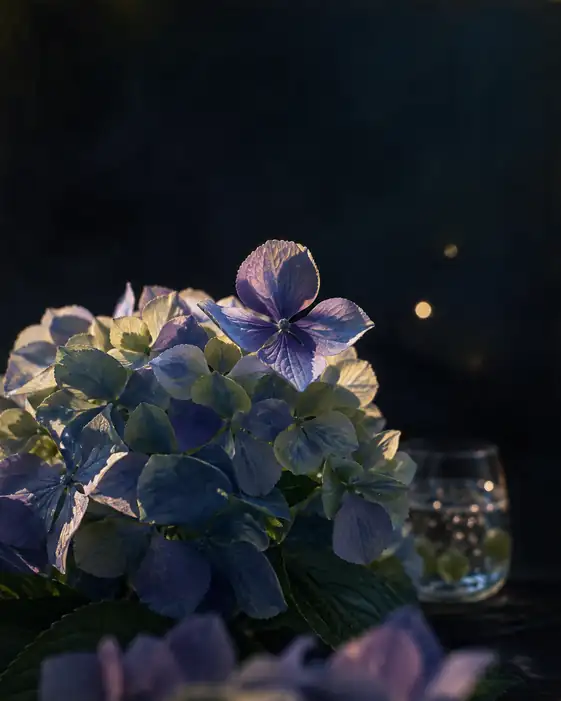
Introduction This still life captures a hydrangea between fullness and dispersal. A blue-violet cluster occupies the right while one floret floats at left above glass. Warm lateral light turns separation into quiet drama. Description Large florets overlap at right, their veined petals shifting from slate blue to lavender. A central bloom faces forward with stamens visible. One curled floret hangs in the empty left field. Below, rounded glass contains water and green matter, scattering highlights. Dark leaves support the flower while golden light and shadows cross the tabletop. Analysis The compact mass and isolated floret create asymmetrical tension. Empty space clarifies the detached form and implies descent toward the vessel. Crisp central petals transition into softer blooms, creating depth. Warm rim light models blue-violet folds through temperature. Glass repeats the flower's round volume at smaller scale and bends light into points. Diagonal shadows extend the composition. Interpretation and Evaluation The suspended floret embodies an unlasting moment: it belongs visually to the cluster but has entered another trajectory. Glass suggests a destination, though contact remains unconfirmed. This uncertainty keeps loss or renewal open. Warm light suggests passing time, while bright petals resist melancholy. Papery veins, smooth water, and heavy leaf create effective tactile contrast. Conclusion Isolated motion, complementary light, and material contrasts turn the arrangement into a meditation on release. Falling form, glass, and shadows imply change without prescribing a story.
Same Subcategory
 Moonlit Solitude with White Porcelain
Similar Artworks
 Summer Afternoon with Lavender Fizz
 Golden Resonance in Azure Petals
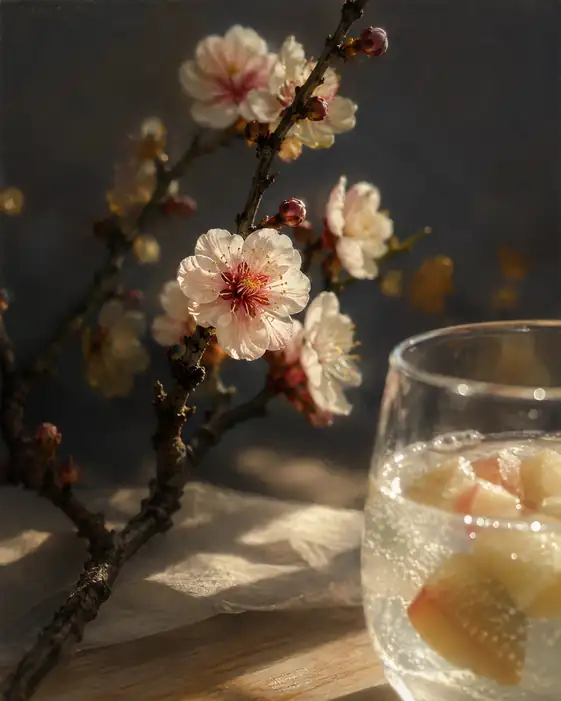 A Toast to a Plum-Scented Afternoon
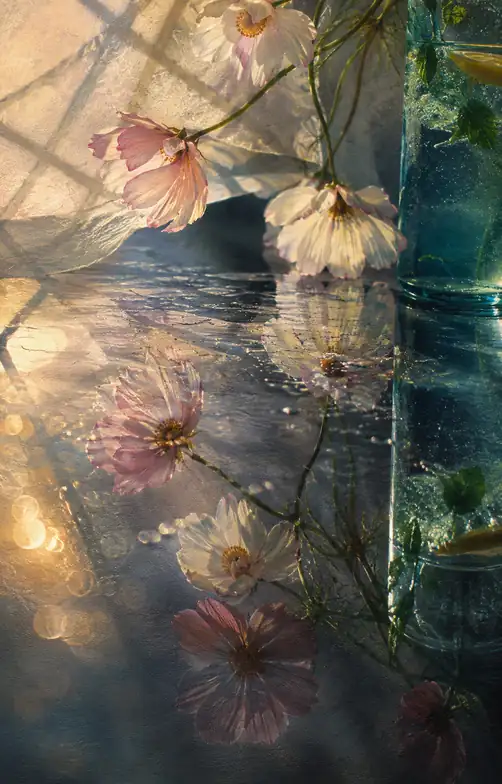 Sunlit Table and Floating Cosmos
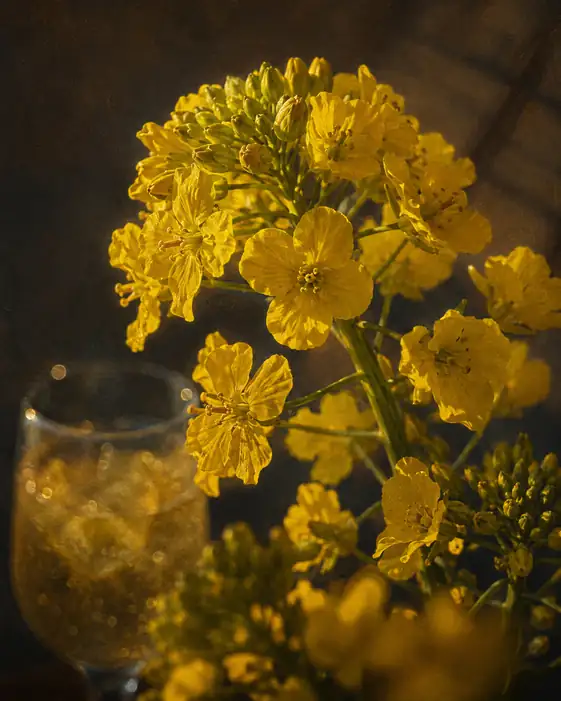 Canola Bouquet by Sparkling Glass
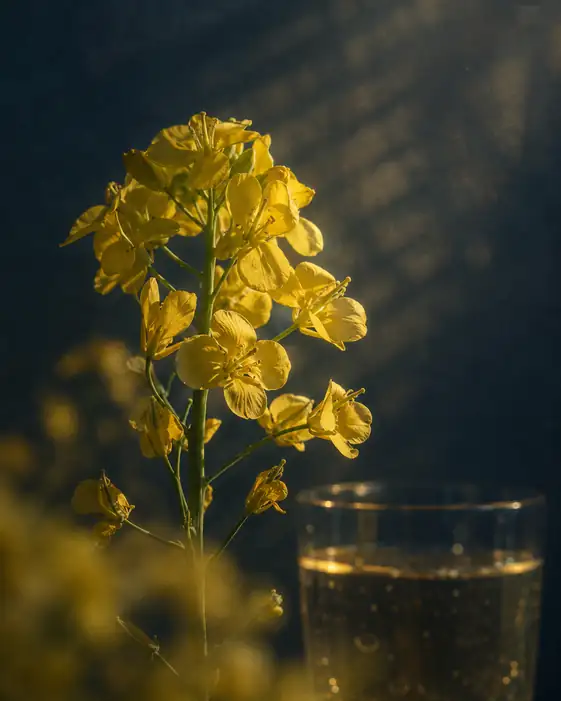 Morning Sunbeams and Golden Blossom
 Gilded Edges in the Shadowed Room
 White Porcelain and the Rain-Soaked Bloom
 Morning Bell and the Waking Bloom
 Pink Cosmos and Brass Desk Lamp