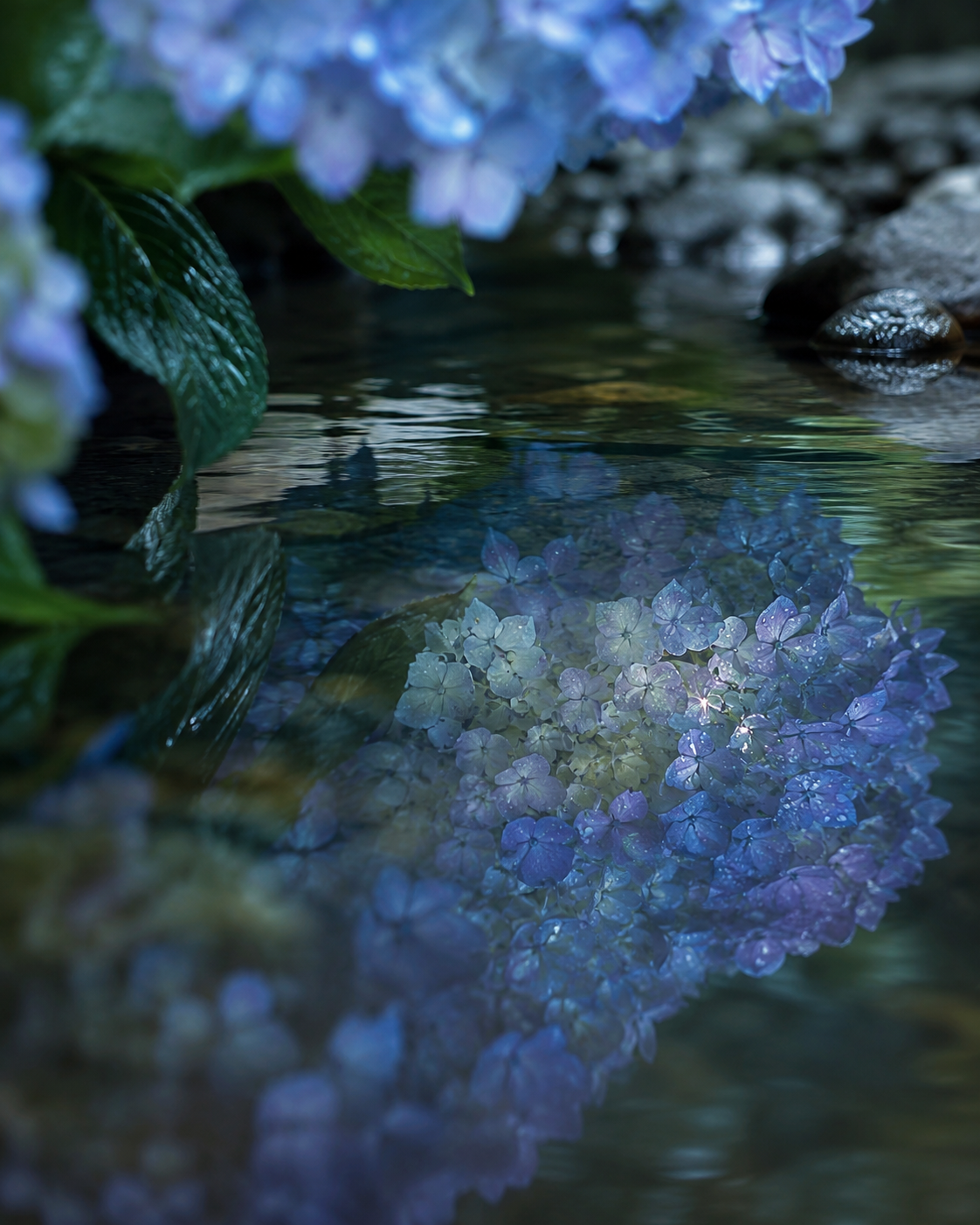
Stream of Petals in the Water Mirror
Critique
Introduction This image turns a waterside hydrangea into an ambiguous meeting of flower and reflection. The clearest bloom appears below the compositional waterline, while soft petals and wet leaves hang above. Garden elements become a submerged dream. Description A blue-violet reflection occupies lower right, its florets visible beneath green and silver bands. Dark water spans the center. Glossy serrated leaves descend at left; blurred blossoms form an upper canopy. Smooth stones gather at right, including one rounded stone mirrored along the waterline. Analysis The composition avoids simple symmetry. Real flowers remain soft and cropped, whereas their inverted counterpart is detailed, reversing visual authority. Central ripples separate two realms without closing either. A diagonal leaf points into the reflection, and stones stabilize the opposite side. Deep green and blue are relieved by pale floral glow. Highlights repeat wetness across water, leaves, and stone. Interpretation and Evaluation Because the reflected bloom is clearer than its source, indirect vision feels more compelling than immediate reality. The flower hovers beneath the surface like preserved memory, yet ripples threaten its coherence. This tension gives the serene study emotional weight. The cropped canopy creates intimacy; the dark center supplies stillness. A modest stone's near-perfect duplication clarifies the premise and contrasts with the unstable flower. Conclusion Through inverted emphasis, restrained color, and surface movement, reflection becomes a mode of perception rather than ornament. Convincing moisture and layered focus let the elusive copy become more present than its original.
Same Subcategory
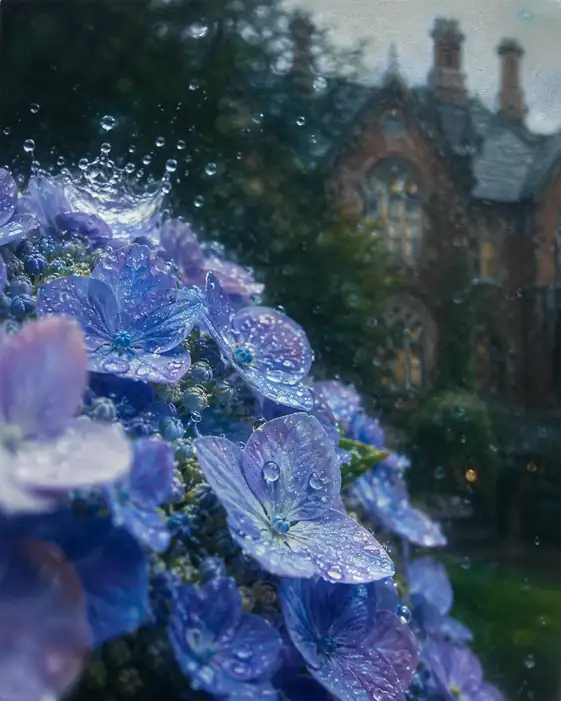 Gothic Spire Beyond the Summer Rain
Similar Artworks
 Ripples of Indigo Along the Brook
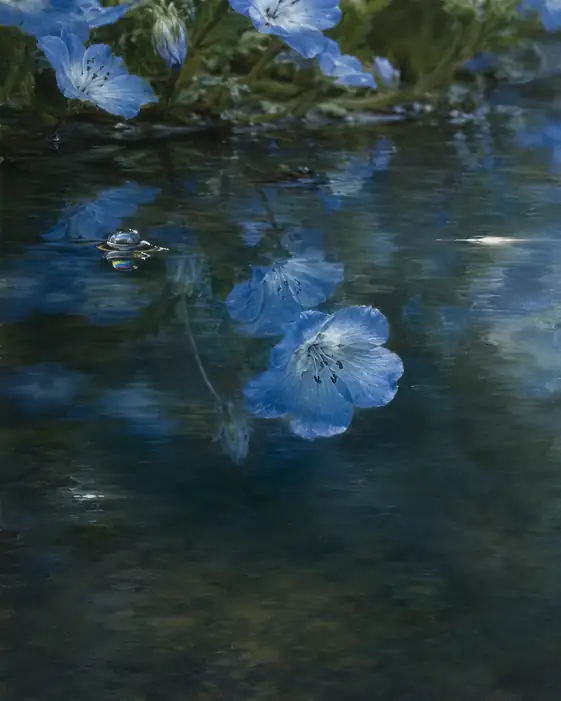 Floating Nemophila on Clear Stream
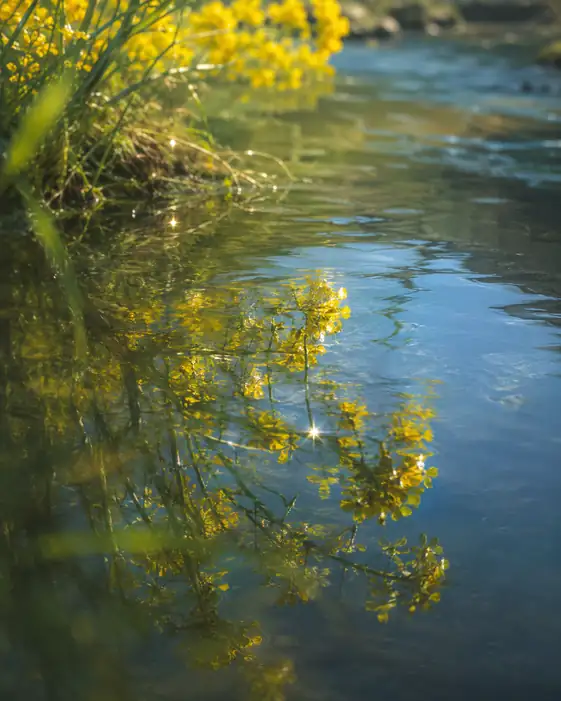 Spring Stream and Mustard Bloom Reflection
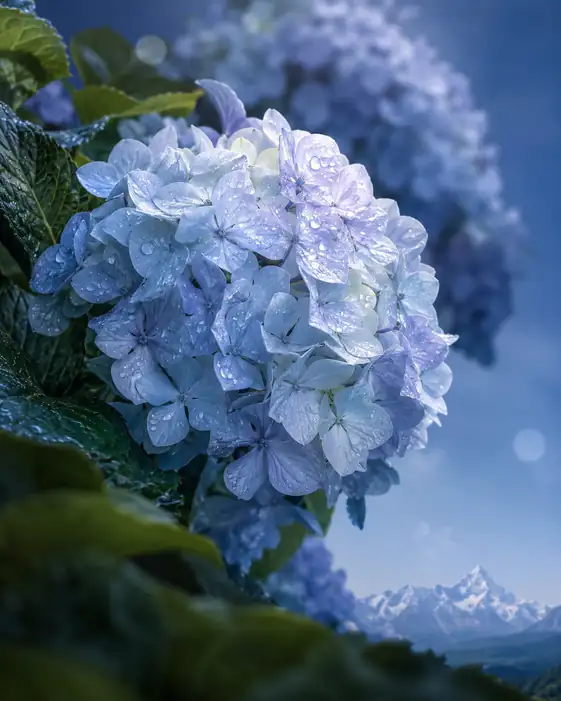 Solitary Summit Framed in Indigo
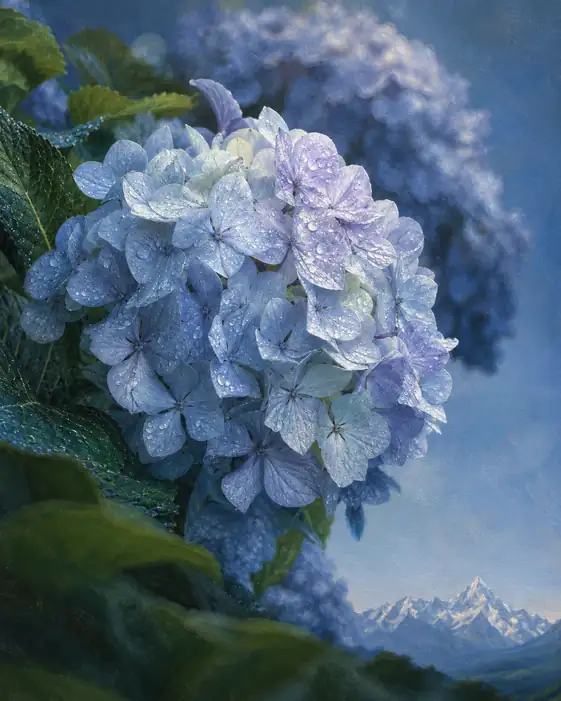 Floating Azure Above the Snowy Peaks
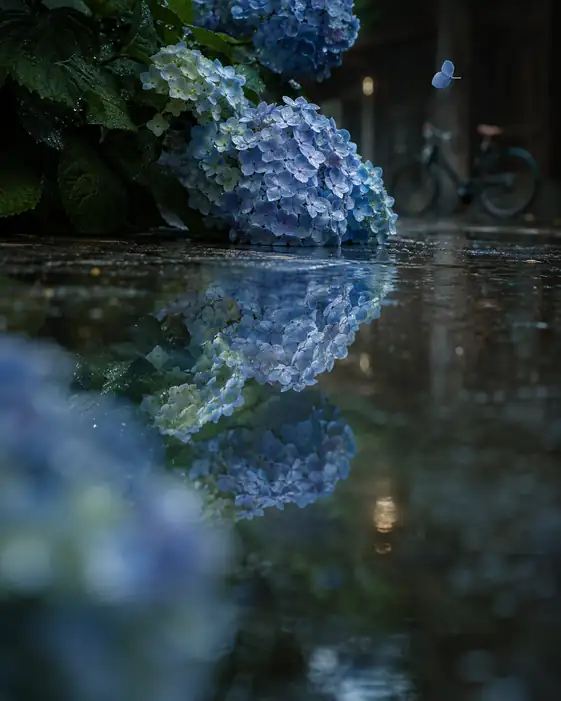 Suspended Moment Above the Water
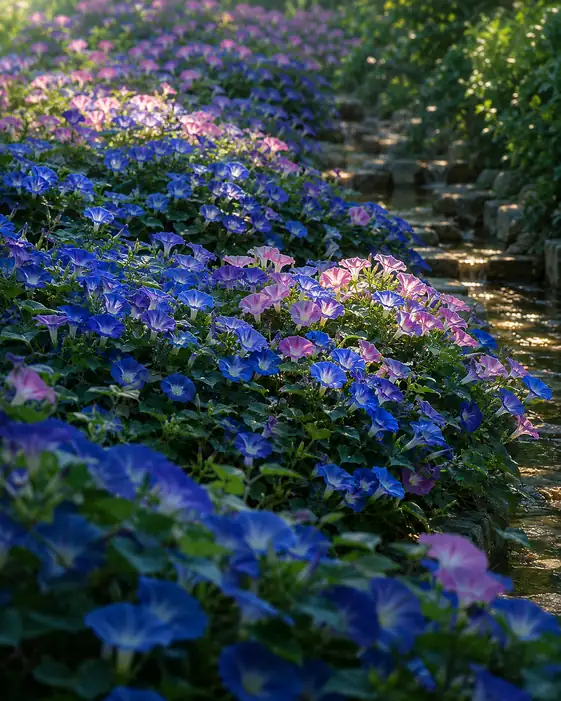 Flow of Azure Blooms in Morning Sun
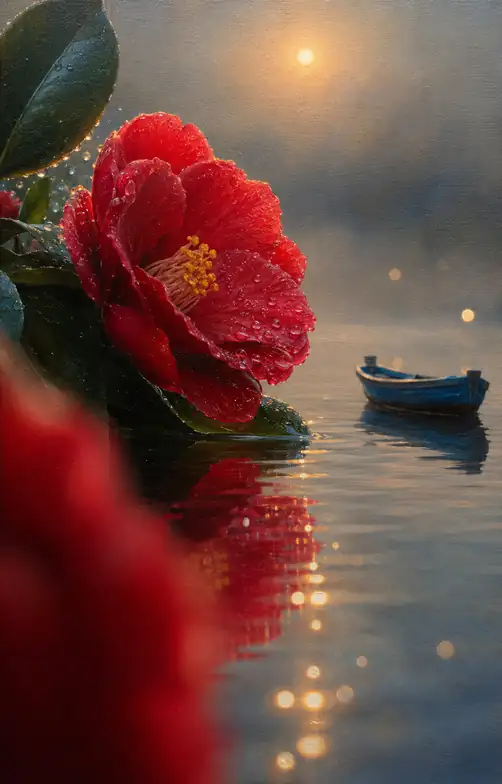 Camellia at Sunset by the Rowboat
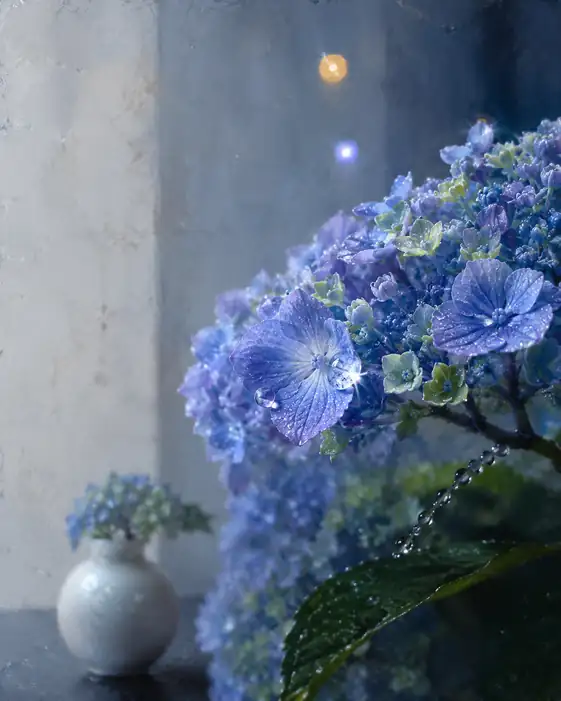 White Porcelain and the Rain-Soaked Bloom
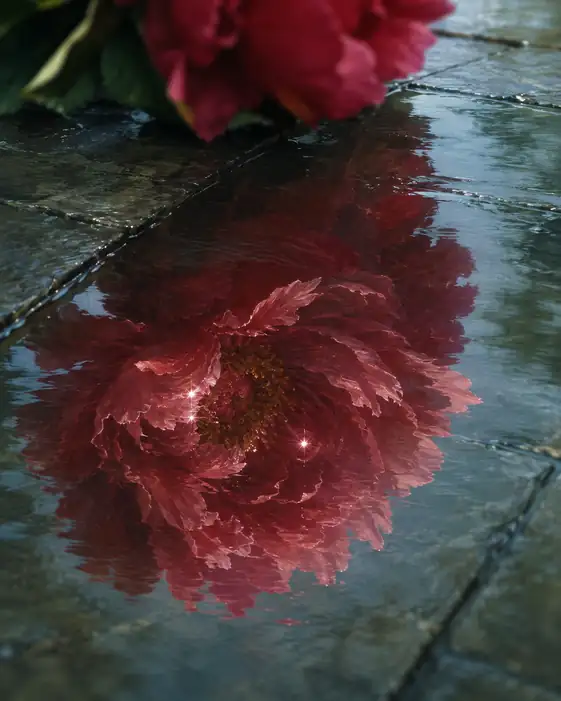 Crimson Peony Reflected in Cobblestone Puddle