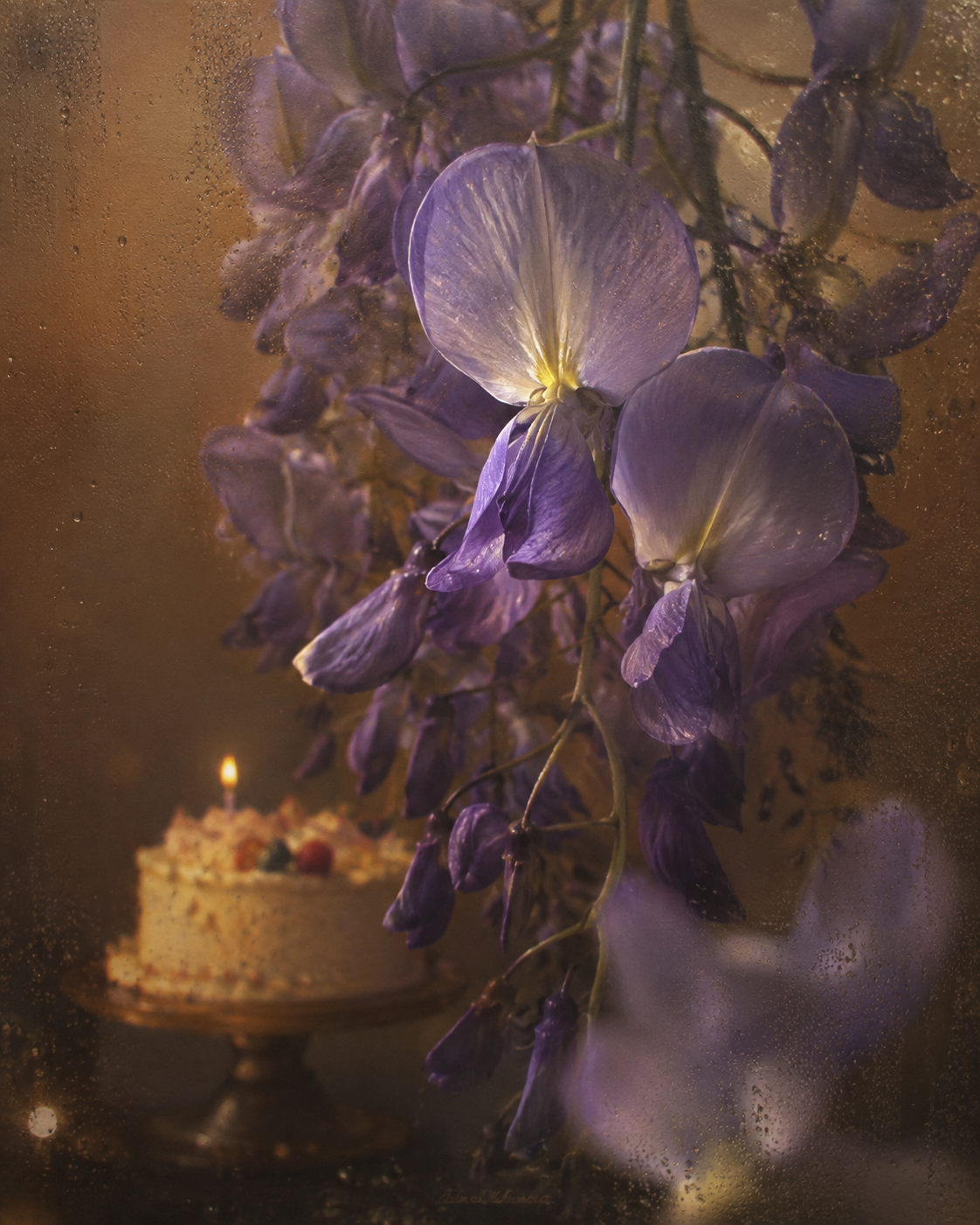
Warm Glow Beyond the Rain-Veiled Glass
Critique
Introduction This interior views wisteria through a wet transparent plane, with candlelit cake at lower left. Condensation veils flower and dessert, studying nearness, obstruction, and diffused warm light. Description Two broad lavender flowers fill the upper center and right, their pale fanlike petals surrounding yellow bases and folded violet lower petals. Darker buds and stems descend between them. Across the entire surface, fine beads and larger drops form an uneven transparent layer. At lower left, a round cream cake on a pedestal sits softly out of focus, decorated with red and dark fruit and a single candle flame. A large blurred purple bloom occupies the lower right. Analysis The nearest flowers form overlapping circular masses, balanced diagonally by the small cake and flame. Warm brown background light passes through lavender petals, revealing veins while keeping deeper buds opaque. Droplets sharpen the front plane even where the subjects behind are soft, creating two simultaneous focus systems. Violet and amber dominate, with cream and yellow defining the central flower and candle. The descending green stems connect the bright upper blossoms to the shadowed lower field. Interpretation and Evaluation The wet barrier prevents direct access to the celebratory objects and makes looking itself part of the subject. The candle remains recognizable but remote, while the flowers press close without becoming fully touchable. Petal translucency, condensation, fruit, and soft flame are technically persuasive. Extreme scale contrast, layered surfaces, and concentrated amber light give the familiar flower-and-cake motif an original psychological distance. Conclusion Large blossoms command first, but viewing makes the wet plane and candle equally important. Veiling, warm-cool color, and divided focus transform celebration into a scene across a fragile boundary.
Same Subcategory
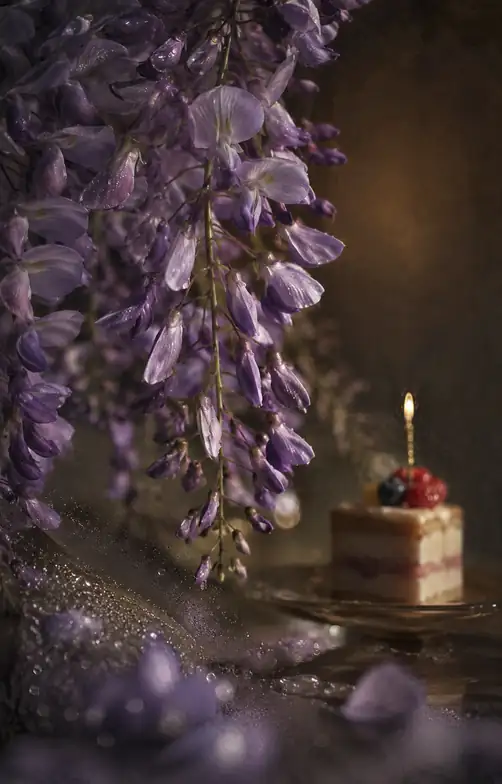 Candlelight and Wisteria at Midnight
Similar Artworks
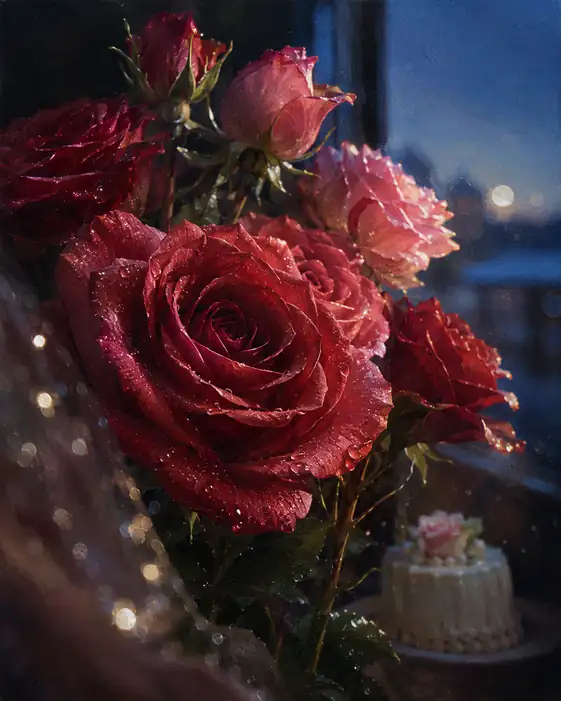 Twilight Window Draped in Blossoms
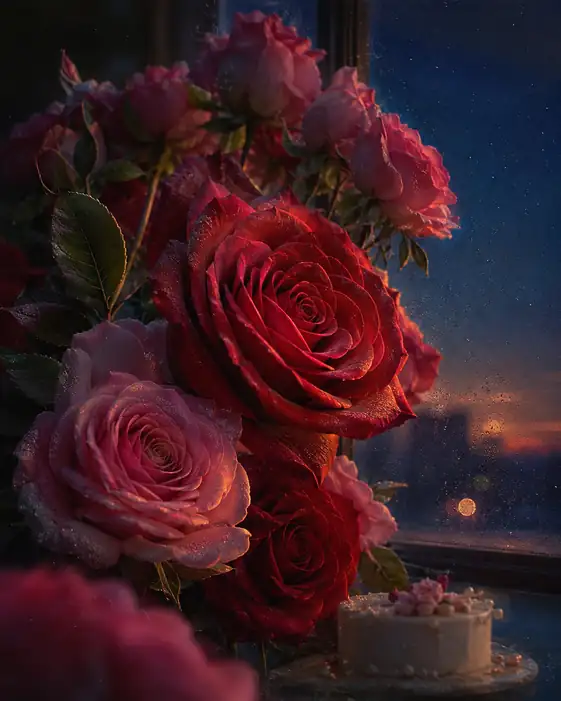 Celebration at the Rain-Veiled Window
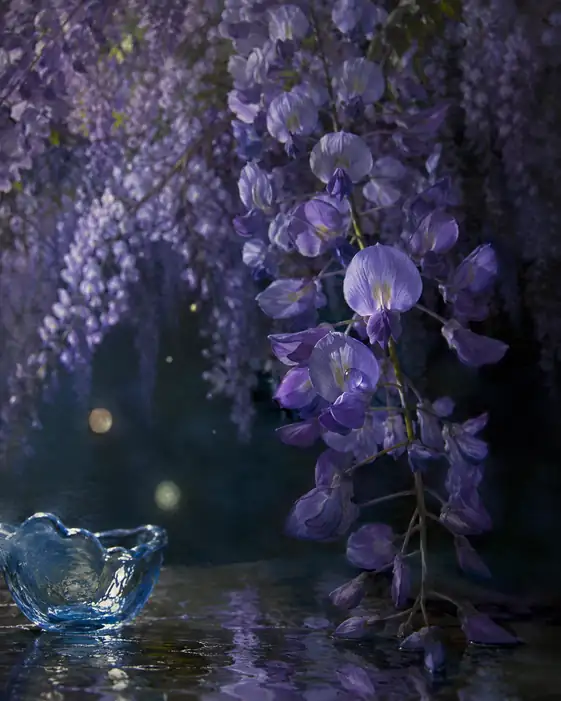 Sapphire Glass and Falling Violet Petals
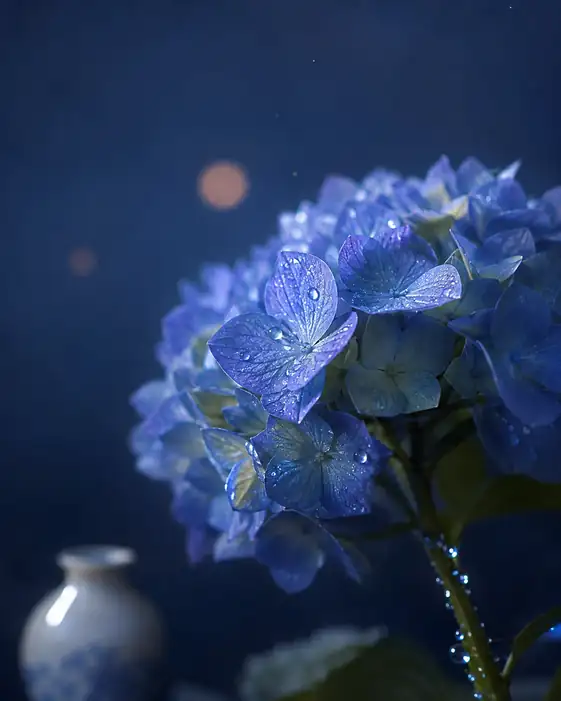 Moonlit Solitude with White Porcelain
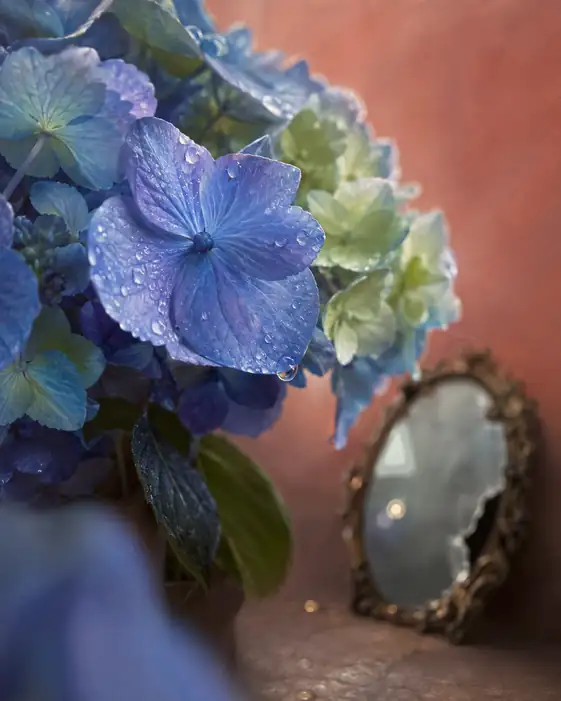 Azure Hydrangeas Beside the Vintage Mirror
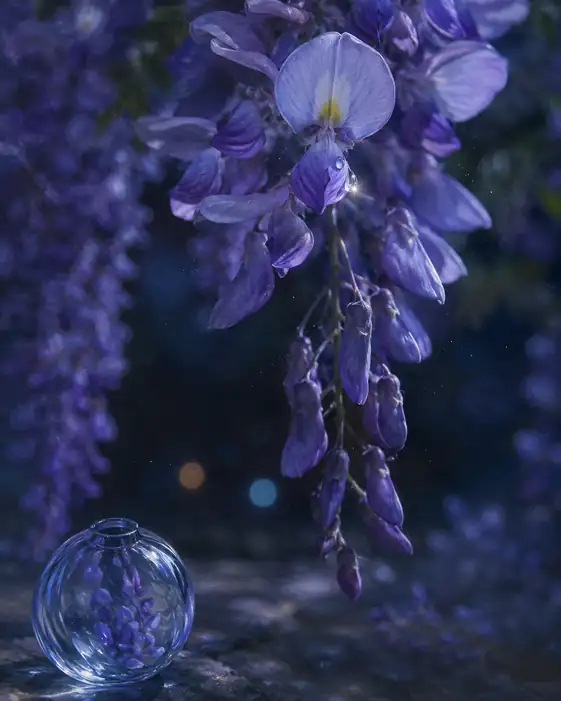 Reflections in the Cobalt Vessel
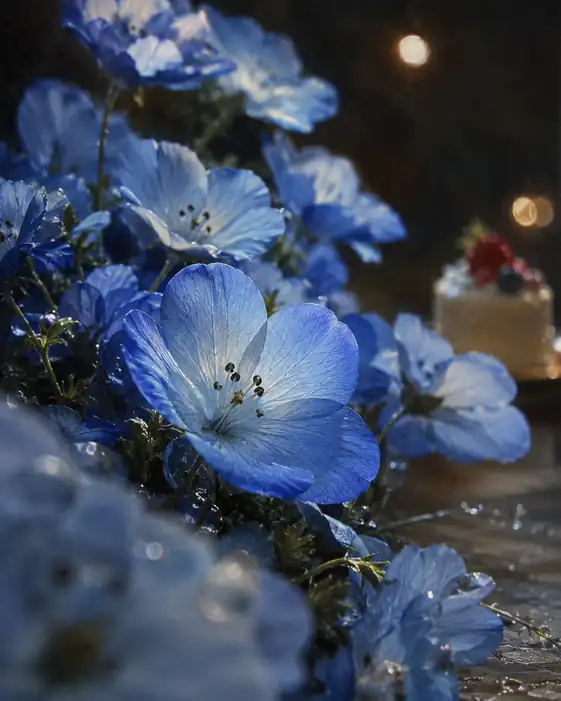 Nemophila and Berry Tart
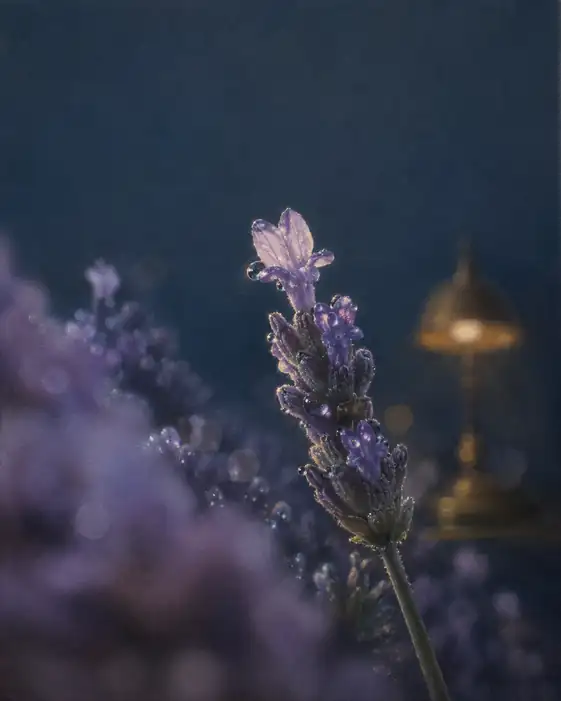 Scent of Lavender in the Brass Light
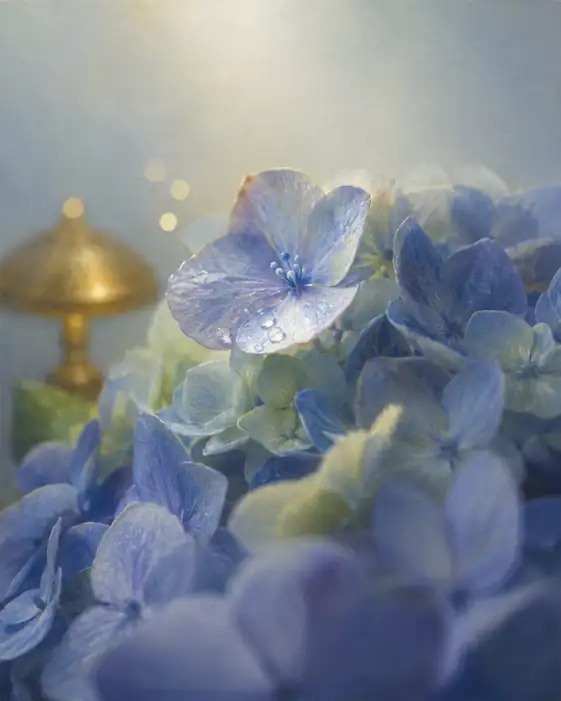 Golden Resonance in Azure Petals
 Morning Bell and the Waking Bloom