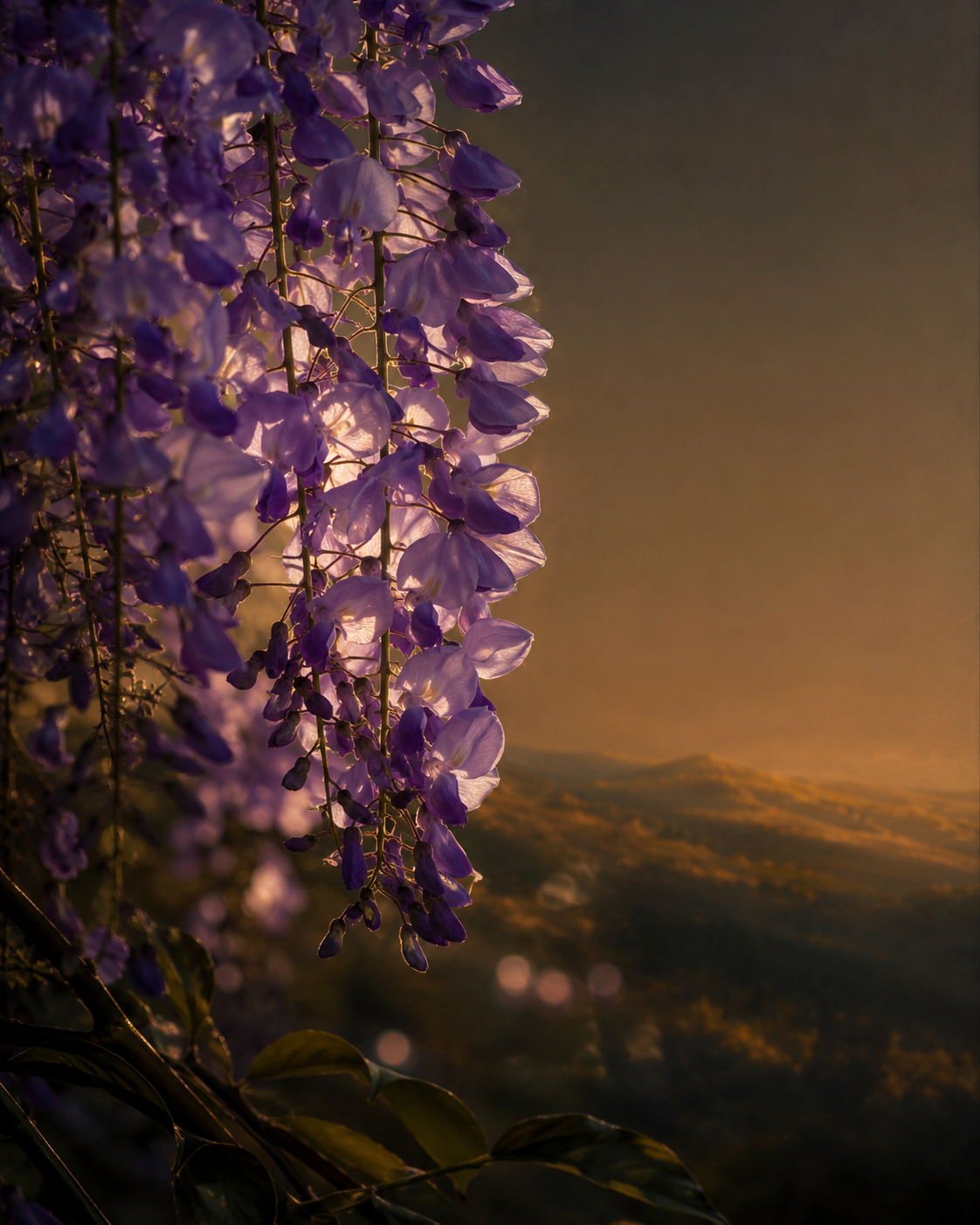
Amber Horizon and Falling Wisteria
Critique
Introduction This painting sets wisteria against amber sky and a dark mountain valley. Flowers occupy a narrow left band, while open space gives the hanging forms weight and the landscape breadth. Description Several racemes descend from the upper left, their pale open petals catching warm rim light and their lower buds remaining deep violet. Dark woody stems run vertically among them. Glossy leaves and thick branches fill the lower-left corner. Beyond, a muted orange-gray sky covers most of the frame, meeting layered mountain ridges below. A handful of soft circular lights appears in the shadowed valley, and distant flower clusters blur along the left edge. Analysis The composition depends on a strong division between dense vertical flowers and expansive empty sky. Backlight traces petals and stems with thin gold lines, separating the racemes from the atmosphere. Violet and amber form a complementary contrast, moderated by olive-black leaves and gray mountains. The hanging chains direct the eye down toward the valley, while horizontal ridges hold the lower field steady. Shallow focus clarifies the central flower edges and softens both nearer clusters and distant terrain. Interpretation and Evaluation The flowers become a near curtain through which the large landscape is glimpsed. Their downward gravity opposes the valley’s receding breadth, joining bodily proximity with remote space. Drawing is controlled in the alternating buds and lit petal membranes, while tonal restraint preserves detail within darkness. Bold negative space, narrow foreground placement, and warm-cool balance give the familiar sunset motif an original severity. Conclusion Wisteria appears as a bright edge first, but viewing makes the open right side measure distance. Asymmetry, rim light, and layered shadow let a close flower define the valley’s scale.
Same Subcategory
Similar Artworks
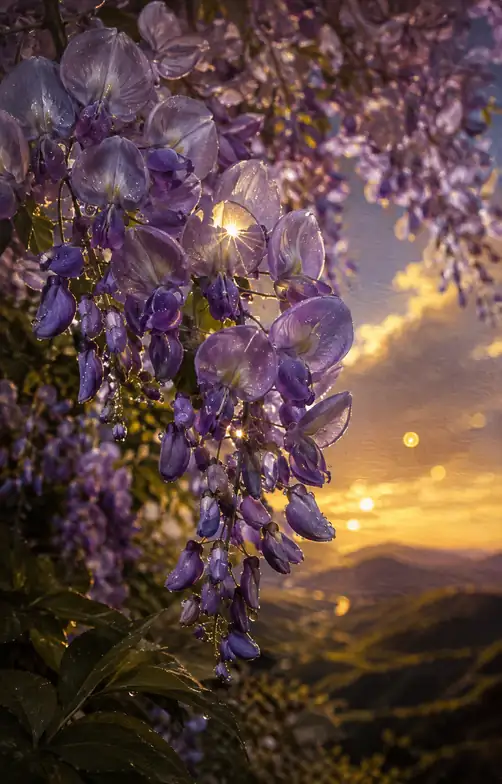 Sunburst Through Wet Wisteria Petals
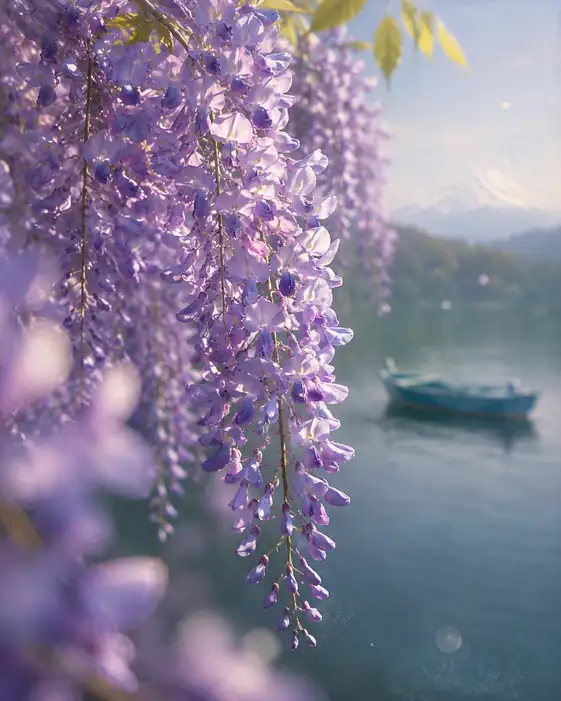 Serene Summit Beyond the Wisteria Bower
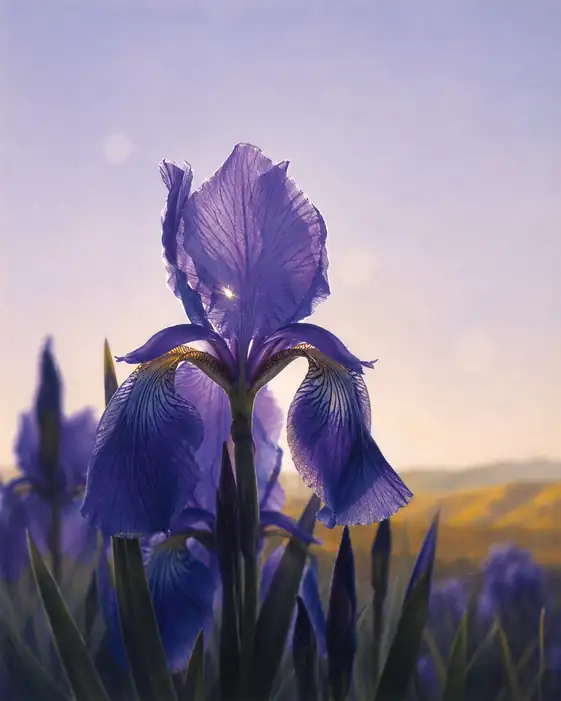 Translucent Iris Against Golden Sunset
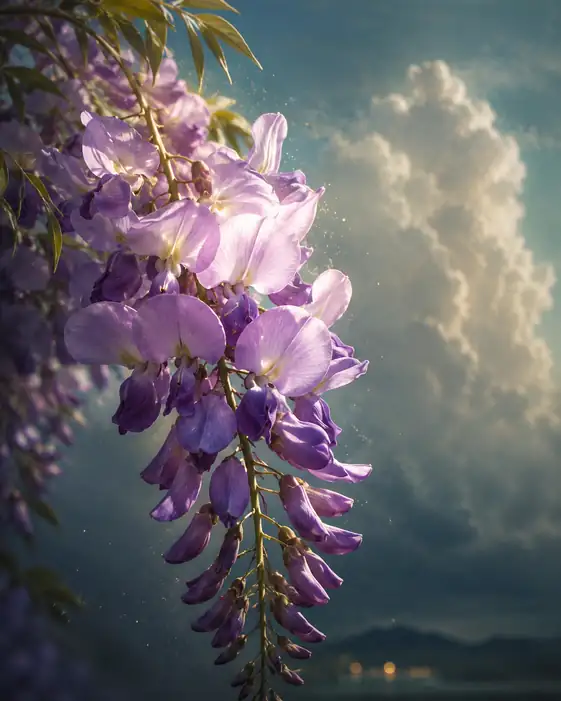 Wisteria Rising to Meet the Summer Cloud
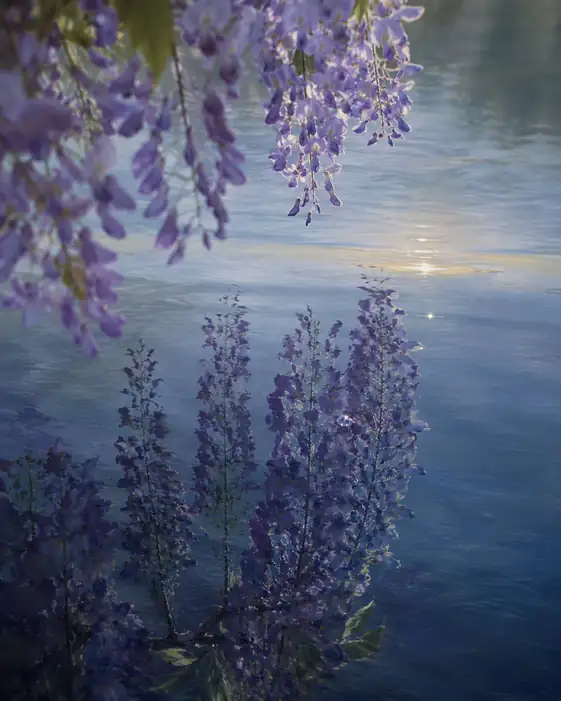 Wisteria Reflected in the Quiet Pool
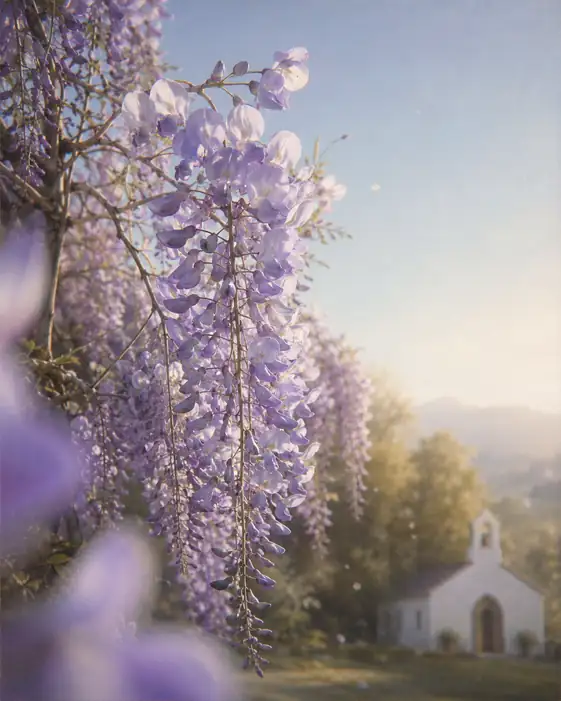 White Chapel Framed in Wisteria
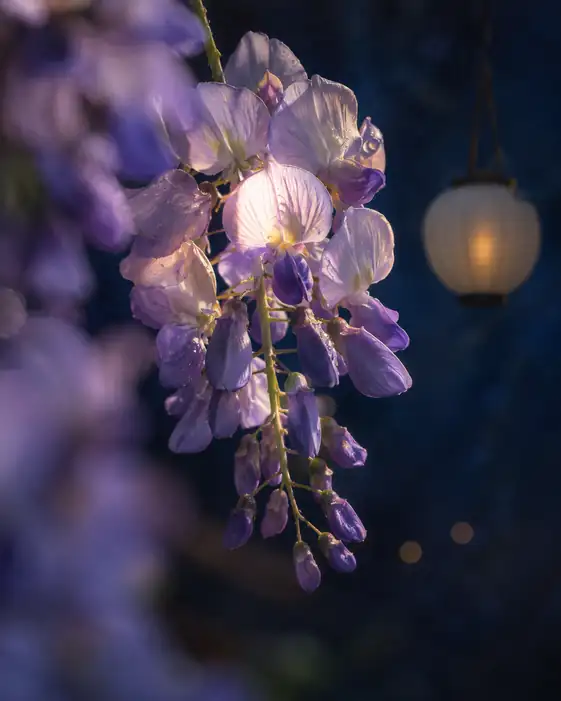 Solitary Wisteria Beneath the Night Lamp
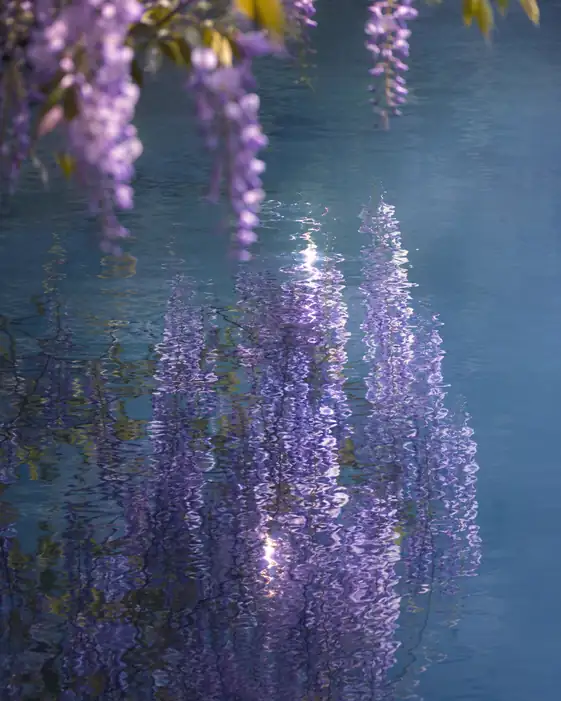 Ripples of Violet Across the Water
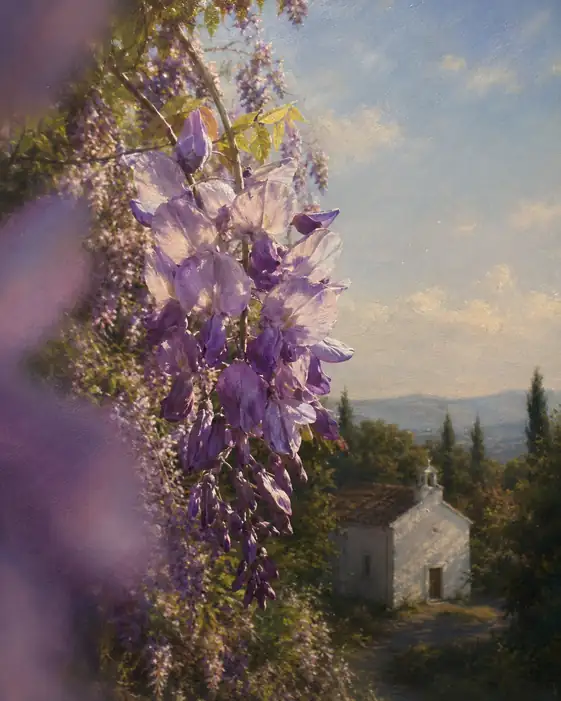 Golden Light Across Wisteria and Stone
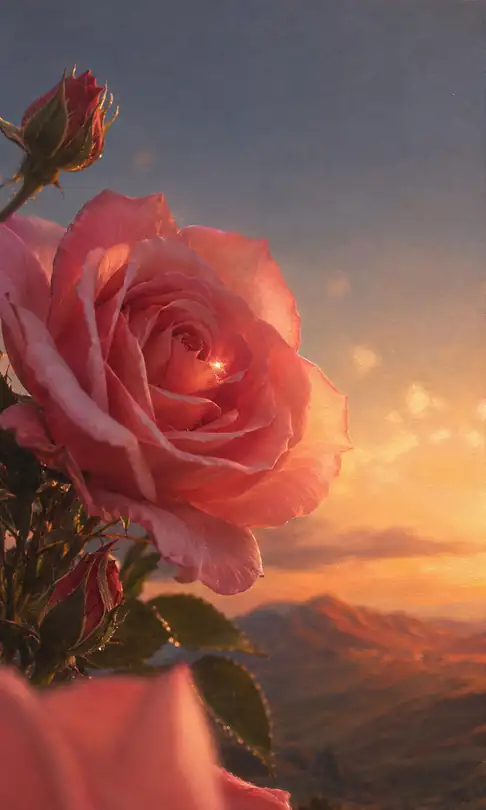 Rose Petals in the Golden Horizon