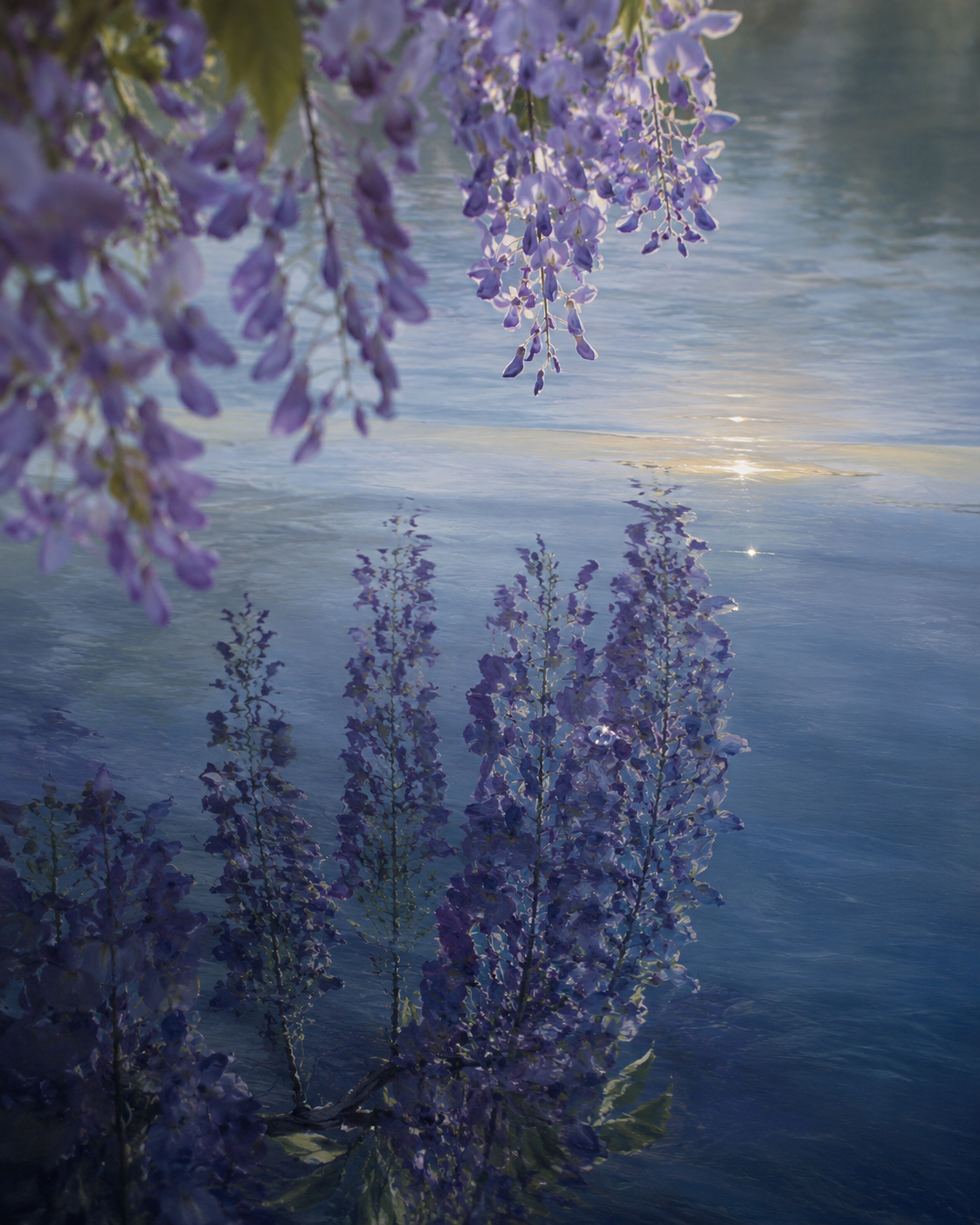
Wisteria Reflected in the Quiet Pool
Critique
Introduction This painting looks down on water where wisteria and reflection occupy opposite ends. Flowers enter above and left, while dark inverted racemes rise below, making water the field of comparison. Description Pale lavender clusters hang along the upper edge, with the sharpest small raceme near upper center and broad blurred blooms at left. The water fills most of the image in blue-gray horizontal ripples. Below the middle, several reflected flower columns extend upward from a dark branch and green leaves near the bottom. Their violet forms are broken into wavering segments. A narrow gold reflection and several star-like highlights cross the upper water. Analysis The composition reverses gravity: real flowers descend, while their image appears to grow upward. Open water separates these directions and prevents the two floral fields from touching. Focus, value, and motion distinguish them; upper petals are light and still, whereas lower forms are dark, elongated, and disturbed. Violet repeats across a cool blue ground, with yellow-white light supplying limited warmth. Horizontal ripples counter the reflected verticals and produce a slow visual pulse. Interpretation and Evaluation The reflection preserves the recognizable structure of wisteria while continually revising its edges. This makes seeing less a duplication than an unstable translation. The work carefully draws the small upper raceme and convincingly modulates water across calm and rippled zones. Its spacious composition, inverted growth, and restrained color are original. The isolated highlights also clarify that light, not only flower, is being reflected. Conclusion The eye separates blossoms from their image first, but viewing makes the interval the subject. Reversal, cool harmony, and surface movement turn reflection into another form of growth.
Same Subcategory
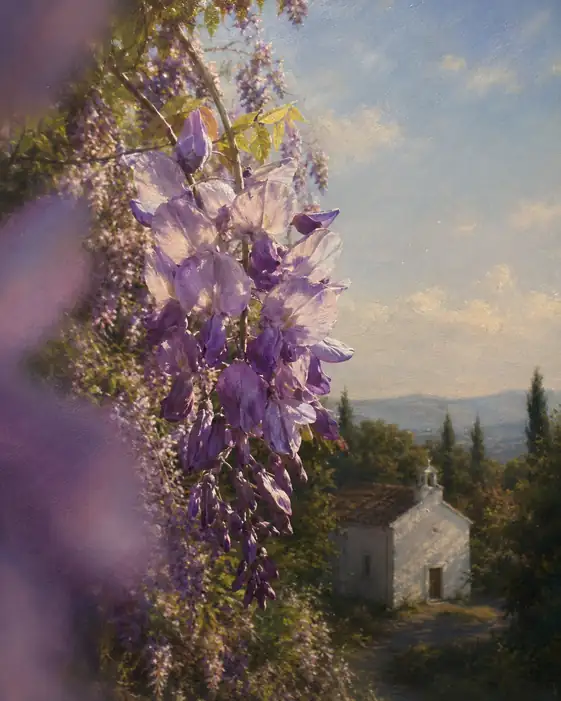 Golden Light Across Wisteria and Stone
Similar Artworks
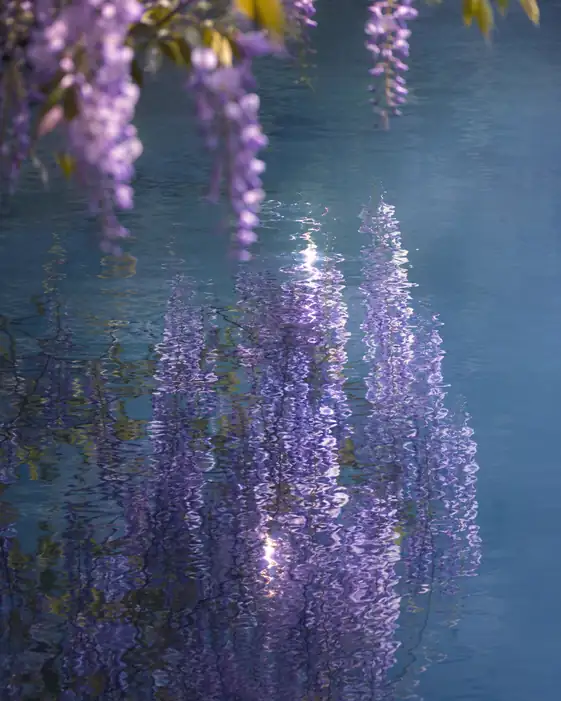 Ripples of Violet Across the Water
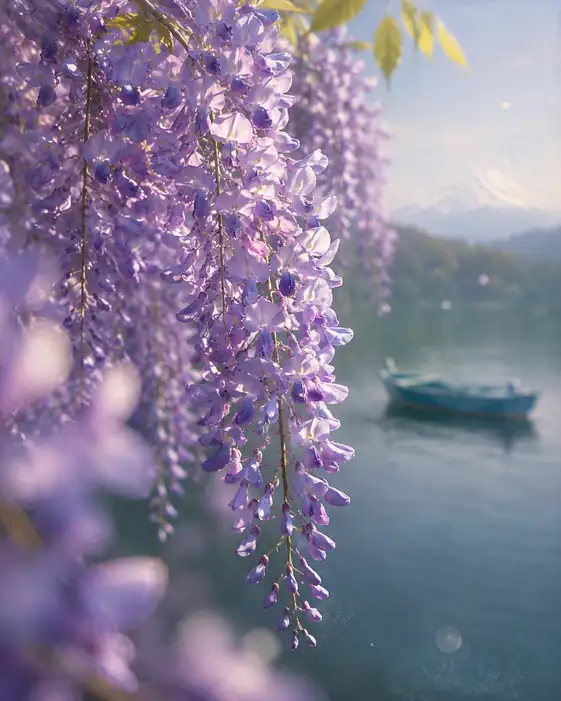 Serene Summit Beyond the Wisteria Bower
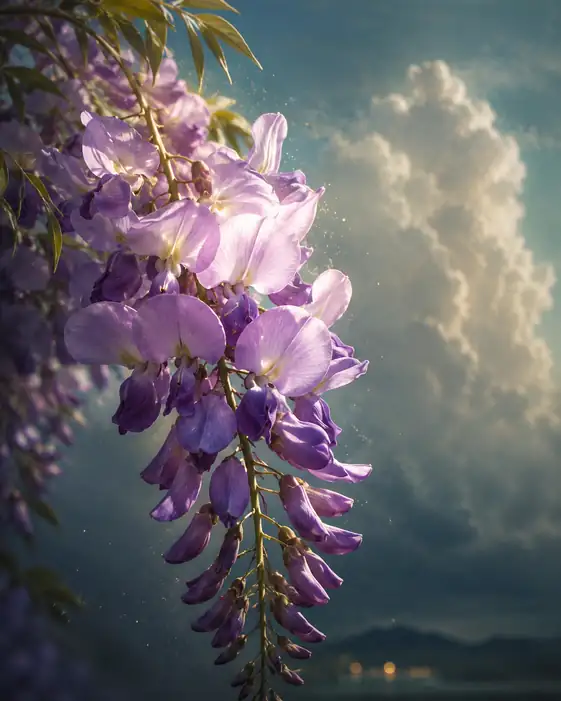 Wisteria Rising to Meet the Summer Cloud
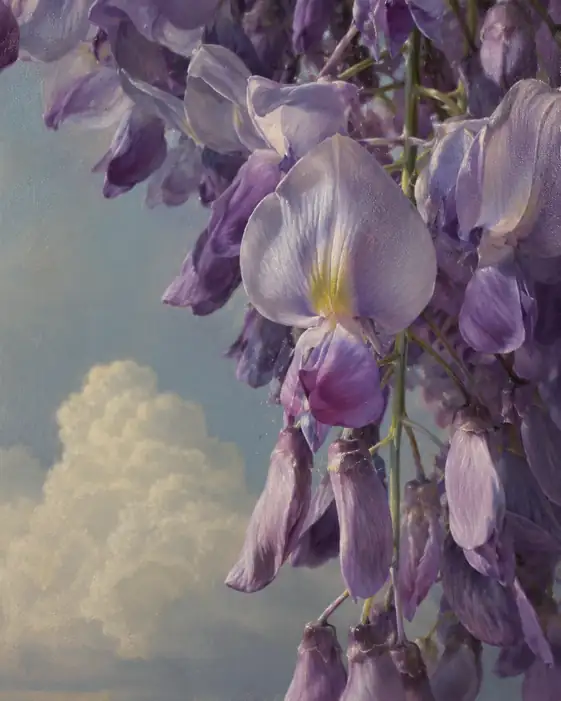 Cloud and Petal in Summer Sunlight
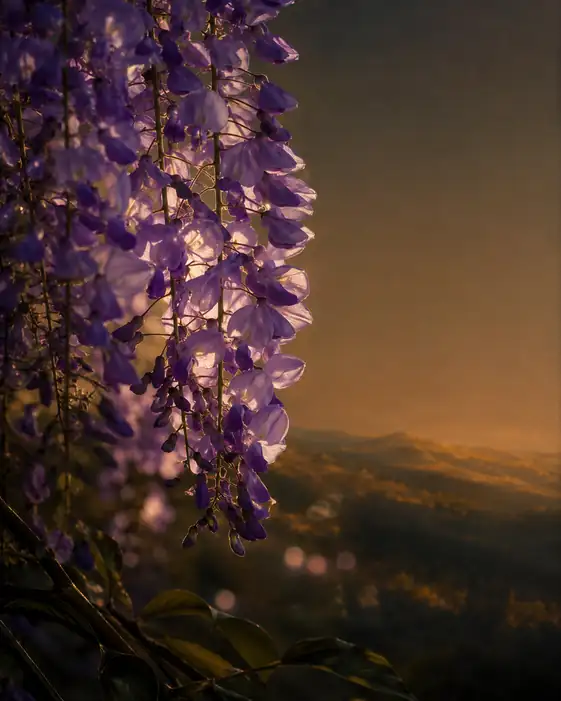 Amber Horizon and Falling Wisteria
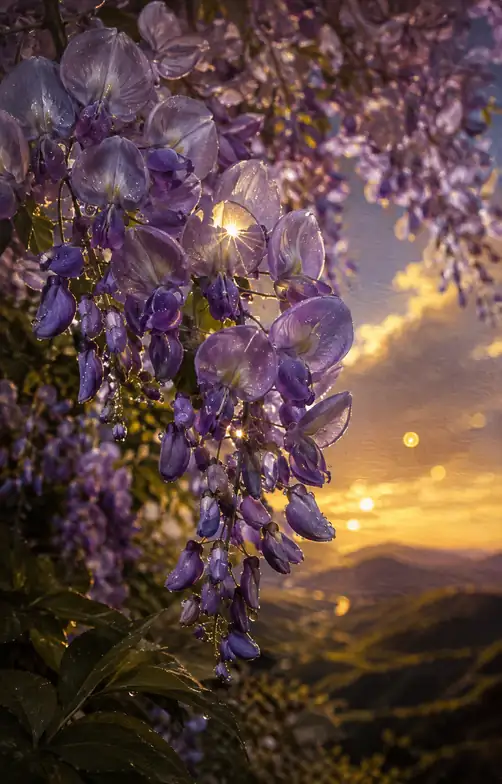 Sunburst Through Wet Wisteria Petals
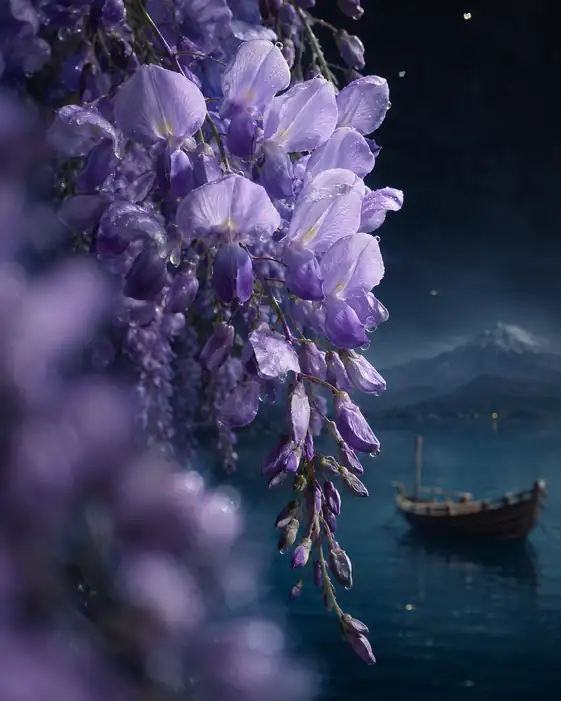 Night Lake Framed in Falling Wisteria
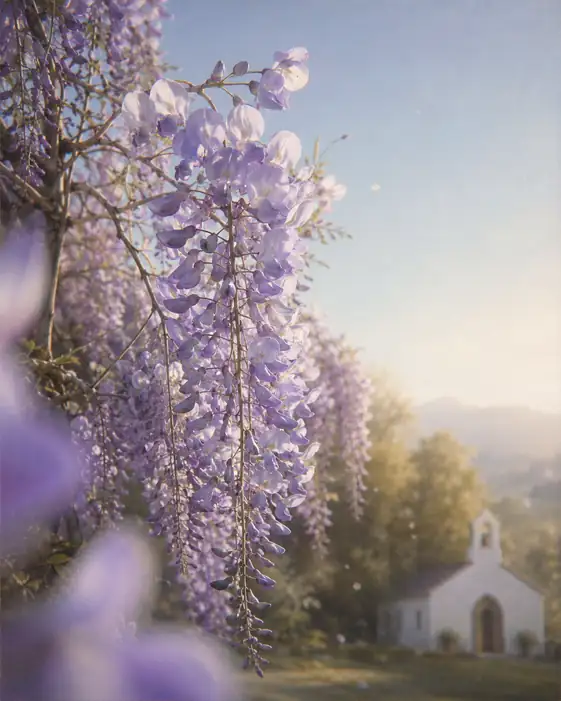 White Chapel Framed in Wisteria
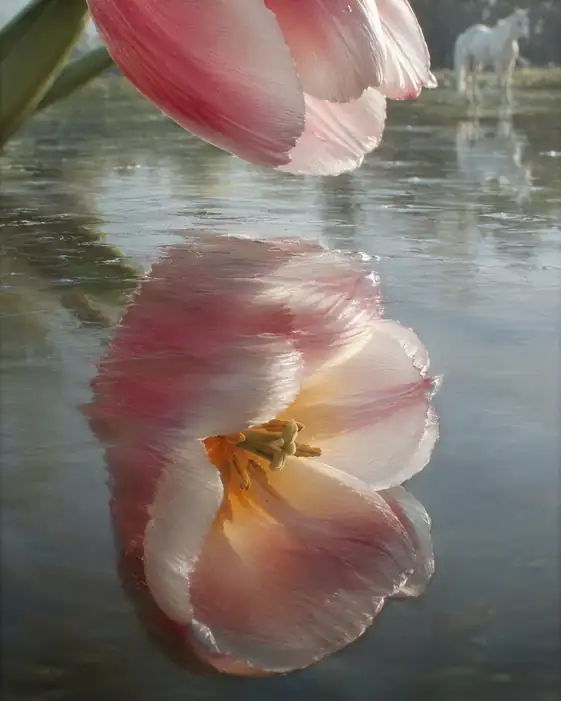 White Steed and Tulip Reflection
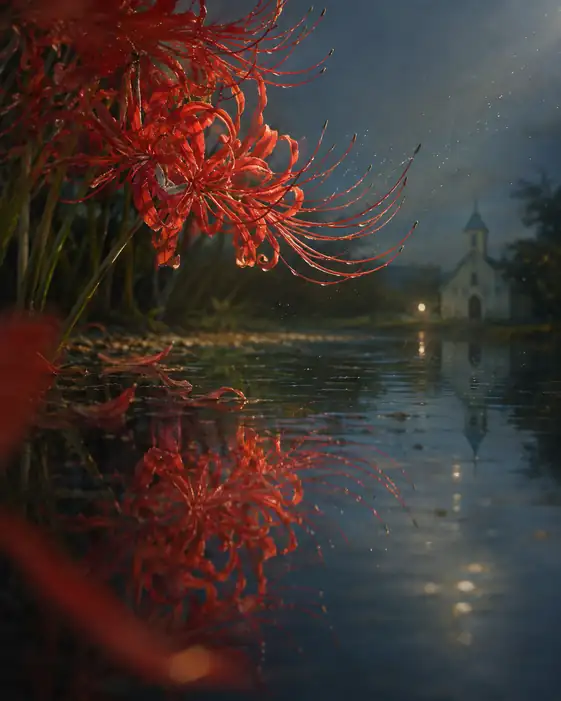 Chapel by the River and Crimson Shadow