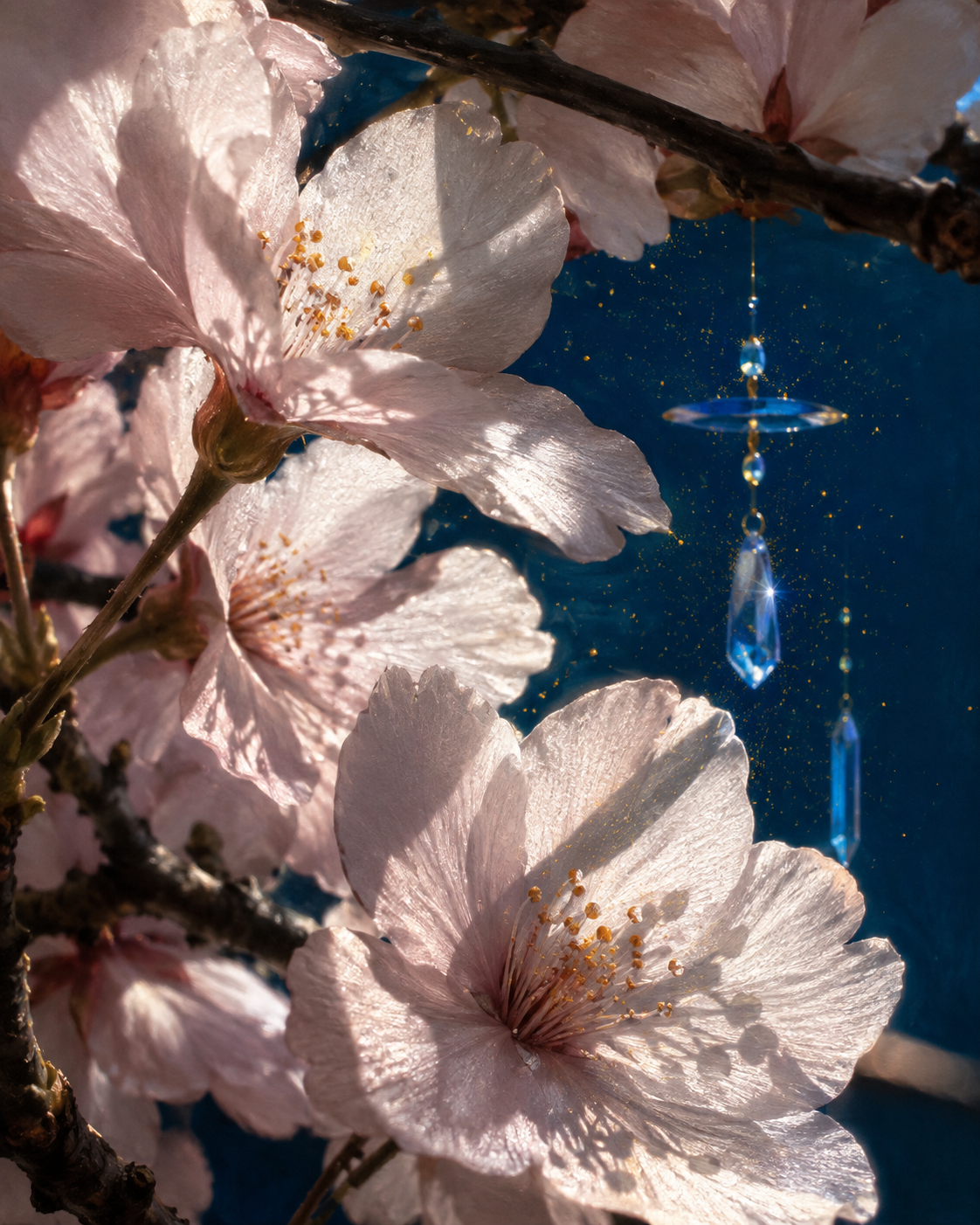
Theater of Light and Sapphire Facets
Critique
Introduction This intimate macro-like painting places luminous cherry blossoms beside hanging blue crystals. The unusual pairing turns magnified botanical detail into a small cosmic theater, where pollen-like gold flecks drift across a saturated field and sunlight becomes the true subject. Description Large pale pink blossoms fill the left, upper, and lower portions of the image. A dark branch crosses near the top, with thicker twigs rising from the lower left. Individual stamens and textured petals are sharply visible. At right, several vertical strings support transparent blue beads, discs, and pointed pendants. The nearest crystal flashes with a star-shaped highlight. Analysis The composition balances heavy organic masses on the left with narrow geometric accents on the right. Branches create diagonals and horizontal pressure, while the ornaments introduce measured vertical rhythm. Strong backlighting makes petals alternately opaque and translucent, revealing veins, folds, and cast shadows. Pink and blue establish a cool-warm opposition, energized by small gold points. Shallow depth and cropped forms eliminate conventional setting, so differences of surface—rough bark, silky petals, hard crystal—become the main spatial language. Interpretation and Evaluation The pendants can read as captured rain, ceremonial charms, or fragments of sky brought among the flowers. Their durability contrasts with blossom fragility, though both depend on passing light to become visible. The star flare risks a familiar decorative effect, but its precision is balanced by irregular petal edges and branching forms. Golden motes make the still scene seem active, suggesting pollen and time dispersed through air. Conclusion The painting succeeds by making material differences emotionally resonant. Glass, blossom, bark, and dust share illumination without losing their identities. Its concentrated scale encourages slow viewing.
Same Subcategory
 Gaslight Glowing in the Cherry Night
Similar Artworks
 Prismatic Sunlight in the Azure Shadow
 Chandelier of Blossoms and Light
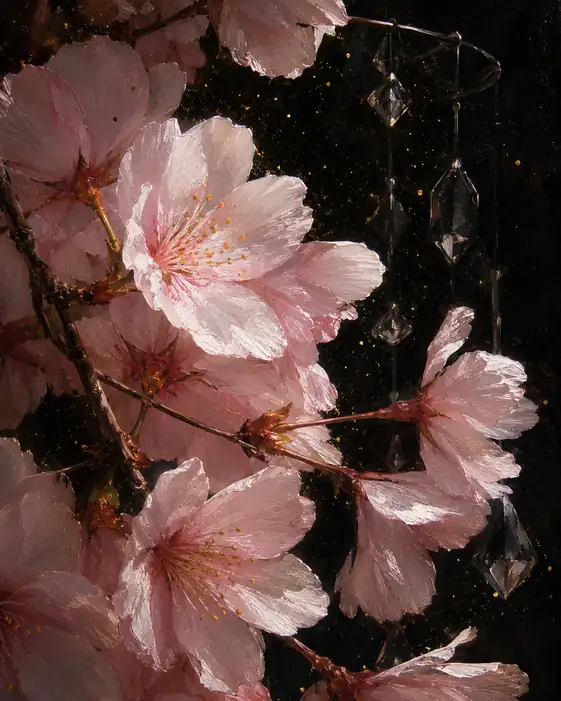 Petal and Prism in Midnight Velvet
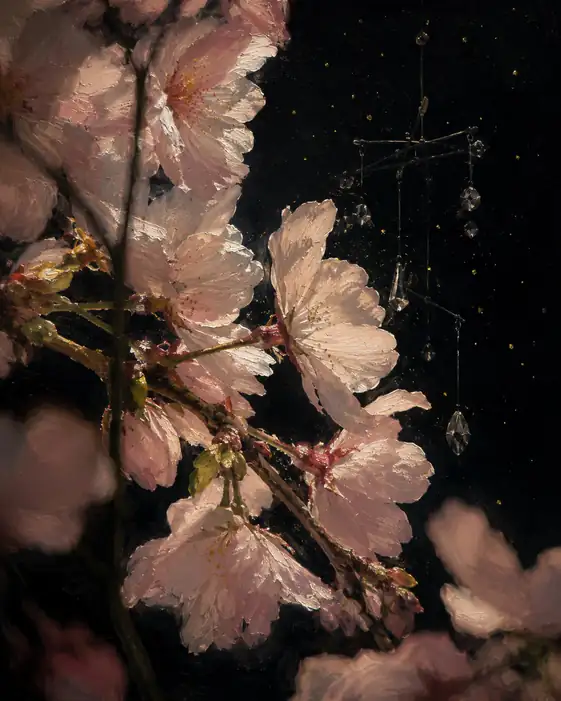 Crystal Drops and Midnight Blossoms
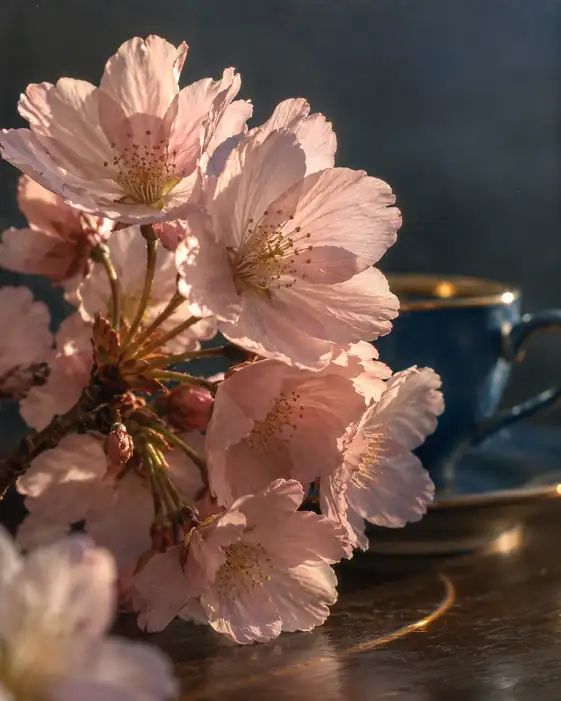 Shadows and Blossoms on the Dark Wood
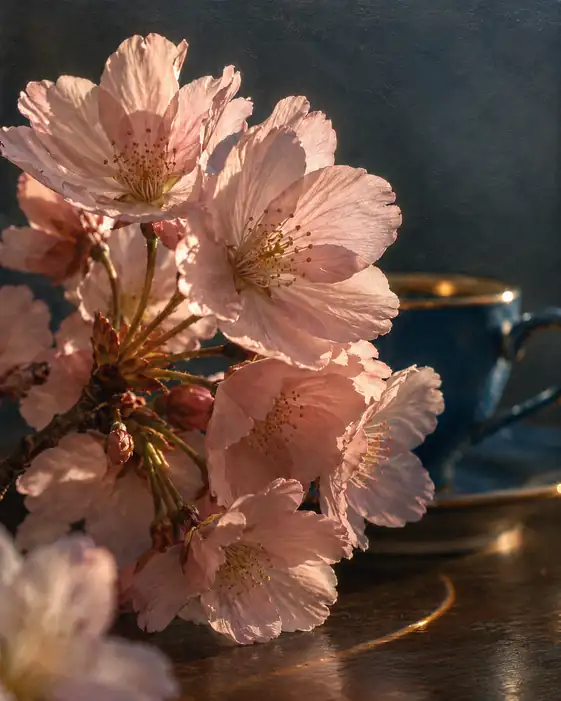 Morning Tea Beside a Branch of Bloom
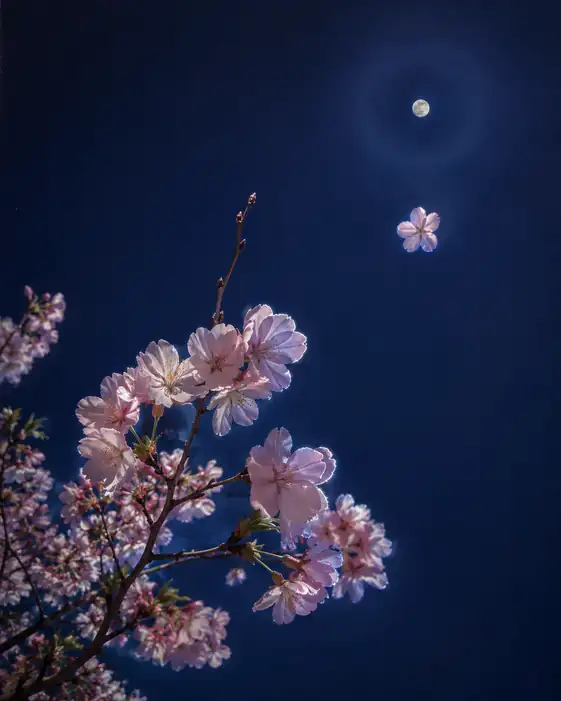 Slender Twigs Reaching for the Moon
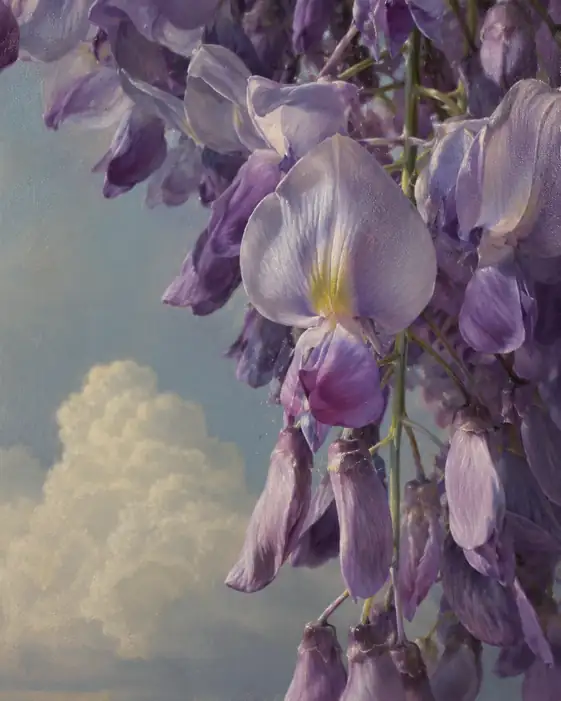 Cloud and Petal in Summer Sunlight
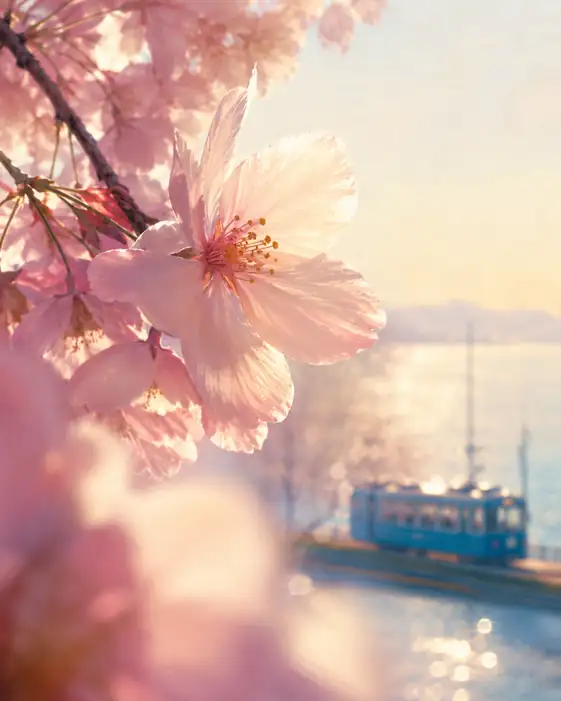 A Single Bloom Above the Coastal Rails
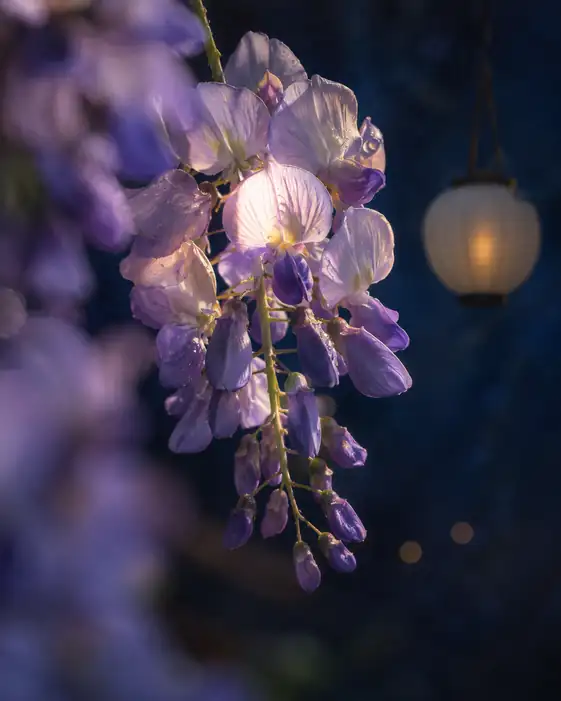 Solitary Wisteria Beneath the Night Lamp