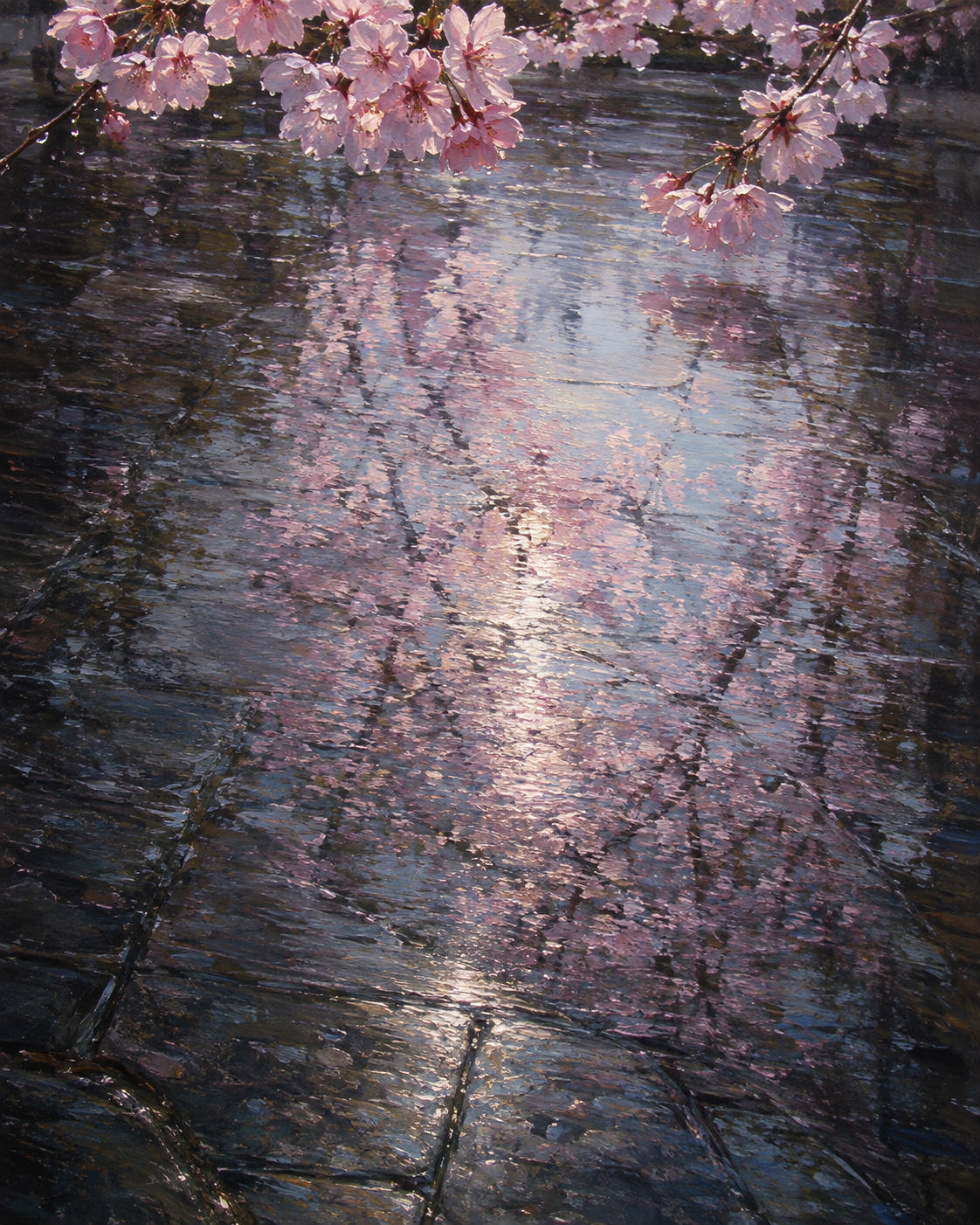
Reflection of the Canopy in Rain-Soaked Stone
Critique
Introduction This downward-looking painting devotes almost the entire frame to rain-dark pavement reflecting cherry trees and pale sky. Only a narrow fringe of actual blossoms enters from above. The reversal makes the unstable image on the ground more expansive than its source. Description Pink flower clusters hang across the top edge from dark wet branches. Below, large rectangular paving stones extend toward the foreground, divided by black seams and covered with shallow water. Their surface reflects vertical trunks, clouds, blossoms, and a bright central strip of sky in broken pink, silver, blue, and charcoal. Small ripples and uneven stone textures distort the image. No horizon or figures appear. Analysis The stone joints create a perspectival grid beneath fluid reflections. A pale vertical band anchors the center, while darker sides form a corridor. Actual blossoms provide a sharp upper frame; their reflected counterparts dissolve into strokes and patches. Cool gray-blue supports muted pink and cream. Thick directional marks describe both rough stone and moving water. The absence of a visible source tree makes the reflected canopy feel like submerged space. Interpretation and Evaluation Reflection preserves bloom while making it impossible to grasp. Rain, often treated as an interruption, becomes the condition for seeing an enlarged second spring. The paving represents fixed urban order; water temporarily redraws it with branches and sky. The image avoids conventional scenic beauty by focusing on where people walk. Its empty surface invites the viewer to slow down and look rather than pass. Conclusion The work succeeds by relocating wonder to the ground. Stone remains stone, yet for a brief wet interval it carries sky and blossom. Attention transforms an ordinary route into a deep, unstable garden.
Same Subcategory
Similar Artworks
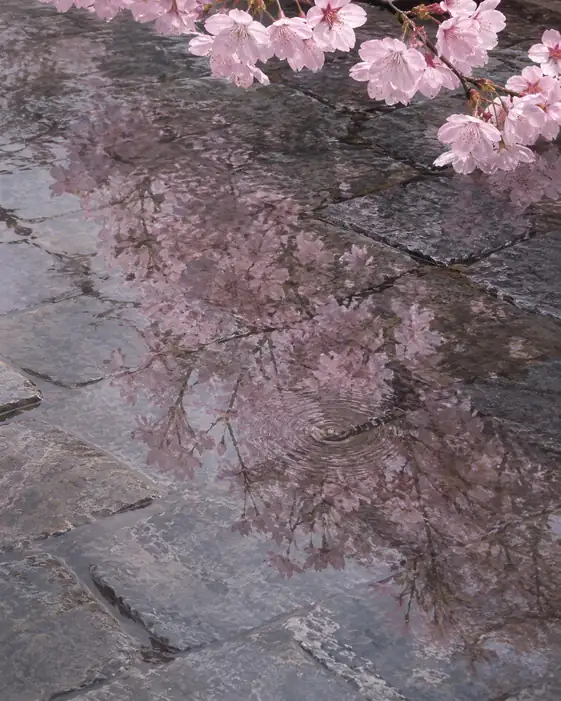 Cherry Raindrops in the Stone Mirror
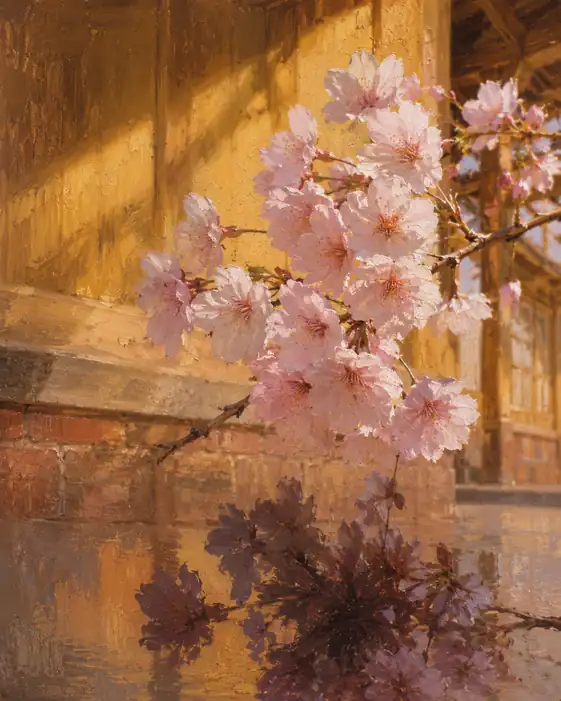 Blossoms Mirrored on Wet Earth and Timber
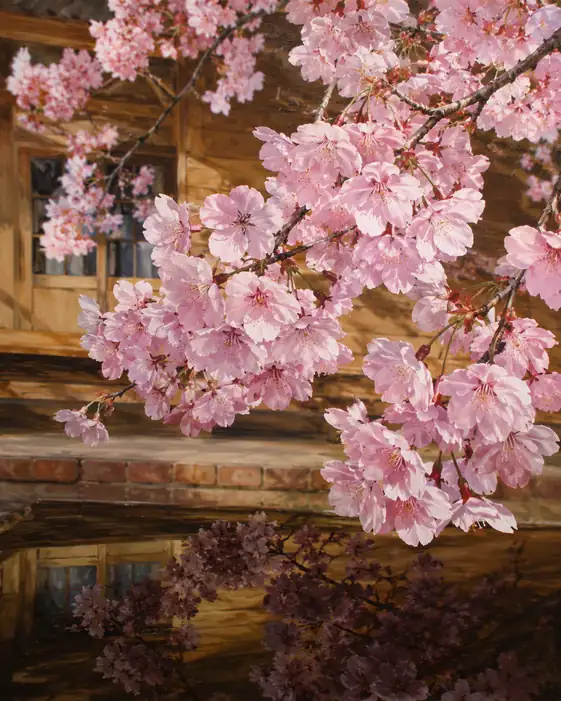 Spring Reflected on Still Water and Timber
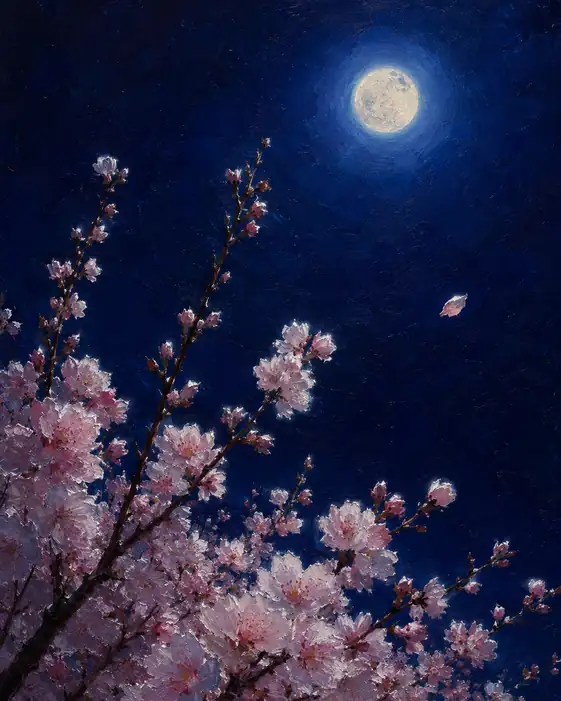 Full Moon in the High Azure Night
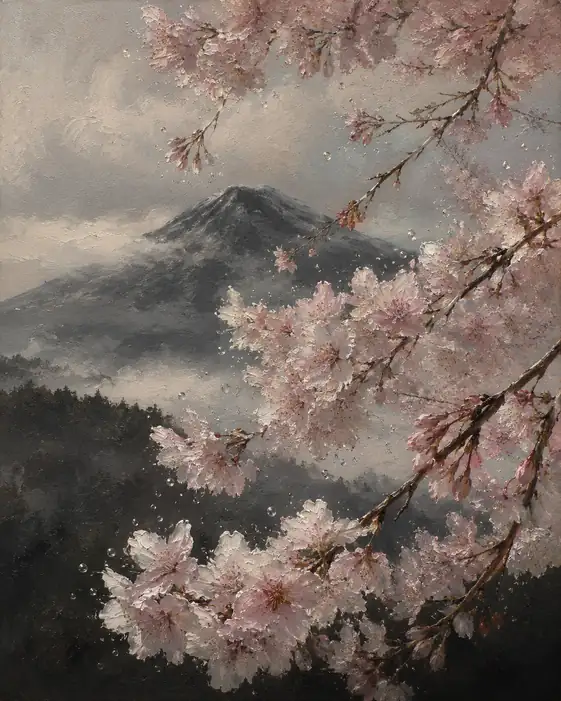 Sacred Peak Framed in Rain-Beaded Blooms
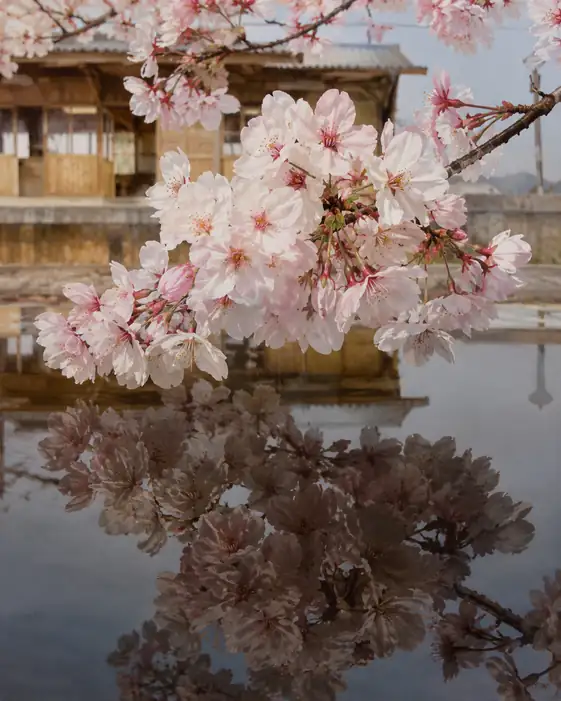 Symmetrical Reverie Above the Pool
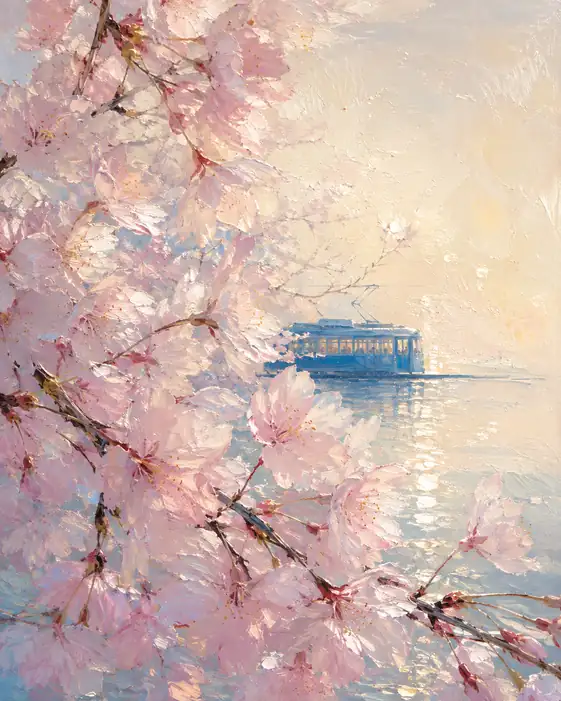 Luminous Memory Along the Coastal Track
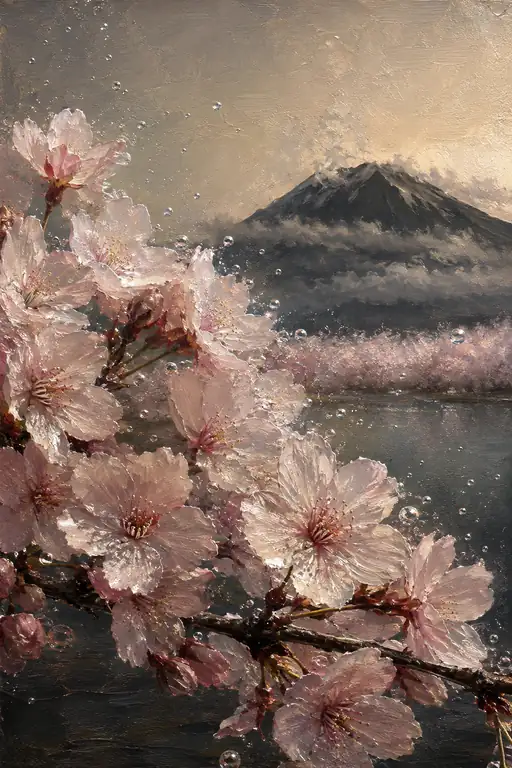 Glistening Droplets Over the Lake of Blossoms
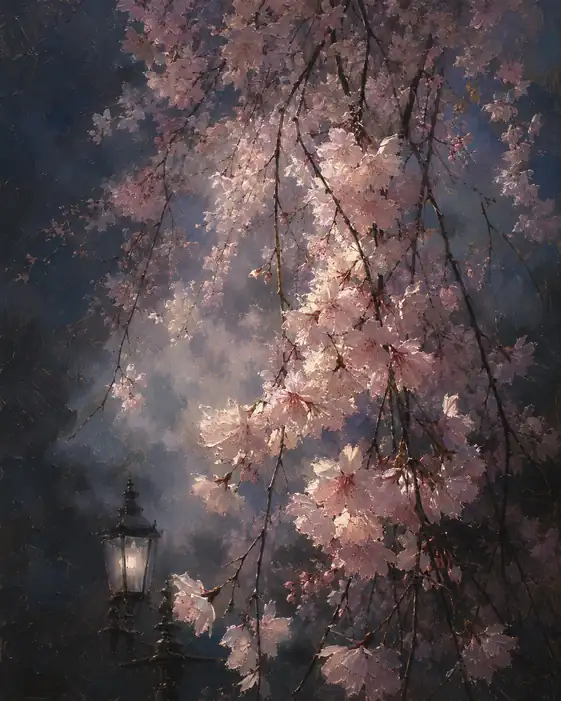 Canopy of Night Cherries Over the Lantern
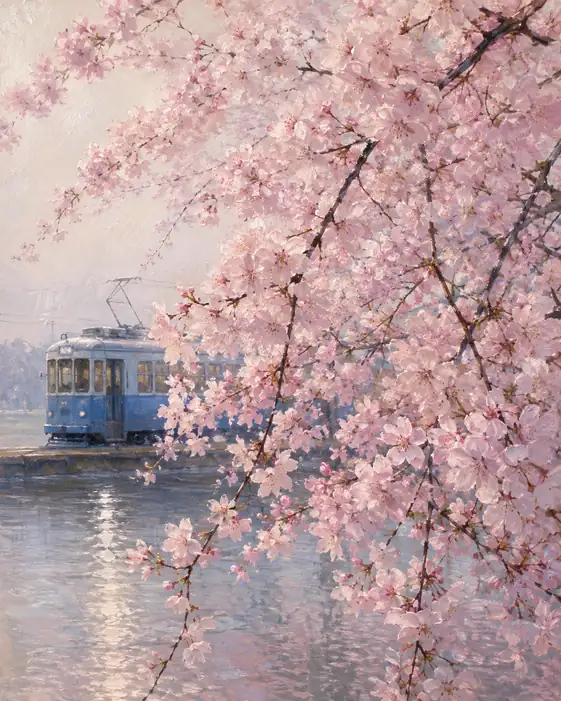 Blue Tram Gliding Through Springtime