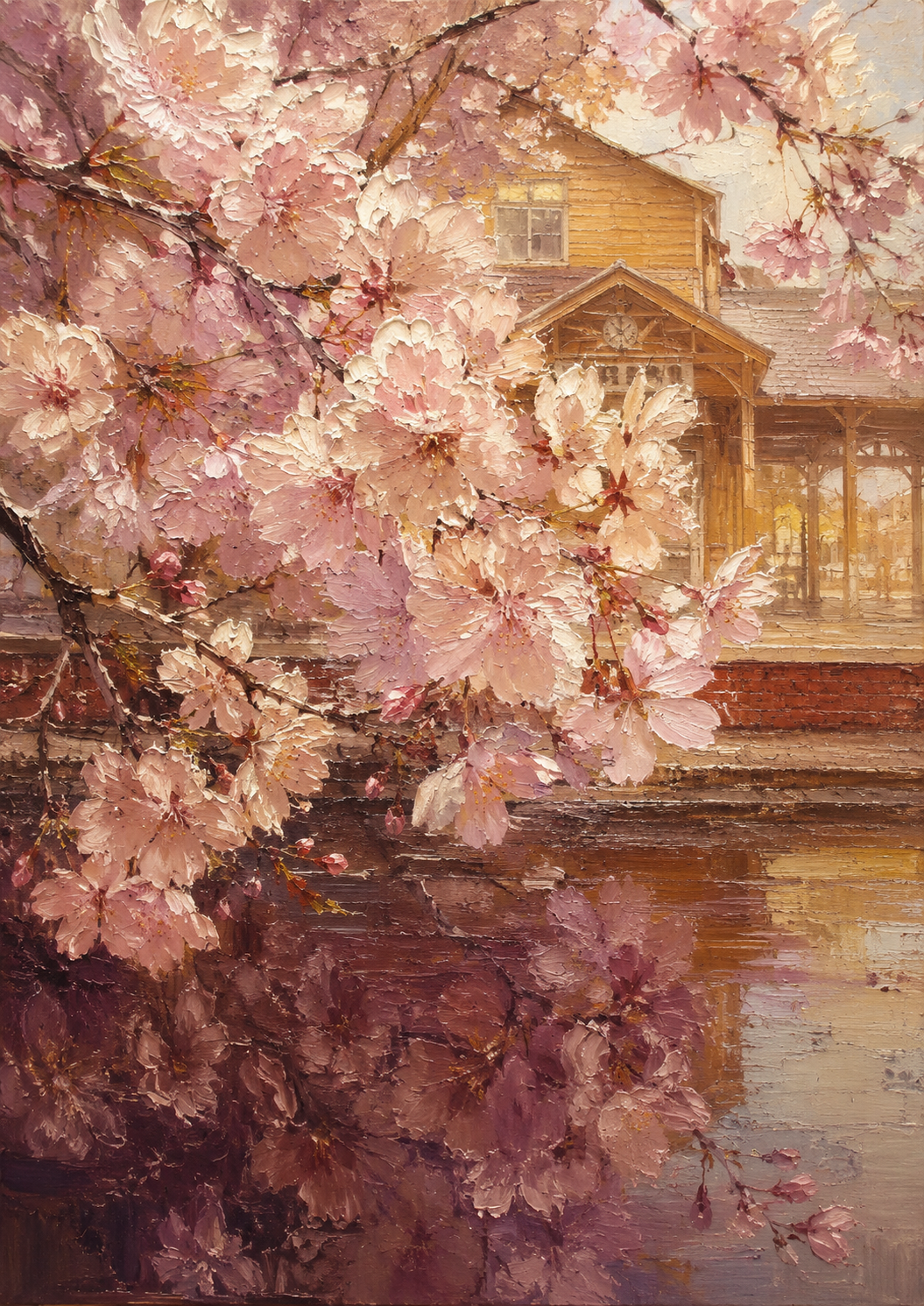
Station of Memories in Full Bloom
Critique
Introduction This warm painting views a wooden station through an overwhelming screen of cherry blossoms and their reflection in wet pavement. Architecture is partly concealed above and doubled below. Spring bloom turns an ordinary transit building into a layered memory image. Description Large pale pink flowers and dark branches fill the upper left and center, with smaller blooms crossing the right edge. Behind them stands a honey-colored timber station with gabled entrance, multipane windows, platform canopy, and a small round clock. Brick and stone border the lower façade. A broad wet surface reflects blossoms, building, and gold light in deep mauve. Fallen petals scatter near the bottom. Analysis The blossom screen divides vision into glimpses, delaying recognition of the building. Roof triangles and window rectangles provide stable geometry behind irregular petals. Reflection expands the lower half but softens forms into horizontal color. Warm ocher, pink, and cream dominate, grounded by dark branches and brick. Thick impasto unifies flowers, wood, and water, while directional strokes distinguish each. Cropping gives the scene immersive proximity rather than documentary clarity. Interpretation and Evaluation A station normally organizes arrival and departure, yet here seasonal growth interrupts its practical legibility. The clock suggests measured public time; blossoms and reflection introduce cyclical and unstable time. Their coexistence turns transit into remembrance. Nostalgia is pronounced, but water, partial concealment, and fallen petals prevent the past from appearing fully recoverable. The building remains active as a threshold rather than a sealed relic. Conclusion The work succeeds by layering three temporal records: enduring architecture, recurring blossom, and momentary reflection. None is complete alone. The viewer reconstructs the station through fragments, much as a remembered place is rebuilt from changing impressions.
Same Subcategory
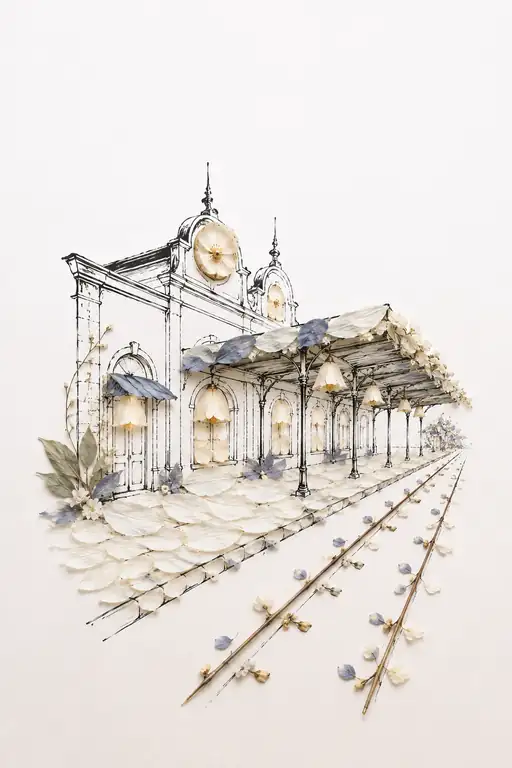 Station of the Silent Departure
Similar Artworks
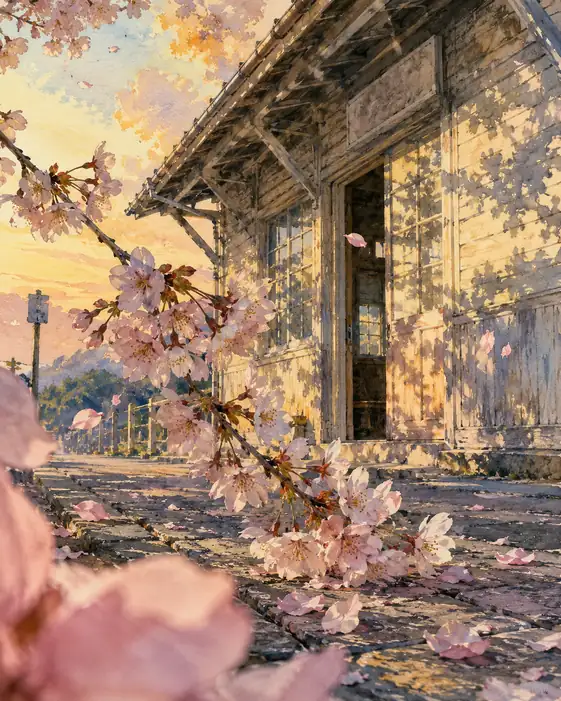 Nostalgia of a Wooden Station in Bloom
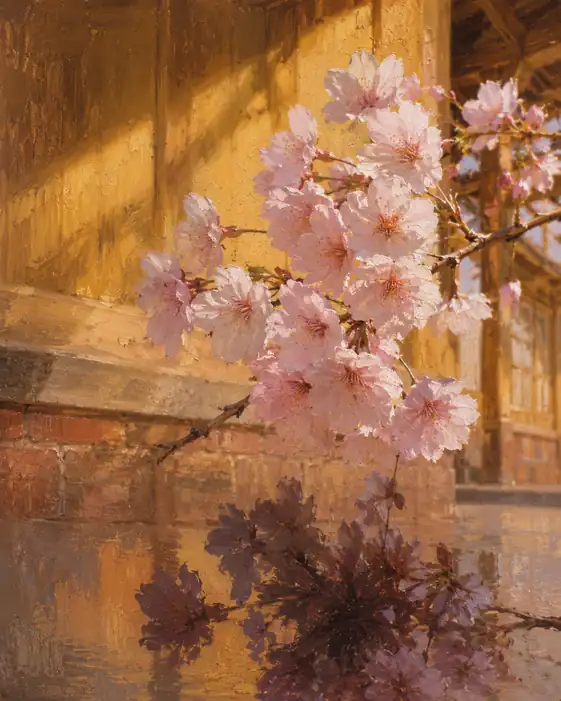 Blossoms Mirrored on Wet Earth and Timber
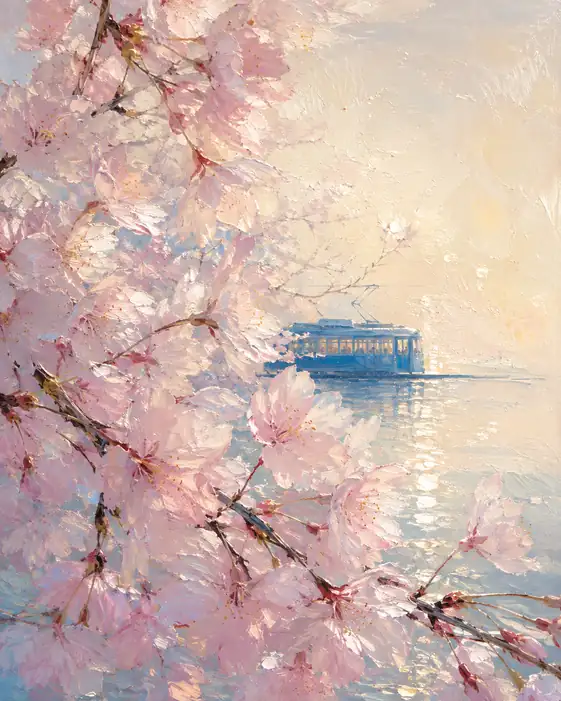 Luminous Memory Along the Coastal Track
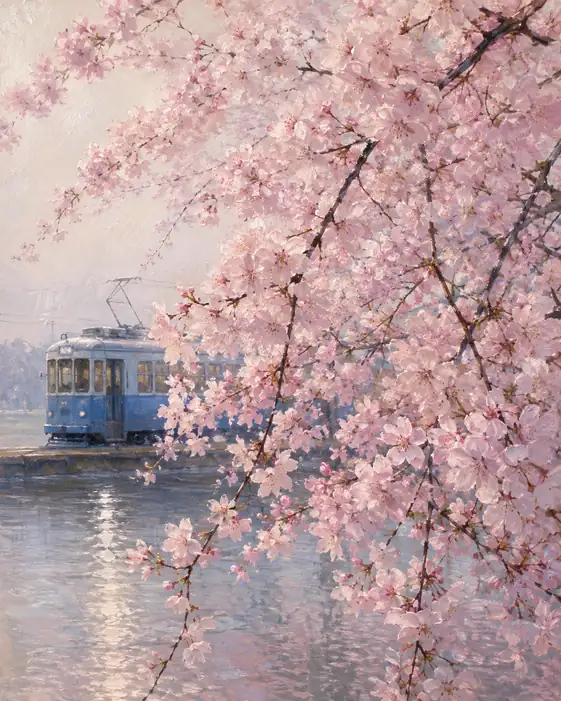 Blue Tram Gliding Through Springtime
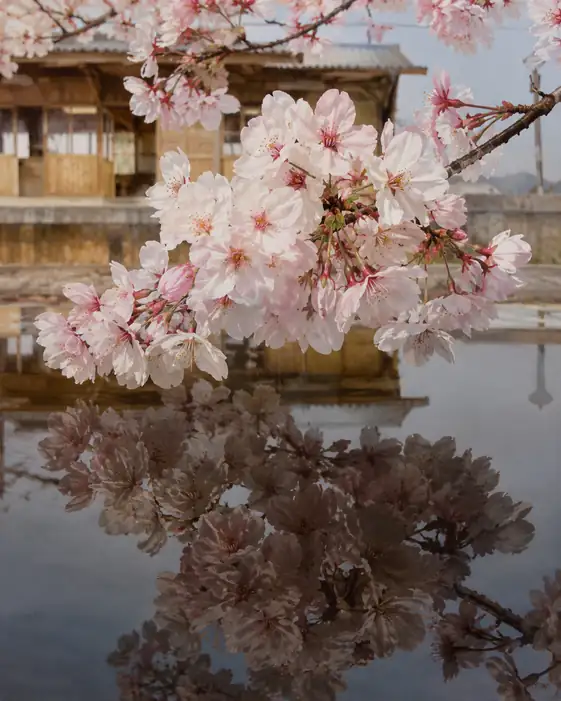 Symmetrical Reverie Above the Pool
 Gentle Breath Within the Cherry Mist
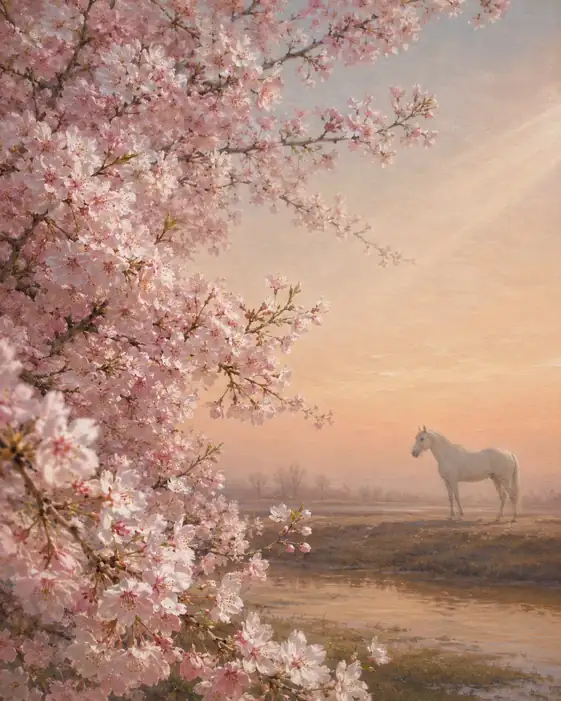 Silent White Horse Across the Cherry Stream
 Reflection of the Canopy in Rain-Soaked Stone
 Glistening Droplets Over the Lake of Blossoms
 Night Breeze Through the Cherry Canopy