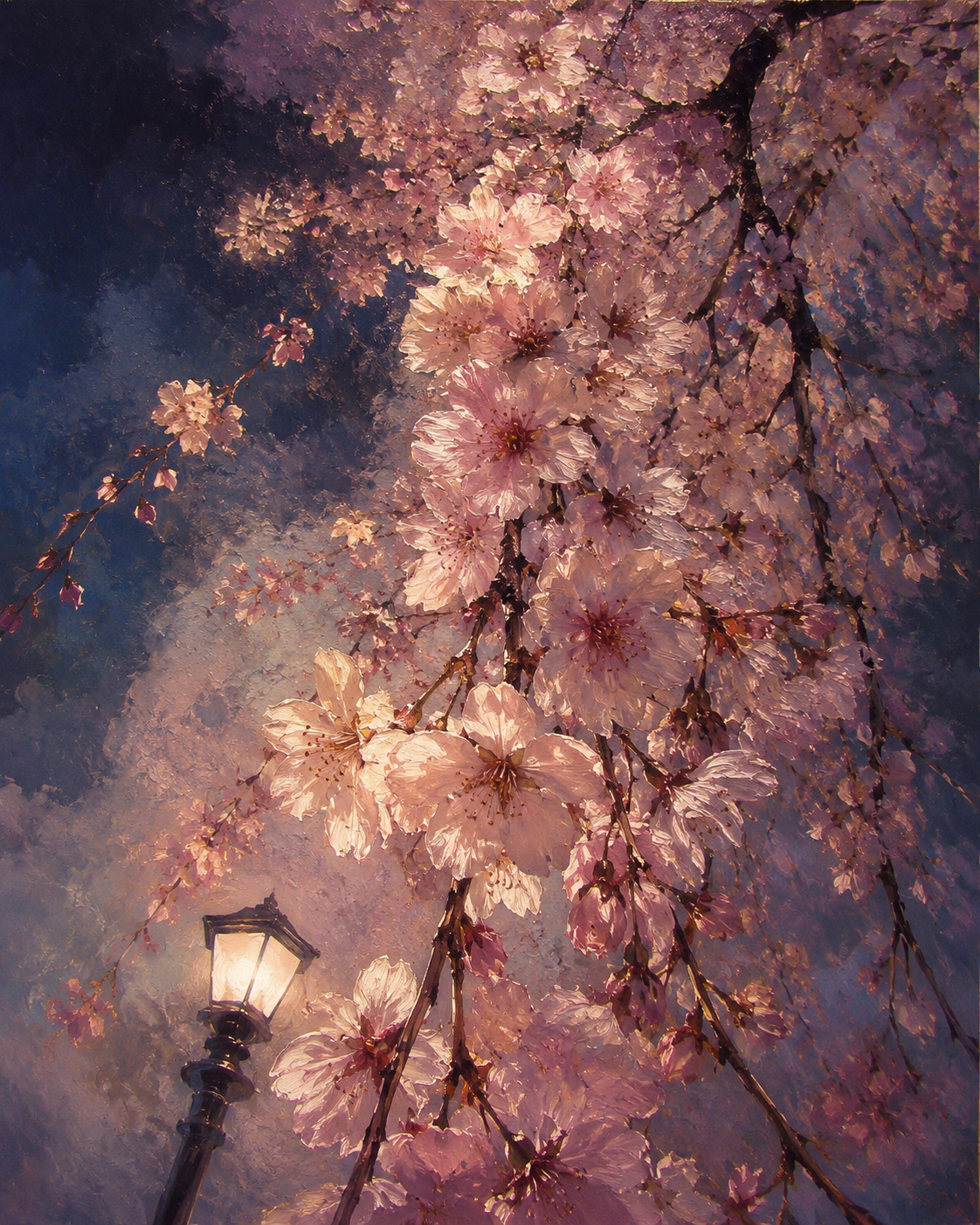
Night Breeze Through the Cherry Canopy
Critique
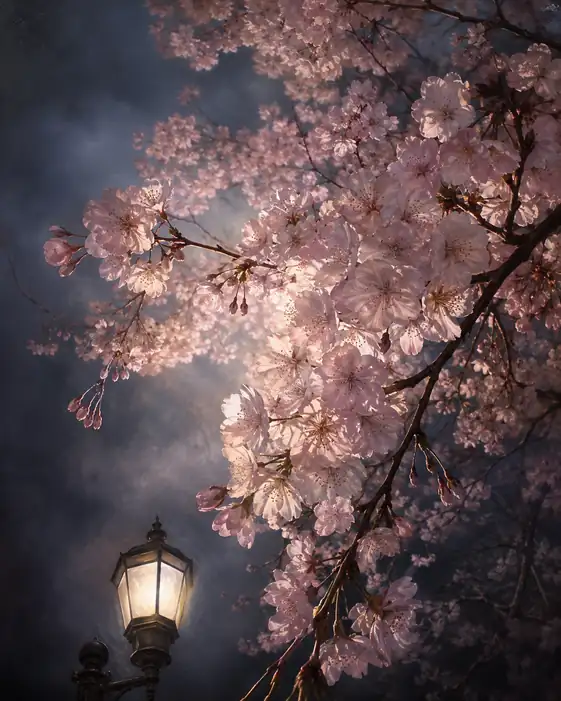
Introduction This twilight painting looks upward through dense cherry blossoms toward a modest streetlamp. The floral canopy dominates, while the lamp appears low and partly enclosed by branches. Public light becomes a quiet participant in seasonal spectacle. Description Thick clusters of pink blossoms cascade from the upper right through the center, connected by dark branching lines. Large individual flowers face the viewer amid smaller buds and distant masses. A black lantern rises from the lower left, its cream glass glowing softly. The background shifts from deep navy at upper left to smoky mauve and warm haze near the lamp. Petal-like flecks fill the atmosphere. Analysis The flower cascade forms a broad descending diagonal, countered by the lamp post’s upward thrust. Luminous blossoms repeat the lamp’s warm center at many smaller scales. Dark branches provide a structural web within the pink abundance. Thick petal strokes alternate with rubbed, atmospheric passages. The off-center lamp avoids competing with the canopy and establishes human scale. Deep blue shadow prevents the warm pink field from flattening. Interpretation and Evaluation The lamp reveals blossoms after daylight, extending the hours in which a public season can be shared. Yet it remains subordinate, illuminating rather than owning the view. The branches resemble a sheltering roof, with civic infrastructure beneath it. Familiar romantic associations are strong, but the dark sky and sparse peripheral twigs add melancholy. Celebration and lateness coexist. Conclusion The work succeeds by giving artificial light a supporting role. The lamp’s durability meets bloom’s short duration without trying to preserve it. Instead, illumination becomes an act of attention offered for one evening.
Same Subcategory
Similar Artworks
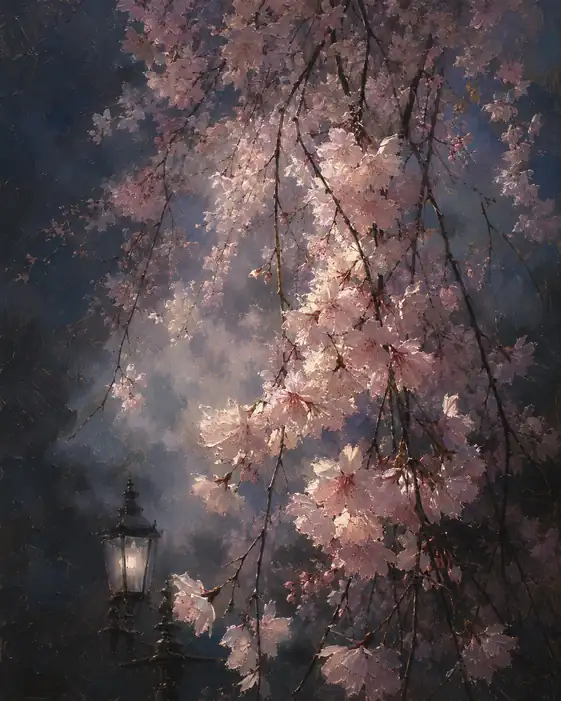 Canopy of Night Cherries Over the Lantern
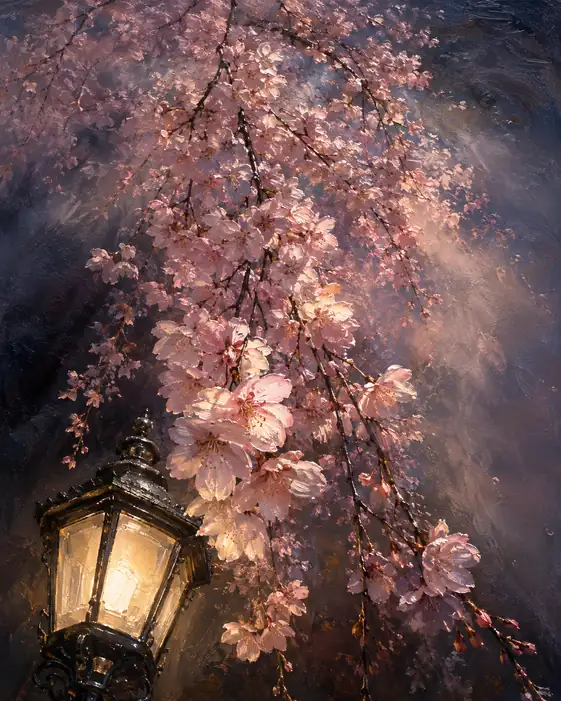 Golden Glow Beneath the Weeping Cherries
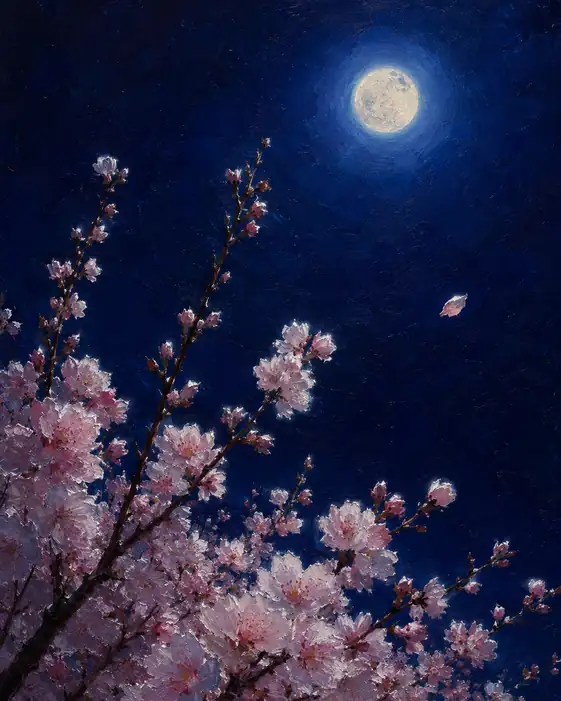 Full Moon in the High Azure Night
 Gaslight Glowing in the Cherry Night
 Layered Canopies in the Midnight Blue
 Distant Moon Halo Above the Midnight Blooms
 Reflection of the Canopy in Rain-Soaked Stone
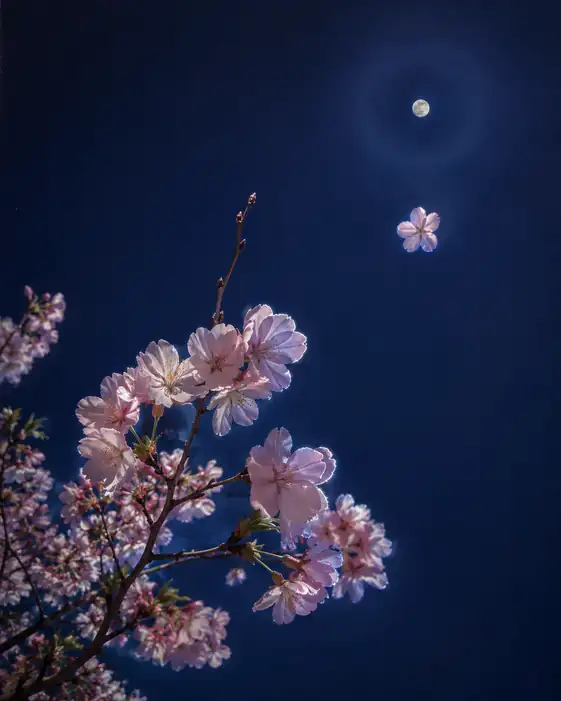 Slender Twigs Reaching for the Moon
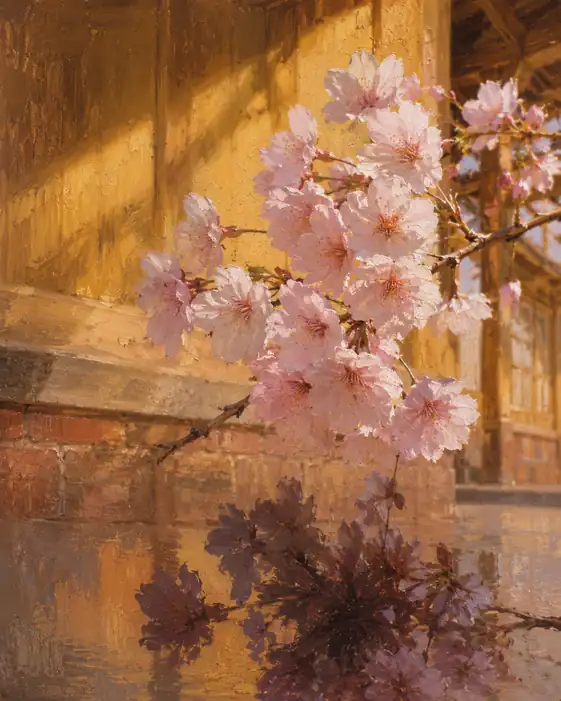 Blossoms Mirrored on Wet Earth and Timber
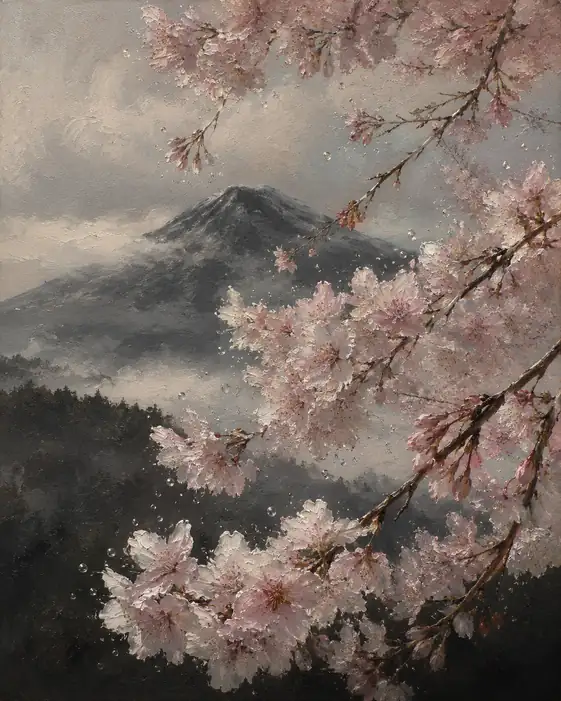 Sacred Peak Framed in Rain-Beaded Blooms