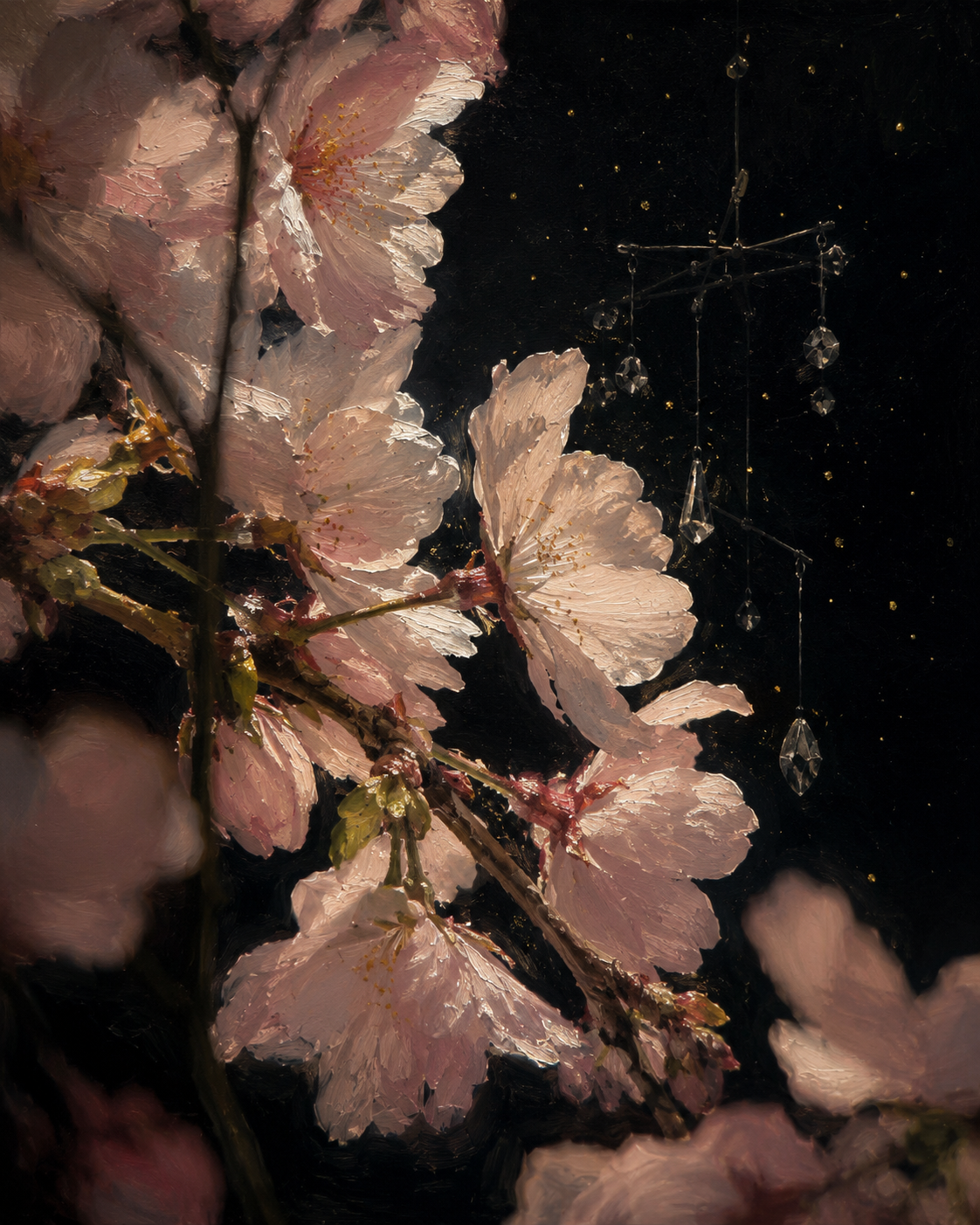
Crystal Drops and Midnight Blossoms
Critique
Introduction This nocturnal painting pairs close cherry blossoms with a delicate hanging mobile of crystal drops. Both catch sparse light against near-black space. Natural bloom and constructed ornament become parallel instruments for making darkness visible. Description Large pale pink blossoms and buds fill the left and lower portions, attached to dark diagonal branches. Their thick petals reveal warm ridges, yellow stamens, and thin crimson bases. At upper right, a nearly invisible cross-shaped wire structure suspends faceted clear pendants at different lengths. Tiny gold points scatter across the background. Several flowers at the edges blur, while central petals and crystals remain sharp. Analysis The composition balances the heavy floral mass at left with the airy mobile at right. Branch diagonals approach but do not touch its slender lines. Pale blossoms and transparent prisms share highlights while differing in volume. Deep black removes ordinary depth cues, making suspended forms appear cosmic. Thick impasto gives petals bodily presence; precise glints make crystal almost immaterial. Asymmetrical spacing preserves tension and quiet. Interpretation and Evaluation Flowers and crystals both depend on light, yet one grows and fades while the other is fashioned to endure. Their pairing considers different ways of preserving radiance. The mobile may suggest constellations, rain, or a memory device, but its faint structure resists fixed symbolism. Gold specks risk decorative sweetness; the severe darkness and rough branches provide restraint. Fragility is shared rather than sentimentalized. Conclusion The work succeeds by comparing organic and crafted transience without declaring a winner. Petals hold light through flesh; prisms hold it through refraction. Between them, empty night becomes an active field of relation.
Same Subcategory
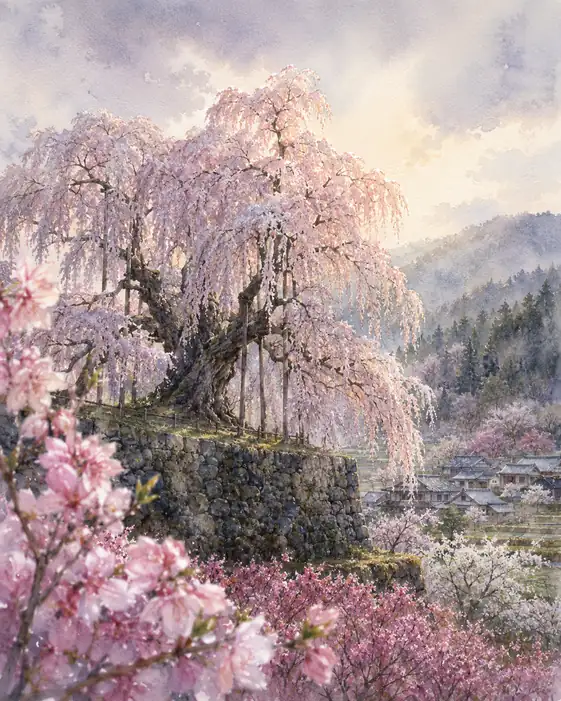 A Thousand Years Bloom Downward
Similar Artworks
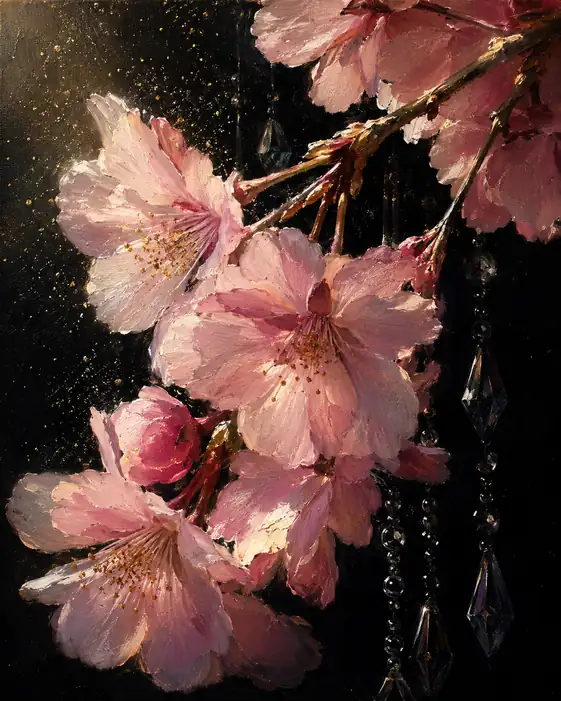 Chandelier of Blossoms and Light
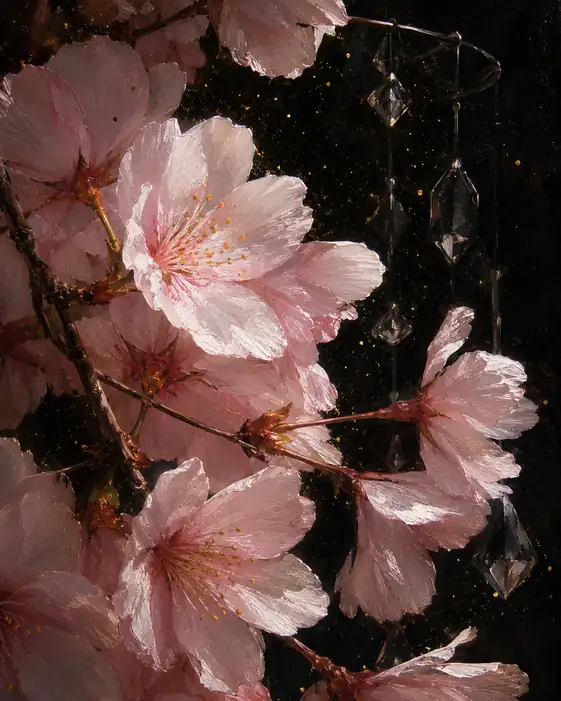 Petal and Prism in Midnight Velvet
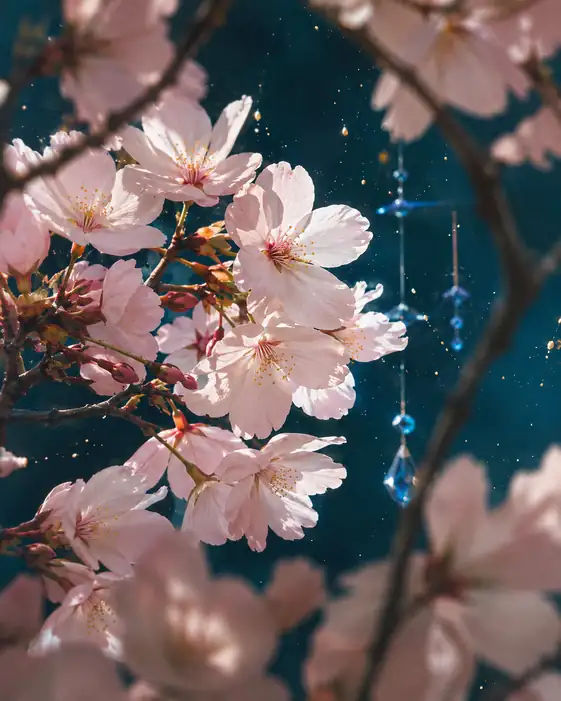 Prismatic Sunlight in the Azure Shadow
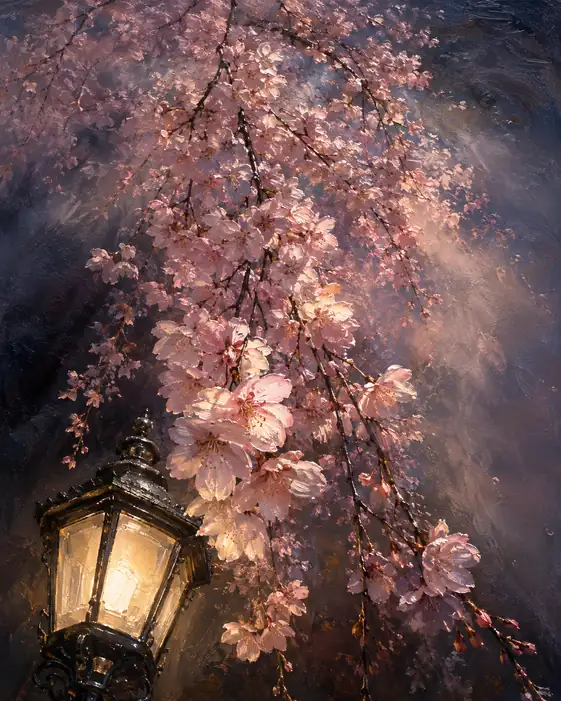 Golden Glow Beneath the Weeping Cherries
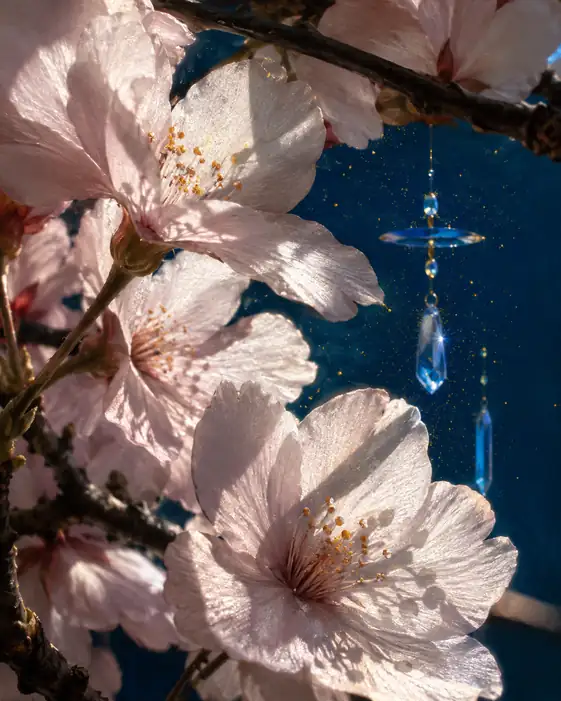 Theater of Light and Sapphire Facets
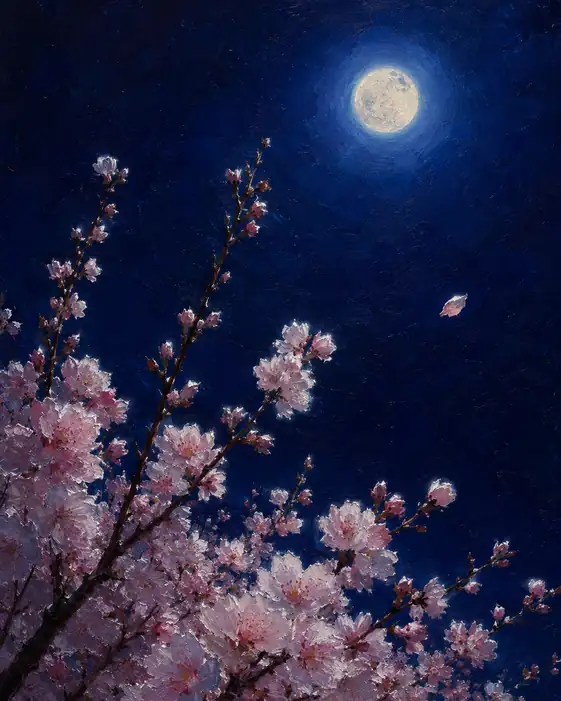 Full Moon in the High Azure Night
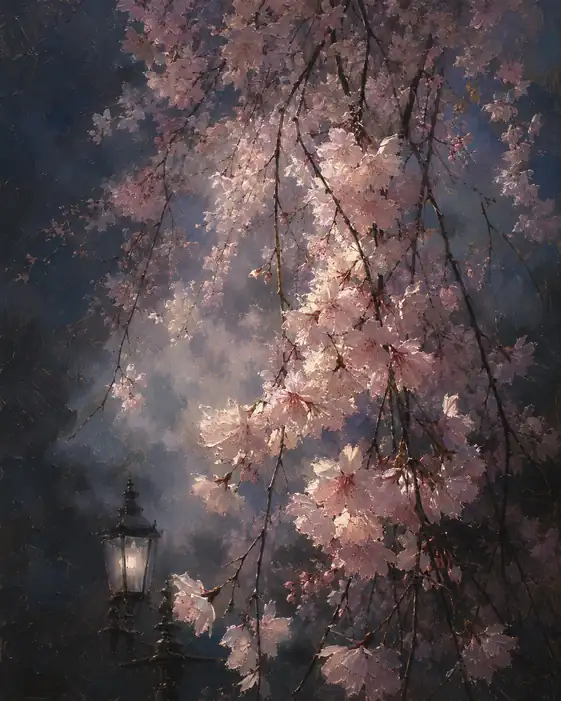 Canopy of Night Cherries Over the Lantern
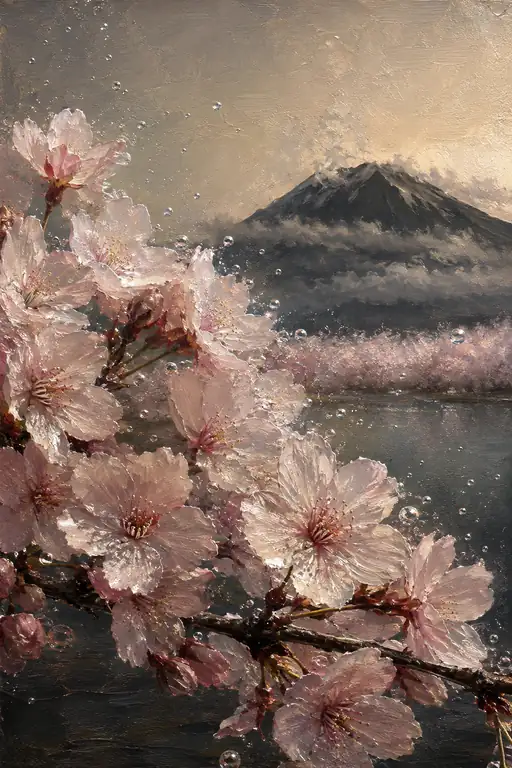 Glistening Droplets Over the Lake of Blossoms
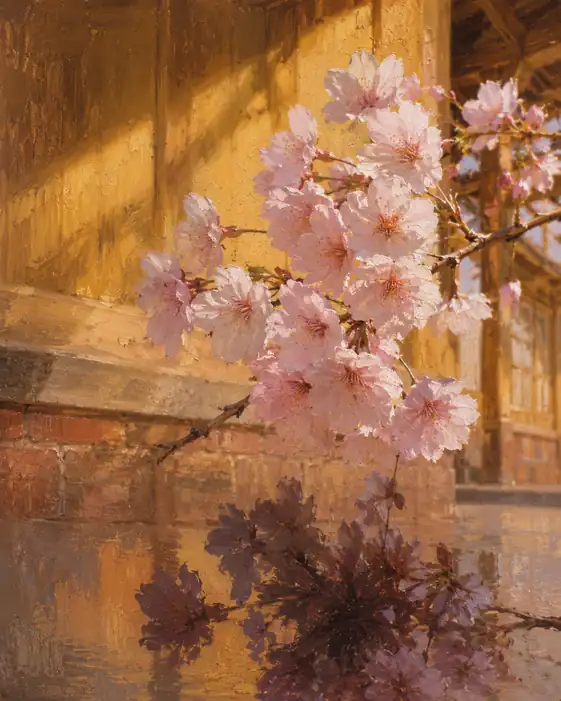 Blossoms Mirrored on Wet Earth and Timber
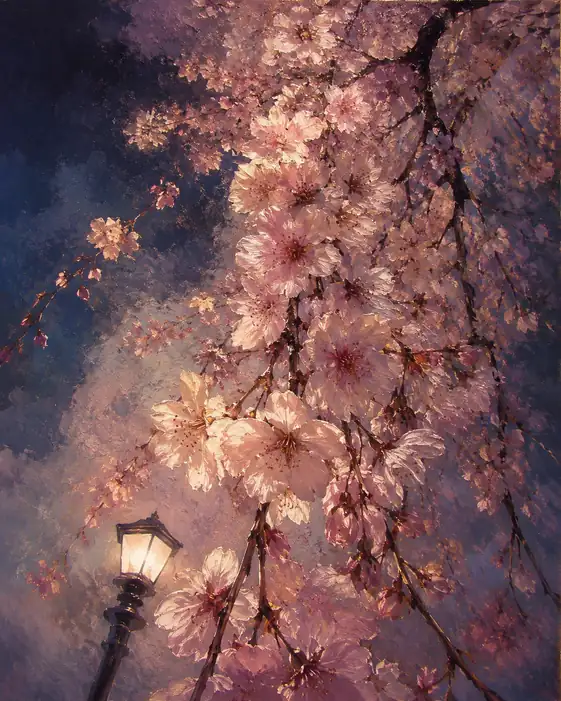 Night Breeze Through the Cherry Canopy