
Graceful Glance Beneath Cascading Wisteria
Critique
Introduction This portrait places a woman beneath cascades of wisteria. She turns over her shoulder holding a paper parasol, suspended between encounter and reserve. Floral repetition joins costume, hairstyle, and garden into a spring atmosphere. Description The figure occupies the center-right, wearing a purple kimono patterned with pale wisteria and a red-orange obi. Her formal black coiffure is decorated with combs, red ties, and hanging violet flowers. A translucent ribbed parasol opens behind her head. She holds its wooden shaft near her shoulder and looks calmly left. Dense wisteria curtains fill foreground and background, with petals crossing her cheek and warm sunlight filtering through. Analysis The parasol forms a circular halo behind the head, stabilizing the diagonal pose. Hanging flower clusters create vertical rhythm, while the gaze moves horizontally through them. Purple repeats across living blooms, fabric, and ornaments; red accents define collar, hair, and obi. Soft foreground blur increases depth and privacy. Fine facial modeling contrasts with broken floral texture. Backlight traces face, hand, and parasol ribs, organizing an otherwise abundant surface. Interpretation and Evaluation The coordinated motifs can suggest harmony between personal presentation and season, but the woman’s sideways glance prevents her from becoming a static emblem. She appears aware of being seen while retaining inward distance. The parasol protects and displays simultaneously. Idealized beauty and historical styling are pronounced, yet the poised hand and restrained expression introduce agency. A loose petal on her cheek makes ceremonial control vulnerable to weather. Conclusion The work succeeds by balancing ornament with psychological presence. Repeated wisteria binds figure and environment, while gaze and posture preserve distinction. Beauty becomes an active negotiation between belonging to a tradition and remaining privately oneself.
Same Subcategory
 Warm Luminescence Rising in Darkness (No. 25)
 Gentle Heritage Held in Tender Hands
Similar Artworks
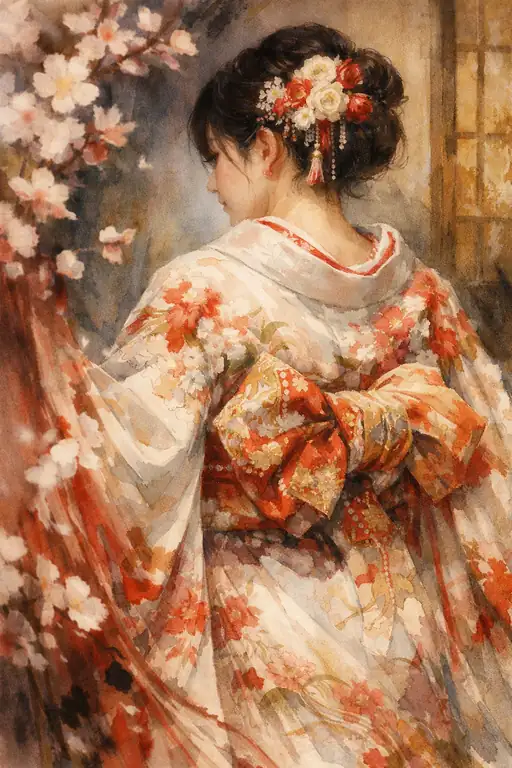 Whispers of the Spring Breeze
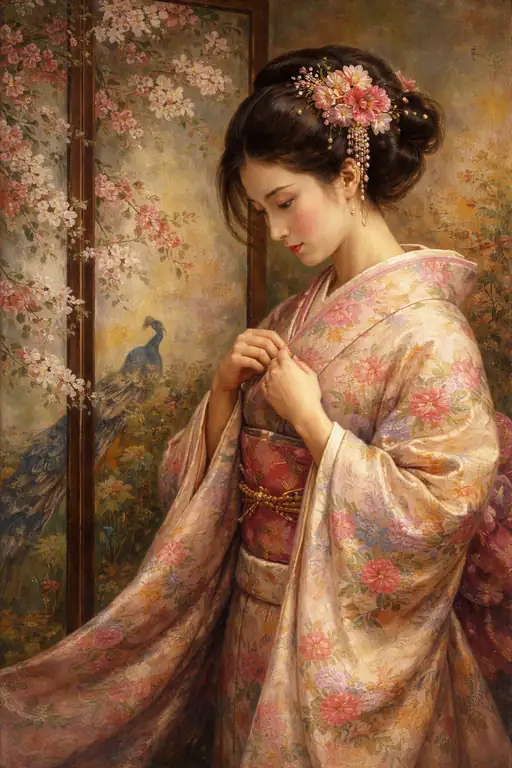 A Dream Woven in Sakura and Silk
 Ephemeral Elegance in Bloom
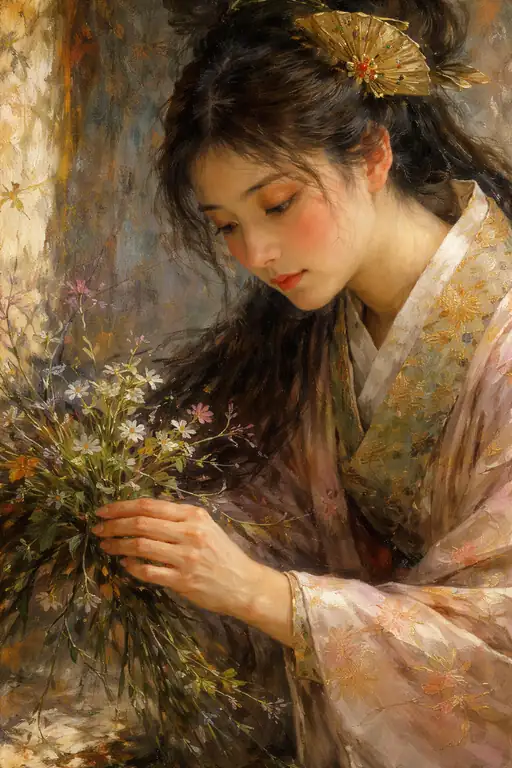 A Melancholy Gaze Adorned with Wildflowers
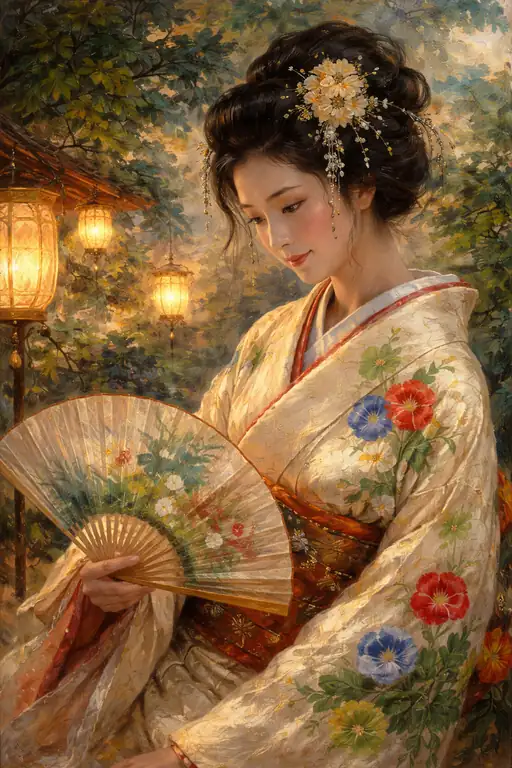 Grace Behind the Painted Fan
 Spring's Silent Reverie
 Whispers of Silk and Sunlight: A Moment of Grace
 Fleeting Grace in the Spring Breeze
 Melody in the Indigo Night
 The Hidden Observer's Gaze