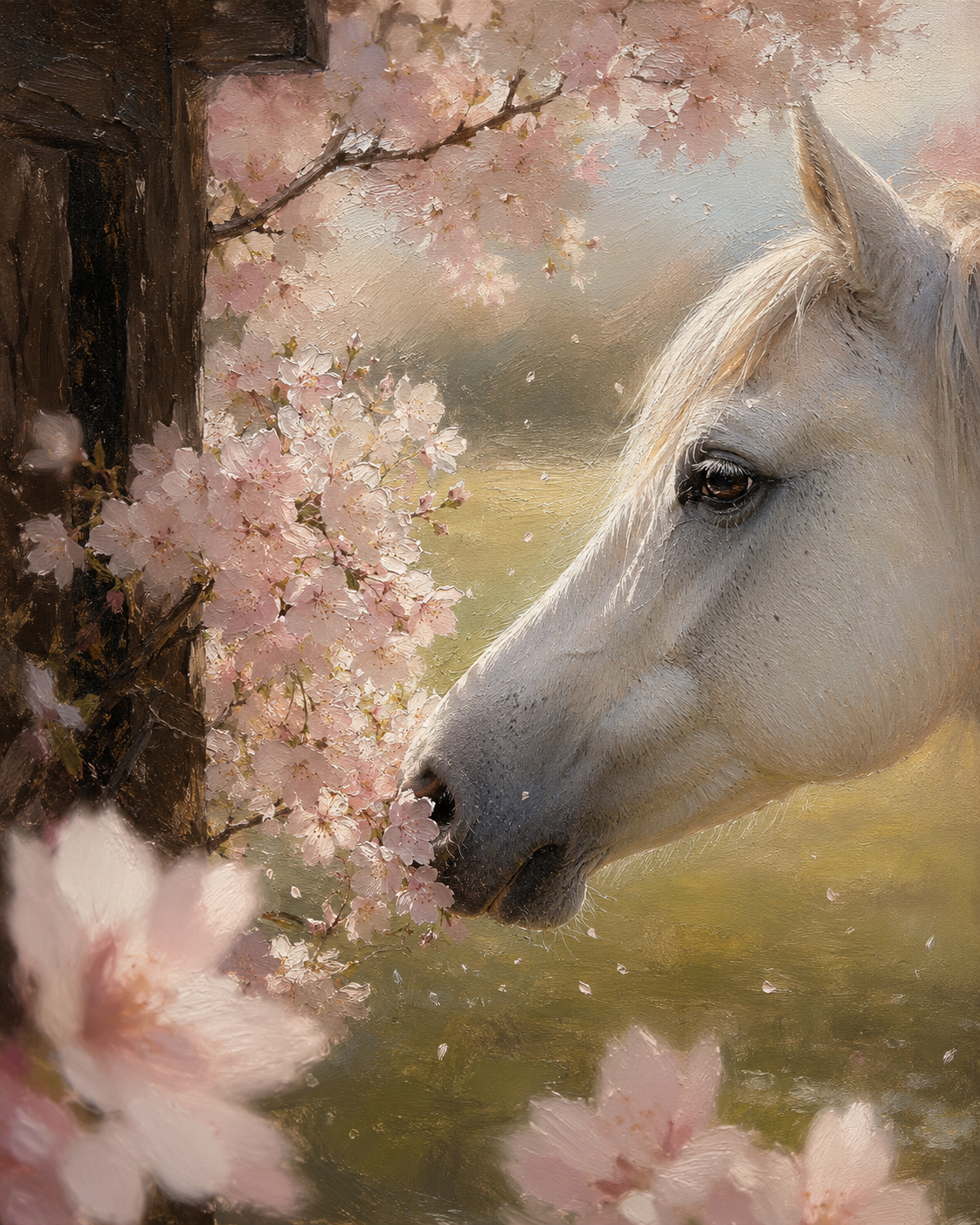
Breath of Spring Beside the Gentle Steed
Critique
Introduction This intimate portrait shows a white horse extending its head through cherry blossoms beside a dark wooden stable. The animal’s calm eye becomes the focal point amid drifting petals and soft spring light. Strength is presented through receptivity rather than action. Description The horse’s head and long neck fill the right half in profile. Fine cream hairs cross its forehead, one ear rises sharply, and a dark reflective eye looks left. Its gray muzzle approaches clusters of pale pink blossoms growing beside the stable opening. Large blurred flowers frame the lower foreground. Petals drift across a muted green field and hazy background under warm light. Analysis The horse’s pale triangular profile advances against subdued green, while the dark doorway balances it at left. Blossom branches create a diagonal bridge between architecture and animal. Fine strokes define hair, lashes, whiskers, and muzzle; thicker flower marks and soft distance provide contrast. Pink, cream, brown, and olive form a restrained harmony. The eye’s glossy highlight concentrates emotion without humanizing the animal excessively. Interpretation and Evaluation The horse appears to smell or quietly inspect the blossoms, making attention reciprocal: animal and season meet at close range. Petals emphasize transience, while the stable and mature body suggest continuity and care. The image risks prettiness, but the heavy muzzle, weathered wood, and alert ear preserve physical presence. Its tenderness comes from observed restraint rather than dramatic gesture. Conclusion The work succeeds by giving stillness expressive weight. Flower, eye, and breath occupy the same intimate interval. Spring is not merely scenery around the horse; it becomes something the animal encounters, and through that encounter the viewer notices it anew.
Same Subcategory
 Thunder of Hooves beneath the Evening Sun
Similar Artworks
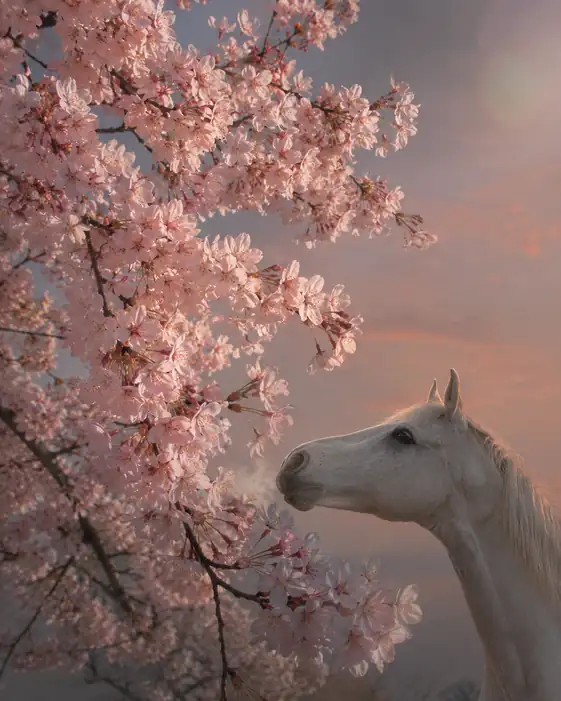 Tender Encounter at Sunset
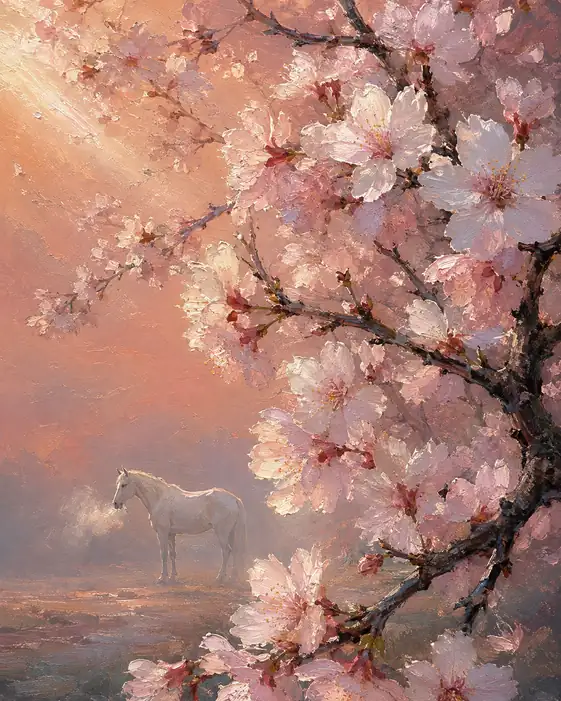 Gentle Breath Within the Cherry Mist
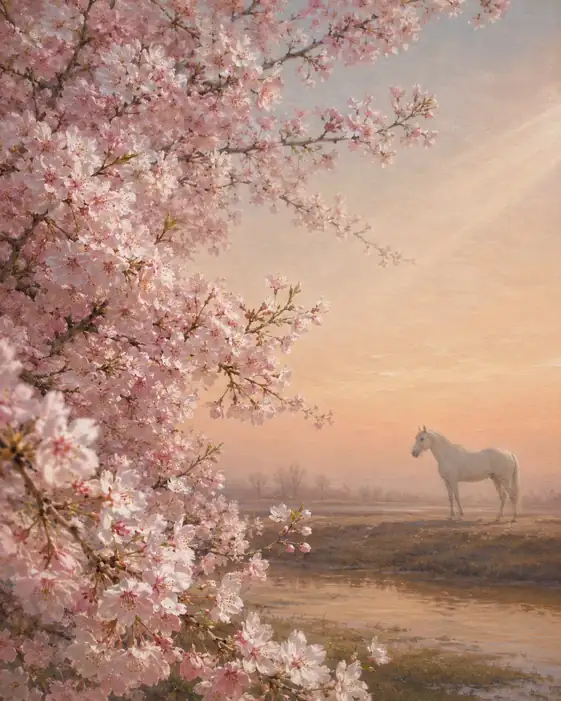 Silent White Horse Across the Cherry Stream
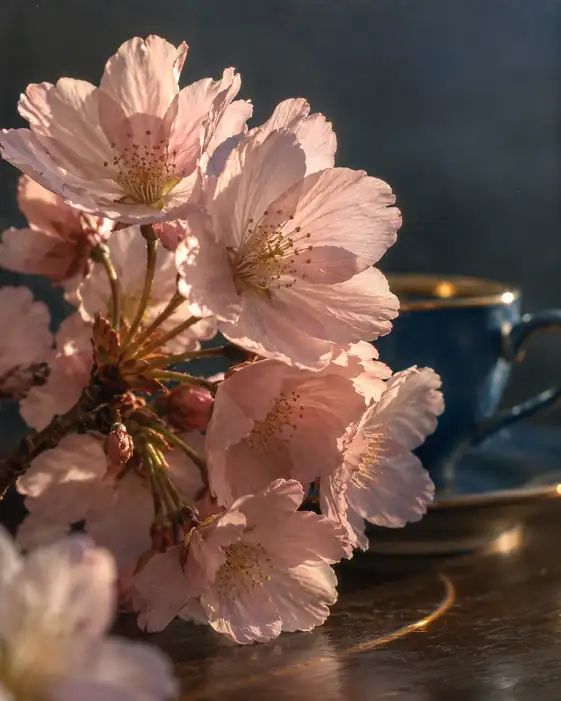 Shadows and Blossoms on the Dark Wood
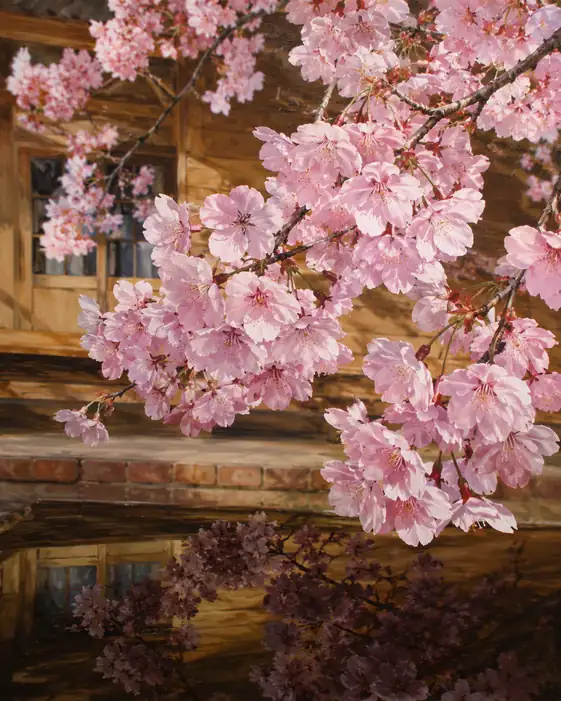 Spring Reflected on Still Water and Timber
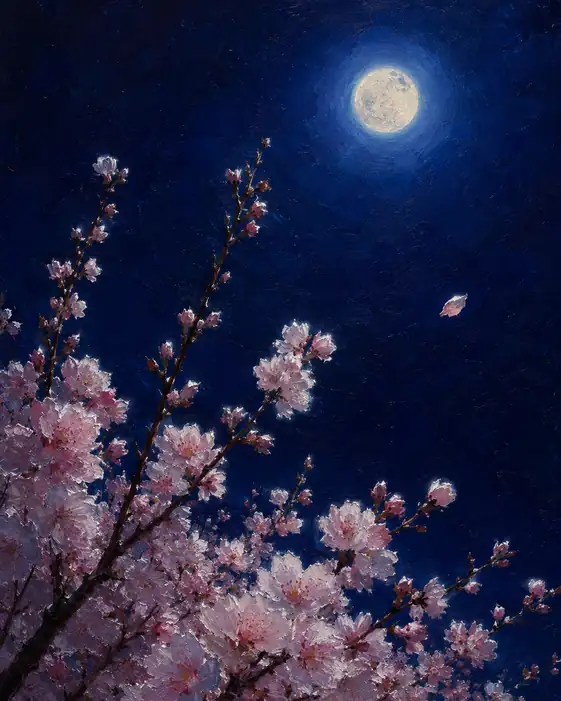 Full Moon in the High Azure Night
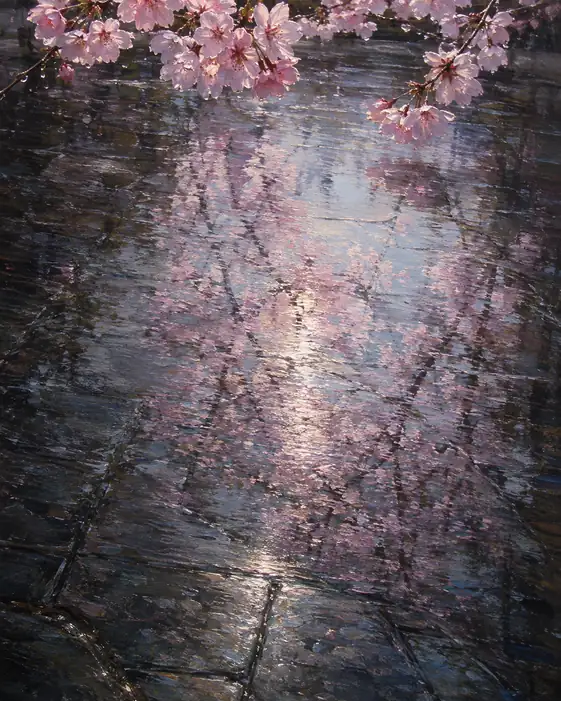 Reflection of the Canopy in Rain-Soaked Stone
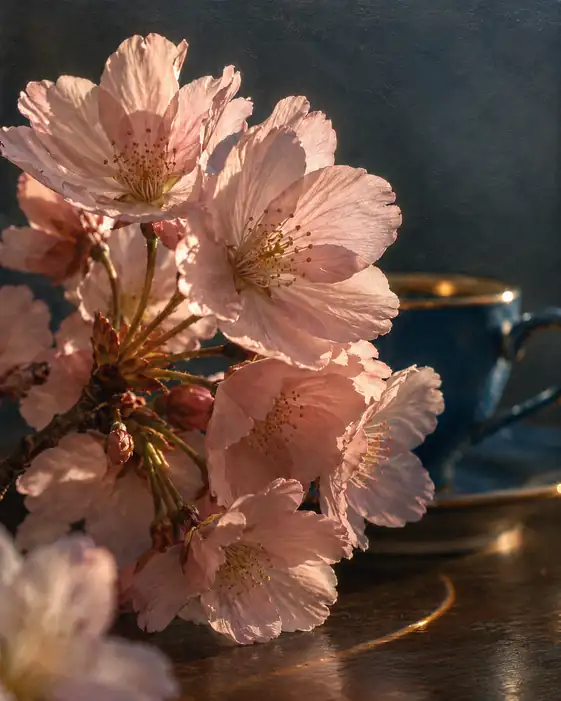 Morning Tea Beside a Branch of Bloom
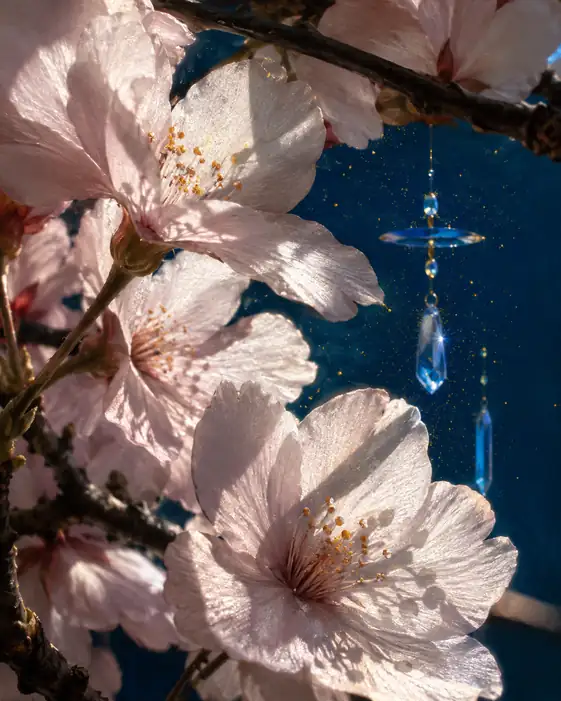 Theater of Light and Sapphire Facets
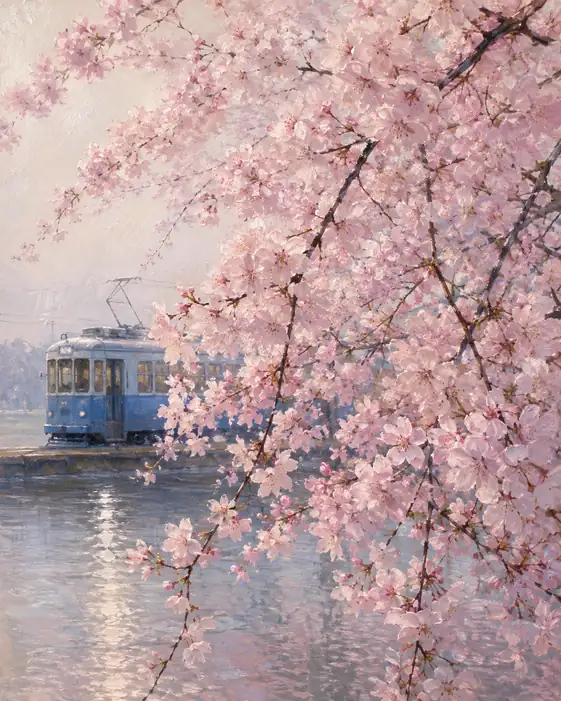 Blue Tram Gliding Through Springtime