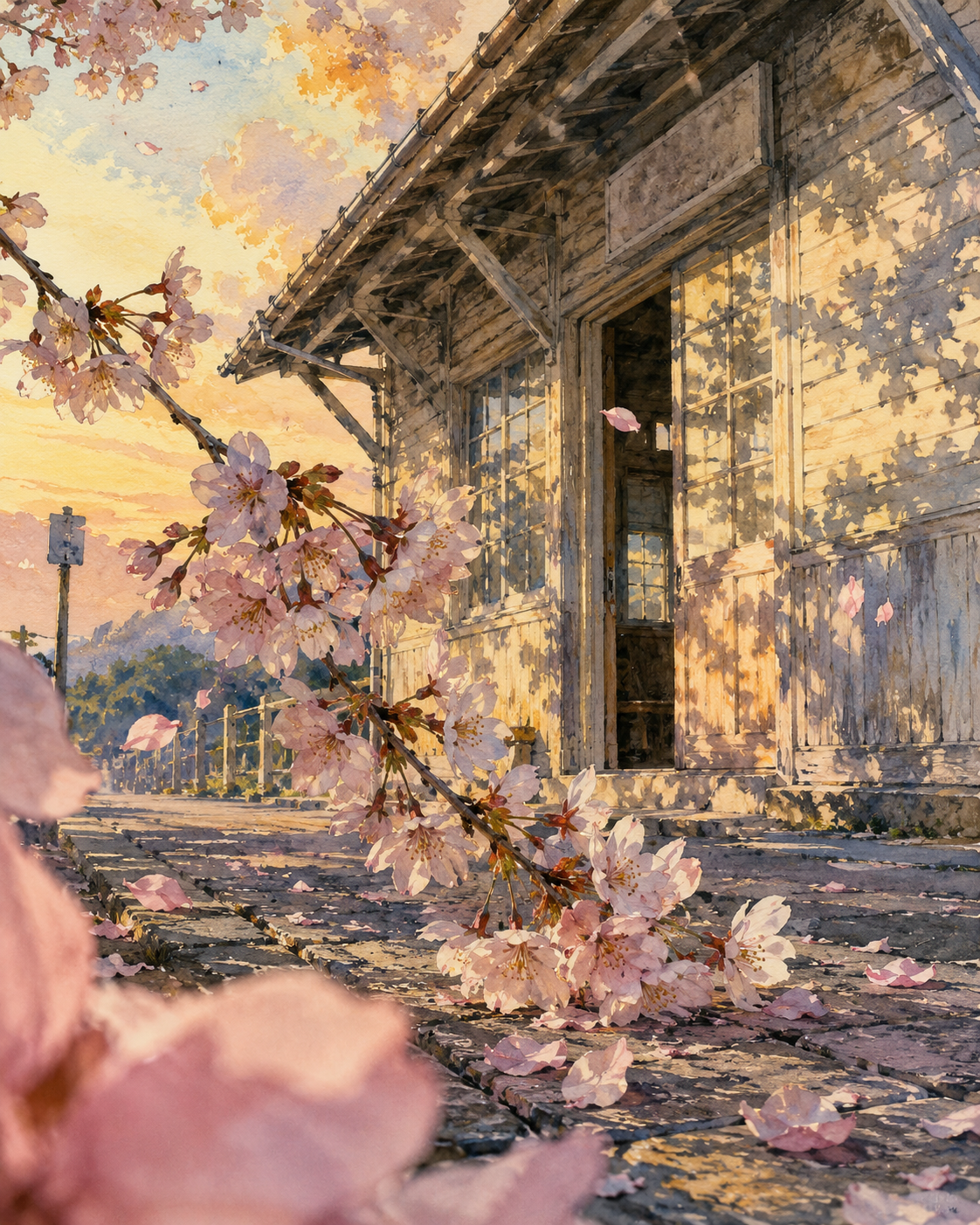
Nostalgia of a Wooden Station in Bloom
Critique
Introduction This watercolor views an old wooden station or rural building through a low branch of cherry blossoms. Warm evening light touches weathered boards and scattered petals. Seasonal renewal and architectural age meet without erasing one another. Description A flowering branch runs diagonally from upper left toward lower center, its pale pink clusters sharply articulated. Large blurred blossoms fill the nearest lower edge. Behind them stands a long timber building with deep eaves, exposed braces, multipane windows, an open doorway, and a faded signboard. Cracked paving extends beside a simple fence toward distant hills. Petals drift through gold and lavender sky. Analysis The blossom diagonal crosses the building’s strong roofline and guides sight toward the doorway. Repeated window rectangles and horizontal boards establish order, while flowers and shadows break it. Warm yellow light catches façade, pavement, and petals; gray-brown wood supplies restraint. Focus moves from blurred foreground to sharp branch, then softer architecture, creating layered depth. Watercolor washes describe sky and shadow, while dry marks emphasize aged timber. Interpretation and Evaluation The open door suggests that the old structure still receives passage, even if no traveler appears. Blossoms make time visible at a seasonal scale; worn boards measure it through accumulated years. Their juxtaposition avoids treating decay as simple loss. Instead, renewal illuminates what endures. Nostalgia is evident, but cracked paving, faded signage, and empty windows keep it from becoming purely sentimental. Conclusion The work succeeds by allowing fragile bloom and durable building to share one evening. Petals do not restore the past; they make its surviving textures newly perceptible. The station becomes a threshold where repeated spring encounters historical time.
Same Subcategory
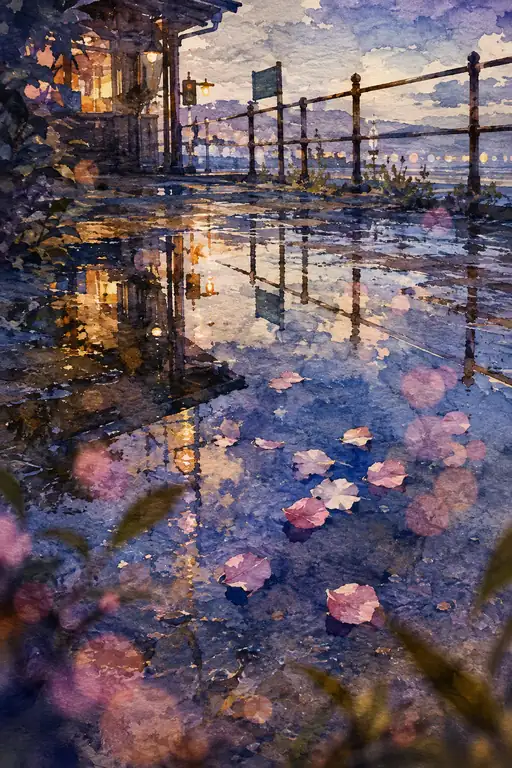 Petals Drift across the Station's Evening Mirror
Similar Artworks
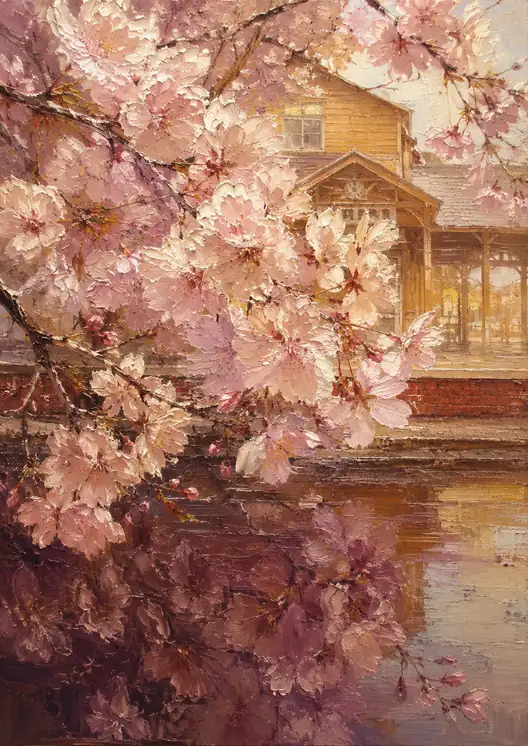 Station of Memories in Full Bloom
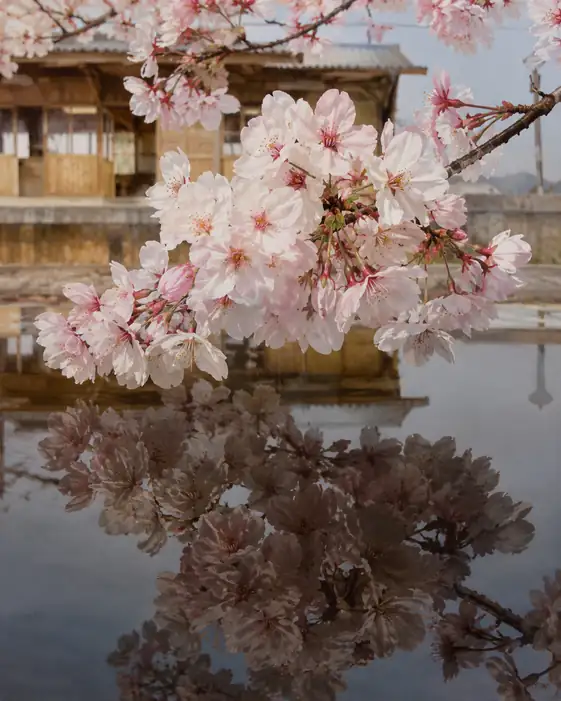 Symmetrical Reverie Above the Pool
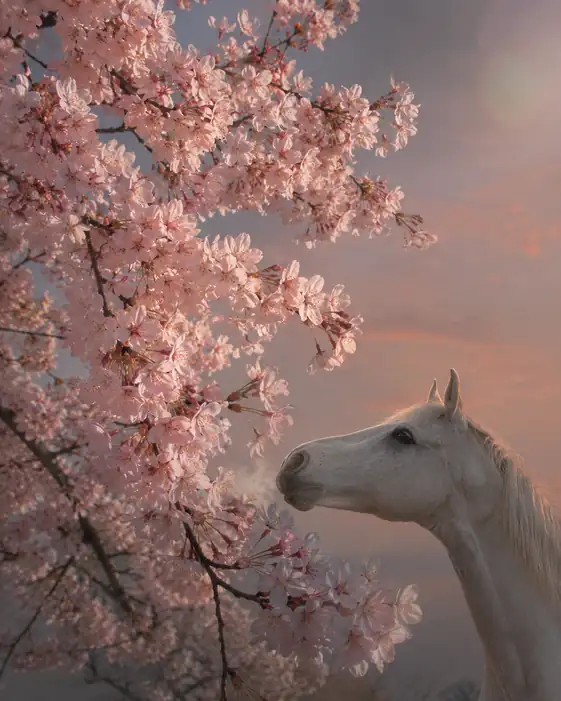 Tender Encounter at Sunset
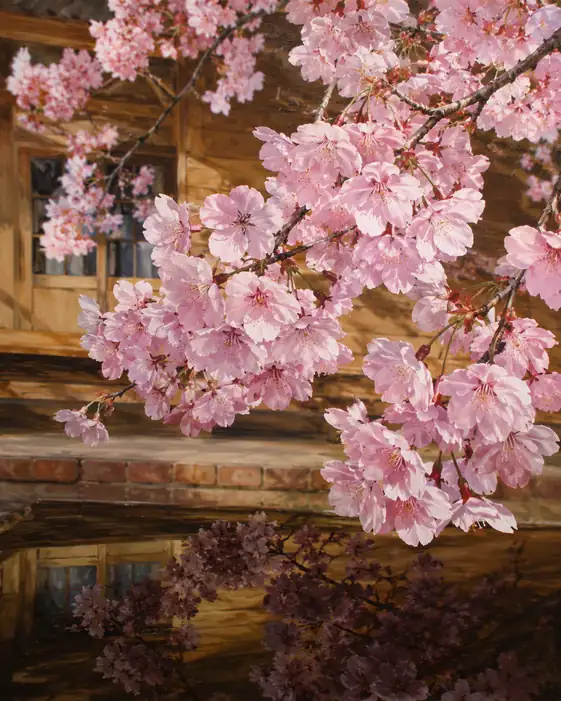 Spring Reflected on Still Water and Timber
 Gentle Breath Within the Cherry Mist
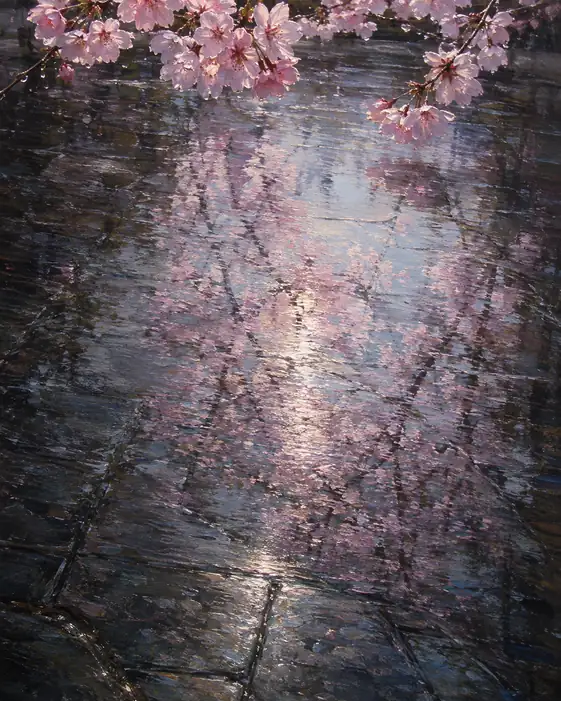 Reflection of the Canopy in Rain-Soaked Stone
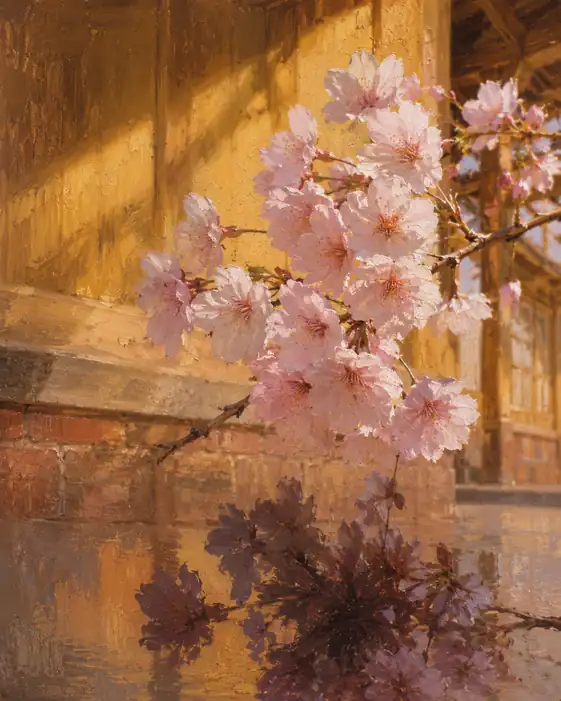 Blossoms Mirrored on Wet Earth and Timber
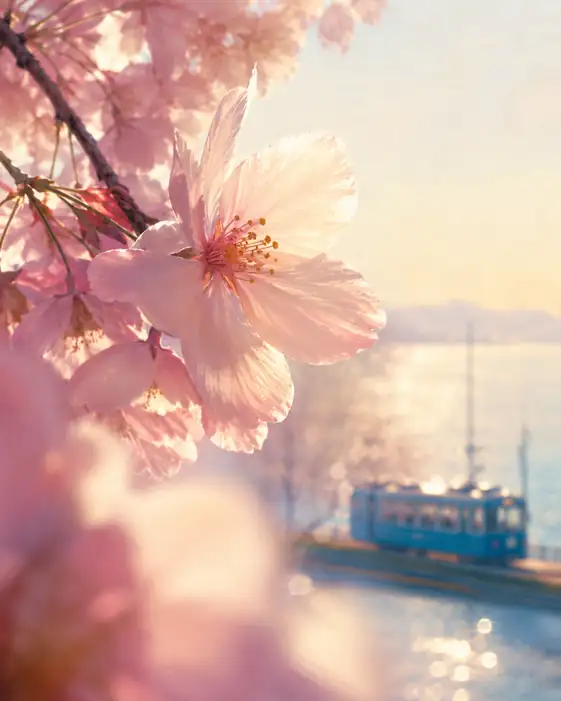 A Single Bloom Above the Coastal Rails
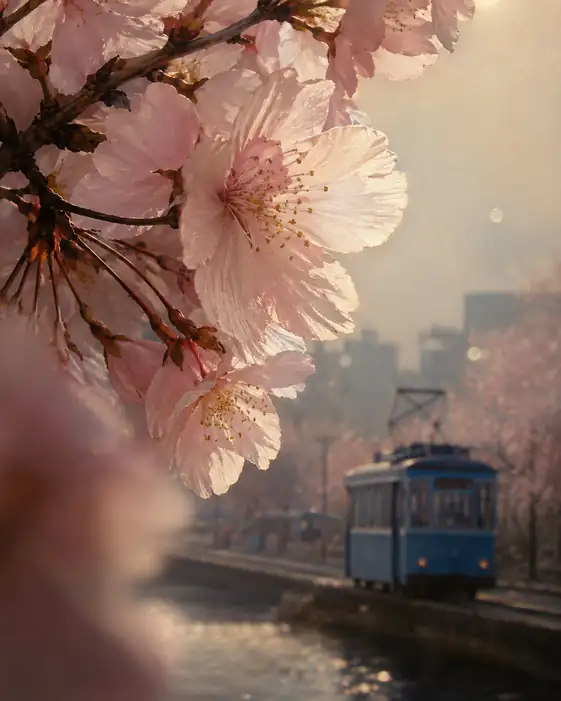 Backlit Petals Framing the Blue Tram
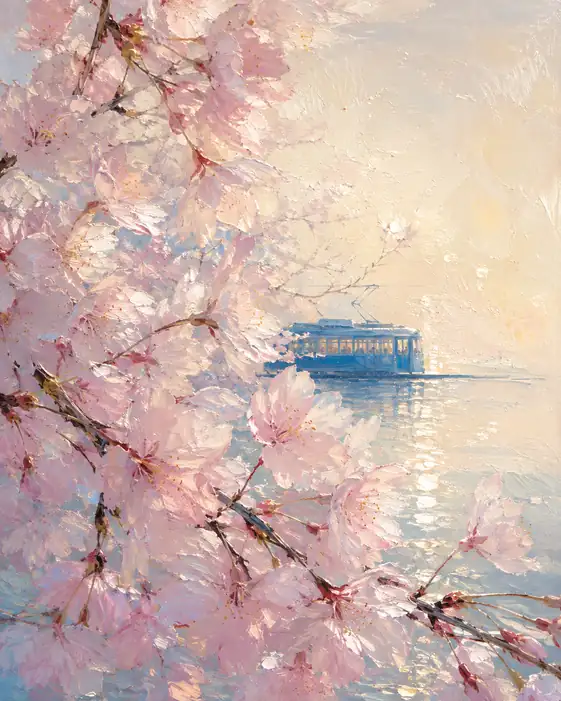 Luminous Memory Along the Coastal Track