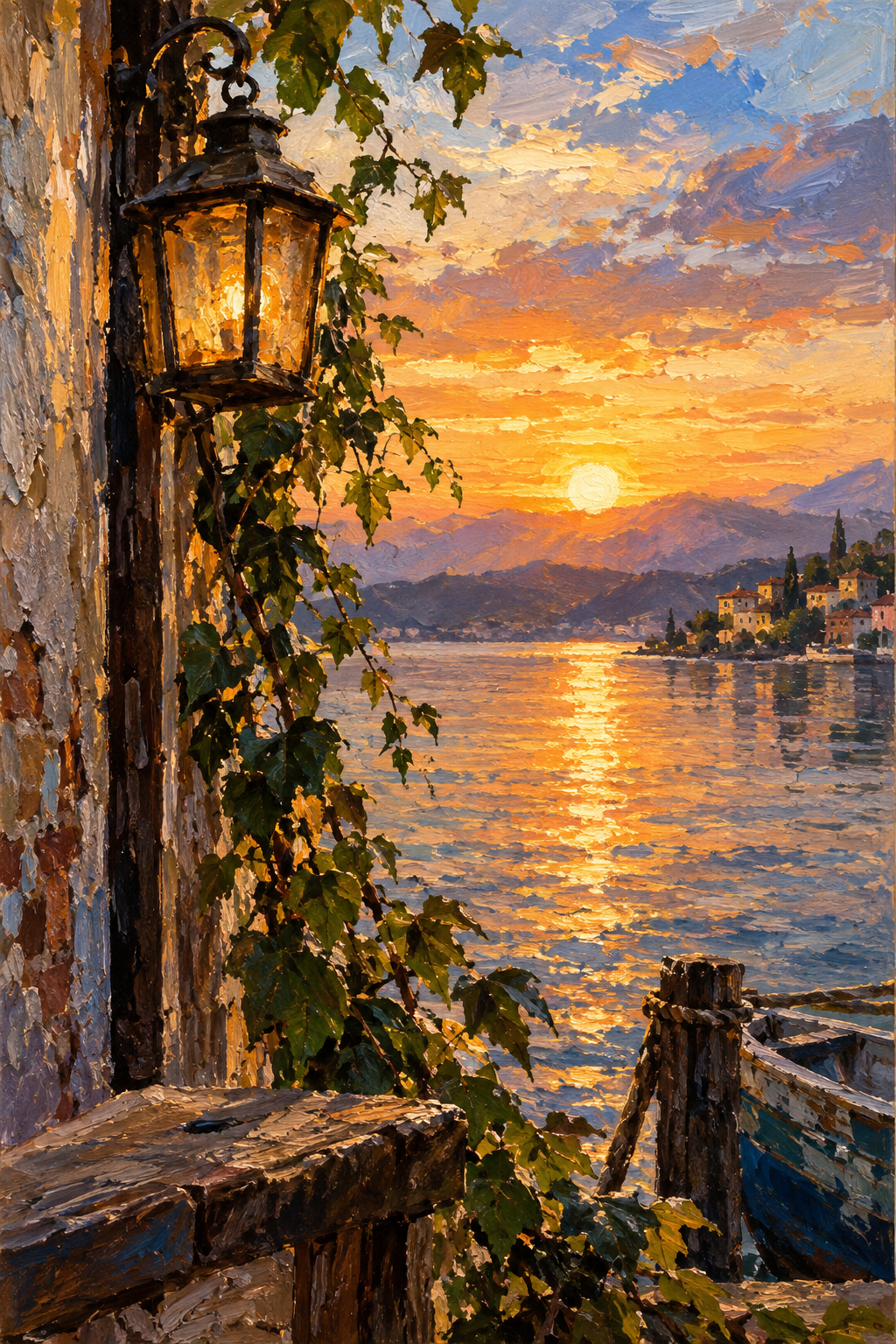
Magenta Cascade Over White Plaster
Critique
Introduction This painting views sunset beside an ivy-covered wall and lantern. A boat is moored while a village rests across water. Domestic objects and landscape share amber light, turning observation into belonging. Description A black metal wall lantern glows at upper left against rough stone. Ivy descends around it and across the lower edge. Beneath, a weathered wooden bench or sill projects toward the water. At right, part of a blue-and-white boat is tied to a post. The setting sun hangs above layered violet mountains, casting a broad gold path across rippled water toward clustered pale houses and dark cypress trees. Analysis The vertical wall and foliage frame the open horizontal lake, establishing a strong near-far contrast. Lantern and sun form two warm centers at different scales, linked by reflections on stone and water. The mooring post anchors the lower right and interrupts the luminous path. Thick, directional strokes build clouds, waves, plaster, and leaves, giving every surface tactile energy. Cool blue and violet temper the dominant orange without weakening its radiance. Interpretation and Evaluation The lantern duplicates sunset through human craft, bringing celestial distance to the scale of a doorway. The tied boat suggests travel held in reserve, while the opposite village offers a possible destination. Ivy connects built shelter to seasonal growth. The scene romanticizes the coast, yet ropes, worn wood, and rough wall maintain working life. Warmth belongs equally to home, route, and horizon. Conclusion The work succeeds by balancing departure with attachment. Boat and open water invite movement, but lantern, wall, and mooring hold the viewer near shore. Sunset becomes not an ending but a shared light through which distant and familiar places recognize each other.
Same Subcategory
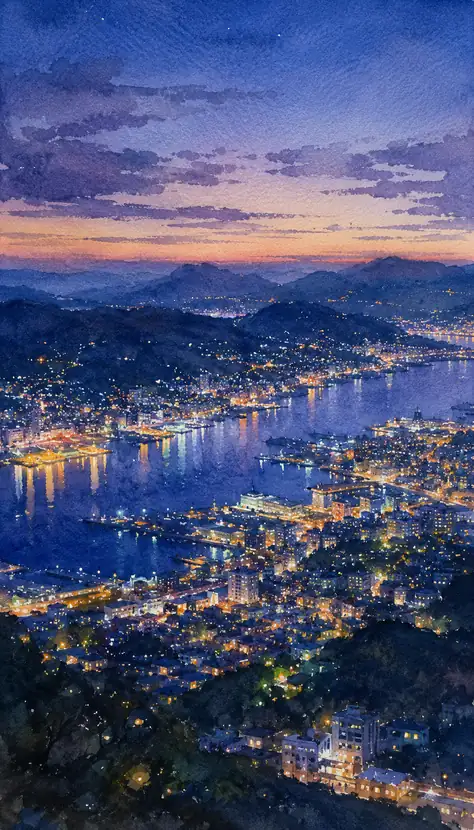 Night Learns the Shape of the Harbor
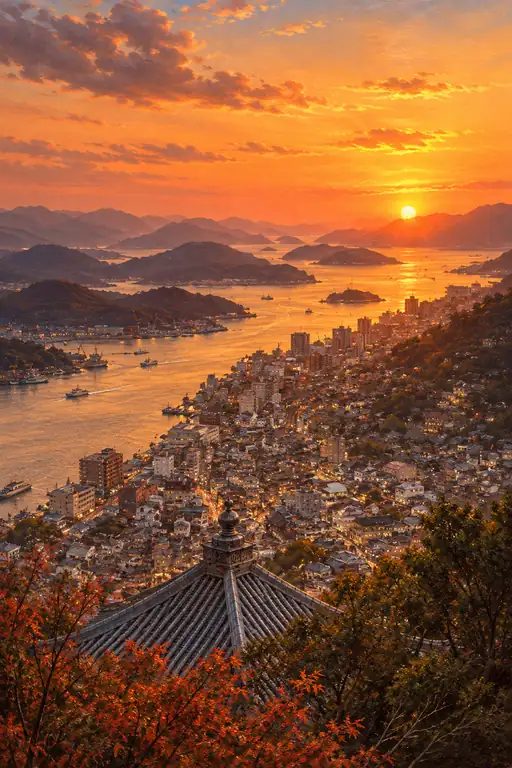 Golden Twilight Over the Narrow Sea
Similar Artworks
 Golden Dusk Aboard the Flower Boat
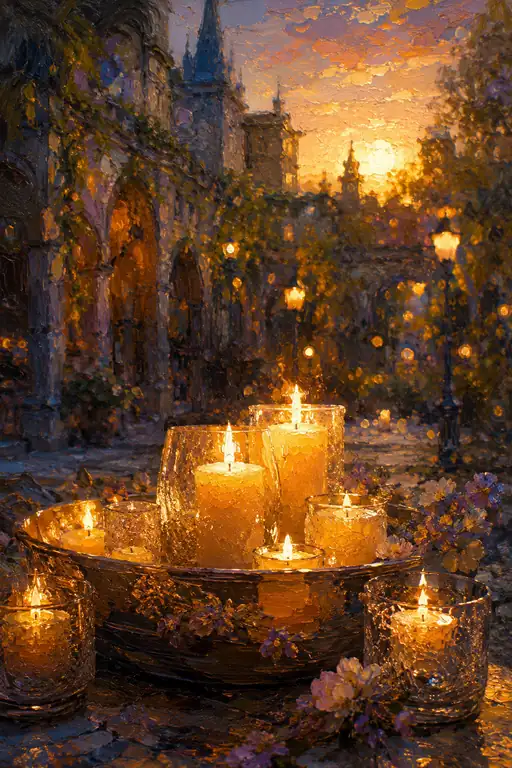 Bowl of Golden Flames in the Twilight Garden
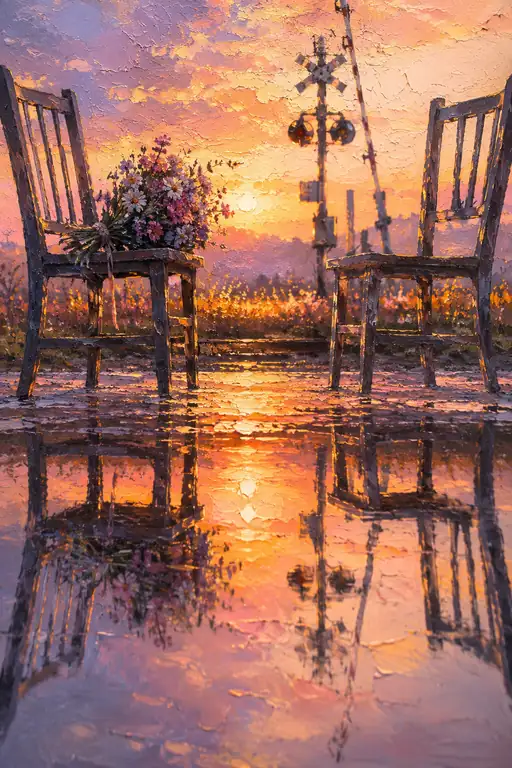 Sunset Bouquet on the Crossing Chairs
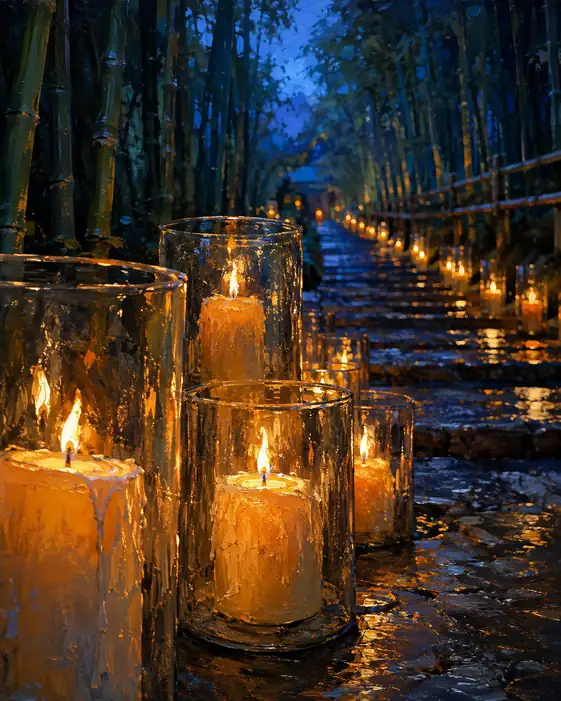 A Constellation of Candles on Forest Steps
 Evening Air Carried on Chimes
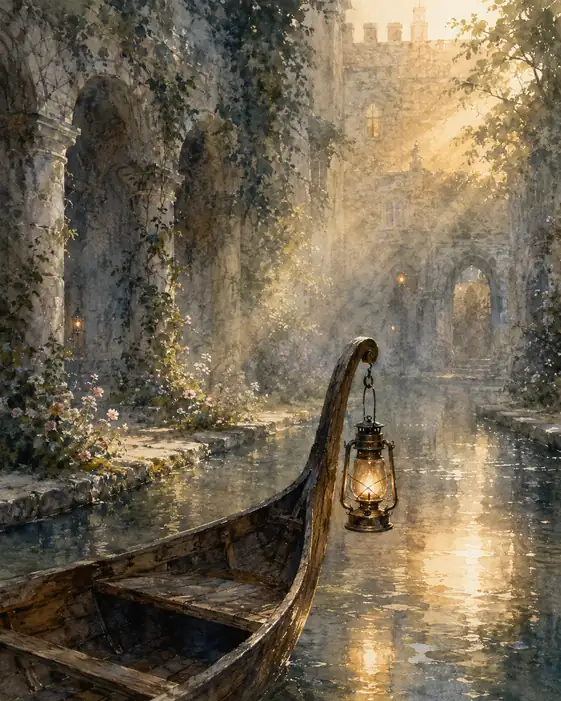 Golden Mist Drifting Through the Canal
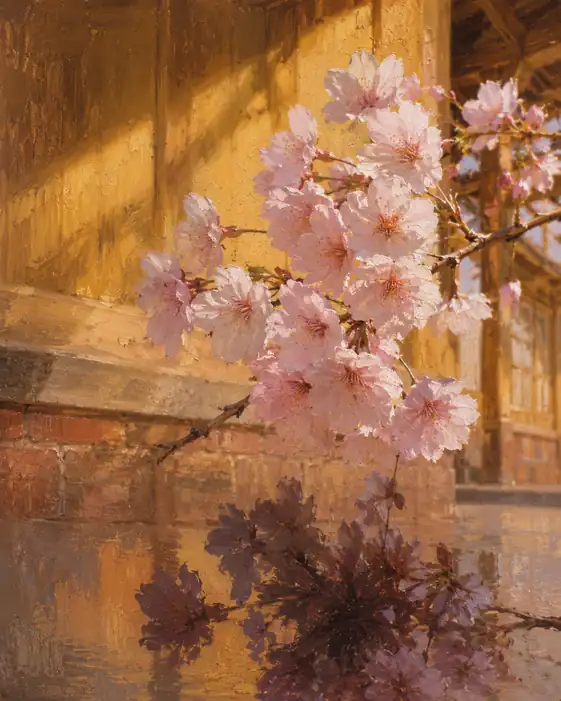 Blossoms Mirrored on Wet Earth and Timber
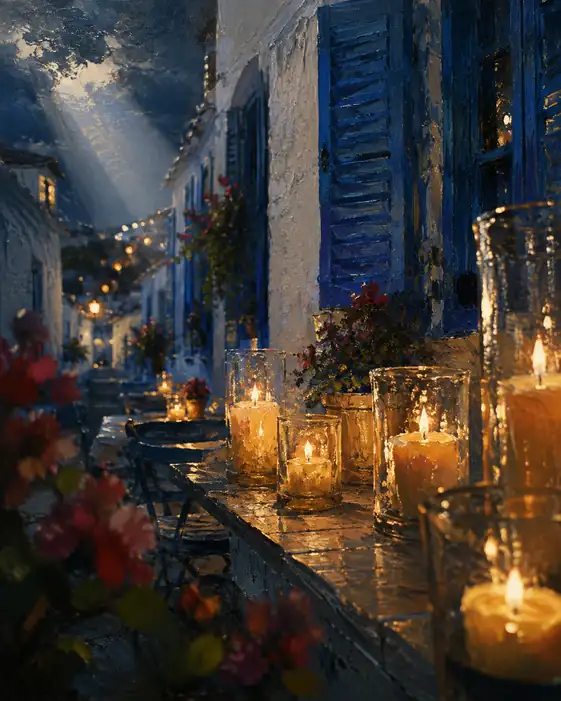 Tender Flame Kept from the Storm
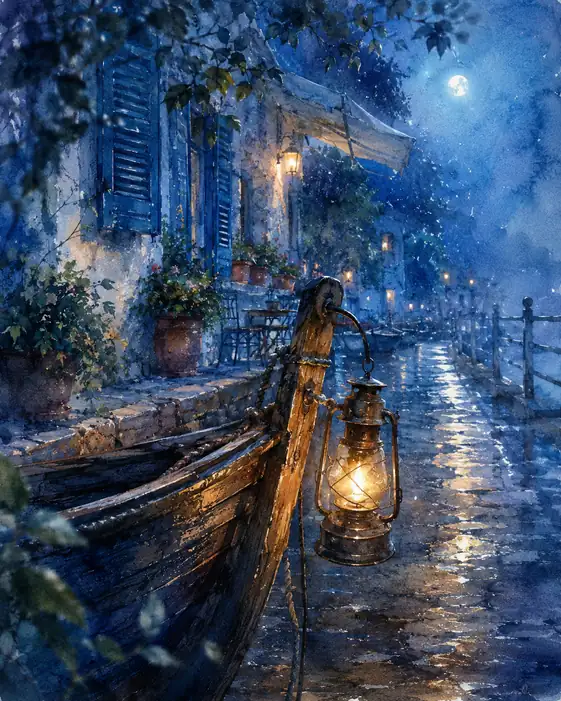 Moored to the Moonlit Tide
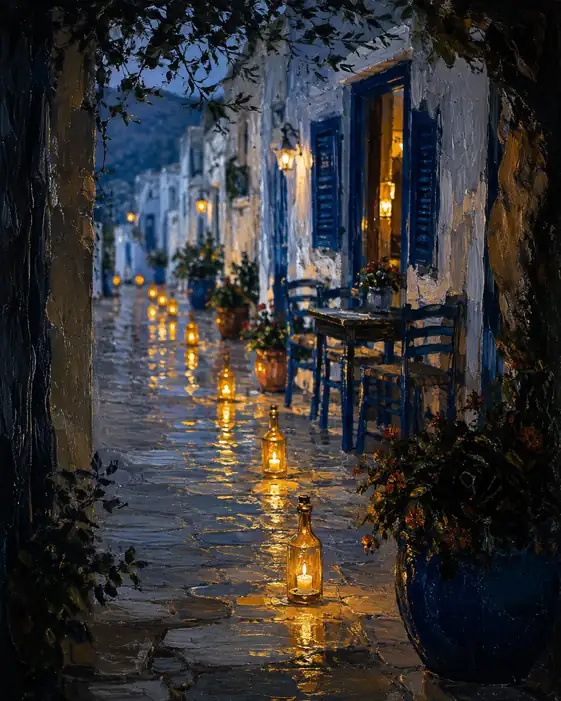 Trail of Small Flames Guided Home