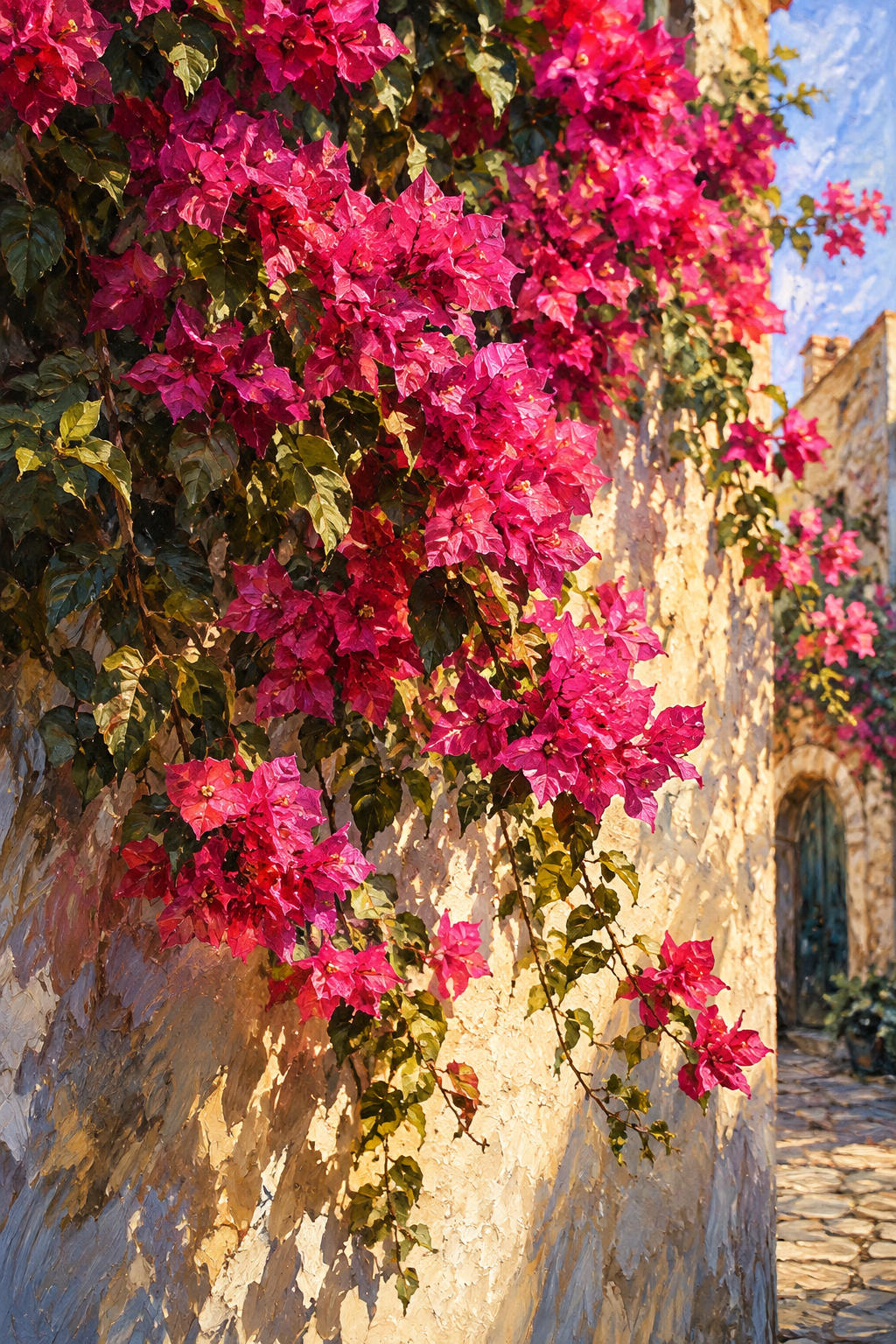
Cascade of Magenta Along the White Alley
Critique
Introduction This sunlit painting studies a wall overwhelmed by magenta bougainvillea along a narrow stone lane. The flowers occupy most of the frame, while architecture and sky appear in fragments. Botanical abundance becomes both subject and spatial force, reshaping the passage around it. Description Dense clusters of vivid pink-red bracts spill from the upper left across a rough cream wall. Small pale centers and dark green leaves punctuate the mass. Trailing branches descend toward the lower center, casting angular shadows. At right, a strip of blue sky, sunlit masonry, stone paving, and an arched dark doorway establish the lane’s depth. More blossoms recur near the distant building. Analysis The composition opposes the flower mass at left to the narrow architectural escape at right. Strong diagonals in trailing stems guide sight toward the doorway. Saturated magenta advances against cream, olive, and sky blue. Thick marks describe crumpled bracts; rough plaster catches similarly broken strokes, linking plant and wall through texture. Sharp foreground detail softens rapidly in the lane. Cast shadows double the vine’s structure and animate empty masonry. Interpretation and Evaluation The plant appears to exceed cultivation, claiming architecture without destroying it. Its abundance can signify vitality, hospitality, or seasonal intensity, while the visible thorns and hard light complicate pure sweetness. The doorway remains distant and dark, so beauty does not disclose the private interior. The painting idealizes Mediterranean color, but cracks, irregular growth, and fallen light preserve material specificity. Openness and privacy coexist. Conclusion The work succeeds by treating bloom as architecture. Flowers frame, shade, direct, and partially conceal the path. Their temporary intensity reorganizes durable stone, showing how a season can briefly redefine an entire place.
Same Subcategory
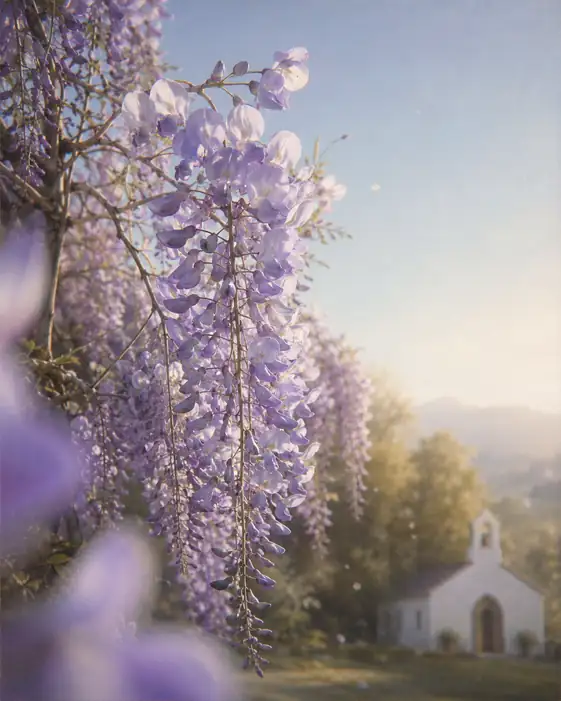 White Chapel Framed in Wisteria
Similar Artworks
 An Unspoken Promise on Cobalt Wood
 Sunlit Archway Draped in Blooms
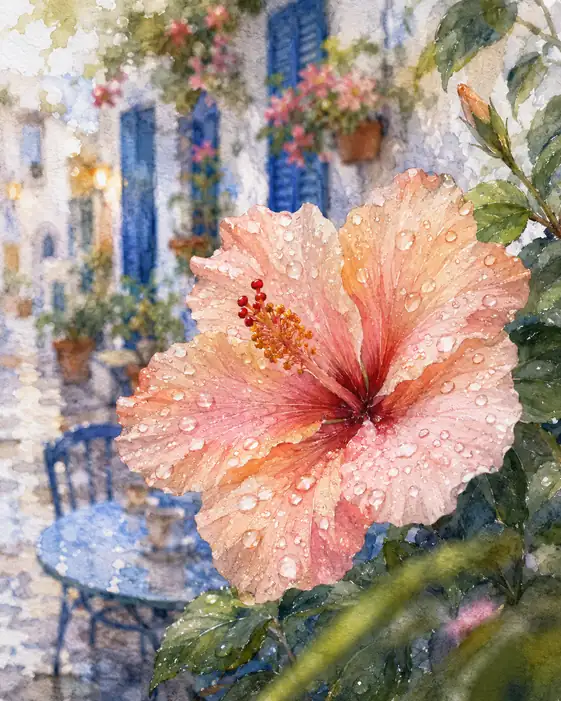 Dew-Kissed Hibiscus in the Mediterranean Morning
 Wildflower Bouquet on the Sunlit Alley Chairs
 A Rainbow Journey to the Horizon
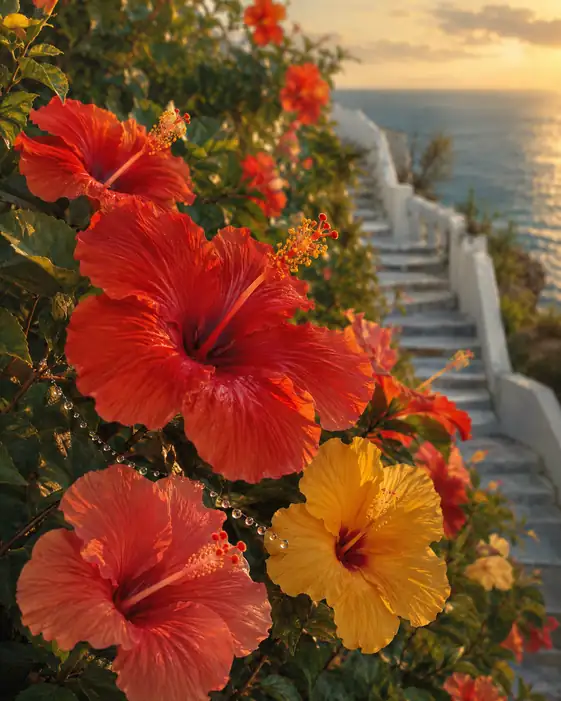 Hibiscus along the Coastal Stairway at Sunset
 Crape Myrtle by the Sparkling Pool
 Coastal Stairway and Livingstone Daisies
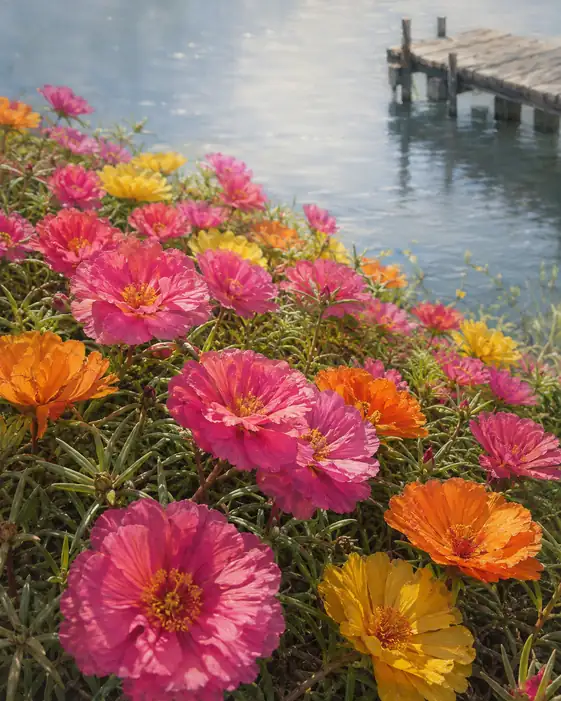 Portulaca Blooms by the Quiet Pier
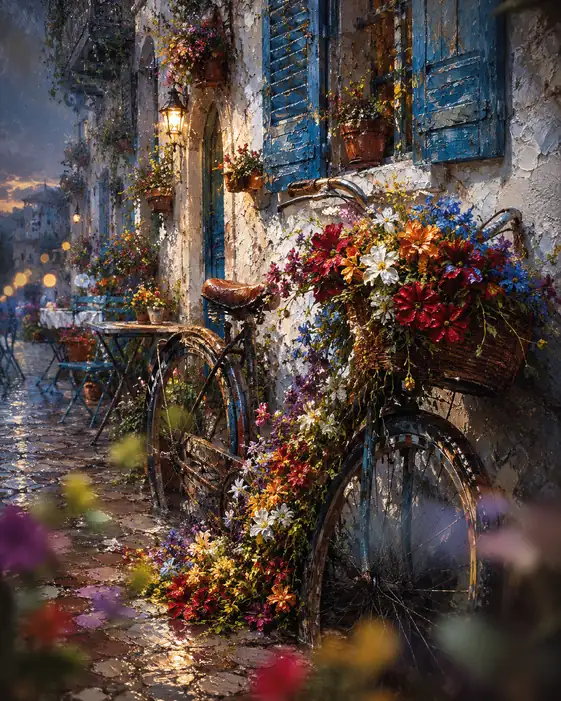 Flower-Laden Bicycle by the Twilight Shutter